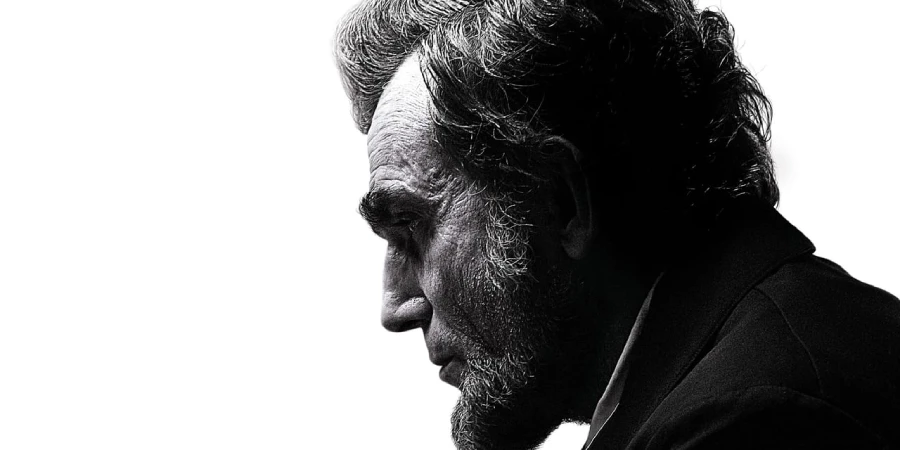

Daniel Day-Lewis sits across from a Black soldier at the opening of Lincoln and recites the words of the Emancipation Proclamation back to him, word for word, from memory. It is a quiet scene, almost casual, and it tells you everything about Steven Spielberg’s approach to this film: history as intimate conversation, not pageant.
Spielberg and screenwriter Tony Kushner chose to compress Lincoln’s presidency into a single legislative fight, the passage of the Thirteenth Amendment, and that narrow focus gives the film a pressure-cooker tension most political dramas never manage to find.
Detailed Summary
The Weight of January 1865
We open in the last winter of the Civil War. Lincoln has just won re-election, but the war grinds on and he knows the Emancipation Proclamation rests on shaky legal ground. A peace delegation from the Confederacy is quietly circling, and if a negotiated peace arrives before the amendment passes, the political will to abolish slavery could evaporate overnight.
Lincoln makes his calculation early: the amendment must pass before anyone learns the Confederate commissioners are coming. He tasks Secretary of State William Seward with lining up votes through any means necessary, ethical or otherwise.
The Vote-Buying Operation
Seward recruits three political operatives, led by the gloriously shady W.N. Bilbo, to bribe, flatter, and pressure lame-duck Democratic congressmen into voting yes. These men are the film’s comic relief, stumbling through offices and taverns trying to secure twenty votes the Republicans cannot win on their own. It is grubby, funny, and completely necessary.
Kushner’s screenplay deserves credit here for refusing to sanitize the process. Votes get bought with patronage jobs. Lincoln himself tells stories instead of making direct arguments. Democracy, the film insists, has always looked like this up close.
Thaddeus Stevens and the Art of Compromise
Congressman Thaddeus Stevens, played by Tommy Lee Jones with barely contained fury, is the film’s most morally complicated figure. Stevens has spent his entire career as a radical abolitionist who believes in full racial equality, not just emancipation. Lincoln needs him to publicly soften that position so moderate Democrats do not bolt.
Stevens’s big floor speech, where he pulls back from declaring racial equality and settles for “equal before the law,” is genuinely painful to watch. Jones plays it with a jaw so tight you expect his teeth to crack. It costs Stevens something real, and the film makes sure you feel that.
Mary Todd and the Lincoln Marriage
Inside the White House, Mary Todd Lincoln, played by Sally Field, wages her own battles. She carries grief over their son Willie’s death like an open wound. She clashes with Lincoln over their eldest son Robert’s desire to enlist, a conflict that keeps surfacing through the film’s middle section.
Field gives Mary a volatility that occasionally tips into melodrama, though one scene, where she sits silently at a White House reception watching Lincoln work the room, lands with real sadness. She knows she is losing him to history, and she cannot stop it.
Robert Lincoln and the Battlefield
Robert Lincoln, played by Joseph Gordon-Levitt, enlists against his parents’ wishes and ends up at Grant’s headquarters just as the war approaches its final days. He witnesses a wagon hauling severed limbs away from a field hospital. It is a brief scene, almost wordless, but it anchors the film’s abstract political arguments in physical horror.
The Confederate Peace Commission Arrives
Word leaks to Congress that Confederate commissioners are traveling to Washington. Democrats seize on the news and demand Lincoln confirm or deny their presence. Lincoln authorizes a technically true but deeply misleading message: no commissioners are currently in Washington, because he has ordered them held outside the city.
It is the film’s most quietly audacious moment. Lincoln commits what amounts to political deception to save the amendment. Spielberg does not judge him. Neither does Kushner. They simply show you the mechanism and let it sit there.
The Vote on the House Floor
The vote sequence is the film’s centerpiece. Spielberg shoots it in tight close-ups and long silent pauses, cutting between Lincoln listening in a telegraph office and the roll call playing out in Congress. Every “aye” lands like a small relief. Every hesitation feels like a potential collapse.
When the amendment passes, the House erupts. Stevens sits holding the printed text of the amendment, and later he brings it home to his housekeeper, Lydia Hamilton Smith, who shares his bed. Jones’s face in that final private moment communicates decades of private conviction that he could never speak aloud in public. It is the best single moment in the film.
Movie Ending
With the amendment passed, Lincoln prepares for a second term and a negotiated end to the war. He receives the Confederate commissioners at Hampton Roads but the peace talks fail; the Confederacy will not accept emancipation as a condition of reunion. The war continues a little longer, and then it ends.
On the night of April 14, 1865, Lincoln prepares to attend Ford’s Theatre. He pauses. His son Tad watches him walk away down a White House corridor, and Spielberg lingers on that shot. You know exactly what is coming, and so does Spielberg, and neither of you says it out loud.
The film cuts to Tad at another theatre, learning that his father has been shot. We see Lincoln’s cabinet members receiving the news. Then Spielberg gives us Lincoln in a deathbed tableau, surrounded by his family, his body finally still. A brief flash of Lincoln addressing Congress earlier in his presidency closes the film, his voice rising on a phrase about “the great task remaining before us.”
Spielberg deliberately avoids showing the assassination itself. That restraint is one of his best decisions in the entire film. Showing the murder would have shifted the film’s emotional weight toward martyrdom and away from what it actually argues: that Lincoln’s political genius, not his death, secured abolition. The ending asks you to mourn the man but remember the work.
Are There Post-Credits Scenes?
Lincoln contains no post-credits scenes. Spielberg ends on the deathbed image and Lincoln’s earlier speech, and then the film simply stops. No tags, no codas, no sequel bait.
Type of Movie
Lincoln is a historical drama with strong elements of political thriller. The tone is serious and deliberate, occasionally leavened by dry humor. It runs closer to a chamber drama than a sweeping biopic. Spielberg strips away battlefield grandeur and keeps almost everything inside rooms.
Cast
- Daniel Day-Lewis – Abraham Lincoln
- Sally Field – Mary Todd Lincoln
- David Strathairn – William H. Seward
- Joseph Gordon-Levitt – Robert Todd Lincoln
- James Spader – W.N. Bilbo
- Hal Holbrook – Preston Blair
- John Hawkes – Robert Latham
- Jackie Earle Haley – Alexander Stephens
- Bruce McGill – Edwin Stanton
- Tommy Lee Jones – Thaddeus Stevens
- Joseph Cross – John Hay
- Jared Harris – Ulysses S. Grant
- Lee Pace – Fernando Wood
- Peter McRobbie – George Pendleton
- Gloria Reuben – Elizabeth Keckley
Film Music and Composer
John Williams composed the score. At this point in his career, Williams and Spielberg had worked together for decades, and Lincoln shows a notably restrained side of that partnership. The score avoids the sweeping orchestral drama you might expect from a Civil War film.
Williams leans on spare piano lines and quiet strings. Much of the film plays with minimal underscore, letting the dialogue breathe. The main theme carries a hymn-like quality without ever tipping into sentimentality, which is harder to achieve than it sounds.

Filming Locations
Principal photography took place largely in Virginia, particularly in and around Richmond and Petersburg. The Virginia State Capitol stood in for key interior congressional scenes. That building carries its own loaded history, having served as the capital of the Confederacy, which gives those scenes an unspoken irony.
Some interiors were built on soundstages. The production design by Rick Carter recreated the House chamber with meticulous attention to the cramped, gas-lit claustrophobia of 1860s Washington. Janusz Kaminski’s cinematography leans on natural-looking amber light that makes every room feel like a candle might go out at any moment.
Awards and Nominations
Lincoln received twelve Academy Award nominations, including Best Picture, Best Director, and Best Supporting Actor for Tommy Lee Jones. Daniel Day-Lewis won Best Actor, his third Oscar win, which remains a record for a male performer.
Sally Field received a Best Supporting Actress nomination. The film also received nominations for its screenplay, cinematography, score, production design, costume design, and film editing. It won the production design award alongside Day-Lewis’s acting prize.
Behind the Scenes Insights
- Daniel Day-Lewis stayed in character as Lincoln throughout the production, communicating with fellow cast members via notes written in period-appropriate language between takes.
- Spielberg had been developing a Lincoln project for years and originally considered a much broader scope covering more of Lincoln’s presidency before Kushner’s script narrowed the focus to the amendment fight.
- Tony Kushner, best known for Angels in America, spent years researching and writing the screenplay, producing multiple drafts before arriving at the compressed legislative-thriller structure.
- Sally Field reportedly pushed hard for her role after learning she had been overlooked in early casting discussions.
- Day-Lewis adopted a higher, softer vocal register than the popular image of Lincoln, drawing on historical accounts that described Lincoln’s voice as surprisingly high-pitched for a man his size.
- Janusz Kaminski used practical light sources and candles as much as possible to achieve the amber, slightly smoky look of the interiors.
- The film was shot on 35mm film rather than digital, a deliberate choice to give the images a grain and texture matching the period’s photographic quality.
Inspirations and References
Doris Kearns Goodwin’s book Team of Rivals: The Political Genius of Abraham Lincoln provided the primary source material. Kushner credited Goodwin’s research extensively, though the screenplay ultimately uses the book as a launching point rather than a scene-by-scene adaptation.
Kushner also drew on primary documents, congressional records, and Lincoln’s own letters and speeches. Lincoln’s storytelling habit, shown repeatedly in the film as a political and social tool, is well documented in historical accounts and shapes the screenplay’s entire characterization of the man.
Alternate Endings and Deleted Scenes
Spielberg has discussed that an earlier cut of the film showed more of the night at Ford’s Theatre. He ultimately removed it because, as he explained in interviews, it felt gratuitous given that the amendment passage was the film’s true climax.
No officially released deleted scenes package has been widely distributed, so specific cut footage remains largely undocumented beyond those directorial comments. The deathbed ending, rather than any depiction of the assassination itself, was a deliberate structural choice made late in the editing process.
Book Adaptations and Differences
Lincoln draws from Doris Kearns Goodwin’s Team of Rivals, but Kushner’s screenplay is not a direct adaptation of that book. Team of Rivals covers Lincoln’s entire presidency and his management of a cabinet filled with former political rivals.
The film extracts only the final months of his life and the Thirteenth Amendment fight. Figures who receive substantial attention in Goodwin’s book, including Secretary of War Edwin Stanton and Treasury Secretary Salmon Chase, appear in minor or background roles in the film. Kushner built the legislative thriller structure himself; it does not exist as a narrative shape in the source book.

Memorable Scenes and Quotes
Key Scenes
- Lincoln reciting the Emancipation Proclamation to two Black soldiers in the opening scene, in near-darkness, with almost no music under it.
- Thaddeus Stevens’s floor speech, where he publicly retreats from his lifelong position on racial equality to protect the amendment’s passage.
- Stevens bringing the printed amendment home to Lydia Hamilton Smith and getting into bed beside her; the camera holds on them without a word.
- Lincoln telling the story about the George Washington portrait in the outhouse while his cabinet waits for him to sign off on military orders, with Stanton visibly furious.
- Robert Lincoln’s silent, wide-eyed encounter with a cart of amputated limbs outside a field hospital.
- Lincoln’s long walk down the White House corridor, seen from behind by Tad, on the night of April 14.
- The vote roll call, with Lincoln listening through a telegraph and every pause filled with tension.
Iconic Quotes
- “I am the President of the United States of America, clothed in immense power. You will procure me these votes.”
- “A compass, I learnt when I was surveying, it’ll point you True North from where you’re standing, but it’s got no advice about the swamps and deserts and chasms that you’ll encounter along the way.”
- “I could write shorter sermons but when I get started I’m too lazy to stop.”
- “We’ve stepped out upon the world stage now. Now! Now! Now!”
- Stevens, when asked what he means by equality: “I mean the equality of man before God and before the law. That is sufficient. That is the only equality the Negroes seek.”
Easter Eggs and Hidden Details
- The painting of George Washington that Lincoln references in his outhouse story actually hangs visibly in the background of a White House scene earlier in the film.
- Kaminski’s lighting in the House chamber scenes subtly shifts warmer as the vote count climbs, moving from cold blue-grey to amber as victory approaches.
- The two Black soldiers in the opening scene finish reciting the Emancipation Proclamation themselves, completing Lincoln’s sentences, a detail that signals the document now belongs to the people who need it, not only to Lincoln.
- Stevens’s wig is famously terrible and obviously fake throughout the film. This is historically accurate: Stevens wore a wig and contemporaries frequently commented on how unconvincing it was.
- The telegram Lincoln reads informing him of casualty numbers in the opening is written in a style matching actual Civil War-era military dispatches.
Trivia
- Daniel Day-Lewis is the only actor to have won three Academy Awards for Best Actor, and Lincoln was his third win.
- Spielberg reportedly kept the identity of the actor playing Lincoln secret during production to protect Day-Lewis’s performance from early press scrutiny.
- The film marks one of the rare occasions Spielberg shot a drama in a single, contained period and location rather than expanding outward with scope and spectacle.
- Tommy Lee Jones won a Screen Actors Guild Award for his performance as Thaddeus Stevens.
- The production team consulted directly with historians and Lincoln scholars to verify speech patterns, political procedures, and period-accurate congressional rules of order.
- Gloria Reuben’s character, Elizabeth Keckley, was a real person and a formerly enslaved woman who became Mary Todd Lincoln’s dressmaker and close confidante.
- Day-Lewis was reportedly Spielberg’s first and only choice for the role; no other actor was seriously considered once Day-Lewis expressed interest.
Why Watch?
Watch it for Tommy Lee Jones, who delivers a performance so precise and so furious that he makes every other actor in the room visibly adjust their energy. His Thaddeus Stevens scene on the House floor, where Jones plays restraint as its own form of violence, is worth the price of admission by itself. Day-Lewis provides the gravity, but Jones provides the heat.
Director’s Other Movies
- Duel (1971)
- Jaws (1975)
- Close Encounters of the Third Kind (1977)
- Raiders of the Lost Ark (1981)
- E.T. the Extra-Terrestrial (1982)
- The Color Purple (1985)
- Empire of the Sun (1987)
- Schindler’s List (1993)
- Amistad (1997)
- Saving Private Ryan (1998)
- A.I. Artificial Intelligence (2001)
- Catch Me If You Can (2002)
- Munich (2005)
- Bridge of Spies (2015)
- Ready Player One (2018)
- West Side Story (2021)
- The Fabelmans (2022)