
Across eleven episodic films and two standalone spin-offs, the Star Wars saga has reshaped cinema and popular culture since 1977. Creator George Lucas famously began the story in the middle, releasing Episode IV first, then prequel trilogies and sequels that jump across decades of in-universe history. For new viewers, that fractured timeline can feel daunting. Watching in story order reveals the rise and fall of the Republic, the Skywalker family’s tragic arc, and the slow corruption of Anakin into Darth Vader before you ever meet Luke.
This guide presents every live-action Star Wars theatrical film in chronological order, meaning the sequence of events as they unfold in the galaxy far, far away. Release dates sit in parentheses so you can see how Lucas and Lucasfilm wove the narrative out of sequence. Whether you are a first-timer or a veteran looking to revisit the saga with fresh eyes, understanding the timeline transforms how you experience callbacks, character choices, and thematic echoes.
Understanding the Star Wars Timeline
George Lucas originally envisioned a nine-film epic, yet released Episode IV in 1977 because he believed the middle chapter offered the most accessible adventure. Audiences met Luke Skywalker, Darth Vader, and Princess Leia without knowing how Vader became a Sith Lord or why the Empire rules the galaxy. That mystery fueled the franchise’s early mystique. Lucas later filled in the backstory with the prequel trilogy (1999-2005), then Disney continued the Skywalker saga with a sequel trilogy (2015-2019) and added two anthology films, Rogue One and Solo, that slot into earlier points in the timeline.
This guide follows story order, placing films where they occur in-universe rather than by release date. Watching Episode I first means you meet Anakin as a child, witness his fall in Episode III, then see the consequences ripple through the original trilogy.
Release order, on the other hand, preserves the reveals Lucas intended: the shock of Vader’s parentage, the mystery of the Clone Wars, the emotional weight of Obi-Wan’s exile. If you prefer narrative surprises over linear coherence, start with the 1977 original and watch by release date. For those who want a straight chronological journey through galactic history, read on.
Star Wars Movies in Chronological Order (In-Universe Story Order)
1. Star Wars: Episode I – The Phantom Menace (1999)
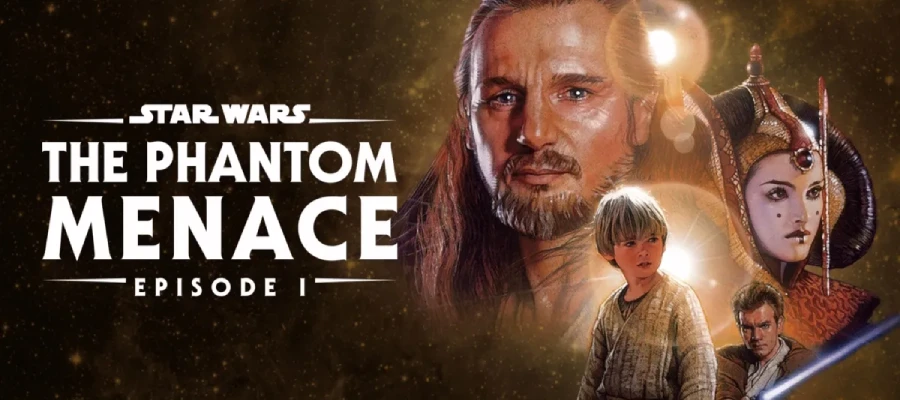
Qui-Gon Jinn and his apprentice Obi-Wan Kenobi arrive on the planet Naboo to negotiate a trade dispute, only to discover an invasion by the Trade Federation. Their mission leads them to Tatooine, where they meet nine-year-old Anakin Skywalker, a slave boy with an unprecedented connection to the Force. Qui-Gon believes Anakin is the prophesied Chosen One who will bring balance to the Force.
George Lucas returned to direct after a 22-year hiatus, pioneering digital filmmaking techniques that would reshape Hollywood. The production leaned heavily on CGI, from the fully digital Jar Jar Binks to the sprawling cityscapes of Coruscant. Critics at the time attacked the film’s dialogue and pacing, yet it grossed over a billion dollars worldwide and introduced a new generation to the saga.
The pod race sequence on Tatooine became an instant visual benchmark, blending practical miniatures with digital enhancements. John Williams composed “Duel of the Fates,” a choral piece that elevated the climactic lightsaber duel between Qui-Gon, Obi-Wan, and Darth Maul into one of the franchise’s most electrifying set pieces.
2. Star Wars: Episode II – Attack of the Clones (2002)
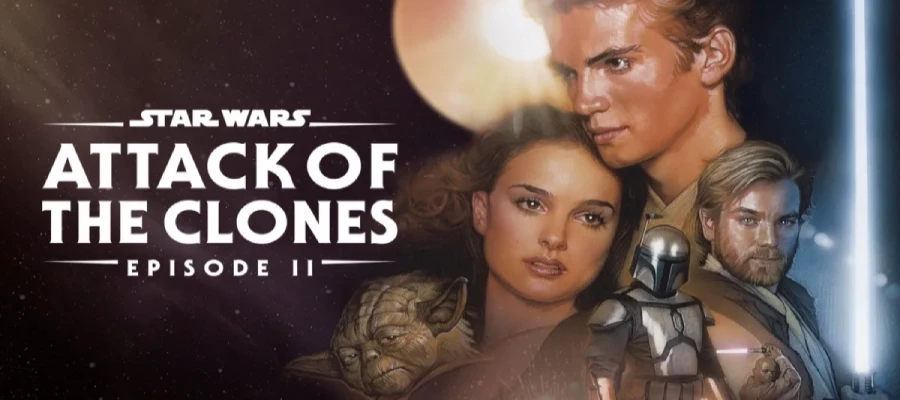
A decade later, Padmé Amidala serves as a senator while facing assassination attempts. The Jedi Council assigns Obi-Wan and his now-adult apprentice Anakin to protect her. Obi-Wan uncovers a secret clone army commissioned by a long-dead Jedi, while Anakin and Padmé retreat to Naboo and fall in love despite the Jedi Order’s ban on attachments.
Lucas shot the entire film digitally, the first major blockbuster to do so. The decision divided cinematographers but accelerated Hollywood’s transition away from celluloid. Industrial Light & Magic rendered thousands of digital clone troopers for the climactic Battle of Geonosis, pushing the boundaries of visual effects at the time.
The film’s romantic subplot drew widespread ridicule for its wooden dialogue, yet it laid essential groundwork for Anakin’s eventual fall. His forbidden marriage to Padmé and his slaughter of the Tusken Raiders who killed his mother foreshadow the darkness to come. Critics remain split on whether the film is earnestly flawed or misunderstood.
3. Star Wars: Episode III – Revenge of the Sith (2005)
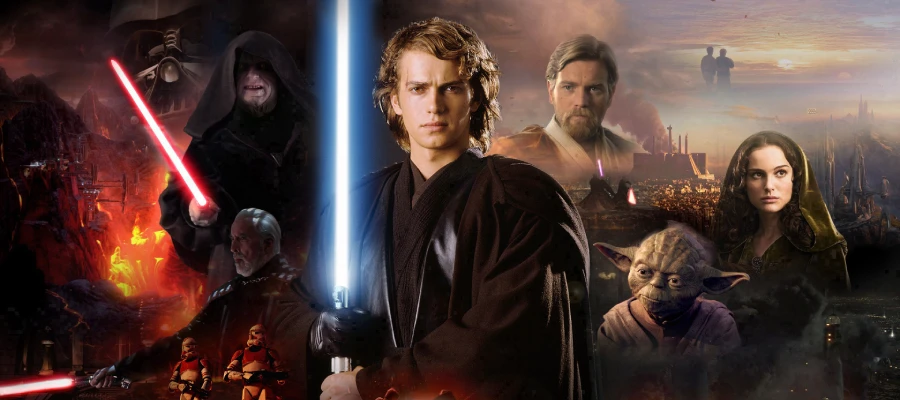
With the Clone Wars raging, Anakin grows increasingly disillusioned with the Jedi Council. Chancellor Palpatine manipulates his fears about losing Padmé, promising forbidden knowledge of the dark side. Anakin’s desperation leads him to betray the Jedi, slaughter younglings, and embrace a new identity: Darth Vader.
The volcanic duel between Obi-Wan and Anakin on Mustafar delivers the emotional and visual climax the prequels had been building toward. Lucas choreographed the lightsaber battle to reflect their bond and betrayal, ending with Anakin’s dismemberment and immolation. The sequence required months of rehearsal and green-screen compositing to blend actors with lava flows.
This entry earned a PG-13 rating, the only prequel to do so, due to its darker tone and graphic violence. It became the highest-grossing film of 2005 domestically and received the most favorable reviews of the trilogy. Many fans consider it the strongest prequel, bridging the gap between Anakin’s fall and the rise of the Empire.
4. Solo: A Star Wars Story (2018)
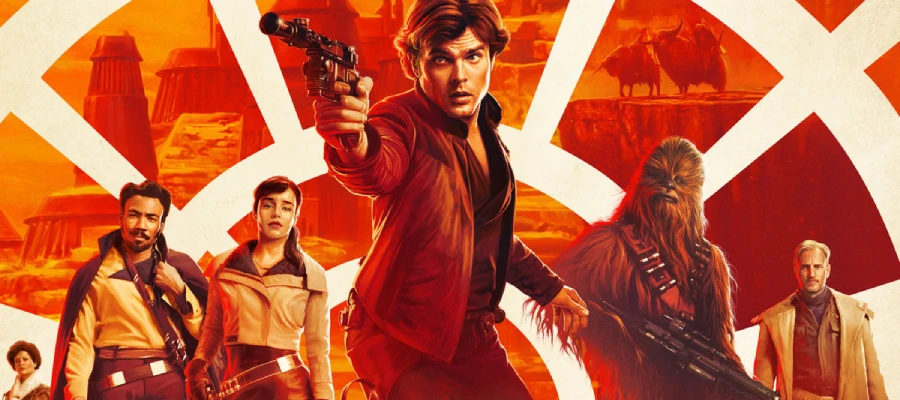
Young Han Solo escapes the criminal underworld of Corellia and joins a band of smugglers led by Tobias Beckett. He meets Chewbacca in an Imperial labor camp, wins the Millennium Falcon from Lando Calrissian in a game of sabacc, and completes the infamous Kessel Run. The film explores his early years before he became the cynical smuggler audiences met in 1977.
Production notoriously imploded midway when Lucasfilm fired directors Phil Lord and Christopher Miller over creative differences. Ron Howard stepped in, reshooting roughly 70 percent of the film. The turmoil ballooned the budget past $250 million, making it one of the most expensive movies ever made. Despite positive reviews, it underperformed at the box office, becoming the first Star Wars film to lose money theatrically.
Alden Ehrenreich faced the impossible task of inhabiting a role Harrison Ford made iconic. He approached Han as a younger, more idealistic version before cynicism set in. Donald Glover’s portrayal of a suave, cape-wearing Lando stole many scenes, prompting calls for a spin-off that never materialized.
5. Rogue One: A Star Wars Story (2016)
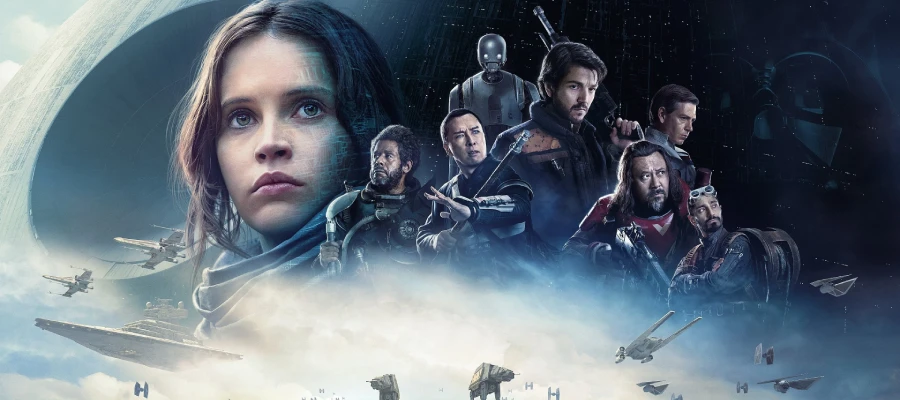
Jyn Erso, daughter of the Death Star’s reluctant engineer, joins a desperate Rebel Alliance mission to steal the superweapon’s plans. The operation is unsanctioned, a suicide run with no expectation of survival. The stolen plans will eventually reach Princess Leia, setting the original trilogy in motion.
Gareth Edwards brought a grounded, war-film aesthetic to the franchise, drawing inspiration from Saving Private Ryan and classic World War II cinema. The Battle of Scarif unfolds with a gritty intensity rarely seen in Star Wars, complete with muddy beaches and dogfights that feel tactile and dangerous. Industrial Light & Magic resurrected Peter Cushing’s Grand Moff Tarkin using motion capture and digital rendering, sparking ethical debates about posthumous CGI performances.
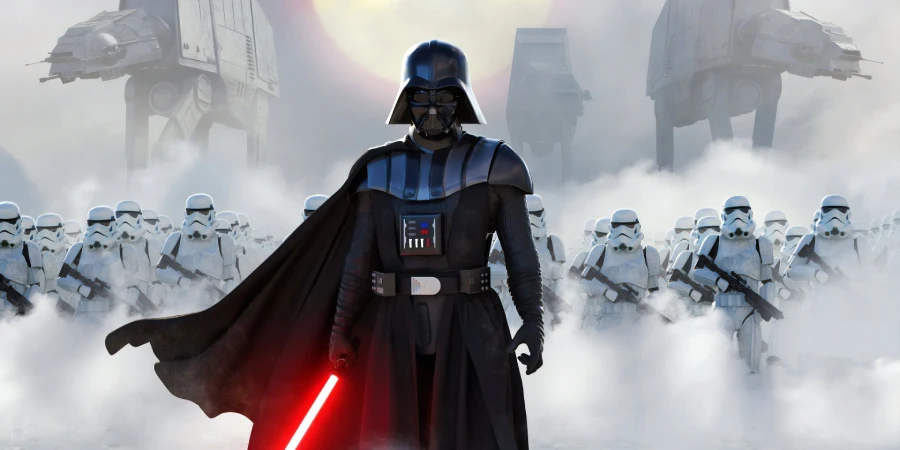
The film’s hallway sequence, in which Darth Vader slaughters Rebel soldiers in a claustrophobic corridor, became an instant fan-favorite moment. It showcases Vader at his most terrifying, a nightmarish force of nature. Rogue One grossed over a billion dollars and remains one of the most acclaimed entries in the Disney era.
6. Star Wars: Episode IV – A New Hope (1977)
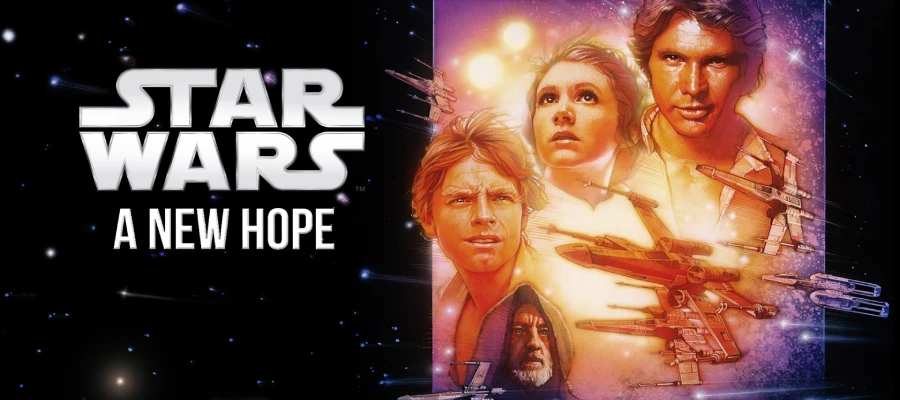
Nineteen years after the Empire’s rise, farm boy Luke Skywalker stumbles upon a message hidden in a droid. Princess Leia calls for help from Obi-Wan Kenobi, now a hermit on Tatooine. Luke joins forces with Han Solo, Chewbacca, and the droids to rescue Leia and strike a blow against the Death Star.
George Lucas shot the film on a modest budget, facing skepticism from 20th Century Fox executives who doubted space fantasy had an audience. The production struggled with malfunctioning props, oppressive Tunisian heat, and a crew that dismissed the project as children’s fare. Lucas suffered chest pains from stress during editing, convinced he had created a disaster.
Instead, the film exploded into a cultural phenomenon, redefining blockbuster cinema. Its innovative special effects, mythic hero’s journey, and John Williams’s soaring score resonated across generations. The film was later retitled A New Hope after Lucas planned the prequel trilogy, though purists still debate whether the subtitle belongs.
7. Star Wars: Episode V – The Empire Strikes Back (1980)
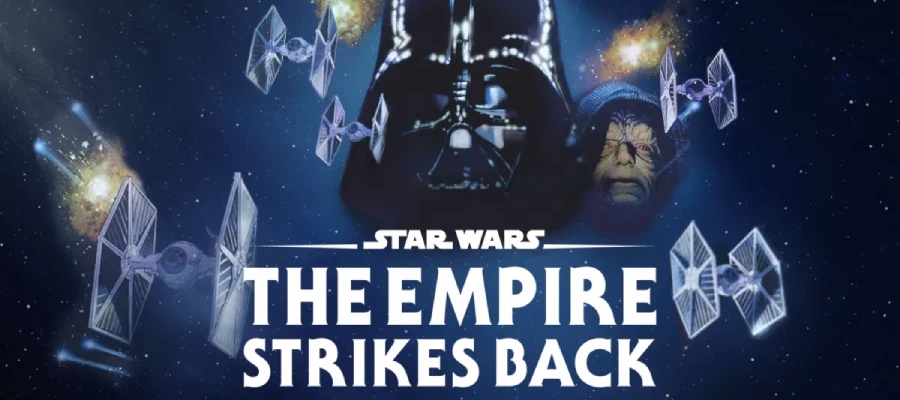
The Empire scatters the Rebels from their base on the ice planet Hoth. Luke travels to the swamp world Dagobah to train with Yoda, while Han and Leia flee Imperial pursuit and develop a reluctant romance. Darth Vader obsessively hunts Luke, determined to turn the young Jedi to the dark side.
Irvin Kershner replaced Lucas in the director’s chair, bringing a darker, more character-driven sensibility. The film subverts the original’s triumph with loss, betrayal, and a cliffhanger ending. Luke loses his hand, Han is frozen in carbonite, and the Rebellion teeters on collapse. Critics initially gave it mixed reviews, unsettled by its bleakness, but it is now widely regarded as the finest Star Wars film.
Vader’s revelation that he is Luke’s father ranks among cinema’s most famous plot twists. Lucas and screenwriter Leigh Brackett guarded the secret so tightly that even the cast didn’t know until the premiere. Only a handful of people on set were aware of the true line during filming.
8. Star Wars: Episode VI – Return of the Jedi (1983)
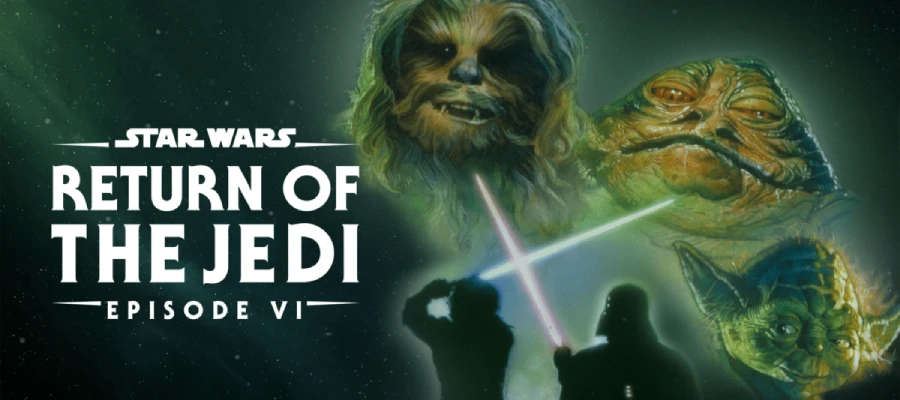
Luke has matured into a Jedi Knight and orchestrates a daring rescue of Han from Jabba the Hutt’s palace. The Rebels learn the Empire is constructing a second Death Star, protected by a shield generator on the forest moon of Endor. Luke confronts Vader and the Emperor, gambling that a spark of good still remains in his father.
Richard Marquand directed, though Lucas maintained tight creative control. The production introduced the Ewoks, furry forest dwellers who help the Rebels destroy the shield generator. Their presence sparked controversy among older fans who found them too cute and toy-friendly, an early sign of the merchandising tensions that would dog Lucas for decades.
The throne room confrontation between Luke, Vader, and Emperor Palpatine delivers the saga’s emotional catharsis. Vader’s redemption and death reframe the entire trilogy as his story, not just Luke’s. The film concluded the original saga with a celebration across the galaxy, providing closure before the long hiatus.
9. Star Wars: Episode VII – The Force Awakens (2015)
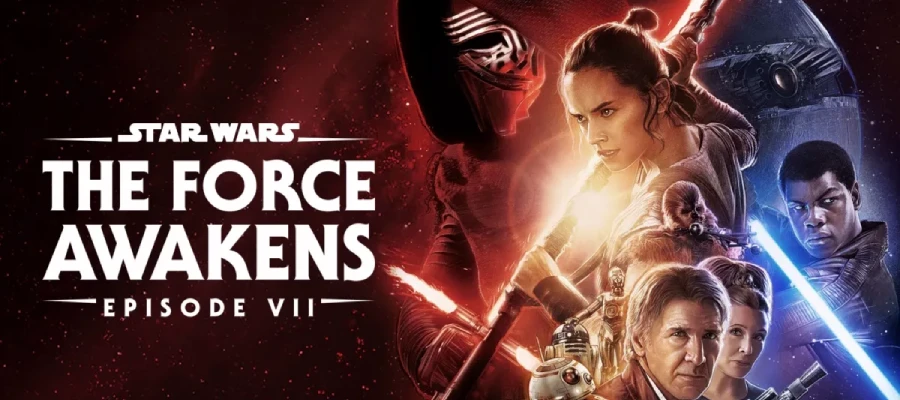
Thirty years after the Empire’s defeat, a new threat called the First Order rises from its ashes. Rey, a scavenger on the desert planet Jakku, discovers she is Force-sensitive when she encounters a droid carrying a map to the missing Luke Skywalker. She teams up with a defecting stormtrooper named Finn and becomes entangled in the Resistance’s fight against Kylo Ren, son of Han and Leia.
J.J. Abrams returned to practical effects and location shooting, a deliberate pivot away from the prequels’ digital aesthetic. The production built full-scale sets in Abu Dhabi and Ireland, using puppetry and animatronics wherever possible. The film’s visual warmth and tangible environments won over fans who had grown weary of green-screen overload.
The movie became a cultural event, grossing over two billion dollars and ranking among the highest-grossing films of all time. Critics praised its energy and newcomer performances, though some accused it of rehashing A New Hope‘s plot beats. Han Solo’s death at Kylo Ren’s hands shocked audiences and anchored the sequel trilogy’s stakes.
10. Star Wars: Episode VIII – The Last Jedi (2017)
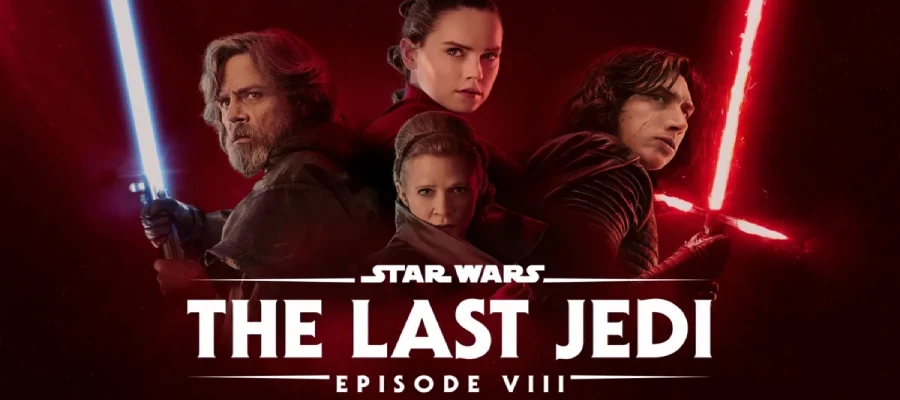
Rey finds Luke on a remote island, hoping he will train her and return to the fight. Luke refuses, disillusioned by his failure with Kylo Ren and the Jedi’s history of hubris. Meanwhile, the Resistance fleet is running out of fuel, hunted by the First Order in a slow-motion chase through space. Kylo Ren and Rey form an unexpected connection through the Force.
Rian Johnson took the franchise in bold new directions, subverting fan expectations at nearly every turn. Luke’s bitter withdrawal and Rey’s nobody origins challenged the saga’s emphasis on bloodlines and destiny. The film polarized the fanbase more than any entry before or since, with some hailing it as a masterpiece and others condemning it as a betrayal.
The Crait battle sequence, in which Resistance fighters face down AT-M6 walkers on a white salt planet, pays homage to The Empire Strikes Back while inverting its imagery. Luke’s Force projection duel with Kylo Ren became one of the most debated moments in franchise history. Johnson’s script forced characters to fail, learn, and grow rather than simply repeat the original trilogy’s victories.
11. Star Wars: Episode IX – The Rise of Skywalker (2019)
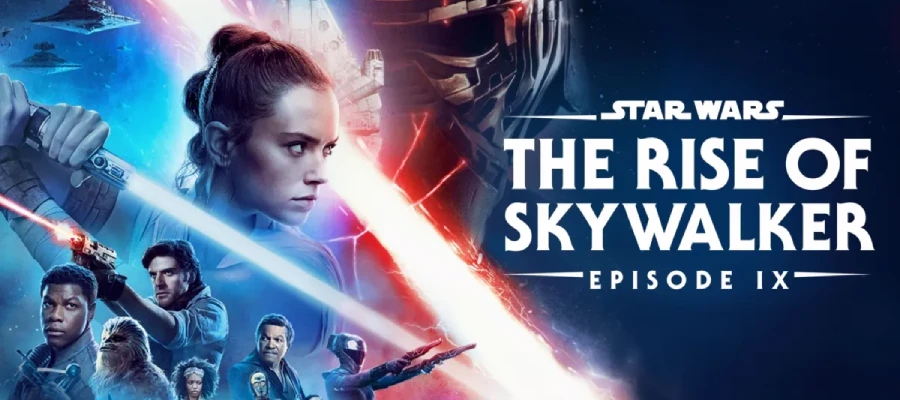
Emperor Palpatine broadcasts a threat from the Unknown Regions, revealing he survived his apparent death. Rey, Finn, and Poe race to find Exegol, the hidden Sith world where Palpatine commands a massive fleet. Rey discovers she is Palpatine’s granddaughter, forcing her to confront her lineage and choose her own identity.
J.J. Abrams returned after Colin Trevorrow’s departure, inheriting a deeply divided fanbase and a compressed production schedule. The film attempts to course-correct from The Last Jedi‘s controversies, reintroducing familiar elements and revealing Rey’s Palpatine bloodline. These choices satisfied some fans but frustrated others who felt the sequel trilogy lacked a coherent vision.
The climax features Rey channeling the voices of past Jedi to defeat Palpatine, a moment designed to unify the nine-film saga. She adopts the Skywalker name in the final scene, burying Luke and Leia’s lightsabers on Tatooine. The film grossed over a billion dollars but received the most mixed reviews of the trilogy, closing the Skywalker saga on an uncertain note.
What Makes Star Wars Special?
Star Wars transcends its space-opera trappings by rooting grand mythology in intimate family drama. The saga explores fathers and sons, mentors and apprentices, the seduction of power, and the possibility of redemption. Anakin’s fall and Vader’s redemption form the franchise’s emotional spine, while Luke’s journey from farm boy to Jedi Knight provides the archetypal hero’s journey.
Visually, the franchise pioneered effects techniques that became industry standard. Industrial Light & Magic’s innovations in motion control, compositing, and later CGI reshaped how blockbusters are made. John Williams’s orchestral scores, from the triumphant main theme to the mournful “Imperial March,” elevate every frame. The music doesn’t just accompany the story; it defines it.
The lived-in aesthetic of the original trilogy gave the galaxy texture and history. Ships were dirty, droids were battered, and cantinas felt like real frontier outposts. This design philosophy distinguished Star Wars from the sterile futurism of earlier sci-fi. Even as the prequels embraced digital gloss, the core universe retained its weathered, grounded quality.
Future of Star Wars
Lucasfilm president Kathleen Kennedy has announced three theatrical films in development. Sharmeen Obaid-Chinoy will direct a Rey-focused story set years after The Rise of Skywalker, exploring her efforts to rebuild the Jedi Order. James Mangold is writing a film set thousands of years before the Skywalker saga, during the dawn of the Jedi and the Force’s early understanding. Dave Filoni, architect of the animated series, will helm a project tying together characters from The Mandalorian, Ahsoka, and other Disney+ shows into a climactic cinematic event.
No release dates are confirmed, and Lucasfilm has slowed theatrical output to focus on streaming series. The franchise remains a tentpole for Disney, yet the company learned from the sequel trilogy’s mixed reception that careful planning and creative vision matter more than annual release schedules.
Your Journey Through the Galaxy
Watching Star Wars in chronological order transforms the saga into a sprawling family tragedy. You witness Anakin’s corruption, the Republic’s collapse, Luke’s redemption of his father, and Rey’s struggle against her heritage. Each trilogy builds on the last, even when creative visions clash. Themes of hope, legacy, and the fight between light and darkness thread through every film.
If you’re starting fresh, expect tonal shifts between eras. The prequels lean heavily on CGI and political intrigue, the originals favor practical effects and swashbuckling adventure, and the sequels split the difference. Each trilogy reflects the technology and storytelling trends of its time. Embrace the variety; it’s part of what makes Star Wars such a rich, evolving universe.
Now you have the roadmap. Start with young Anakin on Tatooine, follow his rise and fall, and watch as his children and grandchildren shape the galaxy in his wake. May the Force be with you.