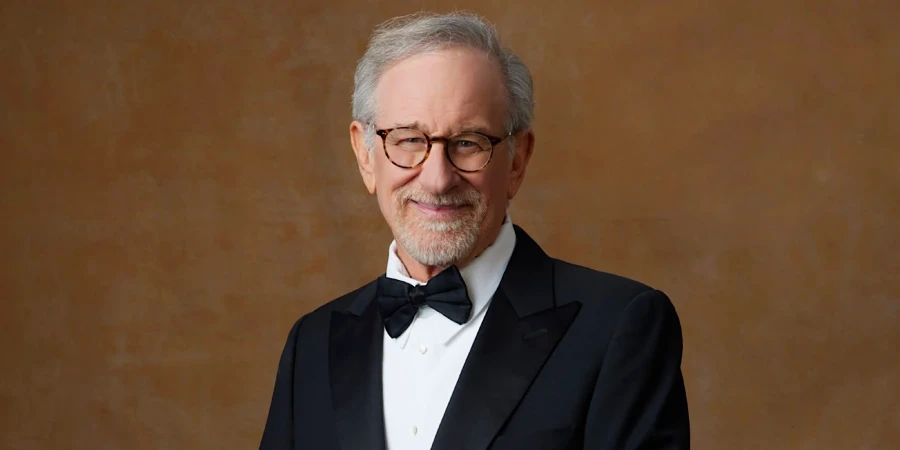

Steven Spielberg is widely regarded as the most commercially successful filmmaker in cinema history. From the shark that invented the summer blockbuster to the Holocaust drama that earned him his first Best Director Oscar, his career spans more than five decades and reshaped modern Hollywood. Below is everything you need to know about his awards, fortune, family, struggles with dyslexia, directing style, and what’s next.
Who Is Steven Spielberg?
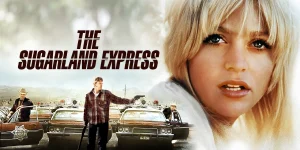
Steven Allan Spielberg is an American filmmaker born on December 18, 1946, in Cincinnati, Ohio. He grew up in Phoenix, Arizona, and later in Saratoga, California, and began making amateur 8mm films at the age of 12. After launching his career with the TV movie Duel (1971) and the novel-adapted thriller The Sugarland Express (1974), he became a household name with Jaws (1975)—the film that gave birth to the modern summer blockbuster.
Today, at 79, he is the co-founder of Amblin Entertainment and DreamWorks SKG, and the highest-grossing director of all time, with his films collectively earning over $10 billion worldwide.
List of Awards Won by Steven Spielberg
Spielberg’s awards cabinet is one of the deepest in Hollywood history. He has won:
- 3 Academy Awards — Best Director for Schindler’s List (1993) and Saving Private Ryan (1998), plus Best Picture as producer of Schindler’s List
- 9 Best Director Oscar nominations (third most ever, behind Martin Scorsese and William Wyler)
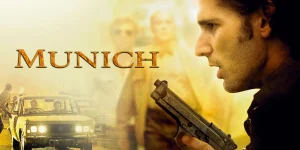
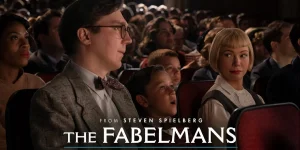
- 14 Best Picture Oscar nominations as producer — a record, across E.T., The Color Purple, Schindler’s List, Saving Private Ryan, Munich, Lincoln, Bridge of Spies, The Post, West Side Story, The Fabelmans, and others
- 4 BAFTA Awards
- 4 Golden Globe Awards
- 13 Emmy Awards
- 3 Directors Guild of America (DGA) Awards, plus the DGA Lifetime Achievement Award
- 7 Producers Guild of America Awards
- 1 Tony Award and 1 Grammy Award, making him one of a small group of filmmakers close to EGOT territory
- The AFI Life Achievement Award, the Cecil B. DeMille Award, and the Presidential Medal of Freedom (2015)
Steven Spielberg Net Worth in 2026
Steven Spielberg is the only working film director currently tracked on the Bloomberg Billionaires Index. As of April 2026, Bloomberg estimates his net worth at approximately $11.4 billion, making him one of the wealthiest entertainers on the planet.
His wealth comes from multiple streams:
- Backend profit-participation deals on his blockbuster films
- Ownership stakes in Amblin Entertainment and the original DreamWorks SKG
- A long-running producing business behind hits like Back to the Future, Men in Black, and the Transformers franchise
- Substantial real-estate holdings, including a Pacific Palisades compound
Who Is Steven Spielberg’s Wife? Meet Kate Capshaw
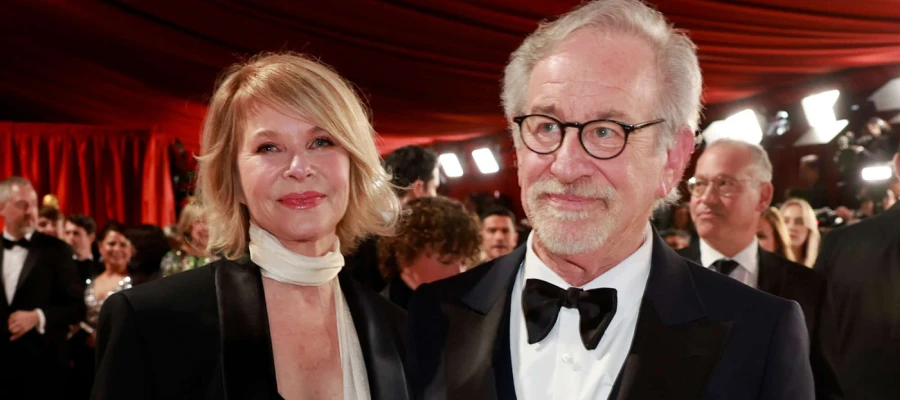
Spielberg is married to American actress Kate Capshaw, best known for her role as Willie Scott in Indiana Jones and the Temple of Doom (1984). The couple met on the audition for that film, began dating after Spielberg’s 1989 divorce from actress Amy Irving, and married in 1991.
Together they are raising a blended family of seven children:
- Jessica Capshaw — Kate’s daughter from her first marriage (and Grey’s Anatomy actress)
- Theo — adopted by Kate before the marriage; Steven adopted him after
- Max Spielberg — Steven’s son with ex-wife Amy Irving
- Sasha, Sawyer, Mikaela, and Destry — the couple’s four biological and adopted children together
Capshaw converted to Judaism before their wedding, and the marriage is famously one of the most stable in Hollywood, having lasted more than three decades.
Was Steven Spielberg Rejected from USC Film School?
Yes—and famously so. Spielberg applied to the University of Southern California’s School of Cinematic Arts and was rejected multiple times because his high-school grades were too low (he was a mostly-C student, a consequence of his then-undiagnosed dyslexia). He ended up enrolling at California State University, Long Beach, and eventually left before finishing his degree to pursue directing full-time.
The story has a poetic ending: USC later awarded him an honorary degree in 1994, and he finally completed his original bachelor’s degree at CSULB in 2002, submitting Schindler’s List as part of his film-production coursework.
How Did Dyslexia Shape Steven Spielberg’s Career?
Spielberg was diagnosed with dyslexia only at age 60, decades into his career. Growing up, he struggled with reading, was bullied at school, and was often labeled lazy by teachers who didn’t understand why such a bright student couldn’t keep up with written work.
In his own words, the late diagnosis was “the last puzzle piece to a great mystery that I’ve kept to myself.”
Two consequences shaped his filmmaking:
- Filmmaking as escape. Spielberg has said movies were his refuge from the classroom humiliation and social bullying tied to his undiagnosed learning difference. He started making short films on his father’s 8mm camera at 12 and never stopped.
- Visual-first storytelling. Because words came slowly, images came first. His famously instinctive sense of composition, blocking, and visual grammar—the very qualities that make a “Spielberg film” recognizable—grew out of a brain that processed the world visually rather than textually.
He now speaks publicly about dyslexia to encourage young people with learning differences, arguing that the condition can be a creative advantage rather than a limitation.
Steven Spielberg’s Directing Style
Spielberg’s style is often called “invisible”—powerful, but never showy. Critics and film-school instructors typically single out four trademarks:
- The “Spielberg Oner.” He is famous for long, uninterrupted takes (usually under three minutes) that cover an entire scene in a single shot. Unlike more ostentatious long takes, his are designed to feel seamless and unnoticed, guided entirely by character motion.
- Motivated camera movement. The camera rarely moves for its own sake. It follows action, tracks a character’s gaze, or drifts toward a threat. Frequent collaborator Dean Cundey put it simply: “The camera is always moving, gradually getting closer to the point of danger.”
- Meticulous blocking. His actors are choreographed with precision so a single take can shift organically between wide shot and close-up without a cut.
- Subjective placement. Spielberg loves putting the camera inside the scene—behind a steering wheel, under a table, low to a child’s eye line—so the audience shares the character’s point of view.
Add to this his use of light as a storytelling tool (often with cinematographer Janusz Kamiński) and his instinct for iconic reveals—the shark fin, the bicycle crossing the moon, the red coat in Schindler’s List—and you have a visual language that has defined mainstream American cinema since the 1970s.
Why Does Steven Spielberg Work with the Same Collaborators?
Like many great directors, Spielberg builds long-term teams because trust and shared shorthand make complex films possible. His most notable recurring partners:
- John Williams (composer). The most celebrated director–composer partnership in film history. Williams has scored nearly every Spielberg theatrical feature since The Sugarland Express (1974), including Jaws, Close Encounters, E.T., the Indiana Jones saga, Jurassic Park, Schindler’s List, Saving Private Ryan, and The Fabelmans.
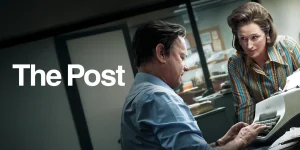
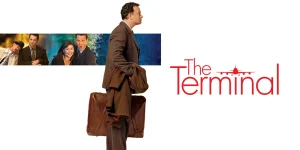
- Tom Hanks (actor). Five feature collaborations — Saving Private Ryan (1998), Catch Me If You Can (2002), The Terminal (2004), Bridge of Spies (2015), and The Post (2017) — plus three WWII-themed miniseries they produced together: Band of Brothers, The Pacific, and Masters of the Air.
- Janusz Kamiński (cinematographer). His DP on almost every film since Schindler’s List (1993).
- Michael Kahn (editor). Cut nearly every Spielberg film from Close Encounters (1977) onward.
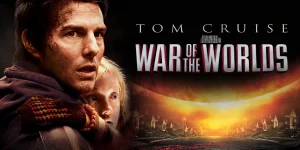
- David Koepp (screenwriter). Writer of Jurassic Park, The Lost World, War of the Worlds, Indiana Jones and the Kingdom of the Crystal Skull, and Disclosure Day.
- Harrison Ford. Star of all five Indiana Jones films, which Spielberg directed four of.
The pattern is the same: once Spielberg finds someone whose instincts align with his, he tends to keep them close for decades.
Why Doesn’t Steven Spielberg Direct Horror Movies Anymore?
Spielberg’s early career leaned heavily on suspense and dread—Duel (1971), Jaws (1975), and Poltergeist (1982), which he wrote and produced. The persistent question “Did Spielberg actually direct Poltergeist?” has never been cleanly resolved: he was on set nearly every day and storyboarded extensively, but the credited director was Tobe Hooper, and Spielberg himself publicly credited Hooper with delivering the finished film.
The reason Spielberg didn’t direct Poltergeist outright is simple: he was under an exclusive contract with Universal to direct E.T. the Extra-Terrestrial, which opened in the same summer of 1982. His deal legally prohibited him from directing another feature simultaneously—so he produced Poltergeist instead.
After E.T., Spielberg steered away from outright horror. He has said in interviews that becoming a father changed what he wanted to put on screen, and his work tilted toward family adventure, historical drama, and human-scale stories. He still flirts with genre tension—Jurassic Park, War of the Worlds, and Disclosure Day all use horror grammar—but he hasn’t returned to pure horror as a director.
What Is Steven Spielberg’s Latest Movie?
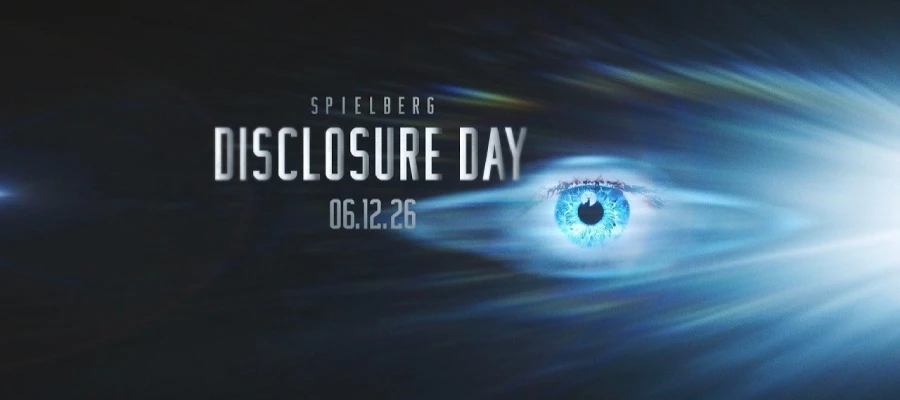
Spielberg’s latest film is Disclosure Day, which opened in theaters and IMAX on June 12, 2026. It marks his return to big-concept science fiction and UFO themes for the first time in over two decades. It arrived on digital platforms on July 20, 2026, so it can now be bought or rented at home.
The plot follows a global “disclosure event” in which humanity learns that extraterrestrial life exists, centered on cybersecurity specialist Daniel Kellner (O’Connor), who steals classified files, and Kansas City meteorologist Margaret Fairchild (Blunt), whose live broadcast changes everything. Spielberg has said the project was partly inspired by his father’s lifelong belief in extraterrestrial life and by a 2017 New York Times investigation into the Pentagon’s UFO program.
Reviews were largely positive, though the film’s roughly $233 million worldwide gross against a $115 million budget made it a modest commercial performer.
Steven Spielberg vs. Martin Scorsese: Who Does It Better?
Spielberg and Scorsese are the two most decorated American directors of the last fifty years. They are also close friends who have championed each other’s work for decades—but their cinema pulls in very different directions.
Storytelling
- Spielberg: Mythic, emotional, populist. He tells stories that aim for the widest possible audience and often carry a redemptive arc.
- Scorsese: Morally ambivalent, character-driven, often about men who fail themselves. His endings rarely feel clean.
Visual Style
- Spielberg: The invisible long take, seamless blocking, light used almost spiritually. The camera disappears into the story.
- Scorsese: Showy, kinetic camera moves, freeze frames, voice-over, and hard cuts on music. The camera is the story.
Subject Matter
- Spielberg: Dinosaurs, aliens, WWII, the Holocaust, American myth.
- Scorsese: New York, crime, Catholicism, guilt, American rot.
Box Office vs. Prestige
- Spielberg is the highest-grossing director of all time and a 2-time Best Director Oscar winner.
- Scorsese holds more Best Director nominations (10) than any active filmmaker, with one win (The Departed, 2006).
Verdict
There isn’t a winner—there are two different kinds of greatness:
- If you want cinema that makes you feel, hands-down: Spielberg.
- If you want cinema that makes you uncomfortable, unmistakably: Scorsese.
Modern American film wouldn’t exist as we know it without either of them.