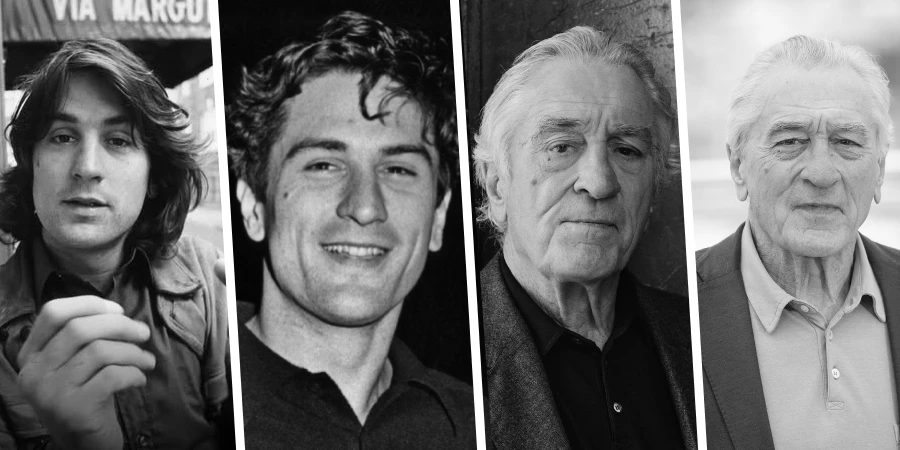

Robert De Niro is one of those rare figures in film history who transcends the idea of “actor.” Over six decades, he has inhabited killers, comedians, street-level saints, and aging gangsters with equal conviction. His name alone signals a certain seriousness of intent. Directors trust him. Audiences follow him. And even when a film falls short, his performance rarely does.
This piece covers everything worth knowing: his roots, his partnerships, his preparation methods, his business empire, his family, and the political voice he has deployed more loudly with every passing year.
Who is Robert De Niro?
Robert De Niro was born on August 17, 1943, in Manhattan, New York. His parents were both artists. His father, Robert De Niro Sr., was a painter; his mother, Virginia Admiral, was also a painter and poet. Growing up in Little Italy and Greenwich Village gave him an early education in the textures of urban life, an education that would surface again and again on screen.
He began studying acting as a teenager, and his intensity was evident from the start. After years of stage work and small film roles, he broke through decisively in the early 1970s. His collaboration with director Martin Scorsese, which began in earnest with that period, would define not just his own career but the shape of American cinema for a generation.
Robert De Niro and Martin Scorsese: Movies Together
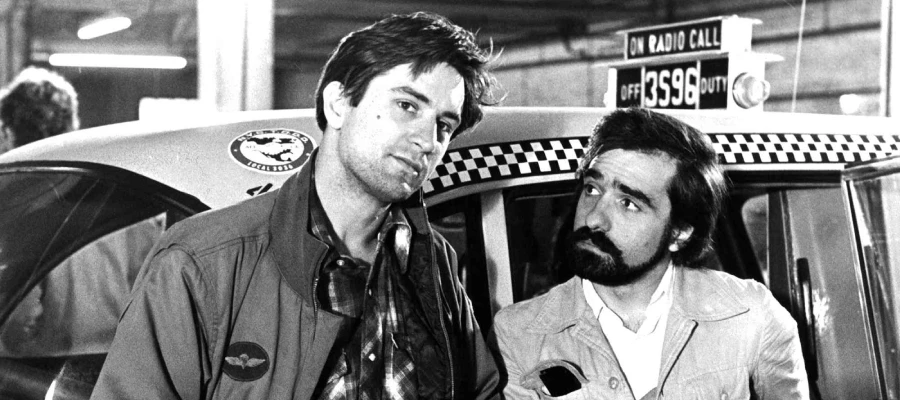
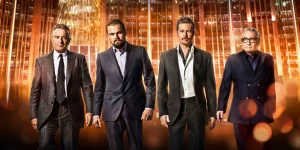
No creative partnership in modern American cinema has been more fruitful than the one between De Niro and Scorsese. Their collaboration produced some of the most acclaimed films of the past fifty years, and it reshaped what audiences expected from crime dramas and character studies alike.
Their working relationship is built on a rare mutual understanding. Scorsese gives De Niro the space to work deeply into a character; De Niro gives Scorsese performances that anchor even the most ambitious storytelling.
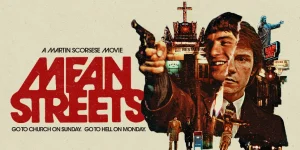
- 1973: Mean Streets
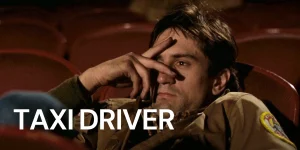
- 1976: Taxi Driver
- 1977: New York, New York
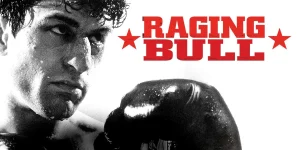
- 1980: Raging Bull
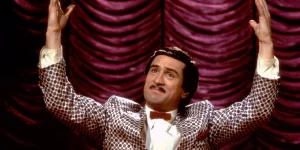
- 1983: The King of Comedy
- 1986: The Color of Money
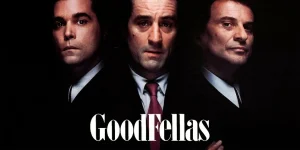
- 1990: Goodfellas
- 1991: Cape Fear
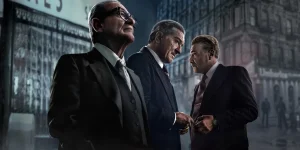
- 2019: The Irishman
Each film pushed both men into new territory. Raging Bull demanded physical transformation and emotional exposure. The Irishman asked them both to confront mortality. Their reunion on that Netflix epic, decades after Goodfellas, felt like a genuine artistic statement rather than a nostalgia exercise.
Robert De Niro and Al Pacino: Every Movie They Made Together
Hollywood has produced many great rivalries and partnerships, but the pairing of De Niro and Pacino occupies a category of its own. Both emerged from the same New York theatrical tradition, both trained rigorously, and both became synonymous with the golden era of American crime cinema.
Interestingly, despite sharing the screen in The Godfather Part II, they have relatively few direct scenes together across their careers. Each film they share carries enormous weight simply because of who they are.
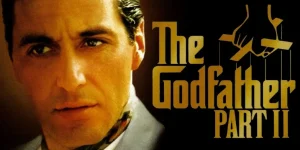
- The Godfather Part II (1974) — De Niro plays the young Vito Corleone; Pacino plays Michael. Their timelines barely intersect, yet the film represents a milestone for both.
- Heat (1995) — Their first direct, sustained scenes together. The coffee shop sequence alone justifies the entire production.
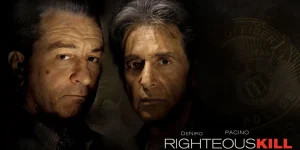
- Righteous Kill (2008) — A thriller that trades on their combined presence more than its script deserves.
- The Irishman (2019) — Pacino joins De Niro in Scorsese’s Netflix epic, playing union boss Jimmy Hoffa.
From Little Italy to the Godfather: Italian Roots and the Young Vito Corleone Role
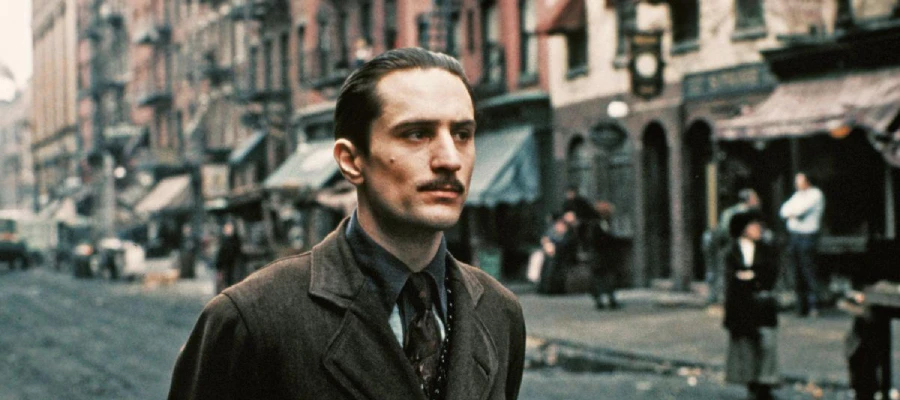
De Niro’s Italian-American identity is not incidental to his career. Growing up in Little Italy shaped his instincts, his ear for dialect, and his understanding of the community codes that run through so many of his most famous roles.
His performance as the young Vito Corleone in The Godfather Part II remains one of cinema’s great feats of characterization. Marlon Brando had already defined the role. De Niro chose not to imitate him but to find the younger version of the same man from the inside out.
To prepare, he learned Sicilian dialect, traveled to Sicily, and built the physical bearing of a man who would one day command respect through stillness alone. The performance earned him his first Academy Award.
That work set a template for how he would approach difficult roles throughout his career: total immersion, meticulous research, and a refusal to settle for approximation.
Method Acting and Extreme Transformations: How De Niro Prepares for a Role
De Niro’s preparation process is the stuff of Hollywood legend, and most of the stories are true. He does not simply learn lines; he reconstructs a life. His approach draws on the Method tradition but extends it into territory that most actors never visit.
Some of his most documented preparations include:
- Raging Bull (1980) — He trained seriously with Jake LaMotta, then deliberately gained around 60 pounds to play the older, heavier version of the boxer.
- Taxi Driver (1976) — He drove a taxi in New York at night, improvised the mirror scene that became one of cinema’s most quoted moments.
- Cape Fear (1991) — He had his teeth filed down and spent considerable time working on the character’s physical presence.
- The Godfather Part II (1974) — He learned Sicilian dialect and studied the historical environment of early 20th century New York.
- Midnight Run (1988) — He spent time with bounty hunters to understand the work from the inside.
For De Niro, preparation is not a performance in itself. It is a private act of understanding. By the time cameras roll, he knows a character so thoroughly that the performance can look effortless even when it required enormous effort to build.
Tribeca, the Film Festival, and De Niro’s New York Legacy
After the September 11 attacks devastated lower Manhattan, De Niro co-founded the Tribeca Film Festival in 2002. His motivation was partly civic: he wanted to help revive the neighborhood where he had built his own production company and invested deeply in New York’s film culture.
The festival grew into one of the most prominent in North America. It expanded beyond film to include television, music, and interactive media, and it has consistently championed independent voices that might otherwise struggle to find audiences.
Moreover, Tribeca reflects something consistent in De Niro’s public identity: a profound, almost possessive love for New York City. His films have returned to the city’s streets again and again. His businesses are rooted there. His political advocacy references it constantly. New York is not just where he was born; it is the landscape that made him legible to himself as an artist.
How Many Oscars Does Robert De Niro Have? Nominations and Career Honors
De Niro has won two Academy Awards and received a total of eight nominations over his career, a record that reflects both his consistency and the competitive field in which he has always operated.
- Won: Best Supporting Actor — The Godfather Part II (1975)
- Won: Best Actor — Raging Bull (1981)
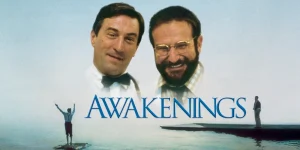
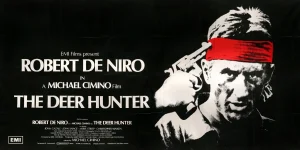
- Nominated: Best Actor — Taxi Driver, The Deer Hunter, Cape Fear, Awakenings, Silver Linings Playbook, The Irishman
Beyond the Oscars, he has received a Golden Globe, a SAG Lifetime Achievement Award, the Cecil B. DeMille Award, and the Presidential Medal of Freedom. In 2016, he received a Kennedy Center Honor. Few careers in entertainment accumulate recognition across so many decades.
Robert De Niro’s Net Worth: Movies, Nobu, and Business Ventures
De Niro’s wealth comes from multiple sources. His acting fees have been substantial across decades of leading and supporting roles, but his business interests add a parallel income stream that has grown significantly since the 1990s.
His most prominent business venture is Nobu, the global chain of Japanese restaurants he co-founded with chef Nobu Matsuhisa and producer Meir Teper. What started as a single Manhattan restaurant has expanded to dozens of locations worldwide, including hotel properties that carry the Nobu brand.
Additionally, he co-founded the Greenwich Hotel in Tribeca, a boutique property that has become one of New York’s more distinguished places to stay. His production company, TriBeCa Productions, has developed film and television projects over several decades.
His estimated net worth is widely reported in the range of several hundred million dollars, though precise figures vary by source.
Family, Children, and Life Off-Screen
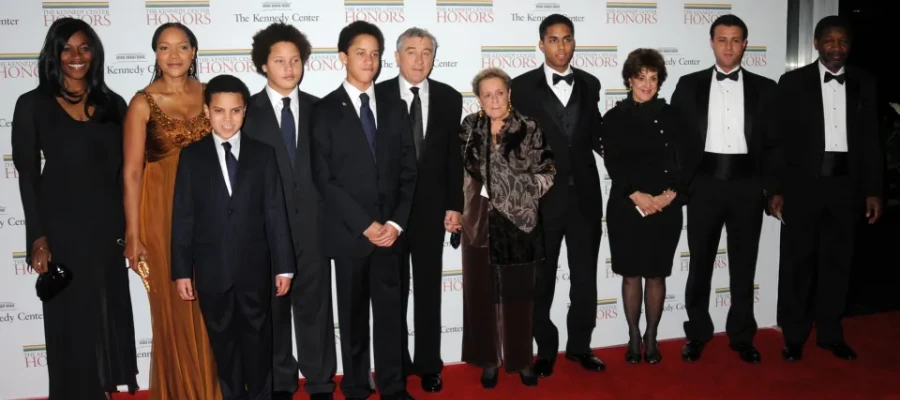
De Niro has seven children and a personal life that he has generally kept at some distance from public scrutiny, even as his professional life has been documented exhaustively.
- He was married to actress Diahnne Abbott from 1976 to 1988.
- He later had a long relationship with actress Toukie Smith.
- He married actress and model Grace Hightower in 1997; they separated and later reconciled before splitting definitively.
- In 2023, he welcomed his seventh child with partner Tiffany Chen.
He has spoken about fatherhood in interviews with increasing candor as he has gotten older, particularly about raising children while managing a demanding career. His youngest child arrived when he was in his late seventies, a fact he has addressed publicly with characteristic directness.
Robert De Niro’s Political Views and Criticism of Donald Trump
De Niro has been a consistent and vocal critic of Donald Trump, and his commentary has intensified over time. He has spoken at Democratic National events, appeared at press conferences related to Trump’s legal proceedings, and delivered remarks at awards ceremonies that made headlines for their directness.
His political identity is rooted in a broadly progressive, New York Democratic tradition. He has supported causes related to arts funding, immigration, and civil liberties over many years. However, his public profile as a political figure grew most sharply in the Trump era.
He has also been open about the emotional toll of political engagement, noting in interviews that he feels a sense of obligation to speak given his platform. Critics argue he overreaches; supporters see him as a rare celebrity voice willing to accept the backlash that comes with sustained political commitment.
Why Robert De Niro Still Takes New Roles
A reasonable question hangs over any artist of De Niro’s stature and age: why keep working? The answer, in his case, seems to involve both genuine artistic appetite and the practical realities that keep most people working longer than they planned.
He has acknowledged in interviews that he works, in part, because he has financial responsibilities, including the costs of raising a large family. That candor is refreshing in an industry where aging stars often frame continued work purely in terms of creative fulfillment.
Nonetheless, his recent work also demonstrates real selectivity in certain projects. The Irishman required him to invest years into a Scorsese production that was clearly a late-career statement. His willingness to submit to digital de-aging technology and revisit the gangster milieu one more time suggested genuine artistic motivation beyond a paycheck.
Furthermore, De Niro has a well-documented discomfort with retirement as a concept. He has said that acting keeps him connected to something essential. For a man who has spent six decades inside other people’s lives, stepping away entirely may simply feel like the stranger choice.
At eighty, Robert De Niro remains one of the most recognizable faces in world cinema, not because he refuses to age, but because he has always found ways to make age itself part of the performance.