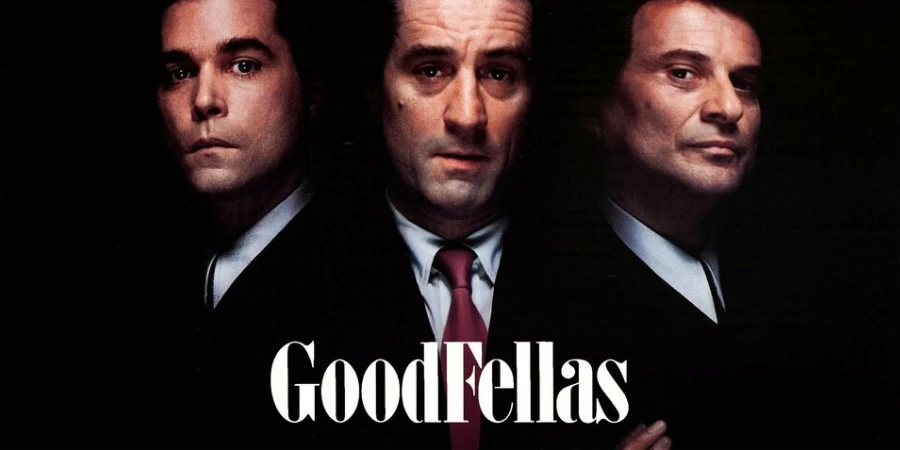

Few films have captured the seductive rot of organized crime as viscerally as Goodfellas. Martin Scorsese’s 1990 masterpiece drops you into the glittering, blood-soaked world of the mob and never lets you look away. Henry Hill’s rise and fall is not just a crime story; it is a portrait of American ambition stripped of all its dignity. This film remains, decades later, one of the most technically brilliant and morally complex works in cinema history.
Detailed Summary
A Kid From the Neighborhood
Henry Hill grows up in a working-class Brooklyn neighborhood in the 1950s, watching the local mobsters with pure, uncomplicated admiration. To young Henry, these men represent power, respect, and freedom from ordinary life. He drops out of school and starts running errands for the Lucchese crime family associate Paul Cicero, known as Paulie.
Henry quickly learns the rules of street life: loyalty above all, silence as a virtue, violence as a tool. His natural charm and eagerness make him a favorite. Meanwhile, he forges a close friendship with Jimmy Conway and the volatile, unpredictable Tommy DeVito.
Learning the Trade
Henry gets his first real taste of mob business through small-time hustles, including selling stolen cigarettes and running protection. His first arrest teaches him an important lesson: say nothing, and the crew rewards you. Paulie and the others celebrate his silence with cash and respect.
In contrast to the legitimate world he left behind, the criminal life offers Henry constant validation. He earns money, earns status, and earns the admiration of everyone around him. Scorsese presents this seduction without apology, letting the audience feel its pull before showing the cost.
The Copacabana and Karen
One of cinema’s most famous sequences arrives when Henry takes Karen on a date. He walks her through the back entrance of the Copacabana nightclub, weaving through kitchens and corridors, tables appearing magically as staff scramble to accommodate him. Karen is dazzled, and the audience is too.
Karen Hill becomes Henry’s girlfriend, then his wife, despite learning quickly that his world is dangerous and dishonest. She finds herself drawn to it nonetheless. Her voiceover narration adds a sharp, sometimes darkly funny perspective on mob life from the outside looking in.
Making His Bones
Tommy DeVito’s explosive violence defines much of the film’s middle section. He kills Billy Batts, a made man from the Gambino family, after Batts publicly humiliates him. Jimmy and Henry help cover it up, burying the body and later moving it when authorities get too close.
Tommy’s murder of the young waiter Spider in a card game is equally chilling, and even more casual. He shoots Spider for talking back, and the crew barely pauses. Scorsese shoots these moments with a matter-of-fact brutality that is far more disturbing than theatrical violence would be.
The Lufthansa Heist
Jimmy Conway orchestrates the Lufthansa heist in 1978, one of the largest cash robberies in American history at that time. The crew pulls off the job and walks away with millions. However, Jimmy grows paranoid about loose ends and begins systematically eliminating everyone involved.
Bodies pile up at an alarming rate. Jimmy’s partners, their girlfriends, anyone who spent lavishly and drew attention, all disappear. Henry watches this unfold and begins to sense that no one around Jimmy is truly safe.
Henry’s Spiral
Henry’s personal life fragments under the pressure of addiction and infidelity. He keeps a mistress named Janice while Karen raises their children. His cocaine habit, initially a sideline business, consumes him entirely.
Consequently, his judgment deteriorates. He starts dealing drugs despite Paulie’s strict prohibition against it. Henry operates in a fog of paranoia, cash, and cocaine, setting himself on a collision course with disaster.

Movie Ending
Henry’s final day as a free criminal is a masterpiece of paranoid filmmaking. Scorsese crosscuts between Henry cooking Sunday sauce, packaging drugs, picking up his brother, arranging a weapons deal, and keeping one eye on a helicopter he believes is tracking him. It is a sequence built entirely on anxiety, and it works brilliantly.
Ultimately, federal agents arrest Henry. He faces years in prison and the certainty of being killed by his own crew if he stays silent, especially since Paulie has already distanced himself. Facing this impossible position, Henry makes the decision that defines everything: he becomes an FBI informant.
He testifies against Paulie Cicero and Jimmy Conway, dismantling the operation he spent his entire life building. Jimmy, who Henry strongly suspects ordered the killing of several associates including Karen’s friend, gets convicted and sent to prison. Paulie receives a long sentence as well. Tommy DeVito, notably, never makes it to this point; he gets shot execution-style when the mob lures him in with the false promise of being made, retribution for killing Billy Batts.
Henry and Karen enter the Witness Protection Program, relocating to an anonymous suburban life that Henry finds utterly suffocating. His final monologue is devastating in its honesty. He misses the life. He misses being somebody. In his new existence, he is just a nobody standing in line at the deli, and he knows it.
Scorsese punctuates the ending with Tommy DeVito (Joe Pesci) turning to the camera and firing his gun, a direct reference to Edwin S. Porter’s 1903 silent film The Great Train Robbery. It is a wink at cinema history, and it closes the film on a note of playful defiance that somehow makes the whole tragedy land even harder.
Are There Post-Credits Scenes?
Goodfellas does not include any post-credits scenes. Once the film ends, it ends completely. There are no bonus sequences, no additional footage, and no teases for future projects. Walk in, watch, and leave with a lot to think about.
Type of Movie
Goodfellas is a crime drama with strong biographical elements, adapted from a true story. Its tone shifts deliberately between exhilarating and deeply unsettling. Scorsese refuses to let it sit comfortably in either camp.
In addition, the film carries a dark satirical edge in places, particularly in Karen’s narration and in the absurd bureaucracy of mob loyalty. It is propulsive, kinetic, and relentlessly engaging while never glamorizing violence without consequence.
Cast
- Ray Liotta – Henry Hill
- Robert De Niro – Jimmy Conway
- Joe Pesci – Tommy DeVito
- Lorraine Bracco – Karen Hill
- Paul Sorvino – Paul Cicero
- Frank Sivero – Frankie Carbone
- Tony Darrow – Sonny Bunz
- Mike Starr – Frenchy
- Frank Vincent – Billy Batts
- Chuck Low – Morrie Kessler
- Debi Mazar – Sandy
- Illeana Douglas – Rosie
- Samuel L. Jackson – Stacks Edwards
Film Music and Composer
Goodfellas relies almost entirely on a carefully curated selection of popular music rather than a traditional score. Scorsese used rock and roll, pop, and R&B tracks to anchor each era of Henry Hill’s life. The result is one of the most iconic music-driven soundtracks in film history.
Notable tracks include “Rags to Riches” by Tony Bennett, “Layla” by Derek and the Dominos (used over the chilling body-discovery montage), and “Gimme Shelter” by the Rolling Stones. Scorsese used Stones tracks repeatedly throughout his career, and Goodfellas shows exactly why that partnership works so well.
Music supervisor Robbie Robertson, formerly of The Band, helped assemble the soundtrack. His understanding of how music shapes emotion and memory made him an ideal collaborator for Scorsese’s vision of using songs almost as chapter markers.
Filming Locations
Principal photography took place primarily in New York, with locations spread across Queens, the Bronx, and other boroughs. These neighborhoods were not just backdrops; they were characters in themselves, grounding the film in the specific texture of working-class New York.
The Copacabana sequence was shot at a location that allowed the famous long take to flow naturally through back corridors and into the main room. Scorsese wanted the camera to mirror Henry’s experience: smooth, confident, and in complete control. The location choice made that possible.
Some interior scenes were filmed in New Jersey. For instance, the diner scenes and certain suburban sequences took advantage of New Jersey’s proximity to New York while providing slightly different visual environments. The overall geography of the film feels authentic because it largely is.
Awards and Nominations
Goodfellas received six Academy Award nominations, including Best Picture and Best Director for Scorsese. Joe Pesci won Best Supporting Actor for his terrifying, electric performance as Tommy DeVito. Lorraine Bracco received a nomination for Best Supporting Actress.
Scorsese himself did not win that year, losing to Kevin Costner for Dances with Wolves, a decision that film history has not been particularly kind to. Furthermore, the film won a BAFTA for Best Editing, recognizing Thelma Schoonmaker’s extraordinary work. It also took home the Silver Lion at the Venice Film Festival.
Behind the Scenes Insights
- Joe Pesci improvised the “funny how” scene based on a real encounter he had with a mobster early in his life, and Scorsese kept it almost entirely intact after workshopping it with the cast.
- Ray Liotta was not the first choice for Henry Hill; Scorsese considered several other actors before Liotta’s audition convinced him completely.
- Lorraine Bracco turned down the role of Carmela Soprano years later specifically because she did not want to repeat a similar character type after Karen Hill.
- Scorsese and editor Thelma Schoonmaker worked obsessively on the rhythm of each sequence, treating the editing almost like a musical composition.
- Robert De Niro spent considerable time researching Jimmy Burke, the real man behind Jimmy Conway, meeting with former associates and studying his behavior patterns.
- The famous Copacabana tracking shot required significant rehearsal and coordination with the restaurant staff, who were actual employees of the venue used for filming.
- Paul Sorvino found the role of Paulie emotionally difficult because he personally found the violence in the script disturbing, though his discomfort arguably enriched his performance’s quiet menace.
Inspirations and References
Goodfellas is based on Nicholas Pileggi’s nonfiction book Wiseguy, published in 1985. Pileggi co-wrote the screenplay with Scorsese, bringing his deep journalistic knowledge of organized crime to the script. Henry Hill himself cooperated extensively with Pileggi for the book.
Scorsese drew visual and structural inspiration from earlier crime films, including White Heat and classic Warner Bros. gangster pictures. However, he deliberately subverted the genre’s usual moral framing. Where older films condemned their protagonists clearly, Goodfellas lets the audience get uncomfortably comfortable first.
Alternate Endings and Deleted Scenes
Scorsese did not pursue radically alternate endings for Goodfellas; the film’s conclusion follows Pileggi’s source material closely. Some scenes were trimmed for pacing, particularly in the early sections covering Henry’s adolescence. These cuts helped maintain the film’s propulsive momentum.
Certain dialogue exchanges were shortened or removed during editing when Scorsese and Schoonmaker felt they slowed the rhythm. No officially released alternate ending exists. The film as released reflects Scorsese’s complete and deliberate vision without significant compromise.
Book Adaptations and Differences
Goodfellas is based directly on Wiseguy by Nicholas Pileggi. Warner Bros. changed the title from Wiseguy to Goodfellas because a television series at the time already used the Wiseguy name. The core narrative follows the book very closely.
Some characters were condensed or composited for the film. Certain events were compressed or reordered slightly to serve dramatic pacing. On the other hand, the essential facts of Henry Hill’s life, including his testimony and entrance into witness protection, remain faithful to Pileggi’s research.

Memorable Scenes and Quotes
Key Scenes
- The Copacabana tracking shot: a single, continuous take following Henry and Karen through the back entrance of the nightclub, establishing his power and her seduction in one breathtaking movement.
- “Funny how?” scene: Tommy corners Henry over the word “funny,” and the tension becomes almost unbearable before he reveals it was a joke, leaving everyone laughing nervously.
- The Layla sequence: Derek and the Dominos’ piano coda plays over a montage of frozen bodies being discovered, mixing beauty with horror in a way that feels genuinely disturbing.
- Billy Batts’ murder: what begins as a tense confrontation in a bar ends with Tommy and Jimmy beating Batts to death, crossing a line that will eventually cost Tommy his life.
- Henry’s final day: the paranoid, helicopter-tracked, drug-fueled chaos of Henry’s last hours as a free criminal, edited at a frantic pace that mirrors his mental state perfectly.
- Tommy’s fake execution: Tommy arrives believing he is about to be made, only to be shot in the back of the head, a brutally efficient scene with no musical fanfare.
Iconic Quotes
- “As far back as I can remember, I always wanted to be a gangster.” – Henry Hill
- “Funny how? Like I’m a clown? I amuse you?” – Tommy DeVito
- “Never rat on your friends and always keep your mouth shut.” – Jimmy Conway
- “I’m an average nobody. I get to live the rest of my life like a schnook.” – Henry Hill
- “You’re a funny guy, Morrie. I like you, that’s why I’m gonna kill you last.” – Jimmy Conway
Easter Eggs and Hidden Details
- The closing shot of Tommy firing at the camera directly references the final image of Edwin S. Porter’s 1903 silent film The Great Train Robbery, one of cinema’s earliest crime narratives.
- Scorsese himself appears briefly in the film as Sandy’s john, viewed through a window, a blink-and-miss-it cameo that rewards attentive viewers.
- Several of the extras in the film were real-life figures connected to New York’s street culture, lending certain crowd scenes an authentic texture that trained actors rarely replicate.
- The freeze-frame on young Henry’s face near the film’s opening mirrors the freeze-frame used much later in the final scene, creating a bookend structure that rewards viewers who catch it.
- Music cues shift subtly as Henry’s drug use increases, with the choices becoming more chaotic and less period-appropriate, mirroring his deteriorating grip on reality.
- Karen’s narration occasionally contradicts or slightly misremembers details that Henry’s narration covered, a subtle nod to the unreliable nature of memory in true crime storytelling.
Trivia
- The film runs approximately 146 minutes and contains roughly 300 scenes, an extraordinarily high number that contributes to its relentless kinetic energy.
- Joe Pesci won his Academy Award for Best Supporting Actor despite having relatively limited screen time compared to Liotta and De Niro; every minute he appears is simply impossible to ignore.
- Scorsese reportedly screened I Vitelloni by Federico Fellini for his cast before filming began, using it as a reference for capturing the textures of a tight male social circle.
- Henry Hill himself had a cameo somewhere in the film, though it is extremely difficult to spot.
- The film was shot in roughly 12 weeks, an impressive pace given its visual complexity and the number of locations involved.
- Ray Liotta later said that filming the “funny how” scene was genuinely nerve-wracking because Pesci’s intensity was entirely unpredictable even during takes.
- Scorsese’s mother, Catherine Scorsese, appears in the film as Tommy’s mother, serving a midnight spaghetti dinner in a darkly comic scene that briefly pauses the film’s violence.
Why Watch?
Goodfellas earns its reputation as one of the greatest films ever made through sheer craft, energy, and moral honesty. Scorsese never lets you forget that glamour and brutality share the same address. Moreover, the performances from Liotta, De Niro, and Pesci reach a level of authenticity that genuinely feels lived-in rather than acted. This film does not just show you the mob; it makes you understand why anyone would ever want to belong to it.
Director’s Other Movies
- Mean Streets (1973)
- Taxi Driver (1976)
- Raging Bull (1980)
- The King of Comedy (1982)
- The Color of Money (1986)
- Cape Fear (1991)
- The Age of Innocence (1993)
- Casino (1995)
- Gangs of New York (2002)
- The Aviator (2004)
- The Departed (2006)
- Shutter Island (2010)
- The Wolf of Wall Street (2013)
- Silence (2016)
- The Irishman (2019)
- Killers of the Flower Moon (2023)