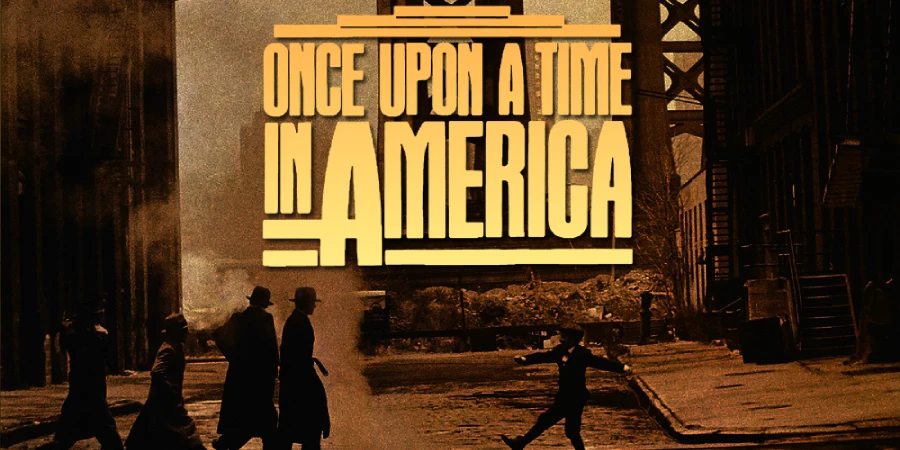

Sergio Leone spent over a decade trying to bring Once Upon a Time in America to life, and the result is one of cinema’s most brutal and beautiful examinations of memory, guilt, and the lies men tell themselves. Running nearly four hours in its full cut, this film does not simply tell a gangster story; it dismantles the very idea of one. At its core, it asks whether a man can truly reckon with the worst thing he has ever done, and it answers that question with devastating, unhurried honesty.
Detailed Summary
The Opium Den Opening and Fractured Timeline
Leone opens the film in 1933, with associates of Noodles (Robert De Niro) hunting him down at a Chinese opium den in New York. Someone has informed on the gang, and three of Noodles’ closest friends have been killed. Noodles flees with a suitcase full of money, only to find it empty when he reaches the locker where he left it.
This sequence immediately establishes the film’s fractured, non-linear structure. Leone moves fluidly between 1933, the 1960s, and the boys’ childhood in the early 1920s. Memory here is not a straight line; it is a fog that Noodles keeps trying to see through.
The Lower East Side Childhood
In the 1920s flashbacks, young Noodles and young Max (played as a boy by Rusty Jacobs) form their bond on the streets of a Jewish immigrant neighborhood. They run small scams, navigate brutal street gangs, and establish their loyalty to each other early. Leone lingers on these scenes with tremendous warmth, making the eventual betrayal all the more shattering.
Young Noodles also develops his obsessive, complicated feelings for Deborah (Jennifer Connelly as a girl). He watches her dance through a hole in a wall, and that image of desire and distance follows him for the rest of his life. In addition, a key act of violence happens early: Noodles kills a local thug named Bugsy to protect Max, landing him in reform school.
The Rise of the Gang
Once released, Noodles reunites with Max, Patsy, and Cockeye. Together they build a bootlegging operation during Prohibition, working under and then alongside corrupt union bosses and crooked police. Their success grows quickly, and Leone portrays this rise with both glamour and unease.
Max, however, grows increasingly reckless and ambitious. He wants bigger scores, bigger risks, and more power. Noodles, meanwhile, remains the more cautious voice, though he follows Max regardless. Consequently, the tension between these two men quietly drives every scene they share.
Noodles and Deborah
Adult Noodles (De Niro) takes Deborah (Elizabeth McGovern) on an elaborate, romantic dinner date in a scene of extraordinary beauty. He rents out an entire restaurant just for her. She tells him she is leaving for Hollywood and a career as an actress, and the evening ends in Noodles raping her in the back of a limousine, one of the film’s most disturbing and unflinching moments.
Leone does not soften this scene or excuse Noodles. It poisons the audience’s sympathy for him in a precise, purposeful way. This act of violence against someone he claims to love reveals the deep rot at his core long before the film’s final revelations.
The Betrayal
Max proposes a suicidal final heist: robbing the Federal Reserve Bank. Noodles, convinced Max and the others will die if they go through with it, makes the agonizing choice to tip off the police himself. He believes he is saving his friends by getting them arrested, accepting that he will be seen as a traitor.
Instead, three bodies turn up, burned beyond recognition and identified as Max, Patsy, and Cockeye. Noodles spends the next three decades believing his tip caused the deaths of his best friends. Furthermore, the gang’s entire cash reserve vanishes. He carries that guilt like a stone for the rest of his life.
The 1960s Investigation
In the 1960s timeline, an elderly Noodles returns to New York after receiving a mysterious invitation connected to the gang’s old suitcase. Someone has moved the coffins of his dead friends and arranged for Noodles to return. He reconnects with an aged Deborah, now a successful stage actress, and tries to piece together who has summoned him and why.
His investigation leads him to a powerful figure named Christopher Bailey. Noodles gradually realizes that Bailey is Max, alive and having faked his own death decades earlier. Max stole the gang’s money, used it to build a vast financial empire, and let Noodles believe he had caused his friends’ deaths all along.

Movie Ending
Noodles confronts Max directly, and the meeting between these two old men carries the full weight of every scene that preceded it. Max reveals the truth plainly: he arranged the entire betrayal himself, substituting three other bodies for those of the gang. He built his power on Noodles’ guilt.
Max tells Noodles that a Senate investigation is closing in on him, and that men are coming to kill him. He essentially asks Noodles to be the one to do it, offering himself up as a final transaction between them. Noodles refuses. He tells Max he already gave him to the police once and that it cost him everything; he will not give him the satisfaction of a meaningful death at his hands.
Max walks out and is killed by men waiting outside. Noodles watches from a distance. Leone does not show the killing directly; he lets the sound and Noodles’ face carry it. The moment is deliberately anticlimactic, which is precisely the point.
Leone then cuts back to 1933 and the opium den. Noodles lies in his bunk, and a slow, opium-hazed smile crosses his face. Many viewers and critics read this as the film’s most radical suggestion: that perhaps everything after the opium den is a dream, a fantasy Noodles constructed to process his guilt. However, Leone himself left this ambiguous, and the film supports multiple readings.
On the other hand, a more straightforward reading holds that the 1960s events are real and that the final smile reflects Noodles retreating into the only peace available to him, chemically induced oblivion. Either way, there is no redemption here, no clean resolution. Leone closes the film on a man escaping into his own mind because the truth is too heavy to carry awake.
Are There Post-Credits Scenes?
Once Upon a Time in America contains no post-credits scenes. Leone was not interested in that kind of epilogue. When the film ends, it ends completely.
Type of Movie
This is an epic crime drama with strong elements of tragedy and memory film. Its tone shifts deliberately between nostalgia, brutality, melancholy, and moral horror. It does not operate like a conventional gangster film; it deconstructs the genre from the inside.
In contrast to films that glorify criminal ambition, Leone consistently frames the gangster life as a source of corruption and loss. There is beauty in his imagery, but it always contains a shadow.
Cast
- Robert De Niro – Noodles (David Aaronson)
- James Woods – Max Bercovicz
- Elizabeth McGovern – Deborah Gelly
- Joe Pesci – Frankie Monaldi
- Burt Young – Joe Monaldi
- Tuesday Weld – Carol
- Treat Williams – James Conway O’Donnell
- Danny Aiello – Police Chief Aiello
- Jennifer Connelly – Young Deborah Gelly
- Rusty Jacobs – Young Max / Young Noodles (dual role)
- Scott Tiler – Young Noodles
Film Music and Composer
Ennio Morricone composed the score, and it ranks among his finest work in a career full of masterpieces. He wrote the music before filming began, a practice Leone famously insisted upon, allowing the score to shape the pace and mood of the edit itself. Morricone’s themes for this film feel less like accompaniment and more like a second narrator.
The most distinctive track uses the pan flute, played by Gheorghe Zamfir, and its haunting, aching sound becomes synonymous with Noodles’ longing and regret. Morricone also incorporates “Yesterday” by the Beatles, slowing and recontextualizing it into something almost unbearably sad. Furthermore, his use of “Amapola,” a popular song of the era, grounds the period sequences in genuine feeling rather than mere nostalgia.



Filming Locations
Leone shot the film across multiple countries, with principal locations in New York City, New Jersey, Italy, and Paris. New York provided the authentic bones of the Lower East Side, though many street-level details required construction and dressing to recreate the 1920s and 1930s properly.
Specific New York locations included areas of Brooklyn and Manhattan. Several interior sequences and European settings were recreated at Cinecittà Studios in Rome, where Leone felt most comfortable and in control. The Grand Central Terminal sequences added a crucial layer of period grandeur that purely studio work could not have matched.
Awards and Nominations
Despite its eventual status as a masterpiece, Once Upon a Time in America received minimal recognition from major awards bodies upon its original release, partly because the butchered American theatrical cut ran only around 139 minutes and received poor reviews. Morricone’s score, however, earned wide recognition and praise. Over time, critical reassessment has placed the film among the greatest ever made, but formal awards recognition remains sparse.
Behind the Scenes Insights
- Leone spent approximately ten years developing the project, acquiring the rights to Harry Grey’s novel and working through numerous screenplay drafts with multiple collaborators.
- Warner Bros. drastically cut the American theatrical release to around 139 minutes and rearranged the scenes into chronological order, destroying the film’s entire structural logic and emotional impact.
- Leone reportedly wept when he saw what the studio had done to his film. He considered the American cut a betrayal of everything the project stood for.
- Robert De Niro and James Woods reportedly had a genuinely tense working relationship on set, which many believe fed directly into the charged dynamic between Noodles and Max on screen.
- Leone was so meticulous about the period detail that he had researchers document every visible shop sign, vehicle, and street element for accuracy.
- Morricone completed major portions of the score before a single frame was shot, and Leone played the music on set during filming to guide the actors’ emotional rhythms.
- Once Upon a Time in America was Leone’s final film. He died in 1989 before completing any subsequent projects.
Inspirations and References
The film adapts The Hoods, a semi-autobiographical novel by Harry Grey (the pen name of Harry Goldberg), a real former New York gangster who wrote the book while in prison. Grey’s account of Jewish organized crime on the Lower East Side during Prohibition gave Leone his foundation. Moreover, the novel’s fragmented, memory-driven narration directly inspired the film’s non-linear structure.
Leone was also deeply influenced by Marcel Proust’s In Search of Lost Time, particularly in how memory functions not as reliable record but as emotional experience shaped by guilt and desire. That Proustian influence elevates the film well beyond a straightforward gangster narrative.
Alternate Endings and Deleted Scenes
The Warner Bros. American cut constitutes, in effect, an alternate version of the film: scenes were rearranged, key sequences cut, and the ending stripped of much of its ambiguity. This version fundamentally changed the story’s meaning rather than simply shortening it. For years, many American audiences only knew this truncated edit.
Subsequent restorations have recovered additional footage, and an extended cut running approximately 251 minutes has been shown at festivals, incorporating scenes that deepen secondary characters and expand certain period sequences. Notably, a scene involving Deborah and an extended sequence at the matzoh factory appear in longer cuts but remain absent from some home video releases. Leone always considered the longest version his true intention.
Book Adaptations and Differences
As noted, the film adapts The Hoods by Harry Grey, but Leone and his screenwriters made significant departures. Grey’s novel is more linear and less philosophically ambitious in its structure. Leone transformed the source material into something far more concerned with memory, guilt, and cinematic time.
Certain characters in the novel have more page time than they receive on screen, and some plot specifics differ. However, the emotional core, a man haunted by what he did and failed to do for the people he loved, transfers directly from the book to the film.

Memorable Scenes and Quotes
Key Scenes
- Young Noodles watching Deborah dance through a hole in the fence wall, a moment of pure longing and voyeurism that establishes his lifelong obsession.
- The opium den opening, with phones ringing across three decades in a single, dizzying cut that announces the film’s structural ambition immediately.
- Noodles’ elaborate restaurant date with Deborah, one of cinema’s most beautiful and ultimately most tragic romantic scenes.
- Noodles calling in the tip to the police and then discovering the burned, unrecognizable bodies of his supposed friends.
- The final confrontation between elderly Noodles and Max, two men stripped of everything except the history between them.
- Max’s limousine pulling away into the dark after the garbage truck scene, with the film’s final shot returning to the opium den smile.
Iconic Quotes
- “I’ve been a two-bit gangster all my life.” – Noodles, accepting his own smallness in comparison to Max’s monstrous ambition.
- “I had them give you a beating you wouldn’t forget for the rest of your life.” – Max, revealing the full scope of his manipulation.
- “Your eyes… they never changed.” – Deborah to Noodles, decades later, a line that carries the whole weight of their shared history.
Easter Eggs and Hidden Details
- Leone hid visual rhymes between the childhood and adult sequences: similar camera angles and framings connect the young characters to their older selves, rewarding close repeat viewings.
- The suitcase containing the gang’s money functions as a recurring visual motif tied to betrayal; every time it appears, someone’s trust is about to be broken.
- Morricone’s score subtly modifies its themes depending on which timeline is active, giving attentive listeners an audio cue about when they are before the intertitles confirm it.
- Harry Grey himself appeared in a small cameo role in the film, a subtle acknowledgment of the autobiographical source material.
- Leone frames several shots of young Noodles and young Deborah to deliberately echo classical paintings, particularly in the dance sequences, linking their story to timeless images of unattainable beauty.
Trivia
- Once Upon a Time in America was the final film Sergio Leone directed before his death in 1989.
- Leone spent over a decade working on the project, making it by far the longest gestation period of any film in his career.
- Robert De Niro reportedly insisted on significant creative input into his character, and Leone respected those contributions throughout production.
- Warner Bros. executives screened the film for test audiences without understanding its non-linear structure, received confused responses, and used that confusion to justify their destructive re-edit.
- At the Cannes Film Festival, the original cut received a lengthy standing ovation.
- James Woods has cited this role as one of the performances he is most proud of in his career.
- The production took place across multiple countries over an extended shoot, making it one of the most logistically complex films Leone ever attempted.
Why Watch?
Once Upon a Time in America is essential viewing because it does something almost no other film attempts: it makes the audience complicit in a man’s self-deception and then strips that deception away with surgical precision. Morricone’s score and Leone’s visual mastery combine to create a four-hour experience that feels both epic and devastatingly intimate. Few films demand as much from their viewers and return so much in exchange.
Director’s Other Movies
- A Fistful of Dollars (1964)
- For a Few Dollars More (1965)
- The Good, the Bad and the Ugly (1966)
- Once Upon a Time in the West (1968)
- Duck, You Sucker! (1971)
Recommended Films for Fans
- The Godfather (1972)
- The Godfather Part II (1974)
- Goodfellas (1990)
- Once Upon a Time in the West (1968)
- Chinatown (1974)
- Miller’s Crossing (1990)
- Sergio Leone: Something to Do with Death (2004)