Three gunmen circle a grave in a cemetery of thousands of crosses, and nobody breathes. That standoff turned a modest Spanish shoot into one of the most imitated sequences in cinema. Sergio Leone’s The Good, the Bad and the Ugly (1966) runs nearly three hours, and it earns every minute with greed, gunfire, and Ennio Morricone’s howling score. Below, we spoil all of it, right down to the last unloaded revolver.
Detailed Summary
Three Names, Three Bloody Introductions
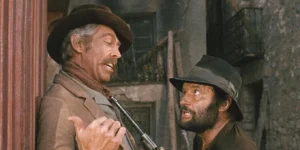
A dusty ghost town opens the film. Three bounty hunters close in on a bandit named Tuco (Eli Wallach), who crashes through a window with a gun in one hand and a leg of meat in the other. A freeze frame stamps him as the Ugly.
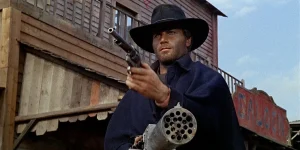
Next, Angel Eyes (Lee Van Cleef) shares a meal with a farmer named Stevens. He wants information about a soldier called Jackson, who now calls himself Bill Carson and knows where a cache of Confederate gold is hidden. Angel Eyes shoots Stevens and his son, then rides to his employer Baker and kills him too, since Stevens had paid him for exactly that.
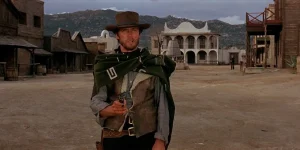
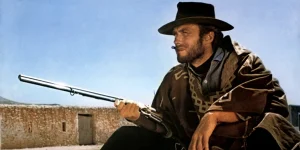
Finally, Blondie (Clint Eastwood) guns down another set of bounty hunters closing in on Tuco. Instead of freeing him, Blondie hauls him to town for the reward. Leone labels him the Good with a wink, because the label barely fits.
The Bounty Scam and a Desert Betrayal
Blondie and Tuco run a con. Blondie collects the bounty, Tuco stands on the gallows, and Blondie shoots the rope at the last second so they can split the cash. Tuco soon demands a bigger share, and Blondie decides the partnership no longer pays.
He abandons Tuco in the desert, seventy miles from water, without a horse. Tuco stumbles into a town, assembles a revolver from spare parts in a gun shop, and robs the owner. Revenge becomes his only occupation.
Tuco catches Blondie mid-scam in a hotel and strings him up from a rafter. A stray cannonball smashes the building, however, and Blondie escapes. Later, Tuco hires three gunmen; Blondie kills all three without leaving his room.
Bill Carson and the Secret of Sad Hill
Tuco tracks Blondie by his campfire, disarms him, and marches him across the desert on foot. Blondie’s face blisters, and Tuco enjoys every step. Then a runaway Confederate ambulance rolls out of the heat, packed with dead soldiers.
One passenger still breathes: Bill Carson. He tells Tuco that two hundred thousand dollars in gold lies buried in Sad Hill Cemetery, but he demands water before naming the grave. While Tuco fetches it, Carson whispers the name to Blondie and dies.
As a result, the two men become hostages to each other. Tuco knows the cemetery; Blondie knows the grave. Tuco suddenly wants his enemy alive.
The Mission and Brother Pablo
Tuco drags Blondie to the San Antonio mission, where his brother Pablo (Luigi Pistilli) serves as a priest. Blondie slowly recovers. Meanwhile, the brothers reunite in a bitter argument about their dead parents and Tuco’s criminal life.
Tuco insists that in their village a man became a priest or a bandit, and Pablo chose the easier road. Pablo strikes him; Tuco strikes back and storms out. He then lies to Blondie about a warm family visit, and Blondie quietly shares a cigar. It is the first real moment of understanding between them.
Captured by the Wrong Army
Wearing stolen Confederate uniforms, the pair salutes a column of gray riders. Dust washes away to reveal Union blue. They land in the Betterville prison camp, a place modeled on the horrors of Andersonville.
At roll call, Tuco answers to the name Bill Carson. Angel Eyes, now a Union sergeant, hears it. He orders the brutal Corporal Wallace (Mario Brega) to beat Tuco while the camp orchestra plays to cover the screams.
Tuco gives up the cemetery. Angel Eyes knows Blondie holds the grave name and, instead of torturing him, proposes a partnership. Tuco leaves on a prison train with Wallace, jumps off, kills the corporal, and breaks his chains with the help of a passing locomotive.
A Bathtub, a Bounty Hunter, and a Reunion
In a shelled, half-abandoned town, the one-armed bounty hunter from the opening finds Tuco in a bathtub. He delivers a speech about revenge. Tuco shoots him through the suds and offers the film’s most quoted advice: shoot, don’t talk.
Nearby, Blondie rides with Angel Eyes and his gang. Tuco recognizes the sound of Blondie’s gun and joins him. Together they wipe out the henchmen, but Angel Eyes slips away.
The Bridge and the Dying Soldier
The road to Sad Hill runs through a Union camp at a river crossing. A drunken Captain (Aldo Giuffrè) explains that both armies bleed daily over a worthless bridge. Blondie and Tuco decide to blow it up so the war moves elsewhere.
While planting dynamite, they trade secrets in case one dies. Tuco names Sad Hill Cemetery; Blondie names the grave of Arch Stanton. The bridge explodes, the captain dies content, and the armies retreat.
Afterward, Blondie finds a dying young soldier in the rubble. He gives the boy a cigar and takes his poncho. Tuco, on the other hand, steals a horse and races ahead to the gold.
Movie Ending
Tuco sprints through Sad Hill’s rings of graves as Morricone’s “The Ecstasy of Gold” swells to a scream. He finds Arch Stanton’s marker and starts digging with a plank. Blondie strolls up and tosses him a shovel; Angel Eyes arrives seconds later and does the same, at gunpoint.
Blondie announces that the money sits in the grave beside Stanton. He writes the name on a stone, places it in the center of the cemetery’s circular plaza, and steps back. Nobody may read it until the shooting stops.
What follows is the three-way standoff known as the Triello. Leone cuts between eyes, hands, and holsters for minutes as “The Trio” builds. Blondie fires first and kills Angel Eyes, who tumbles into an open grave.
Tuco fires too, but his gun only clicks. Blondie emptied it the night before and explains the world’s two kinds of people: those with loaded guns and those who dig. The stone, it turns out, is blank.
The real grave says “Unknown,” and Tuco digs up sacks of gold coins. Blondie then makes him stand on a wobbly cross with a noose around his neck and his hands tied. He leaves half the money, rides off, and Tuco begs, curses, and sobs.
From a distant ridge, Blondie raises his rifle and shoots the rope, one final echo of their old scam. Tuco drops onto his fortune and screams that Blondie is a dirty son of a… and the title card cuts him off. Both men survive; neither will ever trust the other again.
Viewers often ask whether Blondie is truly good. He kills, he cheats, and he abandons a partner in the desert. Nonetheless, he keeps his word about the split and comforts a dying boy, which is more decency than anyone else in the film shows. The poncho he takes also quietly turns him into the Man with No Name from the earlier Dollars films, making this a prequel in spirit.
Are There Post-Credits Scenes?
No. The film front-loads its credits in an animated opening sequence, and the final shot of Tuco screaming leads straight to an end title card. Once Blondie disappears over the ridge, the story is finished.
Type of Movie
The Good, the Bad and the Ugly is a spaghetti western on an epic scale. It mixes a treasure-hunt adventure with a war film, since the Civil War constantly interrupts the chase. Leone also slips in dark comedy, most of it courtesy of Tuco’s mouth.
Tone shifts freely. One scene plays like slapstick, the next like a funeral. Ultimately, the film lands as a cynical, anti-war fable about greed, dressed up as a thrilling shoot-em-up.
Cast
- Clint Eastwood – Blondie (The Good)
- Lee Van Cleef – Angel Eyes (The Bad)
- Eli Wallach – Tuco (The Ugly)
- Aldo Giuffrè – The Union Captain
- Luigi Pistilli – Father Pablo Ramirez
- Mario Brega – Corporal Wallace
- Rada Rassimov – Maria
- Antonio Casale – Bill Carson / Jackson
- Antonio Casas – Stevens
- Al Mulock – The One-Armed Bounty Hunter
- Aldo Sambrell – Elam
Film Music and Composer
Ennio Morricone wrote the score, and it may be the most recognizable western music ever recorded. Morricone was born in Rome in 1928 and died in 2020. Interestingly, he and Leone had attended the same elementary school as boys.
Leone had much of the music composed before shooting and played it on set. Consequently, the camera moves and the actors pause in rhythm with the score. The main theme opens with a two-note motif that mimics a coyote’s howl, and each lead gets his own instrument: a flute for Blondie, an ocarina for Angel Eyes, and human voices for Tuco.
Standout cues include “The Ecstasy of Gold,” with Edda Dell’Orso’s soaring vocals, and “The Trio,” which underscores the final standoff. “The Story of a Soldier” plays during Tuco’s beating. Hugo Montenegro’s cover of the main theme became a chart hit in 1968, and Metallica has used “The Ecstasy of Gold” as concert walk-on music for decades.
Morricone received an honorary Academy Award in 2007. He finally won a competitive Oscar for The Hateful Eight in 2016.
Filming Locations
Leone shot the film in Spain in 1966. The desert sequences use the Tabernas Desert in Almería province, a stand-in for the American Southwest that Leone had already used in the earlier Dollars films. The mission where Tuco meets his brother is the Cortijo del Fraile, a real farmhouse in Níjar, Almería.
The Civil War material moved north to Burgos province, whose greener valleys and rivers better suited the war-torn South. Spanish army soldiers built the Sad Hill Cemetery set in the Mirandilla Valley near Santo Domingo de Silos, laying out thousands of graves. The bridge stood on the Arlanza River near Covarrubias, and the Betterville camp rose near Carazo.
These places matter because the film’s geography tracks its moral descent. Bleached deserts host the cons and betrayals, while the muddy war zones show the real cost of the gold. Sad Hill itself lay abandoned for decades until volunteers restored it in 2015 and 2016, a project chronicled in the documentary Sad Hill Unearthed (2017).
Awards and Nominations
The film received no Academy Award nominations and no major awards on its original release. Its reputation grew over the following decades through critics’ polls and audience lists, where it routinely ranks among the greatest westerns ever made.
Behind the Scenes Insights
- Eastwood hesitated to return for a third film. He negotiated a fee of roughly $250,000, a percentage of the profits, and a Ferrari.
- Eli Wallach nearly died three times on set. He accidentally drank acid left in a soda bottle, a train step almost took his head off during the escape scene, and a horse bolted with his hands tied during the hanging.
- Leone spoke little English, so the actors performed in their own languages. Every voice was dubbed afterward, in both the Italian and English versions.
- The bridge explosion had to be filmed twice. A Spanish officer detonated the charges early, before the cameras rolled, so the crew rebuilt the entire bridge.
- Tonino Delli Colli photographed the film, and Leone studied Civil War photography to shape the look of the prison camp and battlefield scenes.
- For the 2003 extended cut, Eastwood and Wallach recorded new dialogue for restored scenes. Since Van Cleef had died in 1989, Simon Prescott voiced Angel Eyes.
Inspirations and References
Leone built the story on real history. The American Civil War provides the backdrop, and the Betterville camp draws on Andersonville, the notorious Confederate prison in Georgia. Photographs by Mathew Brady and his contemporaries inspired the film’s grim imagery of the wounded and the dead.
The film also completes a loose trilogy with A Fistful of Dollars (1964) and For a Few Dollars More (1965). That first entry took its plot from Akira Kurosawa’s Yojimbo (1961), so the Japanese samurai tradition sits in this film’s DNA. Specifically, Leone’s fascination with silent, ritualized duels owes a debt to Kurosawa.
Alternate Endings and Deleted Scenes
No alternate ending is known to exist. Leone’s Italian cut ran about 177 minutes, while the American release trimmed it to roughly 161 minutes. The trims removed several scenes rather than changing the story’s outcome.
Restored footage includes Angel Eyes visiting a Confederate outpost full of wounded soldiers, an extended sequence of Tuco recruiting his three gunmen, and a conversation between Blondie and Tuco after they kill Angel Eyes’s gang. Later home releases returned this material, with the missing dialogue newly dubbed.
Book Adaptations and Differences
The film is not based on a book. Luciano Vincenzoni and Sergio Leone wrote the original story, with contributions from the screenwriting team Age and Scarpelli. A novelization by Joe Millard appeared in 1967, after the film’s release, and follows the movie rather than the other way around.
Memorable Scenes and Quotes
Key Scenes
- Tuco’s leap through the window in the opening, ending in a freeze frame.
- Angel Eyes finishing his soup, then finishing Stevens.
- Tuco assembling a revolver from parts in the gun shop and testing it on a fence.
- The cannonball that saves Blondie from Tuco’s noose.
- Tuco’s beating at Betterville while the prison orchestra plays.
- The bathtub shootout with the one-armed bounty hunter.
- Blondie and Tuco dynamiting the bridge and trading secrets.
- Blondie’s cigar for the dying soldier.
- Tuco’s frantic run through Sad Hill to “The Ecstasy of Gold.”
- The three-way standoff, still the gold standard for cinematic tension.
Iconic Quotes
- “When you have to shoot, shoot, don’t talk.”
- “You see, in this world there’s two kinds of people, my friend: those with loaded guns and those who dig. You dig.”
- “Every gun makes its own tune.”
- “People with ropes around their necks don’t always hang.”
- “When I’m paid, I always see the job through.”
- “Such ingratitude, after all the times I’ve saved your life.”
- “Hey, Blond! You know what you are? Just a dirty son of a…”
Easter Eggs and Hidden Details
- Blondie only puts on his famous poncho in the last act. By the end he looks exactly like the Man with No Name from the earlier films, which places this story first in the timeline.
- Angel Eyes is called Sentenza, meaning “Sentence” or “Judgment,” in the Italian version. His freeze-frame title appears only after he kills two men.
- A hangman reads Tuco’s full name aloud: Tuco Benedicto Pacífico Juan María Ramírez. It is a comically long name for a man everyone calls Ugly.
- Tuco’s poor cavalry salute to the approaching riders looks Confederate until the dust lifts, a visual joke about how alike the two armies appear.
- The original Italian title, Il buono, il brutto, il cattivo, orders the characters as the Good, the Ugly, the Bad.
- Blondie’s blank stone is a bluff, but it also mirrors the “Unknown” grave that holds the gold. Two nameless markers hide the film’s entire prize.
Trivia
- Eastwood reportedly disliked the cigars his character constantly smokes.
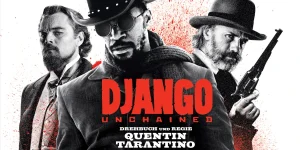
- Quentin Tarantino has repeatedly named this film the best-directed movie of all time.
- Hugo Montenegro’s version of the main theme reached the top of the UK singles chart in 1968.
- Van Cleef, who plays the ice-cold Angel Eyes, had come to the trilogy a year earlier as the honorable Colonel Mortimer in For a Few Dollars More.
- The film’s budget was around $1.2 million, tiny for a nearly three-hour war epic.
- Wallach had never made a western before How the West Was Won (1962), and that performance is what caught Leone’s eye.
- The three leads share the screen together only in the cemetery finale.
Why Watch?
Few films deliver spectacle, humor, and heartbreak in a single sitting. Eastwood, Van Cleef, and Wallach play greed as high opera, and Morricone’s score makes every glance feel dangerous. The final standoff alone justifies the runtime. Watch it once, and you will hear that coyote howl forever.
Director’s Other Movies
- The Colossus of Rhodes (1961)
- A Fistful of Dollars (1964)
- For a Few Dollars More (1965)
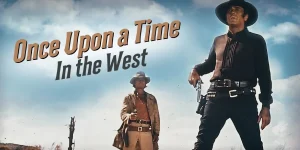
- Once Upon a Time in the West (1968)
- Duck, You Sucker! (1971)
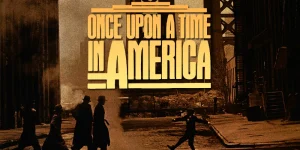
- Once Upon a Time in America (1984)