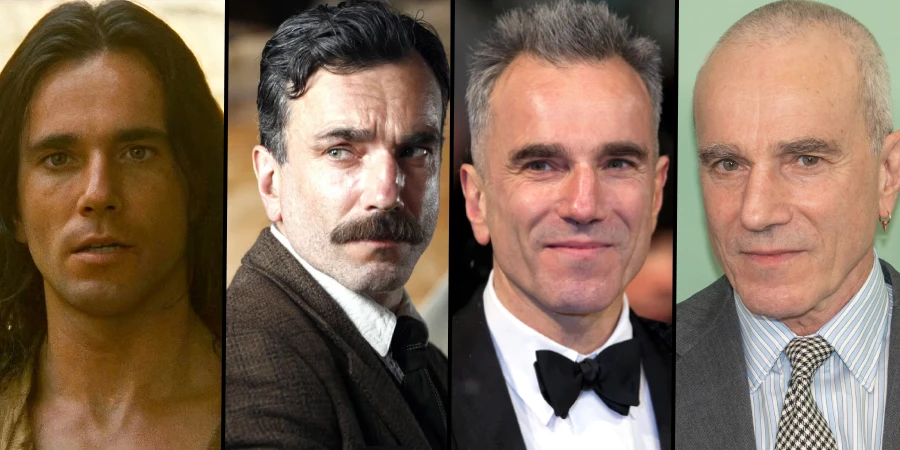

Some actors build a career on volume. Daniel Day-Lewis built one on scarcity. Across more than four decades he has made barely twenty feature films, yet almost every one of them is treated as an event. He disappears for years at a time, refuses most interviews, and returns only when something convinces him it is worth the cost.
That cost has always been the interesting part. His preparation methods have become industry legend: the wheelchair he refused to leave, the prison cell he slept in, the pneumonia he would not treat because the medicine did not fit the period. Critics have called it madness. Directors have called it genius. Day-Lewis himself has mostly declined to explain it at all.
This piece covers his roots, his three Academy Awards, the roles that damaged him, the two retirements, the shoemaking years in Florence, and the strange, artistic family he comes from.
Who Is Daniel Day-Lewis?
Sir Daniel Michael Blake Day-Lewis was born on 29 April 1957 in Kensington, London, into a household saturated with art. His father, Cecil Day-Lewis, was an Anglo-Irish poet, appointed Poet Laureate in 1968. His mother, Jill Balcon, was a stage and screen actress. Older sister Tamasin Day-Lewis went on to become a food writer and television chef.
The family moved to Greenwich when he was two. There he found himself out of place among tougher south London children, bullied for being both Jewish and posh. He learned to copy the local accent and mannerisms to survive. He has since called that his first convincing performance. His unruliness alarmed his parents. They sent him to board at Sevenoaks School, then at the more liberal Bedales in Hampshire. Bedales gave him three lifelong interests: acting, fishing, and woodwork.
He made his film debut at fourteen, uncredited, as a vandal in John Schlesinger’s Sunday Bloody Sunday (1971). The job paid £2 to scratch expensive cars parked outside a church. Formal training came later: three years at the Bristol Old Vic Theatre School. He then joined the Royal Shakespeare Company, playing Romeo and Flute in the mid-1980s.
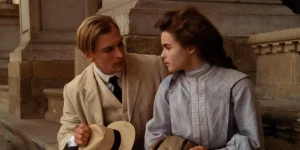
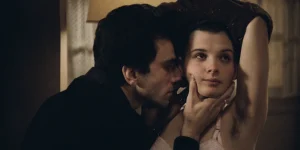
Then 1985 arrived. One year brought two roles. In My Beautiful Laundrette he played a gay street kid involved with a Pakistani youth. In A Room with a View he was the stiff, snobbish Cecil Vyse. Audiences who saw both films frequently did not realise it was the same actor. That was the beginning of the reputation.
How Many Oscars Does Daniel Day-Lewis Have? Awards and Nominations
Day-Lewis has won three Academy Awards, all of them for Best Actor. He is the only person in Oscar history to win that category three times.
Academy Award wins:
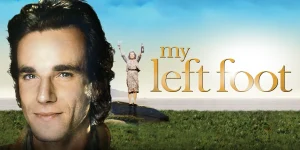
- My Left Foot (1989) — as Christy Brown, the Irish writer and painter born with cerebral palsy
- There Will Be Blood (2007) — as oil prospector Daniel Plainview
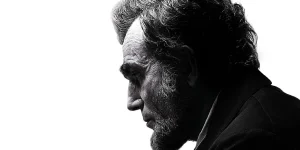
- Lincoln (2012) — as Abraham Lincoln
Academy Award nominations:
Six nominations, three wins: a conversion rate almost no leading actor can match. Beyond the Oscars he has collected four BAFTA Awards for Best Actor, three Screen Actors Guild Awards, and two Golden Globes for Best Actor in a Drama.
There is also a knighthood. Helen Mirren presented his second Oscar in 2008. He knelt, and she tapped him on each shoulder with the statuette. It was as close as he would ever come to being knighted, he joked. Six years later he was proved wrong. The 2014 Birthday Honours appointed him a Knight Bachelor for services to drama. Prince William conducted the investiture at Buckingham Palace.
Six Films in Twenty Years: The Slowest Filmography in Hollywood
Between 1998 and 2017, Day-Lewis appeared in exactly six feature films. Most working actors of his stature release that many in four years.
- Gangs of New York (2002)
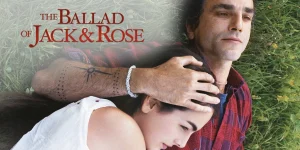
- The Ballad of Jack and Rose (2005)
- There Will Be Blood (2007)
- Nine (2009)
- Lincoln (2012)
- Phantom Thread (2017)
Then came an eight-year silence, broken only in 2025 by Anemone.
The scarcity is deliberate and it changed how his films were received. Because he appears so rarely, each project arrives carrying expectation that most releases never have to bear. Critic David Poland once compared him to Olivier, noting that the long gaps turn his movies into events.
There is a practical reason too. His preparation routinely swallows a year or more before cameras roll, and the recovery afterwards can take just as long. A man who reads a hundred books and lives inside a character for eight months simply cannot make two films a year. The method sets the pace.
Daniel Day-Lewis’s Net Worth in 2026
Daniel Day-Lewis’s net worth is most frequently reported at around $40 million, though estimates from other outlets run as high as $50 to $60 million. All such figures are estimates; he has never disclosed his finances, and his notoriously private life gives celebrity-wealth databases very little to work with.
What is striking is how modest that fortune looks next to his reputation. Actors with a fraction of his critical standing are worth several times more. The explanation is in the filmography itself: no franchises, no sequels, no endorsement empire, no production company churning out content, and long stretches with no income from acting at all.
His money has come almost entirely from performance fees on a small number of films, plus residuals from titles that never leave circulation. He reportedly earned around $8 million for The Crucible in 1996, and his later leading roles commanded substantial eight-figure fees, but the volume was never there. Lincoln, his biggest commercial success, grossed over $275 million worldwide.
He turned down the kind of work that builds real wealth, repeatedly and on principle. The fortune is the price of that choice.
Best Daniel Day-Lewis Performances
Ranking his work is almost unfair, but several performances are consistently cited as the peaks of his career.
- Christy Brown in My Left Foot (1989) — the role that made him internationally famous and won his first Oscar. Fierce, funny, and entirely free of sentimentality.
- Daniel Plainview in There Will Be Blood (2007) — a portrait of American capitalism as predation. The most quoted performance of his career and, for many critics, the greatest of the century so far.
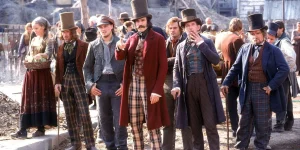
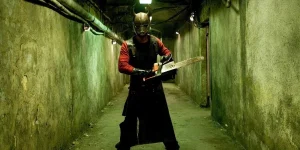
- Bill “the Butcher” Cutting in Gangs of New York (2002) — a villain so charismatic he threatens to swallow the film whole.
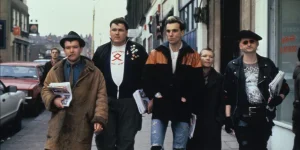
- Gerry Conlon in In the Name of the Father (1993) — the wrongly convicted member of the Guildford Four, played with a rawness that still hurts to watch.
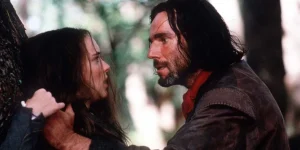
- Nathaniel “Hawkeye” Poe in The Last of the Mohicans (1992) — proof that he could carry a large-scale romantic epic.
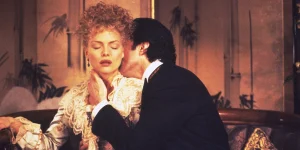
- Newland Archer in The Age of Innocence (1993) — repression rendered in tiny gestures for Martin Scorsese.
- Reynolds Woodcock in Phantom Thread (2017) — an obsessive dressmaker, and a performance many read as a self-portrait of the artist as a difficult man.
The Roles That Nearly Broke Him: Staying in Character Off Camera
Day-Lewis trained traditionally at the Bristol Old Vic, yet he became the most extreme practitioner of method acting in modern cinema. He does not merely research a character; he moves into one and refuses to leave until the shoot ends.
The First Disappearances (1988–1989)
- The Unbearable Lightness of Being (1988) — He learned Czech over an eight-month shoot and, for the first time, refused to break character on or off set.
- My Left Foot (1989) — Preparation began at Sandymount School and Clinic in Dublin, building friendships with people with disabilities. On set he stayed in his wheelchair throughout, forcing crew members to lift him over cables and spoon-feed him, so that he would understand every indignity of Christy Brown’s life. A rumour circulated for years that he cracked two ribs from the hunched posture; he denied it in 2013.
Pushing the Body (1992–1993)
- The Last of the Mohicans (1992) — He undertook heavy weight training, learned to hunt, fish, and live off the land, taught himself to build canoes, and carried a long rifle at all times during filming.
- In the Name of the Father (1993) — Prison rations took around 30 lb off him. He spent long stretches locked in the set’s cell, went two days without sleep, submitted to three days of interrogation by real police officers, and asked crew members to throw cold water at him and shout abuse.
- The Age of Innocence (1993) — For two months he walked around New York City in 1870s aristocratic dress, complete with top hat, cane, and cape.
The Later Transformations (1997–2012)
- The Boxer (1997) — Months of training with former world champion Barry McGuigan left McGuigan saying afterwards that Day-Lewis was good enough to turn professional. He came away with a broken nose and a damaged disc in his lower back.
- Gangs of New York (2002) — He hired circus performers to teach him knife-throwing, kept Bill’s New York accent between takes, and, when diagnosed with pneumonia, initially refused both a warmer coat and treatment because neither belonged to the period. He was eventually persuaded to see a doctor.
- Lincoln (2012) — He asked Spielberg for a full year of preparation, read more than a hundred books on the president, spoke in Lincoln’s voice for the entire shoot, and requested that British crew members avoid chatting to him in their shared accent. He reportedly texted co-star Sally Field in character between scenes.
Spielberg’s response to all this was to leave it alone. He said he never once asked Day-Lewis about his process, because he did not want to know.
Why Daniel Day-Lewis Retired — Twice
Day-Lewis has walked away from acting twice, and both exits made headlines around the world.
The first came after The Boxer in 1997. He gave no dramatic statement, simply went quiet, moved to Italy, and took up shoemaking. He returned five years later for Scorsese.
The second was louder. In June 2017, shortly before Phantom Thread reached cinemas, his representative announced that he would no longer work as an actor. He was sixty, at the height of his powers, and had just delivered a performance that earned another Oscar nomination. Later that year he offered a rare explanation, saying he needed to believe in the value of what he was doing, and that lately he no longer did.
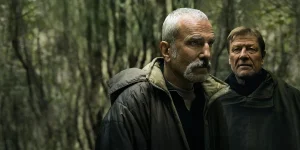
Then, in October 2024, came the announcement that he would star in Anemone, a drama he co-wrote with his son Ronan Day-Lewis, who directed it. The film premiered at the 2025 New York Film Festival and reached cinemas that October, with Sean Bean and Samantha Morton alongside him.
His account of the whole episode has since become notably blunt. He told Rolling Stone that he never really intended to retire at all, calling his earlier remarks “grandiose gibberish” and saying he would have done well to keep his mouth shut. Speaking after a New York screening, he added that he had probably made a fool of himself by announcing he would stop, and probably made a fool of himself again by coming back.
The Shoemaker Years: When He Left Hollywood for Florence
The most persistent story about Day-Lewis is also true. After finishing The Boxer, he moved to Florence and apprenticed with the master shoemaker Stefano Bemer, learning to cut, stitch, and last handmade shoes.
It was not a publicity stunt or a brief sabbatical. For a period his exact whereabouts and activities were genuinely unknown to the press. He had already applied, as a teenager, for a five-year cabinetmaking apprenticeship and been rejected for lack of experience; the pull toward craft had been there long before fame.
What eventually brought him back was Martin Scorsese and the chance to play Bill the Butcher. He has never treated the Florence period as a detour from his real work. In his telling, he had simply stopped doing one kind of work in order to do another.
Did Daniel Day-Lewis See His Father’s Ghost on Stage? The Hamlet Story
In 1989 Day-Lewis returned to the theatre to play Hamlet at the National Theatre in London, directed by Richard Eyre in a near four-hour uncut production. The reviews were mixed, some of them harsh, and he threw himself into the part with the same total commitment he brought to film.
Partway through a performance that autumn, during the scene in which the ghost of Hamlet’s father appears, he broke down. He began sobbing, walked off, and refused to go back on. Jeremy Northam finished the performance; Ian Charleson formally took over the role for the rest of the run. The official explanation was exhaustion.
The unofficial explanation became one of the most famous anecdotes in British theatre history. Day-Lewis said he had seen the ghost of his own father, the poet Cecil Day-Lewis, who died of pancreatic cancer in 1972 when Daniel was fifteen.
Years later he softened the story considerably, telling Time that he had meant it more as metaphor than as hallucination: in a play like Hamlet, he explained, you explore everything through your own experience, and in that sense he probably saw his father’s ghost every night. He has never appeared on stage again. The media frenzy that followed also contributed to his eventual move from England to Ireland in search of privacy.
The story refuses to die. In 2026 it resurfaced in Elsinore, a film about Ian Charleson — the actor who replaced him while dying of AIDS-related illness — which premiered at Telluride with Andrew Scott in the lead.
A Family of Artists: Cecil Day-Lewis, Arthur Miller, and Ronan Day-Lewis
Few actors have a family tree quite like Daniel Day-Lewis’s.
His father was the Poet Laureate Cecil Day-Lewis. On his mother’s side the connection is to film: the actress Jill Balcon was the daughter of Sir Michael Balcon, who ran Ealing Studios and helped build the modern British film industry — BAFTA still presents an award for Outstanding British Contribution to Cinema in his memory. Both Cecil Day-Lewis and Michael Balcon have been honoured with English Heritage blue plaques.
Then the line extends outward. A six-year relationship with the French actress Isabelle Adjani produced a son, Gabriel-Kane, born in 1995. That same year, while filming The Crucible, Day-Lewis visited the home of the play’s author, Arthur Miller, and met Miller’s daughter, the writer and director Rebecca Miller. They married in November 1996 and have two sons, Ronan (born 1998) and Cashel (born 2002). Manhattan and Annamoe in County Wicklow are the family’s two homes.
Ronan Day-Lewis built a reputation as a painter before turning to film, and it was his debut feature that finally pulled his father back to the screen. According to Day-Lewis, Ronan made it clear he would not make Anemone unless his father was in it.
So the family runs from a Poet Laureate through the head of Ealing Studios to one of America’s greatest playwrights and into a young director’s first film — with one of cinema’s finest actors sitting in the middle of it.
The Roles Daniel Day-Lewis Turned Down
For an actor this selective, the list of rejections is almost as interesting as the filmography.
- Aragorn in The Lord of the Rings — Peter Jackson wanted him first and reportedly approached him repeatedly, with increasingly generous offers. Day-Lewis said no every time. He explained in 2009 that he had no interest in large franchise films, that he would not want to work on a movie he wouldn’t want to watch, and that being bored on a set would be demoralising enough to make him quit. Viggo Mortensen eventually took the role.
- Oskar Schindler in Schindler’s List — He was attached to the project while Martin Scorsese was set to direct. When Spielberg took it back, Day-Lewis followed Scorsese to The Age of Innocence instead. He has said he found the role genuinely interesting, but his loyalty to Scorsese decided it. Liam Neeson got the part and an Oscar nomination.
- Abraham Lincoln — at first — Day-Lewis initially turned Spielberg down for Lincoln, feeling unsuited to the role. Leonardo DiCaprio is widely reported to have helped talk him into reconsidering. It won him his record third Oscar.
The pattern is consistent. He has never rejected scale for its own sake; he has rejected work he could not see a reason to disappear into.