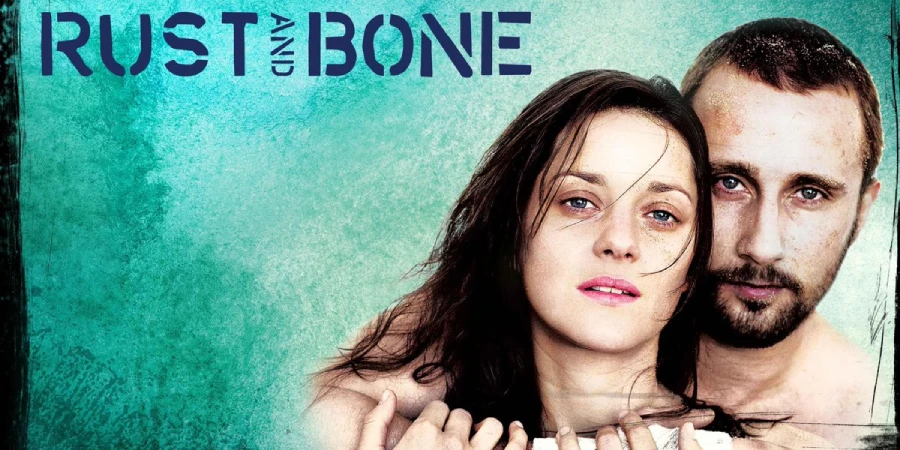

Rust and Bone opens with a man and a child begging for food on a train, and it never really lets you breathe after that. Jacques Audiard crafts a film about two broken people who find something unexpectedly real in each other, even as circumstances keep tearing them apart. This is not a romance in any conventional sense. It is a raw, sometimes brutal portrait of survival, bodies, and the strange resilience of human connection.
Detailed Summary
Ali and Sam Arrive with Nothing
Ali Van Versch (Matthias Schoenaerts) arrives in Antibes with his young son, Sam, after losing his girlfriend. He has no money, no plan, and no real parenting instincts. Ali moves in with his sister, Anna, and her partner, and almost immediately starts working as a bouncer at a nightclub.
Ali is physically imposing but emotionally hollow. He treats people, including his son, as inconveniences. His sister picks up the slack with Sam, covering for a man who cannot seem to care about anything beyond his next physical confrontation.
Stephanie Loses Her Legs
Stephanie (Marion Cotillard) is an orca trainer at a marine park called Marineland. She is confident, vivid, and clearly passionate about her work. Ali meets her briefly at the nightclub, drives her home after a fight, and the two part ways without much ceremony.
Then Stephanie suffers a catastrophic accident during a performance. One of the orcas causes a collapse, and Stephanie loses both legs below the knee. Her world, built on physical grace and professional identity, disappears in an instant.
She spends weeks in a near-catatonic state. Her boyfriend leaves. She sits in her apartment disconnected from everything, including herself. It is only when she calls Ali, almost on a whim, that something shifts.
An Unlikely Connection Forms
Ali visits Stephanie without pity, which is exactly what she needs. He treats her physical condition as simply a fact, not a tragedy to perform sadness around. Consequently, Stephanie starts to reawaken.
He takes her to the beach. He helps her into the sea. These scenes carry enormous weight because Ali’s bluntness, usually a flaw, becomes an accidental form of care.
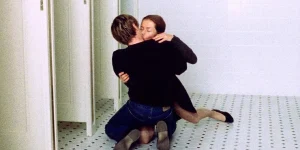
Stephanie asks Ali to have sex with her. He obliges, matter-of-factly. Their relationship becomes physical but not romantic, at least not in any way either of them fully acknowledges.
Ali Enters the World of Illegal Fighting
Ali starts participating in bare-knuckle street fights arranged by a man named Martial. These bouts are brutal and semi-organized, held in parking lots and warehouses. Ali is very good at them.
Meanwhile, he also works a surveillance job at a supermarket. He begins reporting information about employee theft to the management, which creates a morally dubious side income. Ali moves through the world with a kind of ethical indifference that defines his character.
Stephanie starts attending his fights. She films them, helps coordinate logistics, and gradually becomes invested in his world. For the first time since her accident, she has purpose and energy.
Stephanie Finds Her Footing
Stephanie visits Marineland and watches a new trainer work with the orcas. This scene is painful and quietly devastating. She observes from outside the glass, a visitor in a world that used to belong to her.
However, she does not collapse. Instead, she moves forward. She gets her prosthetic legs. She dances at a club. She reclaims physical space in the world, and Cotillard plays every step of this arc with stunning specificity.
Ali’s Emotional Failures Mount
Ali’s relationship with Sam remains cold and neglectful. He leaves the boy unsupervised, prioritizes fighting and women, and shows almost no warmth. His sister grows frustrated. The tension in the household reflects the central problem with Ali: he is physically present but emotionally absent.
He also sleeps with other women openly, treating Stephanie as a convenience rather than a partner. Stephanie, who has developed genuine feelings, confronts this. Ali shuts down. He tells her bluntly that he does not want a relationship, and she walks away.
The Surveillance Subplot Turns Dangerous
Ali’s surveillance work escalates. He starts providing detailed information that leads to workers being fired. His moral flexibility catches up with him when colleagues realize he has been informing. The situation turns hostile and forces Ali to reckon with consequences he never anticipated.
In addition, his fighting career keeps climbing. Martial pushes him toward higher-stakes bouts with real money involved. Ali’s world narrows to physical violence and economic survival, with everyone around him paying some price for his tunnel vision.
Movie Ending
Ali leaves Sam with his sister while he travels for a major fight. Sam, left without proper supervision, wanders onto a frozen lake. He falls through the ice. The accident is sudden and horrifying, and it forces the film’s emotional reckoning in the most brutal way possible.
Sam survives, but only barely. Ali rushes to the hospital in a state of genuine panic and grief that we have not seen from him before. This is the moment his emotional armor finally cracks. Schoenaerts plays the scene with raw, almost animalistic anguish.
Ali goes into his next fight and takes tremendous punishment. He does not defend himself properly. Whether this is guilt, self-destruction, or simply a man broken open is left deliberately ambiguous. He loses the fight in a violent, extended beating.
Stephanie comes to him after the fight. She is the one who shows up. Despite his rejection, despite his emotional failures, she finds him and they reunite. The film does not wrap this in sentiment; it presents it as two damaged people choosing each other because they are the only ones who truly see each other.
Sam recovers. In the final scene, Ali holds his son and interacts with him with tenderness for what feels like the first time. The film closes on a physical image: hands, bodies, the simple fact of two people touching. Audiard ends on the idea that survival is not victory, but it is something.
Audiences often ask whether Ali and Stephanie end up together in any defined sense. The film resists that framing deliberately. They are together in the final moments, but Audiard refuses to offer a clean romantic resolution. What matters is that Ali has finally felt something, and that Sam is alive.
Are There Post-Credits Scenes?
Rust and Bone contains no post-credits scenes. Once the film ends, it ends completely. There are no additional sequences, tags, or bonus footage.
Type of Movie
Rust and Bone is a drama with elements of romance and social realism. Its tone is gritty, unsentimental, and emotionally intense. Audiard shoots it with a naturalistic visual style that keeps the film grounded even during its most heightened moments.
In contrast to typical love stories, this film treats intimacy as something earned through shared exposure to pain, not through warmth or comfort. It sits comfortably alongside European art cinema of the early 2010s.
Cast
- Marion Cotillard – Stephanie
- Matthias Schoenaerts – Ali Van Versch
- Armand Verdure – Sam
- Céline Sallette – Anna
- Bouli Lanners – Martial
- Corinne Masiero – Carole
- Jean-Michel Correia – Mohamed
Film Music and Composer
The score draws from a combination of original music and carefully chosen pop songs. Alexandre Desplat contributed to the film’s musical landscape, but the soundtrack also features prominent use of pre-existing tracks that give the film an unusual emotional texture.
Notably, Katy Perry’s “Firework“ appears during a key scene involving Stephanie’s recovery. Its inclusion is bold and divisive; some critics found it jarring, while others recognized it as a stroke of tonal audacity. It works, somehow, because Audiard uses it without irony.
The song choice reflects something central to the film: unashamed, direct emotional experience, stripped of cool distance. Furthermore, the score throughout prioritizes feeling over sophistication.
Filming Locations
Principal photography took place in and around Antibes and the broader Côte d’Azur region of southern France. The Mediterranean setting is crucial. Its beauty creates a constant, almost cruel contrast with the hardship the characters endure.
Marineland Antibes, a real marine park, features prominently in Stephanie’s storyline. Using a real facility rather than a set grounds her world in something recognizable and specific. The park’s actual orcas appear in the film.
The industrial and working-class spaces of Antibes, parking lots, supermarkets, and sparse apartments, balance the coastal glamour. Audiard consistently frames the characters against environments that reflect their economic precarity.
Awards and Nominations
Marion Cotillard received widespread critical recognition for her performance, including a BAFTA nomination for Best Actress. The film competed at the Cannes Film Festival, where it screened in the main competition.
Matthias Schoenaerts earned nominations and wins at several European film awards for his performance. The film itself received nominations at the César Awards, including recognition for direction and screenplay. It did not win the Palme d’Or at Cannes, but its presence in competition confirmed its stature as a major work of European cinema.
Behind the Scenes Insights
- Marion Cotillard underwent extensive preparation for her role, including spending time with amputees to understand their physical reality and daily experience.
- Visual effects artists digitally removed Cotillard’s legs for scenes where Stephanie appears as an amputee, using techniques that were, at the time, considered highly convincing.
- Matthias Schoenaerts trained seriously for the fighting sequences, building on physical preparation he had previously done for other roles.
- Audiard has spoken about his interest in characters who express emotion through physical action rather than words, a theme central to his broader body of work.
- The production used real Marineland facilities, which required coordination with the park and its animal care teams.
- Schoenaerts and Cotillard reportedly developed strong professional chemistry during filming, which many critics cite as central to the film’s emotional credibility.
Inspirations and References
Rust and Bone is based on a short story collection by Canadian author Craig Davidson, published under the same title. Davidson’s stories are set in Canada and deal with working-class masculinity, physical violence, and bodily trauma. Audiard and co-writer Thomas Bidegain transplanted the material to southern France.
Two stories from the collection form the film’s core narrative threads. Audiard and Bidegain merged characters and situations from separate stories to construct a single continuous narrative, which explains why the film feels somewhat episodic in structure.
Audiard has also cited his longstanding interest in American genre cinema, particularly films about physical survival, as an influence on his directorial approach.
Alternate Endings and Deleted Scenes
No formally released deleted scenes or alternate endings from Rust and Bone have entered wide public circulation. Audiard is known for disciplined editing and does not typically release extended cuts or alternate versions of his films.
Some early reviews suggested the film’s structure went through significant reshaping during editing, particularly around the pacing of Ali’s fighting storyline. However, no specific cut material has been officially documented or released.
Book Adaptations and Differences
Rust and Bone draws from Craig Davidson’s 2005 short story collection of the same name. The book is set in Canada, and its characters are Canadian. Audiard relocated everything to France, which changes the cultural texture considerably.
Davidson’s stories are more fragmented and do not share a single protagonist across the collection. Audiard’s adaptation creates a unified narrative by fusing elements from at least two separate stories, giving the film a connective emotional arc that the source material does not possess in that form.
The orca accident storyline and the bare-knuckle fighting world both originate in the collection, but their combination into one story involving the same two central characters is Audiard and Bidegain’s invention.
Memorable Scenes and Quotes
Key Scenes
- Stephanie at the beach: Ali takes Stephanie into the Mediterranean for the first time after her accident. She floats on her back, weightless, and her expression shifts from fear to something close to peace. Many critics consider this the film’s emotional centerpiece.
- The orca accident: Shot with sudden, disorienting speed, the sequence at Marineland does not linger or dramatize. It simply happens, and then Stephanie is in a hospital bed. The restraint makes it more devastating.
- Stephanie watching the new trainer: She visits Marineland after her recovery and observes her replacement. She stands on the other side of the glass. No dialogue is necessary.
- Ali’s fight after Sam’s accident: Ali allows himself to be beaten. Whether he is punishing himself or simply has nothing left is deliberately unclear, and Schoenaerts carries the ambiguity brilliantly.
- The dancing scene: Stephanie, on her prosthetics, dances at a club. Her body reclaims space and rhythm. It is a quiet triumph that the film presents without fanfare.
- Sam falls through the ice: The accident is swift and horrifying. Ali’s sprint across the frozen landscape and his screaming at the ice is the most emotionally unguarded moment Schoenaerts delivers in the entire film.
Iconic Quotes
- “Are you happy?” Stephanie asks Ali this near the film’s end. His inability to answer cleanly says everything about who he is.
- Stephanie, after asking Ali to sleep with her, says simply: “I want to feel something.” It is the film’s thesis delivered as a request.
- Ali to Stephanie, regarding their arrangement: “No feelings, no problems.” He means it. That is what makes it so sad.
Easter Eggs and Hidden Details
- The film’s title, drawn directly from Davidson’s collection, carries double meaning: bones suggest physical fragility and structure, while rust suggests corrosion and the slow decay of things left unattended. Both themes apply directly to Ali’s emotional life.
- Audiard frames water repeatedly throughout the film, including the sea, the ice, and the pool at Marineland, as a symbol of both danger and renewal for Stephanie.
- Ali’s surveillance job, in which he watches people without their knowledge, mirrors the film’s own observational camera style. Audiard rarely announces his visual metaphors loudly.
- Stephanie’s apartment is noticeably sparse and cold after the accident, a visual contrast to the vibrant Marineland sequences that precede it.
- The Katy Perry track appears at a moment when Stephanie is actively reclaiming her body. Using a pop song associated with mainstream celebration in this raw context creates a deliberate tonal collision that reflects her complicated emotional state.
Trivia
- Matthias Schoenaerts is Belgian, and his preparation for physically demanding roles became something of a signature in his early career.
- The visual effects work on Cotillard’s legs received significant industry attention and was discussed in several post-production interviews as an example of seamless digital removal work.
- Craig Davidson, the author of the source collection, has written under the pen name Nick Cutter for his horror fiction, a very different tonal register from the material Audiard adapted.
- Rust and Bone was a French-Belgian co-production, reflecting both the nationality of its lead actor and its financing structure.
- Audiard spoke in interviews about wanting the film’s physicality to communicate what the characters could not say verbally, a directorial intention that shapes nearly every major scene.
- Marion Cotillard performed many of her beach and water scenes using specialized techniques to maintain the illusion of her character’s physical condition throughout extended takes.
Why Watch?
Marion Cotillard delivers one of the most physically and emotionally committed performances of her career, and Matthias Schoenaerts matches her at every turn. Audiard builds a love story from rubble, refusing sentiment at every turn, and the result is genuinely affecting. Moreover, few films capture the relationship between the body and identity with this kind of unflinching honesty.
Director’s Other Movies
- A Prophet (2009)
- A Self Made Hero (1996)
- Read My Lips (2001)
- The Beat That My Heart Skipped (2005)
- Dheepan (2015)
- A Sister (2018) – short
- Emilia Perez (2024)
Recommended Films for Fans
- The Diving Bell and the Butterfly (2007)
- A Prophet (2009)
- Blue Is the Warmest Color (2013)
- Bullhead (2011)
- Two Days, One Night (2014)
- Amour (2012)
- The Wrestler (2008)
- Fish Tank (2009)