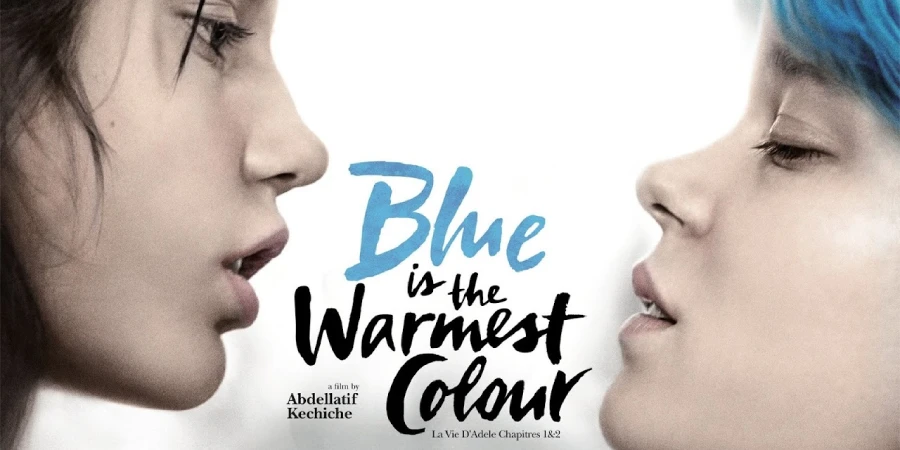

Abdellatif Kechiche’s Blue is the Warmest Color is not just a film about a lesbian relationship. It is a three-hour emotional epic about the chaotic, all-consuming, and ultimately devastating nature of first love. The film captures every blush, tear, and passionate moment with an unflinching camera. Its raw intimacy consequently makes the eventual heartbreak feel intensely personal.
Detailed Summary
Adèle’s Awakening
We first meet Adèle, a high school student studying literature. She is navigating friendships and a clumsy, unfulfilling relationship with a male classmate named Thomas. However, her life changes after a fleeting, electric glance with a blue-haired woman on a crosswalk.
This brief encounter unsettles her. Adèle subsequently dreams of the woman, confirming her burgeoning and confusing desires. She ultimately breaks up with Thomas, unable to fake a connection she does not feel.
Meeting Emma
Encouraged by a friend, Adèle visits a lesbian bar. There, she fatefully reunites with the blue-haired woman, an art student named Emma. An immediate and powerful chemistry ignites between them.
They begin meeting for dates, discussing art, philosophy, and their aspirations. Adèle is drawn to Emma’s confidence and worldview. Emma, in contrast, is captivated by Adèle’s unpretentious nature and passion for life.
A Passionate Affair
Their connection quickly evolves into a passionate physical and emotional relationship. The film dedicates significant screen time to their intimate moments, which are depicted with graphic and controversial realism. Adèle introduces Emma to her working-class parents, but she pretends Emma is just a friend helping her with philosophy.
Conversely, Emma openly introduces Adèle as her girlfriend to her own intellectual, bohemian parents. This dinner scene highlights the class and social differences that will later strain their bond. Emma’s parents are accepting and open, whereas Adèle’s are more traditional.
Cracks in the Relationship
Years pass, and the couple lives together. Adèle becomes an elementary school teacher, a job she loves. Emma, on the other hand, becomes a successful artist, surrounded by a sophisticated circle of friends.
Adèle begins to feel isolated and intellectually inferior within Emma’s world. She struggles to connect with Emma’s friends, who condescendingly dismiss her teaching career. Meanwhile, Emma grows distant, consumed by her work and new social life, subtly criticizing Adèle for her lack of artistic ambition.
The Betrayal and Breakup
Feeling lonely and neglected, Adèle has a brief affair with a male colleague from work. Emma discovers the infidelity and confronts her in an explosive, emotionally brutal argument. Despite Adèle’s desperate apologies and pleas, Emma throws her out of their apartment.
The breakup shatters Adèle. She is shown years later, still consumed by grief and longing for Emma. She is unable to move on, holding onto the memory of the love she lost.


Movie Ending
Years after their devastating breakup, Adèle meets Emma at a cafe. She hopes for a reconciliation, confessing that she still loves her and thinks about her constantly. Emma, now with short blonde hair, gently but firmly explains that she has moved on.
Emma reveals she is in a new relationship with a woman named Lise and has found peace. She still feels a “tenderness” for Adèle but no longer loves her in the same way. This conversation delivers the final, heartbreaking blow to Adèle’s hopes.
Later, Adèle attends Emma’s new art exhibition. She sees Emma happy with her new partner and surrounded by friends. Significantly, Emma’s new paintings are no longer dominated by the color blue but feature warmer, more diverse palettes. Dressed in a striking blue dress, Adèle realizes she is a relic of Emma’s past—a color from a closed chapter. Accepting this painful truth, she walks out of the gallery and down the street, alone.
Are There Post-Credits Scenes?
No, Blue is the Warmest Color has no post-credits scenes. The film concludes as Adèle walks away from the art gallery, and the credits roll immediately after.
Type of Movie
Blue is the Warmest Color is a coming-of-age romantic drama. Its tone is hyper-realistic and naturalistic, often feeling like a documentary. Director Abdellatif Kechiche uses long takes and extreme close-ups to create an immersive, intensely intimate viewing experience that focuses purely on the characters’ emotional states.
Cast
- Adèle Exarchopoulos – Adèle
- Léa Seydoux – Emma
- Salim Kechiouche – Samir
- Jérémie Laheurte – Thomas
- Catherine Salée – Adèle’s Mother
- Aurélien Recoing – Adèle’s Father
Film Music and Composer
The film notably lacks a traditional score, a deliberate choice by director Abdellatif Kechiche to heighten its sense of realism. Instead of a composer-driven soundtrack, the film uses diegetic music—sounds and songs that exist within the world of the characters.
These include tracks played at parties, in bars, or on the radio. This minimalist approach ensures that the audience’s focus remains squarely on the raw emotions of the performances, without musical cues telling them how to feel.


Filming Locations
Blue is the Warmest Color was filmed primarily in Lille, France. This northern French city provides a grounded, everyday backdrop that complements the film’s naturalistic style. Specific locations include the streets of the Wazemmes district and the Lycée Louis Pasteur.
The choice of a real, lived-in city over a picturesque Parisian setting anchors the story in a tangible reality. It makes Adèle and Emma’s world feel authentic and relatable.
Awards and Nominations
The film achieved historic success at the 2013 Cannes Film Festival. The jury, led by Steven Spielberg, took the unprecedented step of awarding the festival’s highest honor, the Palme d’Or, not only to director Abdellatif Kechiche but also to lead actresses Adèle Exarchopoulos and Léa Seydoux. This was the first time performers had been co-awarded the prize with the director.
Furthermore, the film earned nominations at the Golden Globe Awards and BAFTA Awards for Best Foreign Language Film. Adèle Exarchopoulos also won numerous critics’ awards for her breakthrough performance.
Behind the Scenes Insights
- Director Abdellatif Kechiche shot over 800 hours of footage. For example, the famous ten-minute breakup scene was reportedly filmed over the course of a full day.
- Both Léa Seydoux and Adèle Exarchopoulos later spoke out about the difficult and grueling working conditions on set. They described Kechiche’s demanding process as emotionally and physically exhausting.
- The film’s intimate scenes were highly controversial. The actresses have stated that they felt pressured during filming and that the process, which involved many takes over several days, was arduous.
- Adèle Exarchopoulos was only 19 years old during filming, making her authentic portrayal of a teenager particularly compelling.
Inspirations and References
The film is inspired by the 2010 French graphic novel Le Bleu est une couleur chaude by Jul Maroh. The title translates to “Blue is a Hot Color.”
While the film borrows the core premise of a young woman’s first love with a blue-haired artist, it diverges significantly from the source material in its plot and themes.
Alternate Endings and Deleted Scenes
Given the immense amount of raw footage shot, many scenes were inevitably left out of the final three-hour cut. However, director Abdellatif Kechiche has not released any official deleted scenes or an alternate ending. The theatrical version is considered his definitive cut of the story.
Book Adaptations and Differences
Blue is the Warmest Color is a loose adaptation of Jul Maroh’s graphic novel. The film departs from its source material in several key ways. The graphic novel is told through the main character’s diary entries after her death, framing the entire story as a tragic remembrance.
In the book, the main character (named Clémentine) dies at the end from a terminal illness, and her story is more explicitly focused on the societal and parental homophobia she faces. In contrast, Kechiche’s film removes the tragic death plotline and minimizes the external societal pressures. His focus is more universal, zeroing in on the internal dynamics of a single relationship—its passion, class friction, and inevitable decay.

Memorable Scenes and Quotes
Key Scenes
- The First Glance: The moment Adèle and Emma lock eyes while crossing a street is a perfectly executed instance of love at first sight, charged with unspoken electricity.
- The Spaghetti Scene: Adèle cooks spaghetti bolognese for Emma and her friends. The simple, messy meal starkly contrasts with the oysters served at Emma’s parents’ house, symbolizing the class and cultural divide between the two women.
- The Breakup: The confrontation over Adèle’s infidelity is a masterclass in raw, painful acting. It is a long, single-take scene filled with screaming, crying, and palpable heartbreak that is difficult to watch but impossible to forget.
Iconic Quotes
- Emma: “I have an infinite tenderness for you. I always will.”
- Adèle: “I’m happy. I’m happy with you. Like this. I’m happy.”
- Adèle: “But I miss you. I miss not touching you. All the time. I miss it.”
Easter Eggs and Hidden Details
- The Color Blue: Beyond Emma’s hair, the color blue appears constantly throughout the film. It’s in Adèle’s clothing, her bedroom walls, and the lighting of many scenes. As Emma moves on, the color begins to fade from her life and art, while Adèle clings to it, most notably with her blue dress in the final scene.
- Literary Parallels: Adèle is a literature student, and her class discussions often foreshadow her own experiences. Early on, her class analyzes the concept of “love at first sight” in La Vie de Marianne, mirroring her own encounter with Emma.
- Food as a Metaphor: Food plays a recurring role. Adèle is often shown eating with gusto, representing her raw appetite for life. The progression from sharing simple street food to navigating tense, formal dinners with oysters and wine charts the course of their relationship.
Trivia
- The film’s original French title is La Vie d’Adèle – Chapitres 1 & 2 (The Life of Adèle – Chapters 1 & 2), which suggests the story is only the beginning of Adèle’s journey.
- Adèle Exarchopoulos’s “ugly cry” during the breakup scene was entirely real. The actress has said she was emotionally drained and couldn’t control her physical reaction.
- To capture a naturalistic feel, Kechiche often filmed the actresses even when they were not actively performing dialogue, catching candid moments between takes.
Why Watch?
This film is an essential, if challenging, viewing experience. It offers one of the most honest and powerful portrayals of first love ever put on screen. The lead performances are breathtakingly real, capturing the ecstasy and agony of a formative relationship.
Director’s Other Movies
- Games of Love and Chance (2003)
- The Secret of the Grain (2007)
- Black Venus (2010)
- Mektoub, My Love: Canto Uno (2017)