Fate is a blunt instrument in The Edge of Heaven, and director Fatih Akin wields it without mercy. This 2007 German-Turkish drama follows six people across two countries, connecting their lives through grief, migration, and devastating near-misses. Characters miss each other by hours, by rooms, by sheer bad luck. Akin tells you upfront who will die, then makes you watch anyway, and somehow that makes it hurt more.
Detailed Summary
Ali and Yeter: A Deadly Beginning
Ali Aksu, an aging Turkish man living in Germany, pays a Turkish sex worker named Yeter for regular visits. He eventually invites her to move in with him, offering financial security in exchange for exclusivity. Their arrangement feels transactional at first, but genuine companionship slowly develops between them.
Yeter accepts, partly to escape threats from conservative men who have targeted her for shaming their community. However, Ali’s jealousy grows volatile and uncontrollable. During a brutal argument, he pushes her, she hits her head, and she dies. Ali’s impulsive violence shatters everything the film has carefully built in its opening act.
Nejat Searches for a Daughter
Nejat, Ali’s son, is a German-born Turkish literature professor living in Hamburg. He learns that Yeter had a daughter, Ayten, studying in Istanbul, and feels a profound moral obligation to find her. Consequently, he travels to Turkey to locate Ayten and make some form of amends.
Nejat cannot find Ayten, but he falls in love with Istanbul itself. He buys a German-language bookshop from an elderly German man named Hardenberg. Nejat settles into Turkish life, quietly hoping Ayten will eventually appear.
Ayten Flees to Germany
Meanwhile, Yeter’s daughter Ayten is a passionate left-wing political activist in Istanbul. Turkish authorities pursue her for her involvement in radical politics, and she flees to Germany seeking asylum. Her application gets rejected, leaving her undocumented and vulnerable.
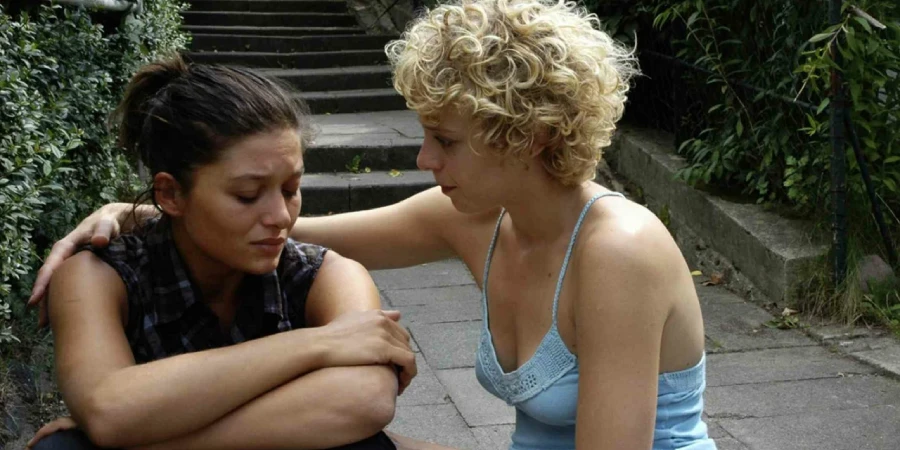
In Hamburg, Ayten meets a young German student named Lotte, and the two women fall quickly and deeply in love. Lotte comes from a comfortable middle-class background, and her mother Susanne initially disapproves of the relationship. Nevertheless, Lotte commits fully to Ayten and fights fiercely for her right to stay.
Ayten’s Arrest and Lotte’s Fatal Decision
Turkish authorities eventually arrest Ayten and deport her back to Istanbul, where she faces imprisonment for her political activities. Lotte, heartbroken and determined, follows her to Istanbul against Susanne’s wishes. She spends her days navigating bureaucracy, trying to secure Ayten’s release.
Lotte befriends a young Turkish man who stores a gun in her apartment. In a street confrontation, that same young man shoots Lotte dead over the weapon. Her death is sudden, senseless, and shattering, a perfect example of Akin’s brutal storytelling economy.
Susanne Takes Over
Susanne, shattered by her daughter’s death, travels to Istanbul to collect Lotte’s belongings and understand what happened. In contrast to her earlier coldness, Susanne becomes consumed by empathy and purpose. She visits Ayten in prison and forms an unlikely bond with the woman Lotte loved.
Susanne even begins advocating for Ayten’s release, continuing her dead daughter’s mission. She rents a room in Nejat’s bookshop, and the two strangers share a quiet, grief-filled coexistence. Neither knows yet that their paths to Istanbul trace back to the same original tragedy.


Movie Ending
Ayten finally receives amnesty and walks free from prison. She moves in with Susanne, and the two women build a fragile but real connection in the wake of Lotte’s death. Susanne has effectively adopted the role of mother to the woman her own daughter died trying to save.
Nejat, for his part, learns that Ali has served his sentence for Yeter’s death and has returned to Turkey. Ali travels to his family’s home village on the Black Sea coast, a sparse, beautiful place from his past. Nejat drives there to find him.
What makes the ending so powerful is what Akin chooses not to show. Nejat arrives at the coast and finds Ali’s fishing boat on the beach but not Ali himself. He sits down by the water and waits. The film ends on that image, quiet and open-ended.
Akin refuses to deliver a reconciliation scene. Instead, he offers something more honest: the possibility of reconciliation, the act of someone choosing to show up. Nejat’s decision to wait is the film’s moral center. He does not know if forgiveness is possible, but he comes anyway. That gesture, simple and unresolved, carries more weight than any dramatic reunion could.
Furthermore, the ending reframes the entire structure. Six lives, two countries, multiple deaths, and countless near-misses all converge in one man sitting on a beach waiting for his father. Akin suggests that connection, even imperfect and uncertain connection, is worth pursuing across any distance.
Are There Post-Credits Scenes?
The Edge of Heaven contains no post-credits scenes whatsoever. Akin ends the film on his own terms, with silence and open water. Nothing follows the credits.
Type of Movie
This film belongs firmly to the drama genre, specifically the tradition of European social realism. Its tone is melancholic, restrained, and deeply human, with occasional bursts of raw emotion. Critics and scholars frequently classify it alongside transnational cinema, given its dual German-Turkish cultural identity.
Akin structures the narrative as an interconnected triptych, in the style of films sometimes called mosaic narratives. Each chapter carries its own title and focus. In addition, the film carries a political undercurrent related to immigration policy, asylum law, and left-wing activism in Turkey.
Cast
- Baki Davrak – Nejat Aksu
- Tuncel Kurtiz – Ali Aksu
- Nurgul Yesilcay – Ayten
- Patrycia Ziolkowska – Lotte
- Hanna Schygulla – Susanne
- Nursel Kose – Yeter
Film Music and Composer
Akin made a distinctive choice by forgoing a traditional orchestral score entirely. Instead, he used pre-existing music, particularly Turkish rock and folk tracks, to anchor the film’s cultural identity. Notably, the band Shantel contributed to the soundtrack alongside other artists.
Cat Stevens, performing under his name Yusuf Islam, provides one of the film’s most emotionally resonant musical moments. His song Father and Son plays at a key juncture, and its thematic fit is almost uncomfortably precise. Music in this film functions as cultural commentary, not just background texture.



Filming Locations
Production took place across Hamburg, Germany and Istanbul, Turkey, with the Black Sea coastal region also featuring prominently. These locations are not interchangeable backdrops; they carry the film’s entire thematic architecture. Hamburg represents the immigrant experience in Europe, while Istanbul grounds the story in Turkish political and cultural reality.
The Black Sea village in the final act feels deliberately removed from both cities, a liminal space outside of politics and immigration systems. Akin shoots it with wide, quiet frames that contrast sharply with the dense urban textures of Hamburg and Istanbul. That visual contrast reinforces the emotional shift of the ending.
Awards and Nominations
The Edge of Heaven won the Best Screenplay award at the Cannes Film Festival in 2007, a major recognition for Akin’s writing. It also served as Germany’s submission for the Academy Award for Best Foreign Language Film. Moreover, it received numerous European Film Award nominations and won broad critical acclaim across international festival circuits.
Behind the Scenes Insights
- Fatih Akin conceived The Edge of Heaven as the second film in a planned trilogy he called the Love, Death and the Devil trilogy, with Head-On (2004) as the first entry.
- Akin himself holds dual German-Turkish identity, and he has described the film as deeply personal, reflecting his own experience navigating two cultures.
- Veteran German actress Hanna Schygulla, famous for her collaborations with Rainer Werner Fassbinder, came out of semi-retirement to play Susanne. Her casting added enormous weight and cinematic history to the role.
- Akin deliberately revealed the deaths of key characters in advance through chapter title cards, challenging audiences to care about characters even knowing their fate.
- Shooting across two countries required significant logistical coordination, and Akin worked with both German and Turkish production crews throughout the project.
Inspirations and References
Akin has cited the tradition of classical tragedy as a core influence, particularly the idea that fate operates through coincidence and near-misses rather than divine intervention. His chapter-title structure echoes theatrical acts, giving the film a deliberately literary quality. In addition, the political context of Turkish left-wing activism in the film reflects real historical tensions in Turkey during that period.
Thematically, critics have drawn comparisons to the work of German director Rainer Werner Fassbinder, who similarly examined immigrant experience and outsider identity in Germany. Akin’s casting of Schygulla reads as a direct nod to that lineage. However, Akin’s warmth and moral ambiguity distinguish his voice from Fassbinder’s more confrontational aesthetic.
Alternate Endings and Deleted Scenes
No officially confirmed alternate endings or significant deleted scenes from The Edge of Heaven have entered public record. Akin has not released a director’s cut or extended version with additional footage. For a filmmaker so precise about structure, the theatrical cut appears to represent exactly the film he intended to make.
Book Adaptations and Differences
The Edge of Heaven is not based on any book, novel, or pre-existing literary source. Fatih Akin wrote the original screenplay himself. No adaptation comparison therefore applies here.



Memorable Scenes and Quotes
Key Scenes
- Yeter’s death: Ali pushes Yeter during their argument and she strikes her head fatally; the scene is quick, unglamorous, and utterly devastating.
- Nejat buys the bookshop: A quietly moving scene in which Nejat decides to root himself in Istanbul, symbolizing his search for belonging and atonement.
- Lotte’s shooting: Sudden and brutal, her death on an Istanbul street reframes everything the film has established about her arc.
- Susanne visits Ayten in prison: Two women, bound by loss rather than blood, reach carefully toward each other across a table; it is one of the film’s most tender moments.
- Nejat waiting on the beach: The final image of the film, a man sitting alone by the water with a fishing boat nearby, open and unresolved.
- “Father and Son” sequence: Yusuf Islam’s song plays over footage that cuts between the estranged father and son, and the emotional collision is almost unfair in its precision.
Iconic Quotes
- “I want to die in the country I was born in.” (Yeter, expressing a longing that resonates throughout the entire film)
- “You’re already dead to me.” (Susanne to Lotte, words that haunt her irreversibly after her daughter’s death)
Easter Eggs and Hidden Details
- Akin places the chapter title cards at the beginning of each section rather than the end, so audiences know a character will die before watching that character’s story unfold; this structural choice is itself the central Easter egg of the film’s design.
- Nejat’s bookshop sells German-language books in Istanbul, a quiet symbol of cultural bridge-building that mirrors his own hybrid identity as a German-born Turk.
- Susanne renting a room above Nejat’s bookshop connects two characters whose lives are already linked by the same chain of events, though neither realizes it until later; their coexistence in that space functions as a subtle visual metaphor for unacknowledged connection.
- Akin uses the color and texture of Turkish versus German urban spaces deliberately, with Istanbul’s warmer tones contrasting against Hamburg’s cooler, grayer palette.
- Ali’s return to the Black Sea coastal village visually echoes classic Turkish folk narratives about old men returning to their origins, a cultural resonance that Turkish audiences would recognize immediately.
Trivia
- The Edge of Heaven carries the German title Auf der anderen Seite, which translates literally as On the Other Side, a title that captures the film’s themes of borders and thresholds more directly than the English release title.
- Fatih Akin was born in Hamburg to Turkish immigrant parents, making the film’s dual-nation structure directly autobiographical in its cultural foundations.
- Tuncel Kurtiz, who plays Ali, was one of Turkey’s most celebrated stage and screen actors; his presence lends the film considerable theatrical gravitas.
- Hanna Schygulla had worked extensively with Fassbinder across decades of German cinema; her appearance in this film created an implicit dialogue between two generations of German filmmaking about identity and otherness.
- Akin’s use of pre-existing music rather than an original score was a deliberate political and cultural choice, letting Turkish and international pop culture speak for itself rather than filtering it through composed mood music.
- Despite its serious subject matter, the film found significant commercial success in Germany alongside its critical acclaim, which was relatively unusual for a film of its thematic weight.
Why Watch?
The Edge of Heaven is one of the most structurally elegant films of its decade, and it earns every emotion it extracts from you. Fatih Akin treats grief, migration, and moral responsibility with rare precision and genuine compassion. Furthermore, its performances, particularly Schygulla and Kurtiz, belong in any serious conversation about acting in European cinema. This is a film that stays with you long after the final image fades.
Director’s Other Movies
- Short Sharp Shock (1998)
- In July (2000)
- Head-On (2004)
- Soul Kitchen (2009)
- The Cut (2014)
- In the Fade (2017)
Recommended Films for Fans
- Head-On (2004)
- Babel (2006)
- Caché (2005)
- Reconstruction (2003)
- Distant (2002)
- 4 Months, 3 Weeks and 2 Days (2007)
- Amores Perros (2000)