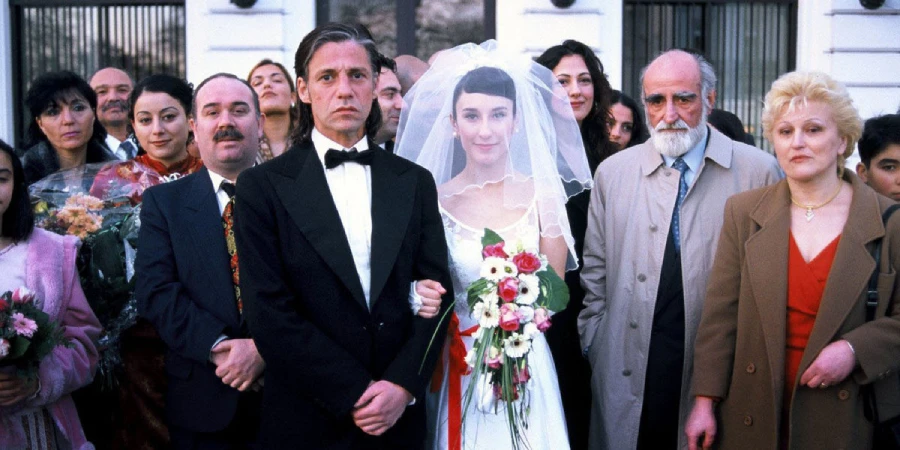

Two strangers crash into each other with the force of people who have nothing left to lose. Head-On, directed by Fatih Akin, opens with a suicide attempt and only gets more intense from there. This German-Turkish film from 2004 won the Golden Bear at the Berlin International Film Festival and shook European cinema to its core. It is raw, loud, and completely unafraid of its own ugliness.
Detailed Summary
A Crash, A Deal, and A Marriage of Convenience
Cahit Tomruk is a Turkish-German man living in Hamburg, drowning in grief and self-destruction after the death of his wife. He drives his car into a wall in what appears to be a deliberate suicide attempt. In the psychiatric ward where he recovers, he meets Sibel Guner, a young Turkish-German woman who has also attempted suicide.
Sibel is suffocating under the strict expectations of her conservative Turkish family. She wants freedom: to drink, to sleep with whom she chooses, to live on her own terms. However, as an unmarried woman, her family will not allow her to live independently.
Sibel proposes a solution. She asks Cahit, a stranger, to marry her in name only so she can escape her family’s control. Cahit refuses at first, but Sibel’s relentless persistence eventually wears him down. They marry, and the arrangement begins as a purely transactional one.
A Fake Marriage That Becomes Real
Sibel moves into Cahit’s chaotic apartment and immediately embraces the freedom she craved. She brings home different men, parties hard, and lives recklessly. Cahit, meanwhile, lives in a haze of alcohol and indifference, working as a cleaner at a music club.
Over time, something shifts between them. Cahit watches Sibel’s reckless joy with growing protectiveness, then tenderness. Sibel begins to see Cahit not as a convenient husband but as someone genuinely worth caring about. In contrast to the film’s violent opening, these scenes carry a fragile warmth.
Cahit eventually confesses that he has fallen in love with Sibel. She resists at first, clinging to the freedom their arrangement provides. However, she ultimately admits her feelings too, and they begin a real, passionate relationship.
Violence Shatters Everything
Niko, a man Sibel had previously been involved with, confronts Cahit in a bar. An altercation breaks out. Cahit, in a rage, beats Niko to death and goes to prison for manslaughter.
Sibel falls apart completely. She cannot face the situation, and her grief turns self-destructive again. She leaves Hamburg and travels to Istanbul, the city her family originally came from.
Istanbul and Collapse
In Istanbul, Sibel attempts to rebuild her life. She finds work and a social circle, but her trauma and self-loathing pull her toward increasingly dangerous behavior. She sleeps with strangers, uses drugs heavily, and pushes herself toward the edge.
A violent attack leaves her badly beaten and nearly killed. Consequently, she reaches a kind of bottom. A Turkish man named Ctesiphon (also called Serdar in some contexts) helps her recover. She eventually settles into something resembling stability, living with this man and having a daughter.
Years Pass
Cahit serves his prison sentence. During his time inside, he holds onto the idea of Sibel as the reason to keep living. He writes her letters. He plans to find her in Istanbul once he is released.
After his release, Cahit travels to Istanbul, determined to reunite with Sibel. He tracks her down and they meet. The reunion is charged with emotion, longing, and the weight of everything they have both been through.



Movie Ending
Cahit finds Sibel in Istanbul. She has a daughter, a partner, and a life she has painstakingly constructed from the ruins of her breakdown. Their meeting crackles with love and grief in equal measure.
Sibel still loves Cahit. That much is clear. However, she tells him she cannot simply abandon the life she has built. Her daughter grounds her in a way nothing else has. She is no longer the reckless young woman who proposed a fake marriage in a psychiatric ward.
They spend one night together, a reunion that is tender and heartbreaking at once. Cahit wants her to leave with him. Sibel refuses. She chooses her daughter, her stability, and her hard-won sense of self over a passionate but historically destructive love.
In the final scene, Cahit gets into a taxi and leaves Istanbul alone. The film does not offer a clean resolution or a romantic reconciliation. Instead, it closes with a sense of acceptance layered over profound sadness. Both characters have survived, but survival has cost them something irreplaceable.
Akin frames this ending with remarkable restraint. For a film so relentlessly loud and violent in its first half, the ending whispers. It suggests that growth and love do not always arrive at the same time, and that sometimes the most honest thing two people can do is let each other go.
Throughout the film, a traditional Turkish musical ensemble appears between scenes, performing by the Bosphorus. This framing device gives the story a mythic, almost folkloric quality. The ending’s quiet devastation lands harder precisely because those musical interludes have been preparing us for a story about longing that may never resolve neatly.
Are There Post-Credits Scenes?
Head-On contains no post-credits scenes. Once the film ends, it ends completely. Given the emotional weight of the final moments, anything additional would feel intrusive.
Type of Movie
Head-On operates primarily as a romantic drama, but that label undersells its range. It also functions as a psychological character study and a raw examination of cultural identity and displacement.
Tonally, the film swings between chaos and intimacy. It is loud, abrasive, and at times genuinely shocking, yet it contains moments of devastating tenderness. Akin refuses to let it settle into any single emotional register.
Cast
- Birol Unel – Cahit Tomruk
- Sibel Kekilli – Sibel Guner
- Catrin Striebeck – Maren
- Guven Kirac – Sehnur
- Meltem Cumbul – Selma
- Zarah McKenzie – Nurse
- Stefan Gebelhoff – Niko
Film Music and Composer
Alexander Hacke, of the German industrial band Einsturzende Neubauten, composed and supervised the film’s music. His background in abrasive, experimental sound makes him an ideal fit for this story. The score blends noise and silence in ways that mirror Cahit’s interior life.
The film also features an eclectic soundtrack mixing punk, rock, and traditional Turkish music. Tracks by artists such as Depeche Mode and Selim Sesler appear on the soundtrack. This cultural collision in the music reflects the central theme of identity caught between two worlds.
Notably, the traditional Turkish musical ensemble appearing between scenes performs songs that add a layer of lament and beauty. These interstitial musical moments become an emotional anchor for the entire film.



Filming Locations
Principal photography took place in Hamburg, Germany and Istanbul, Turkey. This geographic split is not incidental; it mirrors the cultural split at the heart of both main characters.
Hamburg grounds the film in the gritty, unglamorous reality of the Turkish-German immigrant experience. Industrial settings, cramped apartments, and smoky bars define this half of the story.
Istanbul, in contrast, carries both beauty and danger for Sibel. Akin shoots the city with honesty, capturing neither a tourist postcard nor a simple backdrop, but a living place that forces Sibel to confront her own roots. The Bosphorus sequences, where the musical ensemble performs, give the city a timeless, symbolic weight.
Awards and Nominations
Head-On won the Golden Bear at the 2004 Berlin International Film Festival, one of cinema’s most prestigious prizes. It also won the European Film Award for Best Film that same year.
Sibel Kekilli received significant recognition for her performance, winning the German Film Award for Best Actress. Furthermore, the film earned Fatih Akin the German Film Award for Best Director. It was a landmark sweep for German cinema.
Behind the Scenes Insights
- Fatih Akin wrote the script in a very short period, driven by an intense personal need to tell this specific story about identity and belonging.
- Sibel Kekilli was a non-professional actress before this film; Akin discovered her through a casting call, and her performance stunned critics worldwide.
- A tabloid controversy erupted in Germany after Kekilli’s casting, when her past work in adult films became public. Akin and the production stood firmly by her, and her performance ultimately silenced the critics.
- Birol Unel underwent significant physical transformation for the role, inhabiting Cahit’s self-destruction with an intensity that many cast members found genuinely unsettling on set.
- Akin insisted on shooting in real Hamburg locations rather than constructed sets, giving the film an authentic, lived-in texture that would have been impossible to replicate artificially.
- The traditional Turkish musical ensemble sequences were filmed separately and edited in as deliberate interruptions to the narrative flow, a choice Akin made to create breathing room in an otherwise suffocating story.
Inspirations and References
Head-On draws on Fatih Akin’s own background as a German-born son of Turkish immigrants. He has spoken about the film reflecting genuine tensions he observed and felt growing up between two cultural identities.
The film also carries echoes of classical tragedy in its structure. Specifically, the arc of two damaged people finding each other only to be torn apart by fate and violence recalls elements of ancient Greek dramatic tradition, filtered through a modern European immigrant context.
Akin has cited John Cassavetes as an influence on his raw, character-driven approach to filmmaking. Moreover, the film’s unflinching treatment of self-destruction connects it to a broader European art-house tradition that includes directors such as Rainer Werner Fassbinder.
Alternate Endings and Deleted Scenes
No officially released alternate ending or significant deleted scenes package exists for Head-On. Fatih Akin has not released a director’s cut with substantially different material.
Akin has discussed in interviews that he always knew the ending would resist romantic resolution. No alternate version in which Sibel leaves with Cahit was seriously developed or filmed.
Book Adaptations and Differences
Head-On is not based on a book, a play, or any pre-existing literary source. Fatih Akin wrote the original screenplay himself. Consequently, there is no source material to compare it against.

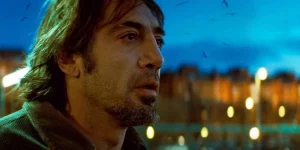

Memorable Scenes and Quotes
Key Scenes
- Cahit deliberately driving his car into a wall in the opening sequence, establishing the film’s brutal emotional stakes immediately.
- Sibel proposing the fake marriage to Cahit in the psychiatric ward, delivering her pitch with a matter-of-fact desperation that is both darkly funny and deeply sad.
- Cahit confessing his love to Sibel for the first time, catching both her and the audience off guard after so much deliberate emotional distance.
- The killing of Niko in the bar, a sudden explosion of violence that pivots the entire film onto a new and devastating track.
- Sibel’s brutal beating in Istanbul, a harrowing sequence that marks her absolute lowest point and forces the story toward its quieter second movement.
- The final reunion between Cahit and Sibel in Istanbul, charged with love, regret, and the quiet acknowledgment that some things cannot be recovered.
- Cahit’s solitary taxi ride away from Istanbul at the film’s close, one of the most quietly devastating final images in contemporary European cinema.
Iconic Quotes
- “I don’t want to die alone.” (Sibel, in the psychiatric ward, cutting to the heart of her proposal with disarming honesty.)
- “I love you. I’m not used to it, but I love you.” (Cahit, expressing his feelings with the awkwardness of a man who has forgotten how to be alive.)
Easter Eggs and Hidden Details
- The musical ensemble performing by the Bosphorus plays songs that thematically echo each narrative chapter. Attentive viewers will notice the lyrics foreshadow upcoming emotional turns.
- Cahit’s apartment is deliberately cluttered with remnants of his dead wife, visual evidence of his unresolved grief that lingers in the background of early scenes.
- Sibel’s choice of clothing gradually shifts from dark, constricting tones in Hamburg to warmer colors in Istanbul, a subtle visual marker of her fractured but real attempt at transformation.
- The bar where Cahit works appears in multiple scenes as a kind of purgatorial space, a place where neither the past nor the future has any hold, only the present moment of noise and numbness.
- Akin places small Turkish cultural details throughout the Hamburg scenes, flags, food, and language fragments that quietly insist on the characters’ dual cultural reality even when the characters themselves resist it.
Trivia
- Head-On was the first German film in 18 years to win the Golden Bear at the Berlin International Film Festival.
- Sibel Kekilli had no significant acting experience before Fatih Akin cast her in the lead role.
- Fatih Akin was only 30 years old when he directed this film, making his Golden Bear win even more remarkable.
- The film’s German title is Gegen die Wand, which translates literally as Against the Wall, a phrase that describes both Cahit’s opening suicide attempt and the broader sense of cultural and personal entrapment.
- Despite its intense content, the film was a commercial success in Germany, reaching mainstream audiences well beyond the art-house circuit.
- Alexander Hacke assembled the eclectic soundtrack by drawing on both his industrial music background and his deep personal interest in Turkish musical traditions.
Why Watch?
Head-On earns its reputation as one of the essential European films of the 2000s through sheer emotional force and two performances that refuse to let you look away. It handles cultural identity, grief, and self-destruction with brutal honesty and surprising compassion. Few films this decade matched its ability to be simultaneously devastating and alive.
Director’s Other Movies
- Short Sharp Shock (1998)
- In July (2000)
- Solino (2002)
- Crossing the Bridge: The Sound of Istanbul (2005)
- The Edge of Heaven (2007)
- Soul Kitchen (2009)
- The Cut (2014)
- In the Fade (2017)