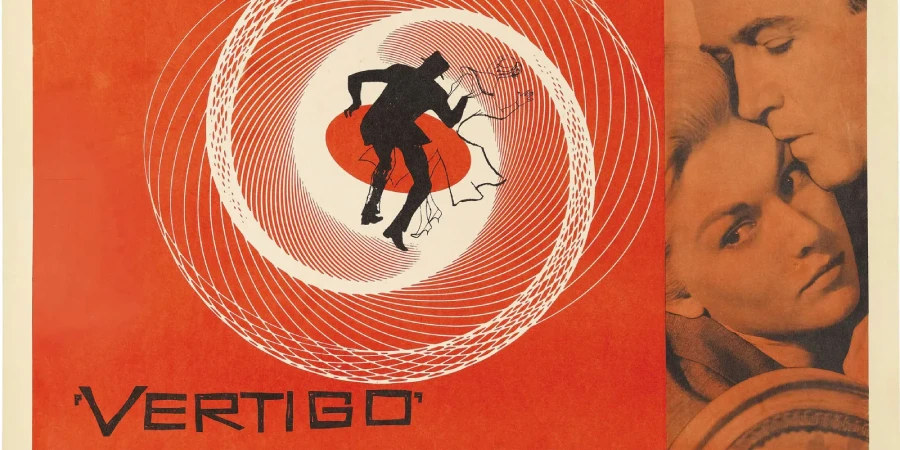

A dazzling display of obsession slowly transforms a retired detective into a monster. Actually, Vertigo weaponizes romance against human psychology. Alfred Hitchcock crafted this masterpiece out of raw dread and vivid colors. Consequently, viewers experience the agonizing depths of deception firsthand.
Detailed Summary
A Fear of Heights
Detective John “Scottie” Ferguson develops severe acrophobia after a traumatic rooftop chase. Specifically, a fellow officer falls to his death while trying to save him. Scottie quits the police force due to intense guilt.
He soon meets an old college acquaintance named Gavin Elster. Gavin desperately needs a private investigator to follow his wife. He claims his wife, Madeleine, behaves strangely.
The Strange Case of Madeleine
Scottie starts tailing her across San Francisco. Interestingly, she visits the grave of a tragic historical figure named Carlotta Valdes. Madeleine seemingly believes she possesses the spirit of this dead woman.
Eventually, she attempts suicide by jumping into the San Francisco Bay. Scottie rescues her from the cold water. They quickly fall in love after this harrowing encounter.
The Bell Tower Tragedy
The couple travels to the historic Mission San Juan Bautista. Unfortunately, Madeleine suddenly runs up the tall bell tower. Scottie tries to chase her.
His extreme vertigo prevents him from reaching the top. As a result, he watches in horror as she plunges to her apparent death. A jury later rules the tragic incident a suicide.
A Painful Breakdown
Scottie suffers a massive nervous breakdown. He spends several months recovering in a clinical institution. His friend Midge Wood tries to comfort him without much success.
He wanders the streets aimlessly after his release. He constantly searches for faces resembling his lost love. This fixation slowly consumes his entire existence.
Finding Judy
One day, Scottie spots a woman named Judy Barton. She looks exactly like Madeleine but features different hair and makeup. He obsessively approaches her.
He demands a date with the reluctant young woman. Meanwhile, Judy secretly harbors a massive confession. She actually played the role of Madeleine all along.
The Cruel Twist
Gavin Elster hired Judy to impersonate his wife. He threw his real, already deceased wife from the bell tower. He essentially used Scottie as a perfect, credible witness.
Judy genuinely loves Scottie and decides to stay with him. However, Scottie cannot accept her current appearance. He violently forces her to dye her hair blonde.
He makes her wear Madeleine’s exact wardrobe to complete the illusion. Judy surrenders her own identity to appease his madness. Ultimately, this submission leads to disaster.
Movie Ending
Scottie notices a very familiar necklace on Judy. He quickly realizes Gavin tricked him. Anger immediately replaces his blind affection.
He forces Judy back to the fateful Mission San Juan Bautista. He violently drags her up the terrifying bell tower steps. Furthermore, his raging anger completely cures his acrophobia.
Judy confesses the entire sinister plot at the top. She begs Scottie to forgive her actions. They share a passionate kiss near the dangerous ledge.
A shadowy nun suddenly emerges from the trapdoor. This dark figure startles Judy immensely. Consequently, Judy steps backward off the ledge to her death.
The nun briefly rings the mission bell in sorrow. Scottie stands silently on the ledge. He stares down into the terrifying abyss below.
Are There Post-Credits Scenes?
No, this classic feature has no post-credits scene. Alfred Hitchcock rarely utilized tricks after the final fade to black. The story completely concludes once the closing title card appears.
Modern audiences might expect a teaser for a sequel. In contrast, classic cinema usually ended stories abruptly on a high emotional note. Leaving the theater with pure shock was the ultimate goal.
Type of Movie
Fans generally classify Vertigo as a psychological thriller. It also functions as a deeply tragic romance. Moreover, elements of film noir heavily influence the visual presentation.
Therefore, suspense builds slowly through visual cues rather than constant dialogue. The haunting tone lingers long after the credits roll.
Cast
- James Stewart – John “Scottie” Ferguson
- Kim Novak – Madeleine Elster / Judy Barton
- Barbara Bel Geddes – Midge Wood
- Tom Helmore – Gavin Elster
- Henry Jones – Coroner
Film Music and Composer
Bernard Herrmann crafted the sweeping, dramatic musical score. His compositions perfectly capture a dizzying sense of romantic doom. The music famously loops in circular patterns.
Similarly, these repetitive melodies mirror Scottie’s endless downward mental spiral. For instance, the track “Scene d’Amour” remains highly celebrated among soundtrack enthusiasts. Herrmann secured a permanent place in cinema history with this work.
Filming Locations
Hitchcock famously shot much of this picture in San Francisco. The misty, hilly streets perfectly enhance the mysterious atmosphere. Crucial scenes unfold at the Golden Gate Bridge and Coit Tower.
The director utilized Mission San Juan Bautista for the climax. However, the production crew added the iconic tall bell tower using special effects. The real mission lost its original tower to a fire years earlier.
Awards and Nominations
The Academy Awards gave the picture two distinct nominations. It competed for Best Art Direction and Best Sound. Unfortunately, the feature did not win any competitive Oscars during its initial release.
Critics initially offered mixed reviews. On the other hand, the 1989 National Film Registry inducted the movie for its cultural significance. The British Film Institute eventually named it the greatest feature ever made.
Behind the Scenes Insights
- Admittedly, Hitchcock frequently clashed with Kim Novak over costume choices.
- The director blamed James Stewart for early box office struggles.
- A famous dolly zoom effect created the dizzying visual distortion.
- Cameramen spent thousands of dollars perfecting the unique zoom technique.
- Vera Miles originally held the lead role before experiencing a pregnancy.
Inspirations and References
The screenplay adapts a popular French novel called D’entre les morts. Moreover, writers Pierre Boileau and Thomas Narcejac authored this twisted tale. They supposedly wrote it specifically targeting Hitchcock’s attention.
Nonetheless, the original authors previously penned the source material for Les Diaboliques. The legendary director narrowly missed securing the rights to that earlier sensation.
Alternate Endings and Deleted Scenes
Foreign censorship boards sometimes demanded different narrative resolutions. Specifically, some European markets required villains to face strict justice. Censors simply hated seeing Gavin Elster escape punishment.
Hitchcock reluctantly filmed an alternate tag ending to appease them. This extra scene shows Scottie listening to a radio broadcast in Midge’s apartment. The radio announcer confirms Elster’s impending arrest in Europe.
Book Adaptations and Differences
Interestingly, the original French novel takes place against a gritty Parisian backdrop. In addition, the book protagonist discovers the masquerade much later in the story. He learns the cruel truth at the very end.
Hitchcock changed the narrative flow drastically. He reveals Judy’s secret to the audience well before the climax. This structural shift creates agonizing suspense instead of a basic surprise.
Memorable Scenes and Quotes
Key Scenes
- Scottie follows Madeleine silently through a gorgeous art museum.
- A terrifying, psychedelic nightmare sequence haunts Scottie during his breakdown.
- Judy finally emerges from the bathroom fully transformed into Madeleine.
- The dizzying stairway climb pushes both characters to their physical limits.
Iconic Quotes
- “Only one is a wanderer. Two together are always going somewhere.”
- “You shouldn’t keep souvenirs of a killing.”
- “I loved you so, Madeleine.”
- “There’s no losing it. And there’s no finding it.”
Easter Eggs and Hidden Details
- Hitchcock makes his standard cameo early on while carrying a musical instrument case.
- Green lighting constantly bathes Judy to signify her ghostly connection.
- Spirals appear repeatedly in hair buns and staircase designs.
- Mirrors frequently fracture reflections to hint at dual identities.
Trivia
- The costume designer forced Novak to wear suits without undergarments to feel uncomfortable.
- Paramount Pictures briefly lost the distribution rights for several decades.
- Cinemas rarely projected the picture until a massive restoration project finished in 1996.
- The feature originally premiered to fairly lukewarm audience reception.
- Therefore, audiences needed decades to fully appreciate the complex narrative depth.
Why Watch?
This classic thriller delivers breathtaking cinematography alongside unmatched psychological suspense. Every carefully constructed frame bursts with vibrant symbolism and hidden meaning. Furthermore, Hitchcock fundamentally redefined how modern directors construct visual tension. You will continuously question the dangerous nature of romantic obsession.
Director’s Other Movies
- Psycho (1960)
- Rear Window (1954)
- North by Northwest (1959)
- The Birds (1963)
- Dial M for Murder (1954)