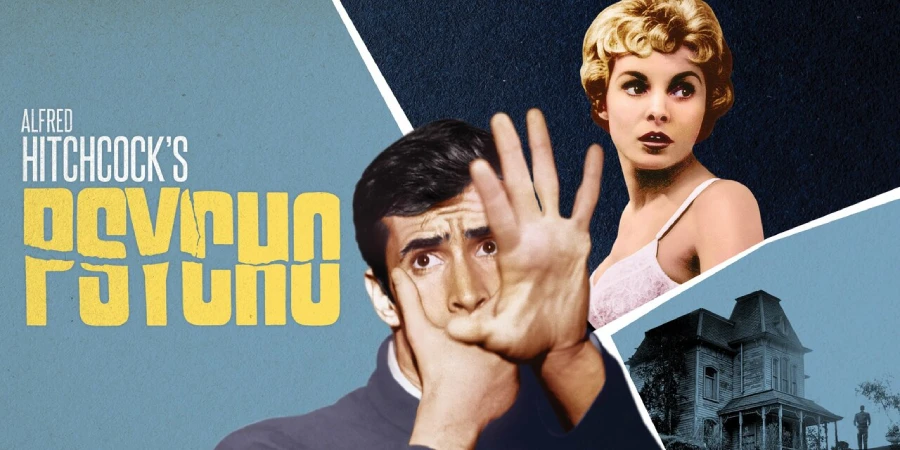

Marion Crane thought a stolen forty thousand dollars could buy her a new life. Instead, a rainy night and a secluded roadside stop sealed her doom. Alfred Hitchcock shattered cinematic conventions by killing off his leading lady halfway through the story. Ultimately, audiences learned that true terror hides behind a polite smile.
Detailed Summary
A Desperate Theft
Marion Crane hates her secret motel rendezvous with her debt-ridden lover. She works as a secretary at a real estate office in Phoenix. One day, her boss trusts her to deposit thousands of dollars in cash.
Temptation predictably overwhelms the unhappy woman. She steals the cash to start fresh with Sam Loomis. Marion packs her bags and flees town in a blind panic.
Arrival at the Motel
A heavy rainstorm forces her off the main highway. She eventually spots the glowing neon sign for the Bates Motel. Norman Bates greets her with nervous charm and offers her a room.
They share a tense dinner in his parlor surrounded by stuffed birds. Norman talks about his domineering mother during their strange conversation. He moreover claims we all go a little mad sometimes.
The Infamous Shower
Marion resolves to return the stolen money the next morning. She steps into the shower to wash away her guilt. A shadowy figure suddenly enters the bathroom wielding a large knife.
The attacker brutally slashes Marion to death in a shocking sequence. Norman discovers the bloody scene afterward and panics. He cleans the bathroom and sinks her car in a nearby swamp.
The Investigation Begins
Marion goes missing for a week. Her sister Lila Crane consequently tracks down Sam. A private investigator named Milton Arbogast also joins the search.
Arbogast traces Marion’s route directly to the lonely establishment. He questions Norman and quickly spots holes in the young man’s story. Norman suspiciously refuses to let the detective speak with his mother.
Uncovering the Truth
The determined detective sneaks into the creepy Victorian house. A woman rushes out and fatally stabs Arbogast on the stairs. Sam and Lila subsequently pose as an ordinary couple to search the property themselves.
Sam distracts Norman in the front office. Lila sneaks up to the main house meanwhile to find Mrs. Bates. Norman realizes the trick and races up the hill.
Movie Ending
Lila sneaks down into the underground fruit cellar. She sees an elderly woman sitting quietly in a chair facing the wall. Next, Lila cautiously taps the strange woman on the shoulder.
The chair spins around to reveal a horrific leering corpse. Mrs. Bates has been dead for ten long years. Just then, Norman rushes into the cellar wearing his mother’s clothes and a wig.
He wields a large knife and lunges right at Lila. Sam fortunately arrives in time to wrestle him to the floor. Local police officers arrest Norman and transport him to the station.
A psychiatrist explains the killer’s deeply fractured psyche. Norman specifically murdered his mother and her lover out of jealousy years ago. He then stole her corpse and preserved her body to erase his guilt.
Norman essentially split his own mind into two distinct identities. His mother personality completely takes over whenever he feels attraction to a woman. In the final shot, Norman sits silently in a holding cell.
His mind belongs entirely to his deceased mother now. A faint image of a skull flashes briefly over his smiling face. Thus, the real Norman no longer exists.
Are There Post-Credits Scenes?
No extra scenes follow the terrifying conclusion. Psycho wraps up its story long before post-credits stingers became a modern cinema trend. The screen simply fades to black after pulling Marion’s car from the swamp.
Audiences leave the theater with genuine psychological dread rather than a cute teaser. A definitive ending truly serves this masterpiece much perfectly.
Type of Movie
Psycho remains the quintessential psychological thriller. It also established many foundational rules of the modern slasher genre. Elements of classic film noir blend seamlessly with intense horror.
The tone feels claustrophobic, anxious, and deeply pessimistic. Furthermore, persistent themes of guilt and madness elevate the core narrative.
Cast
- Anthony Perkins – Norman Bates
- Janet Leigh – Marion Crane
- Vera Miles – Lila Crane
- John Gavin – Sam Loomis
- Martin Balsam – Detective Milton Arbogast
- John McIntire – Sheriff Al Chambers
Film Music and Composer
Bernard Herrmann composed the iconic and chilling musical score. He interestingly used only a string orchestra for the entire recording sessions. This lack of brass and woodwinds creates a harsh, scraping sound palette.
His screeching violin strings during the shower scene remain universally legendary. Hitchcock originally wanted that murder sequence to play without any music. Herrmann secretly scored the scene anyway however, and altered cinema history.
Filming Locations
The crew shot almost the entire film on the Universal Studios lot in California. They built the famous house and motel exteriors on a backlot known as Revue Studios. Today, tourists still visit those original structures on the popular studio tour.
Downtown Phoenix provided the opening city landscape shots. This early location work perfectly established Marion’s mundane daytime reality. The confined studio sets instead amplified the claustrophobia of the isolated motel.
Awards and Nominations
The Academy Awards favored the film with four major nominations. Alfred Hitchcock earned a nod for Best Director. In addition, Janet Leigh secured a Best Supporting Actress nomination for her memorable performance.
Art Direction and Cinematography also received well-deserved recognition. The movie surprisingly did not win any competitive Oscars that year.
Behind the Scenes Insights
- Hitchcock funded the project himself after Paramount executives refused to back the risky picture.
- The production crew mostly consisted of television veterans from the director’s weekly anthology show.
- Bosco chocolate syrup famously substituted for actual blood during the black-and-white shower sequence.
- The director bought up almost every available copy of the original novel to protect the twist ending.
- Censors initially objected to seeing a flushing toilet on screen because it violated strict Hollywood decency codes.
Inspirations and References
The film adapts a gritty 1959 novel written by Robert Bloch. Bloch based his fictional killer loosely on true crimes committed by Ed Gein. Both men hoarded macabre items and possessed an unhealthy obsession with their deceased mothers.
Gein lived in rural Wisconsin and inspired multiple horror villains over the decades. This specific story similarly taps directly into fears of isolated Americana. The chilling real-world connection makes the fiction even scarier.
Alternate Endings and Deleted Scenes
Fans rarely spot actual deleted scenes from this tightly edited classic. Hitchcock meticulously planned every single camera angle before rolling film. He therefore strictly shot only what he intended to use.
The studio did force slight trims to the initial shower sequence to satisfy the censorship board. A few frames of brief nudity hit the cutting room floor before the theatrical release. The final film otherwise matches the exact intended artistic vision.
Book Adaptations and Differences
Bloch depicted Norman as a short, overweight, middle-aged man who drank heavily. The director cleverly cast the highly attractive and youthful Anthony Perkins instead. This brilliant choice made the villain far more sympathetic to unsuspecting audiences.
The novel also spends more time exploring Norman’s occult interests. Marion additionally dies via a brutal decapitation in the written text rather than multiple stab wounds. The movie streamlines the plot for a cleaner visual narrative.
Memorable Scenes and Quotes
Key Scenes
- Marion driving through a heavy rainstorm while imagining the voices of her coworkers.
- The shocking forty-five-second shower murder that perfectly utilizes rapid editing techniques.
- Detective Arbogast tumbling backward down the stairs in a bizarre tracking shot.
- The final reveal of the mummified mother spinning around in the basement chair.
Iconic Quotes
- “We all go a little mad sometimes.”
- “A boy’s best friend is his mother.”
- “She just goes a little mad sometimes. We all go a little mad sometimes. Haven’t you?”
- “I hope they are watching. They’ll see. They’ll see and they’ll know, and they’ll say: ‘Why, she wouldn’t even harm a fly.'”
Easter Eggs and Hidden Details
- Hitchcock makes his traditional cameo wearing a cowboy hat right outside Marion’s office window.
- Marion wears white undergarments before stealing the money to symbolize her initial innocence.
- Her bra and slip change to black after the theft to reflect her corrupted morality.
- Numerous stuffed owls and hawks surround Norman in the parlor to foreshadow his predatory nature.
- A haunting skull briefly superimposes over Norman’s face during his final inner monologue.
Trivia
- Paramount Pictures distributed the film, but Universal Studios eventually acquired the rights decades later.
- Theater owners enforced a strict policy preventing latecomers from entering the auditorium after the opening credits.
- Walt Disney famously refused to let Hitchcock shoot at Disneyland because he made “that disgusting movie.”
- First-time viewers often screamed so loudly in theaters that they drowned out the actual movie dialogue.
Why Watch?
Every horror enthusiast needs to experience this foundational classic at least once. Psycho remains genuinely chilling even decades after its release. Spectacular performances and brilliant camera tricks endure the test of time. Ultimately, it redefined suspense on screen forever.