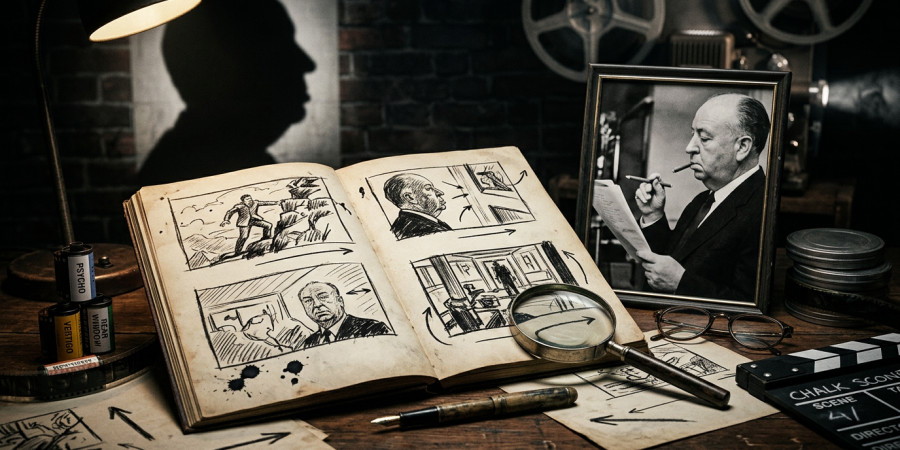

Alfred Hitchcock didn’t just direct films. He engineered them, frame by frame, through meticulous pre-visualization. His legendary approach to storyboarding transformed cinema, turning the pre-production phase into an art form as vital as the final cut. Understanding Alfred Hitchcock storyboards reveals how the Master of Suspense crafted tension, controlled pacing, and revolutionized visual storytelling. For modern filmmakers and cinema enthusiasts, his methods remain a masterclass in cinematic precision.
Why Hitchcock’s Storyboarding Process Changed Cinema Forever
Most directors in Hollywood’s golden age treated storyboards as optional guides. Hitchcock, however, elevated them to blueprints of absolute authority. He famously claimed he never looked through the camera viewfinder on set because he’d already “seen” every shot in his storyboards.
This wasn’t mere arrogance. His pre-visualization techniques allowed him to choreograph suspense with surgical precision. Every camera angle, every cut, every actor movement served a deliberate psychological purpose.
The Philosophy Behind Hitchcock’s Visual Planning
Hitchcock believed filmmaking was primarily a visual medium. Dialogue and performance mattered, yet the camera’s perspective controlled audience emotion. Consequently, he spent weeks or months storyboarding before a single actor arrived on set.
His storyboard process involved several key principles:
- Complete visual control: Hitchcock storyboarded entire films, sometimes thousands of frames, eliminating spontaneity in favor of calculated impact
- Editing in advance: By planning every cut during storyboarding, he essentially edited the film before shooting it
- Emotional manipulation: Camera angles and shot sequences were designed specifically to provoke fear, tension, or curiosity in viewers
- Economic efficiency: Detailed storyboards reduced costly on-set experimentation and minimized shooting time
The Collaborative Art of Hitchcock Storyboard Creation
Hitchcock rarely drew his own storyboards. Instead, he collaborated with talented storyboard artists who translated his vision into detailed illustrations. Saul Bass, perhaps his most famous collaborator, created iconic storyboards for the shower scene in Psycho and the crop duster sequence in North by Northwest.
These partnerships were intensely creative. Hitchcock would describe shots verbally, acting out scenes and explaining precise emotional beats. His storyboard artists then rendered these descriptions into frame-by-frame illustrations.
How Hitchcock Communicated His Vision
During storyboard sessions, Hitchcock functioned like an orchestra conductor. He articulated exact camera movements, lens choices, and compositional details. Moreover, he explained the psychological reasoning behind each decision.
His instructions covered multiple dimensions:
- Camera perspective: High angles to diminish characters, low angles to empower them, Dutch angles to create unease
- Shot duration: Longer takes for mounting tension, rapid cuts for chaotic violence or panic
- Visual metaphors: Symbolic compositions that communicated subtext without dialogue
- Lighting schemes: Shadow patterns and contrast ratios sketched directly into storyboard frames
Breaking Down Famous Hitchcock Storyboard Sequences
Several sequences demonstrate the power of Hitchcock’s storyboarding techniques. These moments showcase how detailed pre-visualization created unforgettable cinema.
The Shower Scene in Psycho
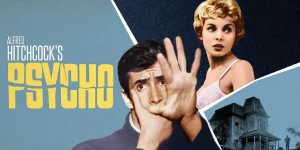
This 45-second sequence required 78 camera setups and 52 cuts. Saul Bass’s storyboards mapped every angle, creating a montage of violence that never explicitly showed the knife penetrating flesh. Instead, the editing pattern itself became the weapon, assaulting viewers psychologically.
Hitchcock’s storyboards specified exact framing for each shot. Close-ups of the showerhead, Marion’s screaming face, the knife’s descent, and water spiraling down the drain were choreographed like a brutal ballet.
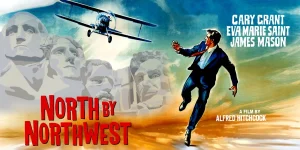
The Crop Duster Attack in North by Northwest
This daylight suspense sequence defied conventions. Most thrillers relied on darkness and shadows, but Hitchcock created terror in bright, open farmland. His detailed storyboards planned every shot of Cary Grant’s character being hunted by the plane.
Storyboards established the visual rhythm: wide shots emphasizing isolation, medium shots of Grant’s growing panic, and aerial shots from the plane’s perspective. In addition, they mapped the geography so viewers understood spatial relationships despite rapid editing.
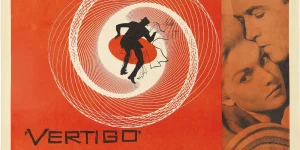
The Vertigo Dolly Zoom
Hitchcock’s storyboards for Vertigo included technical annotations for cinematographer Robert Burks. The famous “dolly zoom” effect, where the camera tracks backward while simultaneously zooming in, was storyboarded with precise measurements. This created the disorienting sensation of vertigo itself.
The Technical Details in Hitchcock’s Film Storyboards
Professional Hitchcock film storyboards included far more than simple sketches. They contained technical specifications that production departments relied upon during shooting.
Each storyboard frame typically featured:
- Shot numbers: Sequential numbering that corresponded to the shooting script
- Lens specifications: Focal lengths noted for each setup (wide-angle, normal, telephoto)
- Camera movement: Arrows and notes indicating pans, tilts, dollies, or crane shots
- Actor blocking: Movement paths drawn within the frame showing character positions
- Dialogue cues: Key lines noted to ensure visual and verbal storytelling aligned
This level of detail transformed storyboards into comprehensive production documents. Consequently, cinematographers, production designers, and editors could prepare precisely for each scene’s requirements.
Learning From Hitchcock’s Pre-Production Methods
Modern filmmakers can apply Hitchcock storyboard methods regardless of budget. Digital storyboarding tools make the process more accessible than ever, yet the fundamental principles remain unchanged.
His approach teaches several timeless lessons. First, thorough pre-visualization saves time and money during production. Second, controlling the visual narrative gives directors maximum creative authority. Third, understanding how editing creates emotion allows more deliberate storytelling choices.
Adapting Hitchcock’s Process for Contemporary Filmmaking
Today’s directors don’t need to storyboard entire films as exhaustively as Hitchcock did. However, storyboarding critical sequences, particularly action scenes or complex camera movements, remains invaluable.
Many successful directors still embrace detailed storyboarding. Steven Spielberg, Ridley Scott, and the Coen Brothers all storyboard extensively, following Hitchcock’s example of engineering visual narratives before cameras roll.
Why Hitchcock’s Visual Planning Still Matters Today
The Master of Suspense proved that cinema is primarily a director’s medium when that director exercises complete visual control. His storyboarding process wasn’t about limiting creativity but rather channeling it with maximum efficiency and impact.
In an era of improvisation and spontaneous filmmaking, Hitchcock’s methods remind us that meticulous planning can produce art as inspired as any spontaneous creation. His storyboards weren’t restrictions. They were roadmaps to cinematic perfection.
Study his storyboards, analyze his visual logic, and consider how pre-visualization might strengthen your understanding of cinematic language. Hitchcock’s legacy extends beyond his films themselves into the very methodology of visual storytelling.