
Every frame you see on screen serves a purpose. Filmmakers carefully select movie aspect ratios to shape how audiences experience their stories. This deliberate choice affects everything from emotional impact to visual storytelling power. Understanding why directors choose specific frame dimensions reveals a hidden language of cinema that enriches your viewing experience.
Aspect ratio determines the width-to-height relationship of the rectangular image projected on screen. Some films feel expansive and epic, while others create intimacy through narrower frames. These decisions aren’t arbitrary: They reflect artistic intent, technical considerations, and narrative goals.
What Are Movie Aspect Ratios and Why Do They Matter
Aspect ratios in film represent the proportional relationship between image width and height. When directors choose between formats like 2.39:1 or 1.85:1, they’re making fundamental choices about composition and audience focus.
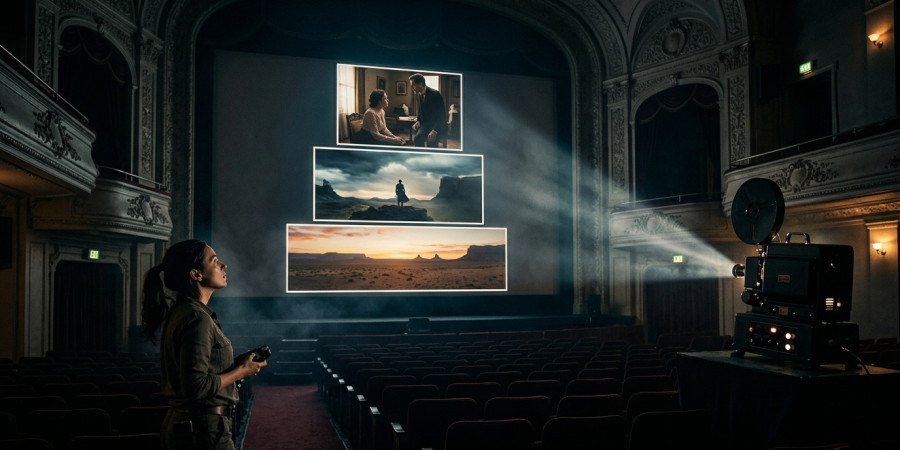
Different aspect ratios dramatically alter how viewers perceive space and movement. Wider formats emphasize horizontal landscapes and group dynamics. In contrast, narrower ratios draw attention to individual characters and vertical elements within the frame.
Consider how a widescreen format allows cinematographers to place multiple characters in a single shot while maintaining visual clarity. Meanwhile, a standard ratio forces tighter compositions that can heighten tension or intimacy.



Common Film Aspect Ratios and Their Applications
Several standard aspect ratios dominate modern cinema. Each format carries specific associations and practical advantages that filmmakers leverage for storytelling purposes.
Widescreen Formats
The 2.39:1 aspect ratio (also called anamorphic widescreen) creates a cinematic look that audiences associate with big-budget productions. This ultra-wide format excels at capturing landscapes, action sequences, and ensemble scenes.
Filmmakers favor this ratio for:
- Epic westerns and historical dramas requiring sweeping vistas
- Science fiction films that establish vast, otherworldly environments
- Action movies where horizontal movement and spatial relationships matter
- Period pieces aiming for a classic, theatrical presentation
Standard Theatrical Ratio
The 1.85:1 format strikes a balance between width and height. This versatile cinema aspect ratio suits diverse genres without feeling overly stylized.
Many contemporary dramas, comedies, and thrillers adopt this ratio because it provides compositional flexibility. Directors can frame intimate conversations and action sequences with equal effectiveness.
Academy Ratio and Television Standards
The 1.37:1 (or 4:3) aspect ratio dominated early cinema. Though rarely used in modern theatrical releases, some directors revive this format for specific artistic purposes. Furthermore, it evokes nostalgia and creates a distinctive visual signature.
Modern filmmakers occasionally choose narrower ratios to:
- Suggest historical periods or replicate vintage film aesthetics
- Create a sense of confinement or psychological pressure
- Focus viewer attention on facial expressions and character details
- Establish a unique visual identity that distinguishes their work
How Aspect Ratio Affects Storytelling and Emotion
Filmmakers use aspect ratio in movies as a narrative tool. The frame shape guides where viewers look and how they interpret visual information.
Wider aspect ratios allow characters to inhabit space separately within a single composition. This technique can illustrate emotional distance between people who physically share the same room. Conversely, a tighter ratio forces characters closer together within the frame, potentially amplifying intimacy or conflict.
Genre Considerations
Certain genres naturally align with specific film aspect ratios. Horror films sometimes employ narrower frames to create claustrophobia and limit peripheral vision. As a result, audiences feel trapped alongside the characters.
Meanwhile, adventure films and war epics embrace ultra-wide formats to showcase scale and scope. These choices enhance the viewer’s sense of being immersed in vast, dangerous, or beautiful environments.
Psychological Impact
Research in visual perception suggests that frame shape influences emotional response. Horizontal compositions feel more stable and expansive. Vertical or square compositions create different psychological effects, emphasizing isolation or introspection.
Directors exploit these subconscious associations. They match the movie frame ratio to the emotional journey they want audiences to experience.
Technical and Practical Factors Behind Aspect Ratio Choices
Beyond artistic considerations, practical realities shape film format decisions. Budget constraints, distribution platforms, and equipment availability all play roles in determining final aspect ratios.
Exhibition Venues
Theatrical presentations offer the greatest flexibility for unconventional aspect ratios. However, streaming platforms and television broadcasts introduce complications. Some filmmakers choose ratios that translate well across multiple viewing formats to preserve their vision beyond the cinema.
Streaming services have complicated aspect ratio choices because viewers watch content on devices ranging from phones to large-screen TVs. Therefore, some directors opt for more versatile formats that maintain compositional integrity across platforms.
Camera and Lens Selection
Available camera systems and lenses influence aspect ratio selection. Anamorphic lenses create distinctive optical characteristics beyond simply widening the frame. These specialized tools produce unique flare patterns, bokeh, and depth-of-field rendering that contribute to the overall aesthetic.
Budget considerations matter significantly. Anamorphic equipment requires additional expense and technical expertise. Consequently, independent productions might select formats based partly on resource availability rather than purely artistic preference.
Notable Directors and Their Signature Aspect Ratios
Many filmmakers develop recognizable visual styles through consistent aspect ratio choices. These decisions become part of their artistic signature.
Wes Anderson frequently employs symmetrical compositions that work beautifully within various aspect ratios, though he’s explored multiple formats throughout his career. Christopher Nolan often shoots in IMAX format, which provides an even taller frame than standard theatrical ratios, particularly for spectacle sequences.
Some directors change aspect ratios within a single film to signal shifts in narrative, time period, or perspective. This technique requires careful planning but can powerfully communicate thematic transitions.
Framing Your Perspective on Cinema
Understanding movie aspect ratios opens a new dimension of film appreciation. Next time you watch a movie, notice how the frame shape contributes to your emotional response and visual experience. Directors carefully select these proportions to enhance storytelling, create atmosphere, and guide your attention.
Pay attention to how different genres and filmmakers approach aspect ratio as a creative tool. You’ll discover that every frame edge represents a deliberate choice rather than a technical default. This awareness transforms passive viewing into active engagement with cinematic craft.
Start analyzing the films you watch with fresh eyes. Notice how wider or narrower frames alter your perception of space, character relationships, and narrative emphasis. This knowledge deepens your appreciation for the thoughtful artistry behind every shot.