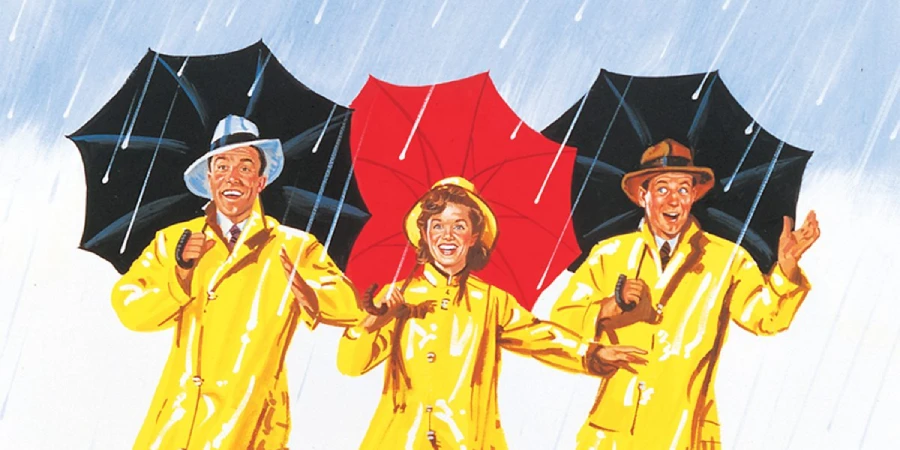

Few movies dare to be this purely, unapologetically joyful, and fewer still pull it off with such effortless craft. Singin’ in the Rain arrived in 1952 as Hollywood’s love letter to its own awkward, hilarious adolescence, the chaotic transition from silent films to sound. Gene Kelly splashing through puddles in a downpour has become one of cinema’s most enduring images. This film earns every frame of that legacy.
Detailed Summary
Hollywood’s Golden Boy and His Carefully Constructed Myth
We open on a glamorous 1927 Hollywood premiere at Grauman’s Chinese Theatre. Don Lockwood (Gene Kelly) narrates his own rise to fame for a breathless crowd of fans, describing a dignified path through classical training and refined artistry. However, the film immediately undercuts his story: flashbacks reveal he and his best friend Cosmo Brown (Donald O’Connor) actually clawed their way up through vaudeville, saloons, and every undignified gig imaginable.
Don’s screen partner is Lina Lamont (Jean Hagen), a silent film star whose off-screen persona is as grating as her voice is shrill. She genuinely believes Don is in love with her, partly because the studio’s publicity machine encourages that fiction. In contrast, Don finds her exhausting.
A Chance Encounter Changes Everything
Fleeing an overeager mob of fans, Don leaps into a passing car belonging to Kathy Selden (Debbie Reynolds). She dismisses him coldly, insisting she has no interest in movies or movie stars, which immediately captivates Don. She claims to be a serious stage actress, which earns his respect and his curiosity.
Later, at a party, Don spots Kathy popping out of a cake as part of a novelty act, exposing her earlier pretension. Kathy retaliates by throwing a cream pie at Don, which accidentally hits Lina instead. Consequently, Lina uses her studio influence to get Kathy fired. Don, genuinely smitten, tracks Kathy down on a film set and wins her over with charm and persistence.
The Sound Revolution Crashes the Party
Meanwhile, the release of The Jazz Singer in 1927 sends shockwaves through the film industry. R.F. Simpson (Millard Mitchell), the head of Monumental Pictures, panics and orders all productions to convert to sound. Don and Cosmo’s current silent epic, The Dueling Cavalier, suddenly needs a total overhaul.
Sound technology proves nightmarish on set. Microphones pick up everything: rustling costumes, ambient noise, crew movement. Lina’s screeching New York accent makes every recorded line a disaster. In addition, her inability to project naturally into early microphones turns every scene into a technical catastrophe.
Lina’s Voice Problem Gets Worse
Test screenings of the newly sound-enabled The Dueling Cavalier end in humiliation. Audiences laugh at Lina’s voice, at the mismatched audio, and at every technical glitch the production crew failed to fix. R.F. Simpson watches his investment collapse in real time.
Cosmo hatches a brilliantly simple idea: dub Lina’s voice with someone else’s. Kathy’s warm, clear, beautiful voice fits perfectly. Moreover, Kathy’s talent as a performer makes every line sing. Don embraces the plan with genuine excitement, and the three friends work together to transform the disaster into something worth releasing.
Making a Musical and Falling in Love
Don, Cosmo, and Kathy rework The Dueling Cavalier into a full musical called The Dancing Cavalier. Kathy records all of Lina’s dialogue and songs behind the scenes. Don and Kathy’s romance deepens through late nights of creative collaboration, and the film captures their connection through some of cinema’s most iconic musical sequences.
Specifically, Don performs “Singin’ in the Rain” alone on a wet studio street, celebrating his love for Kathy with pure, physical joy. Cosmo delivers the acrobatic, slapstick masterpiece “Make ‘Em Laugh” as a solo showcase of O’Connor’s extraordinary physical comedy. These sequences feel spontaneous even though they required exhausting precision to execute.


Movie Ending
The Dancing Cavalier premieres to a rapturous audience. Kathy’s dubbed voice makes Lina sound polished, charming, and entirely convincing. R.F. Simpson is thrilled, critics love it, and the studio immediately sees dollar signs.
Lina, however, has no intention of sharing credit or revealing the truth. She threatens legal action to force Kathy into a permanent, secret dubbing contract, effectively enslaving Kathy’s talent to Lina’s career forever. Don is furious, and R.F. Simpson finds himself caught between Lina’s star power and his own conscience.
At a celebratory post-premiere event, the audience demands Lina sing live. R.F. Simpson, Don, and Cosmo arrange for Kathy to sing offstage while Lina lip-syncs in front of the crowd. Midway through the performance, Don, Cosmo, and R.F. Simpson raise the curtain behind Lina, revealing Kathy singing live. Lina stands exposed, lip-syncing to someone else’s voice in front of everyone.
Lina tries to flee, but Don stops her. He announces to the audience that Kathy Selden is the real voice, the real talent, and the real star. The crowd erupts in applause for Kathy. Lina storms off, her career effectively finished by her own scheme.
Don publicly declares his love for Kathy. She tries to run away, embarrassed and overwhelmed, but Don and Cosmo stop her. A billboard for her new film appears above them, cementing her status as a genuine star. The final image of Don and Kathy kissing in front of that billboard is warm, triumphant, and genuinely earned. Ultimately, the film argues that authenticity always outlasts manufactured glamour.
Are There Post-Credits Scenes?
Singin’ in the Rain contains no post-credits scenes. Films of this era did not use that device. Once the story ends, the credits roll and that is that.
Type of Movie
Singin’ in the Rain is a musical comedy with strong elements of romantic comedy and Hollywood satire. Its tone sits firmly in warm, bright, optimistic territory, never dark and rarely cynical. Even its sharpest jokes land with affection rather than cruelty.
In contrast to many musicals of its era, the film self-consciously pokes fun at Hollywood’s own mythology. It celebrates showbiz while simultaneously mocking its phoniness. That dual awareness gives it a sophistication that pure feel-good musicals often lack.
Cast
- Gene Kelly – Don Lockwood
- Donald O’Connor – Cosmo Brown
- Debbie Reynolds – Kathy Selden
- Jean Hagen – Lina Lamont
- Millard Mitchell – R.F. Simpson
- Cyd Charisse – Dancer in the “Broadway Melody” ballet sequence
- Douglas Fowley – Roscoe Dexter, the beleaguered film director
- Rita Moreno – Zelda Zanders
Film Music and Composer
Most of the songs in Singin’ in the Rain were not written specifically for this film. Arthur Freed and Nacio Herb Brown composed the majority of the score for earlier MGM productions during the late 1920s and 1930s. Freed, who also produced the film, essentially raided his own songbook to build the soundtrack.
Notable tracks include the title song “Singin’ in the Rain,” “Make ‘Em Laugh,” “Good Morning,” and “Would You?” The “Broadway Melody” ballet sequence uses a lengthy orchestral arrangement to anchor a lavish, almost surreal fantasy segment. Lennie Hayton served as the musical director and oversaw the orchestrations.
“Make ‘Em Laugh” is famously similar in melody to Cole Porter’s “Be a Clown.” Freed reportedly borrowed heavily from Porter’s song, though the matter never went to formal legal dispute. Nonetheless, musicologists continue to note the resemblance.

Filming Locations
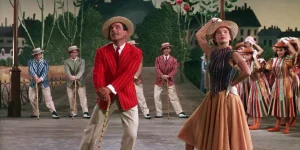
Nearly all of Singin’ in the Rain was shot on the MGM Studios backlot in Culver City, California. MGM’s resources at this period were extraordinary, allowing the production to build elaborate sets without leaving the studio grounds. The famous rain sequence used the studio’s outdoor street set.
Shooting on a controlled backlot gave directors Gene Kelly and Stanley Donen precise command over every element, including the rain itself. The studio mixed milk into the water used in the rain sequence so it would show up better on camera. That creative problem-solving captures exactly the spirit the film celebrates.
Awards and Nominations
Singin’ in the Rain received two Academy Award nominations: one for Jean Hagen as Best Supporting Actress and one for Lennie Hayton for Best Score. Neither nomination converted into a win. In retrospect, that feels like one of Oscar history’s more glaring oversights.
However, the film’s reputation grew massively over the decades. The American Film Institute ranked it among the greatest American films ever made. Its cultural footprint dwarfs its original awards tally by an almost comic margin.
Behind the Scenes Insights
- Debbie Reynolds had very limited formal dance training before production began. Gene Kelly reportedly pushed her extremely hard during rehearsals, reducing her to tears on more than one occasion. She later acknowledged that Kelly was demanding but that the results justified the pressure.
- Donald O’Connor filmed “Make ‘Em Laugh” in one day, then fell ill from exhaustion and had to reshoot it when the original footage was damaged. He performed the entire brutal sequence twice.
- Gene Kelly had a fever during the filming of the “Singin’ in the Rain” title number. The combination of cold water, physical exertion, and illness made the shoot genuinely miserable, which makes the sequence’s apparent joy even more remarkable.
- Jean Hagen was so effective as Lina Lamont that many viewers assume her voice was dubbed or exaggerated. In reality, Hagen was a skilled actress deliberately crafting a comic performance. Ironically, in some scenes where Lina’s “real” voice is supposedly heard dubbed by Kathy, it is actually Hagen’s own natural voice being used.
- Co-director Stanley Donen handled much of the camera work and staging while Kelly focused on the choreography and performance. Their collaboration was productive but not always smooth, and both men later gave somewhat different accounts of who contributed what.
- The “Broadway Melody” ballet sequence runs nearly fourteen minutes and cost a significant portion of the film’s total budget. MGM approved it largely because producer Arthur Freed had enormous creative authority at the studio.
Inspirations and References
Singin’ in the Rain draws directly from the real historical chaos of Hollywood’s transition from silent films to sound in the late 1920s. That transition genuinely destroyed careers overnight, as many silent stars found their voices unsuitable for early microphones. The film treats this historical reality as both dramatic engine and comic gold mine.
Producer Arthur Freed shaped much of the film’s satirical edge from his own experiences working at MGM during that era. Screenwriters Betty Comden and Adolph Green also drew on Hollywood lore and insider knowledge to craft the script’s sharper observations. In addition, the duo structured the story specifically around the pre-existing song catalogue Freed and Brown had already written.
Alternate Endings and Deleted Scenes
No widely documented alternate ending exists for Singin’ in the Rain. The production moved forward with a clear creative vision and did not substantially deviate from the script Comden and Green delivered. Furthermore, no major deleted scenes have surfaced in home video releases or studio archives to significantly alter the narrative.
Some trimming of sequences likely occurred during editing, as was standard practice for MGM productions of this scale. However, nothing of major narrative consequence appears to have been cut. The film audiences saw in 1952 closely reflects the intended version.
Book Adaptations and Differences
Singin’ in the Rain is not based on a book. Screenwriters Betty Comden and Adolph Green wrote an original screenplay built around the existing Arthur Freed and Nacio Herb Brown song catalogue. No source novel, memoir, or stage production preceded the film.


Memorable Scenes and Quotes
Key Scenes
- “Singin’ in the Rain” title number: Don Lockwood dances alone through a studio downpour, swinging from lamp posts and splashing through puddles, celebrating his love for Kathy with uncontainable physical joy.
- “Make ‘Em Laugh”: Cosmo Brown hurls himself through an extraordinary sequence of pratfalls, wall-runs, and prop-based chaos in a tour-de-force of physical comedy that remains jaw-dropping today.
- “Good Morning” trio: Don, Cosmo, and Kathy dance through Don’s house in the middle of the night, using furniture, furniture, and the architecture itself as props in a warmly exuberant group number.
- The curtain reveal: As Lina lip-syncs onstage, the curtain rises to expose Kathy singing behind her, publicly dismantling Lina’s fraud in front of a packed audience.
- The “Broadway Melody” ballet: A lengthy, lavish fantasy sequence featuring Cyd Charisse, presenting a stylized vision of showbiz ambition, corruption, and desire that operates almost as a short film within the film.
- Don’s fake speech: Don narrates his dignified rise to fame while flashbacks contradict every word, establishing the film’s central joke about Hollywood myth-making within its first few minutes.
Iconic Quotes
- “Dignity, always dignity.” (Don Lockwood, narrating a version of his past that bears little resemblance to reality)
- “What a glorious feeling, I’m happy again.” (from the title song, sung by Gene Kelly)
- “Ladies and gentlemen, stop that girl! That girl trying to get away! She’s the one who dubbed the voice for Lina Lamont.” (Don Lockwood, turning the premiere into Kathy’s public debut)
- “If we bring a little joy into your humdrum lives, it makes us feel our work ain’t been in vain for nothin’.” (Lina Lamont, mangling grammar while attempting to sound gracious)
Easter Eggs and Hidden Details
- Jean Hagen’s natural speaking voice, not her exaggerated Lina Lamont accent, actually appears in several scenes where Lina is supposedly being dubbed by Kathy. This means the film quietly uses Hagen’s real voice to represent the “better” voice, a clever layer of irony embedded in the performance.
- Several extras and background performers in the premiere sequence were actual MGM contract players of the era, grounding the Hollywood satire in a real studio community.
- The film references real 1920s Hollywood geography and studio culture in enough detail that film historians use it as a loose touchstone for understanding MGM’s house style during that period, even though the story itself is entirely fictional.
- Cyd Charisse’s character in the “Broadway Melody” ballet has no name and no dialogue, yet she registers as one of the film’s most memorable presences, a deliberate choice to let movement carry all the meaning.
- The song “Make ‘Em Laugh” appears in the film without credit or attribution to Cole Porter, whose “Be a Clown” it closely resembles melodically, a detail sharp-eared viewers still debate.
Trivia
- Debbie Reynolds was only nineteen years old during production. Her dancing scenes required months of intensive preparation, and Kelly pushed her harder than any other performer on set.
- Donald O’Connor smoked heavily at the time, which made his physically brutal performance in “Make ‘Em Laugh” even more punishing. Filming that sequence twice, after the original footage was damaged, tested his physical limits severely.
- Gene Kelly choreographed the entire “Singin’ in the Rain” title sequence himself. He later described it as one of the simplest pieces of choreography he ever designed, letting the joy of the movement carry the number rather than technical complexity.
- The film’s budget was approximately two million dollars, which was substantial for the period. The “Broadway Melody” ballet alone consumed a large share of that figure.
- Betty Comden and Adolph Green wrote the screenplay while constantly listening to the existing song catalogue. They worked backward from the songs to construct a story that would make each number feel dramatically motivated rather than inserted.
- Singin’ in the Rain was not a massive critical sensation on its original release. Its reputation built steadily over the following decades until it achieved its current status as one of the greatest films ever made.
- Gene Kelly and Stanley Donen had previously collaborated on On the Town (1949), establishing a working relationship that they brought to this production.
Why Watch?
Singin’ in the Rain earns its legendary reputation in the first twenty minutes and then keeps earning it. Every performance crackles with genuine skill and charm; every musical number serves the story rather than interrupting it. Moreover, its satirical affection for Hollywood’s absurdities gives it wit that purely celebratory musicals rarely achieve. Simply put, this film is one of cinema’s great pleasures.
Director’s Other Movies
- On the Town (1949) (co-directed by Gene Kelly and Stanley Donen)
- Royal Wedding (1951) (Stanley Donen)
- Seven Brides for Seven Brothers (1954) (Stanley Donen)
- Funny Face (1957) (Stanley Donen)
- Charade (1963) (Stanley Donen)
- Anchors Aweigh (1945) (Gene Kelly, as performer; directed by George Sidney)
Recommended Films for Fans
- An American in Paris (1951)
- The Band Wagon (1953)
- Funny Face (1957)
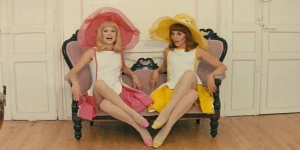
- The Young Girls of Rochefort (1967)
- On the Town (1949)
- 42nd Street (1933)
- The Artist (2011)
- La La Land (2016)
- Easter Parade (1948)