A woman survives a botched hit on a dark Hollywood road, forgets her own name, and wanders into the arms of a stranger who wants to save her. That setup sounds like a classic noir. Instead, David Lynch built one of the most dissected puzzles in film history, a movie that swaps identities, timelines, and realities without warning. Mulholland Drive rewards obsession, and this breakdown spoils every last secret.
Detailed Summary
Jitterbug, Limousine, and a Car Crash
Mulholland Drive opens with a swirl of jitterbug dancers layered over a purple background. A smiling blonde woman flickers among them, flanked by an older couple. Then the image collapses into a pillow, as if someone has just fallen into bed.
A limousine winds along Mulholland Drive at night. A glamorous brunette (Laura Harring) sits in the back until the driver stops and points a gun at her. Before he can fire, a car full of joyriding teenagers slams into the limo.
She crawls from the wreck as the sole survivor. Dazed, she walks down the hillside to Sunset Boulevard and slips into an apartment courtyard. There, she hides inside a unit that an older woman named Ruth is just leaving for a film shoot.
Betty Elms Arrives in Hollywood
Betty Elms (Naomi Watts) lands at LAX, glowing with optimism. An elderly couple, Irene and her companion, wish her luck on her acting dreams. Once they climb into their own car, however, their smiles turn into something eerie and fixed.
Betty heads to her Aunt Ruth’s apartment, where landlady Coco (Ann Miller) hands over the keys. Inside, she finds the brunette in the shower. The stranger calls herself “Rita” after spotting a poster for Gilda starring Rita Hayworth.
Rita admits she cannot remember anything. Her purse holds thick stacks of cash and an odd blue key. Betty, thrilled by the mystery, decides to help her uncover the truth.
Winkie’s and the Nightmare Behind the Diner
At a Winkie’s diner on Sunset, a nervous man named Dan (Patrick Fischler) tells his companion Herb about a recurring dream. In it, a terrifying figure lurks behind this exact restaurant. Dan insists he needs to see the spot in daylight to shake the fear.
They walk to the back lot. A filthy, soot-covered figure slides out from behind the wall. Dan collapses, apparently dead from fright, while Herb looks on helplessly.
A Hitman, a Black Book, and a Botched Job
A pale man in a wheelchair, Mr. Roque (Michael J. Anderson), speaks through a glass wall and orders his people to keep searching. “The girl is still missing,” someone confirms. Phones ring down a chain of shadowy contacts until one call goes unanswered beside a red lampshade.
Meanwhile, hitman Joe (Mark Pellegrino) visits an office to steal a black book full of phone numbers. He shoots the owner, Ed, then accidentally fires through the wall and hits a heavyset woman. Things spiral from there.
Joe drags the wounded woman back inside, shoots a janitor, and puts a bullet into a vacuum cleaner, which triggers the alarm. He flees with the book. Later, at Pink’s hot dog stand, he asks a sex worker about a missing brunette.
Adam Kesher and the Castigliane Brothers
Hotshot director Adam Kesher (Justin Theroux) sits in a meeting with the Castigliane brothers, Vincenzo (Dan Hedaya) and Luigi (Angelo Badalamenti). Luigi orders an espresso, sips it, and spits it into a napkin in disgust. Vincenzo slides over a headshot of an actress named Camilla Rhodes and says, “This is the girl.”
Adam refuses to cast an actress he has never met. Outside, he smashes the brothers’ limousine with a golf club. He drives home to find his wife Lorraine (Lori Heuring) in bed with pool man Gene (Billy Ray Cyrus).
Adam retaliates by pouring pink paint into her jewelry box. Gene throws him out. Soon Adam learns his bank accounts have vanished, and his production has shut down. His assistant Cynthia tells him a man called the Cowboy wants to meet.
The Cowboy at the Corral
Adam drives to a corral above Beachwood Canyon at night. A light flickers on, and the Cowboy (Monty Montgomery) strolls out in full western dress. He delivers a strange, folksy lecture on attitude and warns Adam to recast the film.
“You’ll see me one more time if you do good,” the Cowboy says. “You’ll see me two more times if you do bad.” Adam gets the message and leaves.
Betty’s Audition
Betty rehearses a corny scene with Rita, and the dialogue sounds laughable. At the actual audition, veteran actor Woody Katz (Chad Everett) suggests they play it close and quiet. Betty transforms the trashy material into something charged and dangerous.
The room falls silent. Casting agent Linney James (Rita Taggart) whisks her across the Paramount lot to meet a director. Notably, that director is Adam Kesher.
“This Is the Girl”
On Adam’s soundstage, a blonde performer sings “Sixteen Reasons.” Then the new Camilla Rhodes (Melissa George) lip-syncs “I’ve Told Every Little Star.” Adam, defeated, says “This is the girl.”
Betty and Adam lock eyes across the room. Something passes between them, and she flees before anyone can introduce her. She has promised to help Rita that afternoon anyway.
Searching for Diane Selwyn
Earlier, Rita remembered the name “Diane Selwyn” and found a D. Selwyn in the phone book. Betty and Rita take a cab to the Sierra Bonita apartments. A neighbor explains that she swapped units with Diane, and that Diane has not answered in days.
Louise Bonner, a strange woman in black, has also appeared at Betty’s door with a warning: “Someone is in trouble. Something bad is happening.”
Betty climbs through Diane’s window and unlocks the door. In the bedroom, they discover a bloated, decomposing corpse of a woman. Rita screams, and the image of both women shudders and blurs.
Blue Wigs, Love, and Club Silencio
Terrified that she might be the target, Rita cuts her hair and puts on a blonde wig. Now she resembles Betty. That night, Rita crawls into Betty’s bed, and they make love.
Afterward, Rita mutters in Spanish in her sleep: “Silencio. No hay banda.” She wakes in a panic and insists they go somewhere. At two in the morning, a cab drops them at Club Silencio.
Onstage, a magician (Richard Green) announces that there is no band. Every sound is a recording; every performance is an illusion. Thunder cracks, blue light flashes, and Betty convulses in her seat.
Rebekah Del Rio walks out and sings “Llorando,” a Spanish rendition of Roy Orbison’s “Crying,” without accompaniment. Midway through, she collapses, yet her voice keeps going. Betty and Rita weep together, and Betty finds a small blue box in her purse.
The Blue Box
Back at the apartment, Rita retrieves the blue key. She turns around, and Betty has vanished. Rita opens the box, and the camera plunges into its darkness.
Aunt Ruth walks into the room. It is empty. The Cowboy then appears in the doorway of a dim bedroom and says, “Hey, pretty girl, time to wake up.”

Movie Ending
Diane Selwyn wakes in the same bedroom where Betty and Rita found the corpse. Naomi Watts now plays a gaunt, bitter woman in a dingy robe. Everything before this moment was her dream.
A neighbor stops by to collect her belongings. She mentions two detectives who keep asking about Diane. On the coffee table sits a plain blue key.
Diane makes coffee and hallucinates Camilla (Laura Harring) in her kitchen. The film then slides into fragmented flashbacks. Camilla was a rising star who got Diane small parts on Adam Kesher’s films, and the two women had an affair.
Camilla ended it. On Adam’s set, Diane watched him kiss Camilla while directing a love scene. Camilla later invited Diane to a dinner party on Mulholland Drive, guiding her up a secret path through the hills.
At the party, Adam’s mother Coco greets the guests. Diane awkwardly tells her story: she won a jitterbug contest in Deep River, Ontario, and moved to Hollywood after her aunt died and left her money. Camilla then kisses a blonde woman (Melissa George) in front of her.
Adam and Camilla giggle through a joint announcement of their engagement. Diane’s face crumples. In the final flashback, she sits in Winkie’s with the hitman Joe and slides an envelope of cash across the table.
Joe shows her a blue key. Once the job is done, she will find it where he told her to look. “What does it open?” she asks, and he just laughs.
Back in the present, the blue key on the table confirms that Camilla is dead. Diane spirals. The bum behind Winkie’s holds the blue box in a paper bag, and the tiny, cackling elderly couple crawls out of it.
They grow to full size and chase Diane through her apartment. Screaming, she pulls a gun from the nightstand and shoots herself. Smoke fills the room, and the images of Betty and Rita smile over a glittering Los Angeles skyline.
A blue-haired woman in the balcony of Club Silencio whispers the final word: “Silencio.”
So what does it all mean? The first two hours are Diane’s wish-fulfillment dream, constructed from the guilt and shame of the murder she paid for. She rewrites herself as Betty, a talented innocent, and rewrites Camilla as Rita, a helpless amnesiac who needs her.
Every villain in the dream carries a job of absolution. The Castigliane brothers, Mr. Roque, and the Cowboy force Adam to cast “Camilla Rhodes,” which lets Diane believe Camilla only succeeded through corruption. Adam himself gets humiliated, cuckolded, and broke.
The blonde woman Camilla kissed at the party becomes the fake Camilla Rhodes in the dream, stealing the role Betty deserved. Joe becomes a bumbling clown. Dan’s death behind Winkie’s shows Diane’s mind trying to face the horror of what she arranged in that same diner.
The blue box and key mark the point where the dream can no longer hold. Club Silencio tells Betty outright that everything she has experienced is a recording, an illusion. Once the box opens, Diane must wake up and face a reality without Camilla, without success, and without forgiveness.
Lynch never confirmed this reading, and some viewers prefer to treat the halves as parallel realities or a Möbius loop. Even so, the dream interpretation explains nearly every echo, and it fits the ten clues Lynch offered on the original DVD.
Are There Post-Credits Scenes?
No. Mulholland Drive ends on the whispered “Silencio,” and the credits roll with no extra footage. Lynch even refused to include chapter stops on the DVD, since he wanted the film experienced as one unbroken piece.
Type of Movie
Mulholland Drive is a surreal neo-noir psychological thriller with strong elements of mystery, romance, and dark comedy. Lynch blends the glamour of classic Hollywood with dream logic and outright horror.
Tonally, the film shifts constantly. One scene plays like a sitcom parody; the next plays like a nightmare. That instability is the point, since the audience shares Diane’s inability to tell fantasy from fact.
Cast
- Naomi Watts – Betty Elms / Diane Selwyn
- Laura Harring – Rita / Camilla Rhodes
- Justin Theroux – Adam Kesher
- Ann Miller – Coco Lenoix
- Mark Pellegrino – Joe Messing
- Robert Forster – Detective Harry McKnight
- Brent Briscoe – Detective Neal Domgaard
- Dan Hedaya – Vincenzo Castigliane
- Angelo Badalamenti – Luigi Castigliane
- Michael J. Anderson – Mr. Roque
- Monty Montgomery – The Cowboy
- Patrick Fischler – Dan
- Melissa George – Camilla Rhodes (blonde)
- Chad Everett – Jimmy “Woody” Katz
- Lee Grant – Louise Bonner
- Lori Heuring – Lorraine Kesher
- Billy Ray Cyrus – Gene
- Katharine Towne – Cynthia Jenzen
- Scott Coffey – Wilkins
- Jeanne Bates – Irene
- Bonnie Aarons – The Bum
- Richard Green – The Magician
- Rebekah Del Rio – Herself
Film Music and Composer
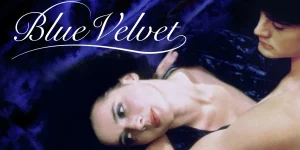
Angelo Badalamenti composed the score, continuing a partnership with Lynch that began on Blue Velvet and produced the famous Twin Peaks theme. His music here drifts between lush, romantic strings and low, menacing drones. The main theme captures both the seduction and the dread of Hollywood.
Badalamenti also appears on camera as Luigi Castigliane, the espresso-spitting gangster. Few composers get to act in their own scores, and even fewer do it this memorably.
The most celebrated musical moment belongs to Rebekah Del Rio. Her a cappella “Llorando” turns Roy Orbison’s “Crying” into a devastating Spanish lament. Lynch recorded her performance in one take at his home studio, and that recording appears in the film.
Two vintage pop songs also anchor the audition sequence. “Sixteen Reasons” by Connie Stevens and “I’ve Told Every Little Star” by Linda Scott provide a sugary contrast to the corruption around them. Lynch himself contributed some ambient tracks, as he often does.

Filming Locations
The real Mulholland Drive snakes along the ridge of the Hollywood Hills, offering views of the city below. Lynch uses it as a border between glamour and danger, the road where Rita nearly dies and where Diane’s world later collapses at the dinner party.
Winkie’s was shot at Caesar’s Restaurant on Sunset Boulevard. Its ordinary appearance matters, because the film’s most primal horror hides behind an everyday diner.
Club Silencio scenes used the Tower Theatre, a 1927 movie palace in downtown Los Angeles. Its faded grandeur suits a venue where old Hollywood magic reveals itself as a trick.
Betty walks through the real Paramount Studios gate on her way to Adam’s soundstage. That gate famously appears in Sunset Boulevard, and its presence signals Diane’s dream of studio-era stardom. Joe’s meeting at Pink’s Hot Dogs on La Brea grounds the hitman subplot in a familiar LA landmark.
Awards and Nominations
David Lynch earned an Academy Award nomination for Best Director. He also won Best Director at the 2001 Cannes Film Festival, sharing the prize with Joel Coen for The Man Who Wasn’t There.
The film collected Golden Globe nominations, including Best Director and Best Screenplay. Editor Mary Sweeney won the BAFTA for Best Editing, and the film took the César Award for Best Foreign Film.
Critics groups showered it with honors. The New York Film Critics Circle named it Best Film, and Naomi Watts won Best Actress from the National Society of Film Critics. In 2016, a BBC poll of critics ranked it the greatest film of the 21st century, and it placed eighth in the 2022 Sight and Sound poll of the greatest films ever made.
Behind the Scenes Insights
- Lynch originally shot Mulholland Drive in 1999 as a television pilot for ABC, intending an open-ended series in the vein of Twin Peaks.
- ABC executives rejected the pilot. Lynch has described his frustration with their notes and their demand for a shorter cut.
- French producer Pierre Edelman and StudioCanal offered funding to shoot new material and turn the pilot into a feature.
- Lynch has said the new ending came to him in a single sitting after meditation, resolving a story that had stayed open for a year.
- Naomi Watts was nearly ready to quit acting when Lynch picked her from a headshot and cast her after a single meeting.
- Laura Harring has said she got into a minor car accident on her way to meet Lynch, which she took as a sign given the film’s opening scene.
- Michael J. Anderson wore a large prosthetic body to play Mr. Roque, so his head appears on an oversized frame.
- Justin Theroux has said Adam Kesher’s black jacket and glasses were modeled on Lynch’s own look.
- Ann Miller, a legend of MGM musicals, gave her final film performance as Coco.
- Monty Montgomery, who plays the Cowboy, was a producer and longtime Lynch associate rather than a professional actor.
- The love scene, Club Silencio, and the entire Diane Selwyn section were among the new scenes shot in 2000.
Inspirations and References
Lynch has cited Sunset Boulevard (1950) as a favorite, and the parallels run deep. Both films dissect Hollywood’s cruelty, and Rita literally walks down Sunset Boulevard after the crash. Betty’s stroll through the Paramount gate echoes Billy Wilder’s classic directly.
Rita takes her name from a poster of Gilda (1946), invoking Rita Hayworth as the ultimate studio-manufactured goddess. Similarly, Rita’s blonde wig transformation nods to Hitchcock’s Vertigo (1958), where a man remakes one woman into another.
Ingmar Bergman’s Persona (1966) offers the closest thematic ancestor. Its two women, a nurse and an actress, gradually merge into one identity, which mirrors the Betty and Rita fusion.
Lynch reportedly first imagined a story about a Twin Peaks character, Audrey Horne, heading to Hollywood. That idea never materialized, but its DNA survives in Betty’s small-town arrival. The title itself came from the road, which Lynch has said he loved for its mysterious sound.
Alternate Endings and Deleted Scenes
The original ABC pilot ran roughly 90 minutes and ended without resolution, since it was meant to launch a series. It contained no Diane Selwyn material, no Club Silencio, and no love scene. Those additions changed the story from an unfolding mystery into a closed loop.
Lynch trimmed several pilot scenes to make room. Detectives McKnight and Domgaard originally had a larger investigative role, which explains why they vanish after the crash. Other minor threads, including more of Adam’s studio troubles, got shortened.
Lynch has refused to release the pilot or any deleted footage. Bootleg copies of the pilot cut circulate among fans, but no official alternate ending exists. Lynch treats the theatrical cut as the only version.
Book Adaptations and Differences
Mulholland Drive is not based on a book. Lynch wrote the screenplay himself, first as a television pilot and then as a feature. Several books have since analyzed the film, but the story is entirely original.
Memorable Scenes and Quotes
Key Scenes
- The Winkie’s nightmare, where Dan confronts the bum behind the diner and drops dead.
- Luigi Castigliane spitting out his espresso in disgust, one of the funniest moments in Lynch’s filmography.
- Betty’s audition, where Naomi Watts turns laughable dialogue into a smoldering, frightening performance.
- The Cowboy’s midnight lecture at the corral, delivered with unnerving politeness.
- Discovering the corpse in Diane Selwyn’s bedroom.
- Rebekah Del Rio’s “Llorando” performance at Club Silencio, and her collapse while the song continues.
- Diane’s final breakdown, as the tiny elderly couple crawls out of the paper bag.
Iconic Quotes
- “This is the girl.”
- “No hay banda. There is no band. It is all an illusion.”
- “Hey, pretty girl, time to wake up.”
- “Someone is in trouble. Something bad is happening.”
- “You’ll see me one more time if you do good. You’ll see me two more times if you do bad.”
- “I just came here from Deep River, Ontario, and now I’m in this dream place.”
- “Don’t play it for real until it gets real.”
- “Silencio.”
Easter Eggs and Hidden Details
- The Winkie’s waitress wears a name tag reading “Diane” in the dream and “Betty” in reality, revealing where Diane borrowed her fantasy name.
- Dan, the terrified man from the Winkie’s scene, sits at the counter when Diane hires Joe, which marks the diner as ground zero for her guilt.
- Louise Bonner’s warning (“Someone is in trouble”) applies to Diane, not Betty.
- The Cowboy keeps his promise. He appears twice more in reality: once at the party and once telling Diane to wake up, which suggests she “did bad.”
- Coco is the landlady in the dream but Adam’s mother in reality, a role that explains her cold disapproval at the party.
- Diane’s neighbor mentions swapping apartments, and the dream has Betty and Rita visit the wrong unit first for the same reason.
- The blue key changes shape. It is a decorative triangular key in the dream and a plain house key in reality.
- Adam’s line “This is the girl” replays Diane’s own view: that Camilla got roles because someone forced the industry to choose her.
- An ashtray and a red lampshade reappear across both halves, anchoring the dream in objects from Diane’s apartment.
- The elderly couple from the airport are the same people who drive Diane to suicide, transforming her grandmotherly well-wishers into her judges.
- The corpse in the dream lies in the exact position Diane takes when she wakes.
Trivia
- Naomi Watts was 31 when Lynch cast her, and the film made her a star almost overnight.
- Laura Harring was crowned Miss USA in 1985 before turning to acting.
- Lynch supplied ten “clues” on the DVD insert to help viewers unlock the story, including “Notice the robe, the ashtray, the coffee cup.”
- The DVD shipped without chapter stops at Lynch’s insistence.
- Roger Ebert gave the film four stars and later added it to his Great Movies collection.
- Angelo Badalamenti won a Grammy for the Twin Peaks theme before playing a gangster here.
- Lynch shot the film with cinematographer Peter Deming, who also shot Lost Highway.
- Watts and Harring became close friends during production and have praised each other’s work for decades.
- Justin Theroux later found wider fame as the star of The Leftovers and as a screenwriter.
- The jitterbug opening was inspired by Lynch’s memory of dance contests, and Diane confirms she won one back in Ontario.
Why Watch?
Mulholland Drive delivers one of the greatest performances of its era from Naomi Watts, and it turns Hollywood ambition into pure nightmare. Every rewatch exposes a new connection. Few films reward attention so generously, and none capture heartbreak quite this strangely.
David Lynch’s Other Movies
- Eraserhead (1977)
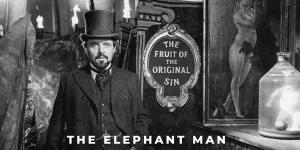
- The Elephant Man (1980)
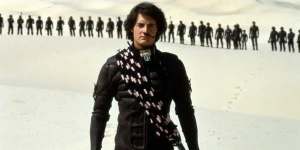
- Dune (1984)
- Blue Velvet (1986)
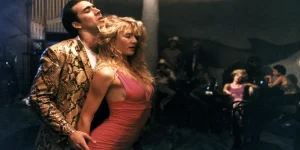
- Wild at Heart (1990)
- Twin Peaks: Fire Walk with Me (1992)
- Lost Highway (1997)
- The Straight Story (1999)
- Inland Empire (2006)