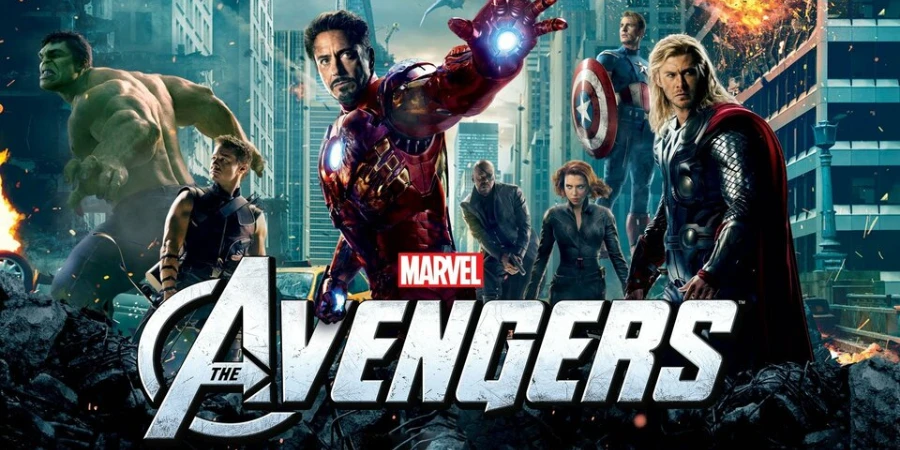
Six superheroes walk into a room and immediately try to kill each other. That is the most honest summary of The Avengers (2012), a film that earns its spectacle by making the team’s dysfunction feel genuinely dangerous before the alien invasion even starts. Joss Whedon pulled off something most blockbusters fail at: he gave every character a reason to be in the room and a reason to resent being there.
Detailed Summary
The Tesseract Awakens
Nick Fury arrives at a S.H.I.E.L.D. research facility where scientists are studying the Tesseract, a glowing blue cube of immense cosmic energy. Without warning, the Tesseract activates on its own, opening a portal through space.
Loki steps through. He seizes the Tesseract immediately, kills several agents with casual brutality, and uses his scepter to mind-control both Clint Barton and scientist Erik Selvig. Agent Phil Coulson barely escapes as the entire facility collapses.
Fury Activates the Avengers Initiative
Fury declares a state of emergency called “Phase Two” is on hold; the Avengers Initiative takes priority. He sends agents to recruit the team one by one, pulling them from wildly different corners of the world.
Natasha Romanoff gets extracted mid-interrogation, a genuinely funny cold open where she is tied to a chair and still completely in control. Steve Rogers punches through several sandbags in a Brooklyn gym, clearly wrestling with his displacement in time. Bruce Banner gets found in Kolkata, reluctant and careful, keeping his rage barely contained behind soft-spoken manners.
Tony Stark Joins Reluctantly
Tony Stark is busy reviewing data aboard a retrofitted Stark tower in New York when Coulson shows up with a dossier. Stark agrees to help, but frames it entirely as his own idea. That distinction matters to him enormously.
Fury briefs the growing team aboard the S.H.I.E.L.D. helicarrier, a massive airborne fortress that lifts off the ocean and vanishes into cloud cover. Selvig, now under Loki’s influence, is building a device to harness the Tesseract and open a sustained portal for Loki’s army, the Chitauri.
Loki Surrenders (On Purpose)
Loki appears in Stuttgart, Germany, forcing a crowd of civilians to kneel before him in a plaza. Steve Rogers drops in with a shield throw that interrupts the speech nicely. Tony arrives seconds later in the Iron Man suit, and together they capture Loki without much resistance.
Loki does not fight back seriously. He lets himself be taken. That surrender is the first sign that everything is going according to his plan, not Fury’s.
Thor Complicates Everything
On the jet back with Loki in custody, Thor drops out of a storm cloud and abducts his brother for a private conversation on a mountain ridge. Tony follows. Steve follows Tony. A three-way fight breaks out in a forest that levels a significant patch of woodland.
Whedon shoots this sequence with a sharp eye for comedic timing. Thor brings his hammer down on Steve’s shield, releasing a shockwave that flattens every tree in a wide radius. Both men stare at the destruction. A beat. They keep fighting anyway.
Fractures on the Helicarrier
Back aboard the helicarrier, Loki sits in a transparent cell designed to hold the Hulk. Stark and Banner bond over science while quietly hacking Fury’s files, discovering S.H.I.E.L.D. is weaponizing Tesseract energy. That revelation fractures the team’s trust in Fury before Loki even has to do a thing.
Loki’s scepter, stored nearby, radiates a subtle influence that sharpens everyone’s irritability. Rogers and Stark bicker constantly. Banner grows increasingly agitated. Fury stonewalls every question. The team is coming apart at the seams from the inside.
The Attack on the Helicarrier
Hawkeye, still mind-controlled, leads a strike team against the helicarrier. Explosions knock out two of the four engines. Banner falls through the floor into a lower deck and transforms into the Hulk in the worst possible environment: a confined metal corridor with no exit.
Romanoff spends the sequence running from the Hulk through steel corridors, and Scarlett Johansson plays genuine terror better than most actors play courage. Thor gets trapped in the cell intended for Loki and ejected from the ship. Coulson confronts Loki alone and gets stabbed through the chest with the scepter.
Coulson Dies, the Team Breaks Apart
Coulson’s death is the pivot point of the entire film. Fury uses his death to reunite a fractured team, showing the team Coulson’s vintage Captain America trading cards, bloodied from the attack. Stark and Rogers finally stop sniping at each other long enough to grieve.
Loki escapes. Barton gets knocked out of his mind control by Romanoff, who slams his head into a metal railing with precise, methodical force. The helicarrier stabilizes. But the team is scattered, demoralized, and leaderless in practical terms.
New York Under Siege
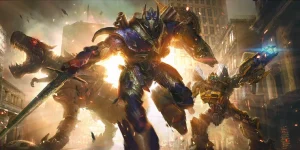
Selvig completes the portal device atop Stark Tower. Loki arrives, opens the Tesseract fully, and tears a hole in the sky above Manhattan. The Chitauri pour through in waves, riding aerial serpents the size of skyscrapers and flooding the streets below with ground troops.
Rogers takes command of the street-level defense with calm authority, coordinating police and guiding civilians while the others handle the bigger threats. This is Steve at his best: not the strongest person in the room, but the clearest thinker under pressure.
The Battle of New York
Whedon orchestrates the battle as a continuous series of handoffs between characters. One long tracking shot follows the action from Hawkeye on a rooftop to Black Widow on a Chitauri glider to Cap on the street to Iron Man in the air to Thor calling lightning to the Hulk smashing a Leviathan midair. It is the best single shot in the film and earns every second of its runtime.
Banner arrives on a motorcycle, calmly explains his secret to managing the Hulk (“I’m always angry”), and immediately turns green and punches a Leviathan straight in the face. The audience reaction to that moment is one of the few times a Marvel film has genuinely surprised a theater in real time.
Movie Ending
World Security Council overrides Fury and launches a nuclear missile toward Manhattan to seal the portal from the outside. Stark intercepts it alone, grabs the warhead, and steers it through the portal into space toward the Chitauri command ship. The missile detonates. The Chitauri, linked to a hive mind, all drop dead simultaneously. The portal starts to close.
Stark runs out of power inside the portal. His suit goes dark. He falls back through the closing gap unconscious, dropping from the sky over Manhattan at terminal velocity. The Hulk catches him mid-fall and releases a roar inches from Tony’s face that snaps him awake. It is a beautifully structured beat: the most uncontrollable force on the team saving the most reckless one.
Loki, beaten thoroughly by the Hulk in Stark’s penthouse (“Puny god” remains one of the funniest lines in any superhero film), gets shackled by Thor and prepared for transport back to Asgard. The Tesseract goes with them. The team disperses without ceremony, no formal handshake, no official founding of anything.
Fury watches them go and defends the Avengers to his superiors. His argument: when they need to be, they assemble. That quiet confidence in a group that barely cooperates is more interesting than any triumphant speech could be.
Are There Post-Credits Scenes?
The Avengers has two post-credits scenes, and they could not be more different in tone. The first, a mid-credits scene, reveals the film’s true villain behind Loki’s plan: Thanos, shown in profile, turning to smile at the camera. In 2012, most general audiences had no idea who that was. Comic readers lost their minds.
The second scene, a brief stinger at the very end of the credits, shows the entire team sitting in silence at a shawarma restaurant in New York, still in costume, visibly exhausted, eating. Nobody speaks. Tony slouches. Thor chews politely. It is a perfect joke and a perfect exhale after two hours of noise.
Type of Movie
The Avengers is a superhero action-adventure film with strong comedic underpinnings. Whedon’s television roots show in the snappy ensemble dialogue and the willingness to deflate tension with a well-timed joke.
Tonally, it sits somewhere between a disaster film and a workplace comedy. The stakes are planetary, but the interpersonal friction feels genuinely small-scale and human.
Cast
- Robert Downey Jr. – Tony Stark / Iron Man
- Chris Evans – Steve Rogers / Captain America
- Mark Ruffalo – Bruce Banner / The Hulk
- Chris Hemsworth – Thor
- Scarlett Johansson – Natasha Romanoff / Black Widow
- Jeremy Renner – Clint Barton / Hawkeye
- Tom Hiddleston – Loki
- Clark Gregg – Agent Phil Coulson
- Samuel L. Jackson – Nick Fury
- Cobie Smulders – Agent Maria Hill
- Stellan Skarsgard – Erik Selvig
- Gwyneth Paltrow – Pepper Potts
- Paul Bettany – J.A.R.V.I.S. (voice)
Film Music and Composer
Alan Silvestri composed the score, and his work here is best understood as a deliberate callback to his own heroic brass writing from earlier decades. The main Avengers theme, a bold ascending brass fanfare, became the signature sound of the entire franchise going forward.
Silvestri builds tension during the helicarrier sequences with low strings and irregular rhythms that keep the audience uneasy even during quieter dialogue scenes. His score is most effective when it pulls back entirely, letting silence carry the weight of Coulson’s death.
The composer had worked with the franchise before, having scored Captain America: The First Avenger the previous year. That continuity gave him a thematic library to draw from, and the callbacks to Steve’s leitmotif hit harder for it.

Filming Locations
Principal photography took place primarily in Albuquerque, New Mexico, where large soundstages at Albuquerque Studios housed the helicarrier interiors and most of the S.H.I.E.L.D. sets. The controlled environment allowed Whedon to design the geography of the ship precisely.
New York City provided exterior footage for the Battle of New York sequences, though a significant amount of the battle was shot on location in Cleveland, Ohio, which doubled for Manhattan. Cleveland’s downtown architecture photograph cleanly as New York, and the city offered logistical flexibility that filming in actual Manhattan would not have allowed.
Stuttgart, Germany provided the exteriors for Loki’s plaza confrontation scene, grounding that sequence in a real European weight that a studio backlot could not replicate. The choice to film there gives the scene a historical echo, an authoritarian figure demanding submission in a German public square, that feels entirely intentional.
Awards and Nominations
The Avengers received an Academy Award nomination for Best Visual Effects at the 85th Academy Awards. It did not win in that category.
The film cleaned up at the Teen Choice Awards and MTV Movie Awards that year, picking up multiple wins across action and comedy categories. Its cultural footprint dwarfed its awards footprint, which is not unusual for blockbusters of its scale.
Behind the Scenes Insights
- Joss Whedon wrote the screenplay in addition to directing, completing a significant rewrite after Zak Penn’s initial draft. Whedon wanted every character to feel like the lead of their own film, not a supporting player in someone else’s story.
- Mark Ruffalo was the third actor to play Bruce Banner in a major film, following Eric Bana and Edward Norton. His casting was Whedon’s specific preference, and Ruffalo’s gentle, distracted quality gave Banner a quality neither predecessor quite captured.
- The shawarma post-credits scene was filmed after the premiere, in the final days of reshoots. Robert Downey Jr. reportedly wore a prosthetic jaw to cover a beard he had grown for another project.
- Tom Hiddleston prepared for the Stuttgart crowd-control scene by studying footage of actual authoritarian public addresses to find the physical rhythms of someone who genuinely expects obedience.
- The one-shot tracking sequence during the Battle of New York required extensive coordination between VFX teams and on-set photographers, stitching together practical and digital elements across weeks of work.
- Gwyneth Paltrow and Robert Downey Jr. filmed their brief Stark Tower scenes at the very end of production, slotting them in around Downey’s scheduling constraints.
- Cobie Smulders trained extensively for the physical demands of the role despite Maria Hill having relatively limited screen time in this installment.
Inspirations and References
The film draws directly from Marvel Comics history, particularly the original Avengers comic series launched by Stan Lee and Jack Kirby in 1963. The assembling of disparate heroes against a shared threat mirrors those early issues closely, including Loki as the initial antagonist.
Whedon cited his experience writing ensemble casts in television, specifically his work on Buffy the Vampire Slayer and Firefly, as preparation for managing six lead characters without shortchanging any of them. That television DNA shows in the sharp, overlapping dialogue rhythms throughout.
The Chitauri invasion draws visual and conceptual inspiration from The Ultimates, Mark Millar and Bryan Hitch’s early 2000s reimagining of the Avengers. That series also informed the more grounded, realistic aesthetic of the S.H.I.E.L.D. operations shown in the film.
Alternate Endings and Deleted Scenes
A deleted scene featuring Maria Hill opens the film in an alternate structure, with Hill debriefing to World Security Council investigators about the Avengers Initiative after the fact. The scene plays like a framing device and was cut because it slowed the opening momentum significantly.
An alternate version of Loki’s capture in Stuttgart included additional dialogue between Loki and Steve Rogers about freedom and subjugation, expanding on Loki’s ideology. Whedon cut it to keep the sequence lean and propulsive.
Additional Bruce Banner scenes set in Kolkata were extended in earlier cuts, giving more texture to his life in exile. They were trimmed during editing to keep the film’s pacing from bogging down in its first act setup.
Book Adaptations and Differences
The Avengers is not an adaptation of a specific book or single comic storyline. It draws from decades of Marvel Comics continuity rather than any one source text, functioning as a synthesis of characters and concepts from multiple ongoing series.
A junior novelization of the film was released alongside it, but this adapted the screenplay rather than inspiring it. No meaningful comparison between page and screen applies here.
Memorable Scenes and Quotes
Key Scenes
- Loki’s Stuttgart plaza speech, where he forces a crowd to kneel and one elderly man refuses to stand down, a moment that earns genuine emotional weight in about fifteen seconds of screen time.
- Stark and Banner bonding in the lab over coffee and mutual fascination with the Tesseract’s energy readings, the warmest scene in the film and the one that most clearly sets up their friendship across future films.
- Romanoff’s interrogation cold open, where she engineers her own rescue while tied to a chair, establishing her competence more efficiently than any action sequence could.
- The Hulk catching the falling Iron Man after the portal sequence, structured so the catch and the roar land as both a rescue and a punchline simultaneously.
- The one-shot tracking sequence during the Battle of New York, circling all six Avengers in a single continuous move that functions as the film’s visual thesis statement.
- Hulk smashing Loki repeatedly into the floor of the penthouse, then walking away while Loki whimpers in the crater.
Iconic Quotes
- “I’m always angry.” (Bruce Banner, just before transforming)
- “Puny god.” (Hulk, after smashing Loki)
- “We have a Hulk.” (Tony Stark, to Loki)
- “You all right?” / “… shawarma.” (Tony Stark, after the portal sequence)
- “Is this love, Agent Romanoff?” / “Love is for children. I owe him a debt.” (Loki and Romanoff)
- “If we can’t protect the Earth, you can be damn well sure we’ll avenge it.” (Nick Fury)
Easter Eggs and Hidden Details
- The number on the door of the shawarma restaurant is visible at the end of the credits scene, and fans have traced it to a real location near the film’s production offices.
- During Stark’s scan of the team in Stuttgart, a graphic briefly displays each hero’s vital signs and threat assessment data in small on-screen text that pauses on a reference to gamma radiation levels for Banner.
- Loki’s scepter contains what appears to be the Mind Stone, though this is not confirmed within the film itself; the yellow gem at its center becomes significant in later MCU entries.
- A photograph of Erskine, the scientist who created the super-soldier serum in Captain America: The First Avenger, appears briefly on a desk in the S.H.I.E.L.D. facility during the opening sequence.
- Hawkeye’s quiver in the film has a mechanical selector system that lets him choose arrowhead types without looking, a detail that is easy to miss but gets a brief close-up during the helicarrier attack sequence.
- Tony Stark’s Mark VII armor in the film activates via bracelets he wears at the wrist rather than requiring a suit-up sequence, a new deployment method introduced without any explanatory dialogue, trusting the audience to catch it.
- Nick Fury’s eye patch cord subtly shifts sides between two scenes, a continuity error that sharpened fan scrutiny of every subsequent Fury appearance.
Trivia
- The Avengers became one of the highest-grossing films of all time upon release, a position it held for several years before later MCU entries surpassed it.
- Joss Whedon wrote the script in a matter of weeks, working from a treatment he had developed quickly after being hired by Marvel Studios.
- Mark Ruffalo is the first actor to perform both Bruce Banner and the Hulk using motion capture, with previous films using separate performers or practical effects for the two roles.
- The helicarrier set was one of the largest practical sets built for any Marvel Studios production up to that point.
- Robert Downey Jr. reportedly kept food hidden around the set and improvised the moment in the lab scene where he offers Banner blueberries, with Ruffalo’s surprised reaction partially genuine.
- Tom Hiddleston wore the full Loki costume and horned helmet on set every single day of production, reportedly to stay in character and to help his co-stars respond to the scale of the character physically.
- The film’s opening Loki sequence was significantly more graphic in earlier cuts; several kills were softened to maintain the PG-13 rating.
- Chris Evans confirmed in interviews that he found the Steve Rogers scenes aboard the helicarrier the most challenging to play, because Rogers has no technological armor or powers in those moments and is essentially an anxious outsider in a room full of geniuses.
Why Watch?
Watch it for Mark Ruffalo’s Banner, who manages genuine pathos inside a film that could easily have buried him under spectacle. His “I’m always angry” reveal reframes every cautious gesture he makes in the preceding two hours. Whedon understood that the funniest and most heartbreaking character in an ensemble is usually the one everyone else treats as a liability.
Director’s Other Movies
- Serenity (2005)
- Much Ado About Nothing (2012)
- Avengers: Age of Ultron (2015)