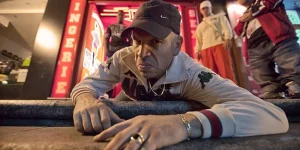

Paul Schrader sent a Calvinist father into the pornographic underworld of 1970s America and somehow turned that lurid premise into one of the most morally serious American films of the decade. Jake VanDorn, played by George C. Scott with the kind of controlled fury that makes you hold your breath, watches a Super 8 reel of his missing daughter performing in a pornographic film, and the camera stays on his face for nearly every agonizing second of it. That single scene earns the whole movie. Schrader, fresh off writing Taxi Driver, knew exactly what he was doing: using exploitation as a vessel for something closer to genuine grief.
Detailed Summary
A Father’s World in Grand Rapids
Jake VanDorn lives in Grand Rapids, Michigan, inside a tight, prosperous Calvinist community. He is a businessman, a churchgoer, a widower, and a devoted father to his teenage daughter, Kristen. Schrader establishes this world with deliberate, almost affectionate patience.
A long Christmas dinner sequence opens the film. Family surrounds Jake. The scene feels warm, slightly cramped, entirely real. Schrader shoots it without irony, because he needs you to believe in this world before it shatters.
Kristen Disappears
Kristen travels to a youth church convention in San Francisco. She never comes back. Jake files a missing persons report, but local authorities move slowly, and Jake grows desperate.
He hires a private investigator named Andy Mast, played by Peter Boyle. Mast is sleazy, effective, and morally flexible in ways Jake clearly is not. Their dynamic pulls the film forward with quiet friction.
The Super 8 Screening
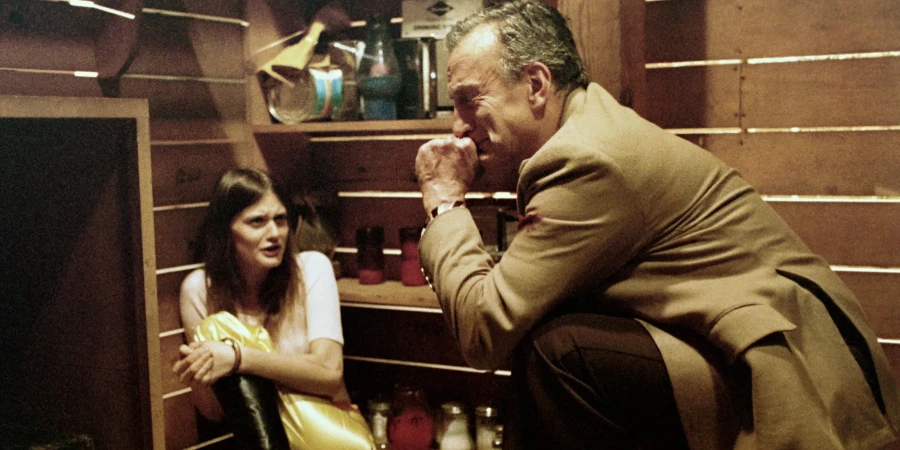
Mast tracks down a pornographic film featuring a girl who matches Kristen’s description. He screens it for Jake in a dim office. Scott sits in a chair and watches. His face crumples, tightens, and goes very still. He finally lunges forward, knocking the projector, and screams at Mast to shut it off.
Schrader keeps the camera exclusively on Scott’s face during the screening. We never see the film itself. That choice is the most disciplined directorial decision in the entire picture, and it pays off completely.
Jake Goes Underground
Jake cannot wait for Mast. He travels to Los Angeles and immerses himself in the adult film industry, adopting a false identity as a producer. He moves through peep shows, massage parlors, and low-budget production offices with barely concealed revulsion.
Scott plays these scenes with a rigid physical control. Jake keeps his hands in his pockets or clasped in front of him, like a man physically restraining himself from reacting. It is superb, understated work from an actor not always associated with restraint.
Niki and the Partnership
Jake meets Niki, played by Season Hubley, a young sex worker who knew people connected to Kristen’s world. He pays her to help him navigate the industry. What develops between them is not romantic but it is genuinely tender and complicated.
Niki pushes back against Jake’s silent judgments. She asks him why a man who claims to love his daughter never actually knew her. The conversation stops Jake cold. Hubley is extraordinary in this film and she remains its most underrated element by a wide margin.
The Trail Deepens
Jake and Niki track the film to a director named Ratan, then follow the trail into increasingly dark territory, including snuff film rumors and connections to a man named Roo. Schrader keeps the plot procedural and grounded, never letting it tip into pure thriller territory.
Jake at one point poses as a buyer interested in producing extreme content. He sits across from men who casually discuss things that visibly horrify him, and Scott plays every micro-reaction with precision.
Finding Kristen
Jake eventually locates Kristen in a sex club in San Diego. She is alive. She did not disappear against her will, at least not entirely. She ran away, chose this life in some capacity, and does not immediately fall into her father’s arms with relief.
This complicates everything. Jake wanted a rescue narrative. Kristen’s reality refuses to give him one cleanly.



Movie Ending
Jake confronts the man behind much of Kristen’s exploitation, a figure named Tod, in a climax that plays out with sudden violence. Jake kills Tod. Schrader stages it quickly and without catharsis, which is exactly right. There is no slow-motion, no swelling score moment, no sense of earned triumph.
Kristen does leave with Jake. She walks out of that world. But Schrader refuses the full reconciliation scene audiences might expect from a Hollywood rescue movie. Father and daughter sit together in a car. The silence between them carries years of estrangement and mutual incomprehension. He does not understand her. She does not fully forgive him for never seeing her.
Jake prays, quietly, in the film’s final moments. His faith, which the film has treated with genuine respect rather than mockery, is the only thing he has left that feels solid. Schrader grew up in a Calvinist household himself, and that autobiographical weight gives the ending its unusual honesty. This is not a man redeemed by action. This is a man returned to God because everything else proved insufficient.
Niki does not get a tidy ending. She disappears from the narrative before the finale. That omission stings, and it is probably the film’s one real structural failure. Her story deserved a closing beat.
Are There Post-Credits Scenes?
Hardcore has no post-credits scenes. The film ends on Jake’s quiet prayer and cuts to black. Nothing follows.
Type of Movie
Hardcore is a neo-noir thriller with strong elements of social drama and moral character study. Its tone is somber and relentless, occasionally bleak, but never nihilistic. Schrader maintains a kind of sorrowful seriousness throughout that separates it sharply from exploitation cinema despite its subject matter.
Cast
- George C. Scott – Jake VanDorn
- Peter Boyle – Andy Mast
- Season Hubley – Niki
- Dick Sargent – Wes DeJong
- Leonard Gaines – Ramada
- David Nichols – Kurt
- Gary Rand Graham – Tod
- Ilah Davis – Kristen VanDorn
Film Music and Composer
Jack Nitzsche composed the score. Nitzsche had worked with Neil Young and scored One Flew Over the Cuckoo’s Nest, and he brought a similar unease to Hardcore. His music leans on dissonance and silence, avoiding any temptation to underline the drama emotionally.
The score rarely pushes. It sits underneath scenes like a low hum of dread, which suits Schrader’s controlled direction perfectly. Some sequences play nearly without music at all, letting ambient sound do the work.

Filming Locations
Principal photography took place in Grand Rapids, Michigan and Los Angeles, California, with additional work in San Diego. The contrast between locations is thematically central. Grand Rapids gives the film its visual grammar of order, clean lines, snow, church architecture, and domestic interiors.
Los Angeles delivers the inverse: neon, cramped interiors, harsh artificial light, streets that feel surveilled and unsafe. Schrader shot actual adult film districts in Los Angeles, which gives those sequences a documentary texture that no studio set could replicate.
San Diego appears near the end and occupies a kind of in-between visual register, neither safe nor fully dangerous. That ambiguity suits the film’s refusal to wrap Kristen’s story in simple moral terms.
Awards and Nominations
Hardcore did not receive major awards attention upon release. Its subject matter likely kept it at arm’s length from major industry bodies during the awards season. George C. Scott’s performance generated significant critical praise, but formal nominations did not follow.
Behind the Scenes Insights
- Paul Schrader drew directly from his own Calvinist upbringing in Michigan when writing Jake VanDorn. The film is partly autobiographical in its emotional architecture.
- Schrader reportedly researched the adult film industry personally before writing the script, visiting locations in Los Angeles to understand the geography and culture he wanted to portray.
- George C. Scott’s performance in the Super 8 screening scene required multiple takes. Schrader later described Scott as fully committing to the emotional breakdown with no protective irony.
- Season Hubley and George C. Scott had a reportedly difficult working relationship on set, which some observers believe added an authentic tension to their scenes together.
- Hardcore was released by Columbia Pictures, which gave Schrader a degree of studio support while still allowing him significant creative control.
- Schrader wrote the script before Taxi Driver went into production, though Hardcore was released after it. The two films share obvious thematic DNA around male obsession and urban moral panic.
Inspirations and References
Schrader openly cited John Ford’s The Searchers as a primary structural influence. Jake VanDorn tracking his daughter through a world he finds morally repellent mirrors Ethan Edwards’s obsessive pursuit across landscapes he cannot fully control. Both men risk losing themselves in the search.
Schrader’s Calvinist background, rooted in the Dutch Reformed tradition he grew up with in Michigan, shapes every aspect of Jake’s psychology. He has written and spoken extensively about that upbringing as formative not just for this film but for his entire body of work.
The film also carries echoes of Taxi Driver, which Schrader wrote. Both feature a rigid, morally absolute male protagonist navigating a corrupt urban world and fixating on rescuing a young woman from sexual exploitation.
Alternate Endings and Deleted Scenes
No officially documented alternate endings for Hardcore exist in the public record. Schrader has discussed in interviews that certain scenes were trimmed for pacing during editing, but specific details about deleted content have not been widely documented or released.
Book Adaptations and Differences
Hardcore is not based on a book. Paul Schrader wrote an original screenplay. No source novel, short story, or prior published work served as its basis.


Memorable Scenes and Quotes
Key Scenes
- The Super 8 screening: Jake watches the film in silence, his face lit by the projector flicker, before collapsing forward and screaming for it to stop. No other scene in the film hits harder.
- Jake explaining Calvinism to Niki in a diner booth. He describes Total Depravity and she listens with genuine curiosity. Two people from completely different worlds suddenly finding a conversational foothold.
- Jake in disguise posing as a pornographic film producer, sitting across a desk from men who discuss on-screen violence with blank professional calm, while Scott keeps his jaw locked and his eyes slightly too still.
- The car silence at the end: Jake and Kristen sitting together after leaving the club, the film refusing to give either character the emotional resolution they, and we, wanted.
- Niki confronting Jake about his inability to truly know his own daughter. She delivers it without cruelty, which makes it land harder.
Iconic Quotes
- “Turn it off. Turn it off!” (Jake during the Super 8 screening, the rawest moment Scott delivers in the film)
- Jake explaining Calvinist doctrine to Niki: a quiet, earnest explanation that Schrader writes without condescension toward either character.
Easter Eggs and Hidden Details
- The Christmas dinner scene that opens the film contains visual echoes of Dutch Golden Age domestic painting, appropriate for a family rooted in Dutch Reformed Christianity. The warm amber light and crowded table feel deliberately composed.
- Jake’s false name and producer persona while undercover is a subtle inversion of his real identity: a man who makes things, now pretending to make something he finds obscene.
- Schrader places religious imagery in background details throughout the Grand Rapids sequences, crosses and church architecture, which disappear entirely once Jake enters Los Angeles.
- The film’s title carries a double meaning. It refers to the hardcore pornography Jake encounters but also to the hardened, unyielding core of his Calvinist faith and personality.
Trivia
- Paul Schrader has described Hardcore as his most personal film, more so than even American Gigolo or Mishima.
- George C. Scott won his Academy Award for Patton in 1970 and famously refused to accept it. By 1979 he had largely moved away from prestige studio projects, and Hardcore represents some of his most unguarded screen work.
- Season Hubley later married Kurt Russell. Her career never fully capitalized on the strong notices she received for this film.
- The film was released under the title The Hardcore Life in the United Kingdom.
- Schrader has cited his personal visit to a pornographic film district while researching the script as a formative and deeply uncomfortable experience that shaped Jake’s reactions throughout the film.
- Peter Boyle, best known for comedic roles, brings a genuinely unnerving quality to Andy Mast that wrong-foots audiences who expect him to be comic relief.
Why Watch?
George C. Scott sitting in that dark room, watching that projector, gives you one of the great unguarded male performances of late 1970s American cinema. Schrader builds an entire theological argument around a father’s grief and then refuses the comfort of an easy resolution. Few films of this period treat faith as neither a joke nor a cure, and that alone separates Hardcore from everything around it.
Director’s Other Movies
- Blue Collar (1978)
- American Gigolo (1980)
- Cat People (1982)
- Mishima: A Life in Four Chapters (1985)
- Light of Day (1987)
- Patty Hearst (1988)
- The Comfort of Strangers (1990)
- Light Sleeper (1992)
- Affliction (1997)
- Auto Focus (2002)
- The Walker (2007)
- First Reformed (2017)
- The Card Counter (2021)
- Master Gardener (2022)
Recommended Films for Fans
- Taxi Driver (1976)
- The Searchers (1956)
- Klute (1971)
- Looking for Mr. Goodbar (1977)
- Affliction (1997)
- First Reformed (2017)
- Chinatown (1974)
- Bad Lieutenant (1992)