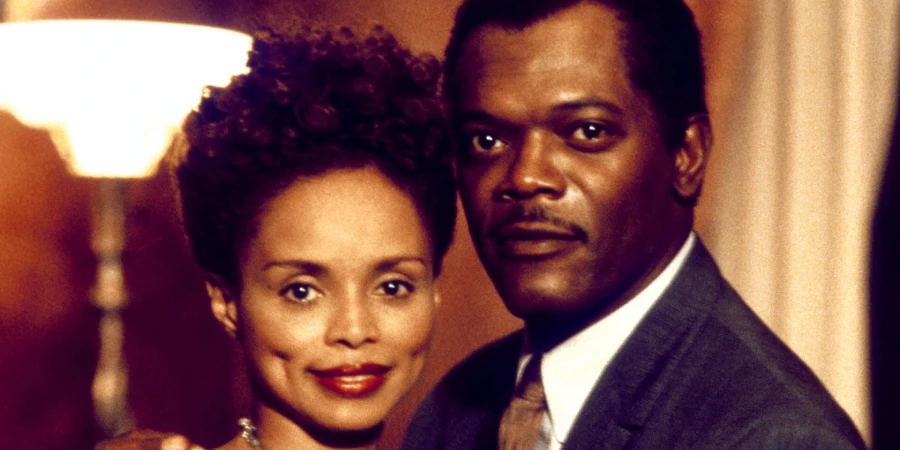

Eve’s Bayou opens with one of the most quietly devastating lines in American cinema: “The summer I killed my father, I was ten years old.” That sentence belongs to Eve Batiste, and writer-director Kemi Lemmons spends the next ninety-plus minutes both proving and complicating it.
Set in a Louisiana Creole community in 1962, the film builds a story about memory, desire, and the way children process adult sins they were never meant to witness. What makes it sting is how completely it refuses to hand you a clean verdict.
Detailed Summary
The Batiste Family and Their World
We meet the Batiste family at a party on their sprawling Louisiana property. Louis Batiste, a charming and well-respected doctor, holds court while his wife Roz and their three children move through the celebration. Eve, the middle child, idolizes her father completely.
Her older sister Cisely is closer to Louis in an intense, complicated way that the film carefully does not immediately define. Their younger brother Poe is mostly comic relief, though even he carries a kind of watchful sadness. The Batiste household radiates privilege and beauty, but Lemmons shoots it with amber light that feels slightly too warm, like something already past.
Eve Witnesses Something She Cannot Unsee
Late at the party, young Eve sneaks into a carriage house to sleep. She wakes to find her father and a family friend, Matty Mereaux, in the middle of a sexual encounter. Eve freezes, then slips away. This scene is shot partly from a child’s limited vantage point, close to the ground, bodies partially obscured, and it is deliberately unclear how much Eve fully understands.
Louis notices her leave. He finds her afterward and speaks to her carefully, but the damage is done. Eve carries this image forward, and it warps every interaction she has with her father from that night on.
The Lavalais Family and Elzora
Running through the film is a parallel world of Creole folk belief and voodoo. Eve’s Aunt Mozelle, a widow with a gift for second sight, serves as a spiritual anchor. She reads fortunes and carries her own grief: every man she has loved has died.
Also present in the community is Elzora, an older woman who practices rootwork and lives on the margins. Eve fears and is drawn to her in equal measure. Elzora represents a kind of knowledge that operates outside what Louis’s rational, medical world can explain.
Cisely’s Secret and Louis’s Behavior
Louis continues his affairs, and the household simmers with Roz’s quiet, dignified pain. Cisely, meanwhile, grows more withdrawn and troubled. One night, something happens between Cisely and Louis that neither character describes in full and that the film refuses to show directly.
Cisely tells Eve that their father kissed her, a sexual kiss, not a fatherly one. Eve is devastated and furious. Later, Louis tells a different version: he says Cisely kissed him while sleepwalking, and that he pulled back. The film holds both accounts simultaneously and never resolves which is true.
Louis Is Shot
Convinced her father is a predator, Eve goes to Elzora and pays her to curse Louis. Around the same time, a man named Lenny Mereaux, Matty’s husband, confronts Louis over the affair and shoots him. Louis dies from the wound.
Eve believes her curse caused her father’s death. She carries that belief as a private, crushing guilt. Poe sees Elzora at the scene and claims she was there, complicating Eve’s understanding of what her curse may or may not have set in motion.
Movie Ending
After Louis dies, Cisely reveals to Eve that her memory has shifted. Cisely now remembers the encounter with their father differently than she did before, and she is no longer certain what actually happened. This revelation does not exonerate Louis. It does not condemn him either. Lemmons is asking something harder: what do we do when the past is genuinely inaccessible?
Eve returns to the moment, in her memory and ours, and we see both versions layered briefly. Neither wins. Adult Eve, narrating from some future point, tells us she has made peace with not knowing. She says memory is the selection we make from our experience, not a recording of it.
Aunt Mozelle gives Eve a mirror and tells her to look at herself. It is a small, quiet gesture, but it carries enormous weight in context: Mozelle is telling Eve that she has her own second sight, that she is a seer who must learn to live with what she sees rather than be destroyed by it.
Louis’s death is real. His flaws were real. His love for his daughters was also real. Lemmons refuses to collapse him into a villain, which is genuinely difficult and genuinely brave filmmaking. Eve ends the film older, responsible for something she cannot fully measure, and alive inside that ambiguity.
Are There Post-Credits Scenes?
No. Eve’s Bayou does not have a post-credits scene. Once the film ends, it ends. Given the film’s tone and intent, a post-credits sequence would be borderline absurd anyway.
Type of Movie
Eve’s Bayou is a Southern Gothic drama with strong elements of family melodrama and magical realism. Its tone is elegiac and slow-burning, built on accumulating dread rather than plot mechanics.
Genre labels almost undersell it. It draws on the tradition of Southern literature, particularly the kind that treats superstition and grief as equally legitimate ways of understanding the world. It is a film for adults in the best sense: patient, morally unresolved, and fully committed to its own register.
Cast
- Jurnee Smollett – Eve Batiste
- Samuel L. Jackson – Louis Batiste
- Lynn Whitfield – Roz Batiste
- Debbi Morgan – Mozelle Batiste Desautel
- Meagan Good – Cisely Batiste
- Jake Smollett – Poe Batiste
- Vondie Curtis-Hall – Julian Grayraven
- Ethel Ayler – Gran Mere
- Diahann Carroll – Elzora
- Roger Guenveur Smith – Lenny Mereaux
Film Music and Composer
Terence Blanchard composed the score. A New Orleans native and celebrated jazz trumpeter, Blanchard brought an intimate knowledge of Louisiana musical culture to every cue. His work here is restrained, favoring mood over melodrama.
Strings and sparse jazz textures carry the film’s sense of memory drifting at the edges. Blanchard does not underscore every emotional beat, which is exactly the right call: the silences he leaves are as expressive as the music. He has since become one of American cinema’s most respected film composers, collaborating repeatedly with Spike Lee.
Filming Locations
Eve’s Bayou was filmed primarily in Louisiana, in and around the New Orleans area. Production used actual bayou landscapes, cypress trees draped in Spanish moss, and period-appropriate Creole architecture. These locations are not just backdrop; they are atmosphere made physical.
Director Lemmons and cinematographer Amy Vincent used the natural light of Louisiana to create that amber-and-shadow palette that defines the film’s look. Shooting on location gave the cast a genuine sense of heat and humidity, and it shows in how they carry themselves. No studio backlot could have produced that texture.
Awards and Nominations
Eve’s Bayou received significant recognition from independent film circles and African American critics’ groups. Debbi Morgan won the Independent Spirit Award for Best Supporting Female, a fully deserved honor for one of the film’s richest performances.
The film received broader critical acclaim and appeared on numerous year-end best lists. Roger Ebert named it among the best films of 1997. It did not receive major Academy Award nominations, which remains a genuine blind spot in Oscar history.
Behind the Scenes Insights
- Kasi Lemmons wrote the script herself and spent years developing it before finding financing. It was her feature directorial debut.
- Samuel L. Jackson served as a producer on the film and was instrumental in getting it made. His belief in the project helped attract other participants.
- Jurnee Smollett was around ten years old during filming, close to her character’s age, and her performance required her to carry scenes opposite seasoned adult actors.
- Lemmons drew on her own Louisiana background and her interest in Creole culture when building the world of the film.
- Diahann Carroll plays Elzora, and her casting against type as a menacing rootworker was a deliberate choice by Lemmons to subvert expectations around Carroll’s glamorous screen persona.
- Cinematographer Amy Vincent was relatively early in her career at the time and brought a distinct visual sensibility shaped by natural light rather than high-key studio setups.
Inspirations and References
Lemmons has cited the Southern Gothic literary tradition as a foundational influence, particularly writers who treat landscape as psychologically active rather than decorative. William Faulkner’s fractured, multi-perspective approach to memory has clear resonance in how the film handles truth.
Creole history and culture, particularly the specific social world of Louisiana’s mixed-race communities in the mid-twentieth century, shaped the film’s setting and its attention to class and skin color within Black communities. This is not a backdrop detail; it is central to how the Batiste family sees itself and how others see them.
The folk-magic elements draw on the real tradition of Louisiana Voodoo and rootwork, treated with respect rather than exploitation. Lemmons was careful to present Elzora and Mozelle’s practices as legitimate systems of belief, not Hollywood horror shorthand.
Alternate Endings and Deleted Scenes
No officially released alternate endings or notable deleted scenes have entered the public record for Eve’s Bayou. Lemmons has not publicized significant cuts, and no special edition release has surfaced material of this kind.
Book Adaptations and Differences
Eve’s Bayou is not based on a book. Kasi Lemmons wrote an original screenplay. No source novel exists to compare it against.

Memorable Scenes and Quotes
Key Scenes
- The carriage house scene: Eve wakes on a pile of coats, peers through the dark, and sees her father’s back, his shirt lifting. The camera stays low and slightly out of focus, mimicking a child’s half-comprehension. It is the wound the entire film grows out of.
- Mozelle’s visions: Each time Mozelle has a vision, Lemmons cuts into a slightly bleached, slow-motion memory space. Her stories about her dead husbands arrive like folk tales, complete and strange. Debbi Morgan plays each one as a woman who has accepted tragedy as her constant companion.
- Eve pays Elzora: Eve digs out her saved coins, walks to Elzora’s table, and pays for a curse on her father. Diahann Carroll barely moves, just watches the child with unreadable eyes. It is a scene about how much damage grief and rage can purchase.
- The two versions of Cisely’s story: Lemmons cuts between Cisely’s account and Louis’s, both shot with equal visual authority. There is no trick photography signaling which is false. Both feel real, because to their tellers, both are.
- The mirror at the end: Mozelle hands Eve a small mirror. Eve looks into it. The camera lingers on her face rather than the reflection, keeping the meaning personal and open rather than symbolic and closed.
Iconic Quotes
- “The summer I killed my father, I was ten years old.”
- “Memory is a selection of images. Some elusive, others printed indelibly on the brain.”
- “We are the product of the lives of the women who came before us.”
Easter Eggs and Hidden Details
- The name “Eve” carries obvious thematic weight: knowledge, innocence lost, and the burden of seeing what others choose not to see. Lemmons picked it deliberately.
- Mozelle’s dead husbands are described in ways that mirror the recurring cycle of the Batiste men: charming, passionate, and ultimately destructive to the women around them.
- Louis’s medical bag appears in several scenes as a symbol of his authority and competence, always present when he is performing his public self, absent in his private failures.
- The Spanish moss hanging throughout the film is not just atmospheric. In Southern Gothic tradition, it signals decay hiding beneath beauty, which is the film’s core argument about the Batiste family.
- Cisely and Eve are often dressed in complementary colors that place them visually as two halves of the same perception, a choice that underscores how their conflicting memories reflect two equally valid vantage points.
Trivia
- Eve’s Bayou was made on a modest independent budget and outperformed expectations at the box office for a film of its scale.
- Jurnee Smollett and Jake Smollett are siblings in real life, which adds a natural ease to their scenes together.
- Roger Ebert called it one of the best films of 1997, a claim many critics have since echoed while noting how underexposed the film remains to general audiences.
- Kasi Lemmons went on to direct Talk to Me (2007), but Eve’s Bayou remains her most discussed directorial achievement.
- Diahann Carroll was in her sixties when she played Elzora, and she reportedly embraced the physical transformation the role required, including prosthetic aging makeup.
- The film’s narration device, an adult Eve looking back, positions the story as a memory piece from its first frame, which is why the question of unreliable memory is baked into the structure rather than introduced as a twist.
Why Watch?
Watch it for Jurnee Smollett’s face in the carriage house scene: a ten-year-old actor doing something most adults never manage on screen, which is showing a character understand something she does not yet have words for. Lemmons builds an entire film around that moment of fractured knowing, and it holds. No other American film of the 1990s handled the unreliability of childhood memory with this much discipline.
Director’s Other Movies
- The Caveman’s Valentine (2001)
- Talk to Me (2007)
- Black Nativity (2013)
- Harriet (2019)
Recommended Films for Fans
- Daughters of the Dust (1991)
- Beloved (1998)
- Beasts of the Southern Wild (2012)
- Moonlight (2016)
- Fruitvale Station (2013)
- The Color Purple (1985)
- Sugar Hill (1993)