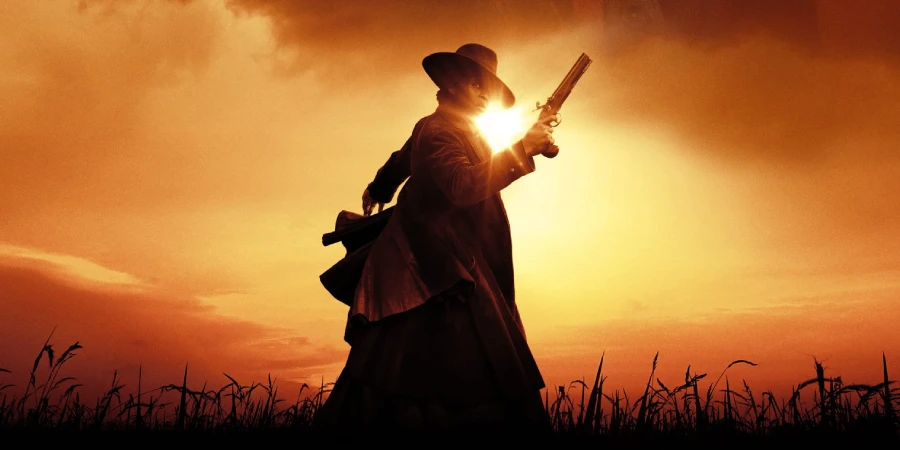

Cynthia Erivo carries a gun, a Bible, and the weight of American history through Harriet (2019), and she does it without flinching once. Director Kasi Lemmons pulls no punches about the brutality Araminta Ross endured before she became Harriet Tubman, one of the most consequential freedom fighters this country ever produced.
What makes this film work is not the mythology surrounding Tubman but the specific, physical, personal cost she paid to build it. This is a story about a woman who chose to keep walking north even when every rational instinct screamed to stop.
Detailed Summary
Araminta’s Life in Bondage
We meet Minty, born Araminta Ross, on the Brodess plantation in Maryland. She is enslaved, married to a free Black man named John Tubman, and fighting a legal battle to secure her own freedom based on a promise her late owner made years earlier.
Her owner, Edward Brodess, refuses to honor that promise. When he dies, his widow plans to sell Minty and her brothers further south to pay off debts. That threat triggers everything that follows.
The Decision to Run
Minty suffers from narcoleptic episodes, the result of a brutal head injury she received as a child when an overseer threw a two-pound lead weight that struck her. She collapses without warning, and during these episodes she experiences what she describes as visions from God.
When her brothers lose their nerve and turn back, Minty presses on alone. She follows the North Star and the guidance of the Underground Railroad, traveling roughly 90 miles through hostile territory on foot. Her arrival in Philadelphia is the film’s first great emotional release.
Becoming Harriet Tubman
In Philadelphia, Minty renames herself Harriet Tubman, taking her mother’s first name and her husband’s last. She connects with William Still, the free Black abolitionist who documents escaped enslaved people and helps organize their passage north.
Harriet refuses to stay comfortable in Philadelphia. She tells Still she is going back south to bring out her family. He thinks she is out of her mind. She is not.
First Return South
Harriet’s first mission back south is tense and economical in the film’s telling. She moves through darkness, uses coded songs as signals, and relies on a network of conductors, both Black and white, who risk everything to shelter runaways.
She brings out her brothers and several others, but her husband John has remarried, believing her dead. That knife of a scene lands quietly but cuts deep. Harriet does not crumble; she keeps moving.
The Gideon Brodess Pursuit
Young Gideon Brodess, the son of her former enslaver, becomes her chief antagonist throughout the film. He is obsessed with recapturing Harriet, partly out of wounded pride and partly because her escapes are costing the Brodess family money and humiliation.
Gideon is not written as a cartoonish monster, which is actually one of the film’s smarter choices. He genuinely cannot comprehend that Harriet is his equal or superior. His confusion reads as historically accurate and quietly damning.
The Underground Railroad Network
Philadelphia abolitionist Marie Buchanon, a free Black woman of means, takes Harriet in and gives her practical support. Their relationship adds a layer to the film about class divisions within the free Black community, a tension the script handles without getting preachy.
William Still keeps meticulous records of every person who passes through his network. His insistence on documentation feels like its own form of resistance, and the film gives that detail its due weight.
The Passage of the Fugitive Slave Act
When Congress passes the Fugitive Slave Act of 1850, the ground shifts under everyone. Philadelphia is no longer safe. Enslaved people who have escaped must now flee all the way to Canada to remain free.
Harriet’s work becomes dramatically more dangerous and more logistically complex. She adapts. She carries a revolver. She famously tells those who falter that they can keep moving or die, because she cannot afford to let anyone turn back and betray the group’s location.
Multiple Rescue Missions
Lemmons compresses several of Harriet’s real rescue missions into a propulsive middle section. Each mission escalates the danger, and Harriet’s visions from God become a tactical tool, guiding her to safe routes and warning her of ambushes.
One of the most striking visual choices in the film is how Lemmons shoots these visions: fast, fragmented cuts with golden light washing out the frame. It is disorienting in exactly the right way. You feel what Harriet feels rather than simply observing it.
Harriet as “Moses”
Word spreads through the enslaved community that a figure called Moses is leading people to freedom. Slaveholders assume Moses is a large, physically imposing man. When they discover Moses is a small Black woman, the humiliation compounds their rage.
Harriet leans into the Moses identity with full conviction. Her faith is not decorative in this film; it is operational. She genuinely believes God is directing her steps, and the film takes that belief seriously rather than treating it as superstition.
Movie Ending
Harriet’s final rescue mission in the film targets her own family, including her elderly parents. Gideon and his hired slave catchers close in, and the sequence builds genuine tension because we know the Fugitive Slave Act makes every step north more lethal.
Harriet leads the group to a river crossing while Gideon’s men are closing the distance. She raises her revolver and, in the film’s most searing confrontation, faces Gideon directly. He cannot bring himself to shoot her. She can. That moment crystallizes everything the film has been building: her will is simply stronger than his.
She gets everyone out. Her parents reach safety. Her father Ben Ross, a free man who has been protecting her family all along, had been deliberately blindfolding himself so he could truthfully testify he never saw his daughter. When the family finally reunites in safety, he removes the blindfold and sees Harriet for the first time in years. That detail, true to the historical record, hits harder than any invented dramatic beat could.
Title cards close the film, telling us Harriet guided approximately 70 people to freedom, served as a spy and scout for the Union Army during the Civil War, and lived to old age. The film makes clear she became a figure who changed the material conditions of real human lives. It earns its uplifting final note because it never pretended the path there was clean.
Are There Post-Credits Scenes?
Harriet does not include any post-credits scenes. Once the title cards deliver Tubman’s legacy statistics and the credits begin, there is nothing additional. You can leave the theater.
Type of Movie
Harriet is a historical biographical drama with strong elements of a survival thriller. Its tone is serious and reverent without becoming stiff. Lemmons keeps the pacing propulsive enough that it never settles into the slow, mournful rhythm that traps lesser prestige biopics.
There are moments of genuine suspense that play almost like a chase film. Underneath all of it runs a current of spiritual conviction that gives the whole picture a quality closer to a folk epic than a standard awards-season drama.
Cast
- Cynthia Erivo – Harriet Tubman
- Leslie Odom Jr. – William Still
- Joe Alwyn – Gideon Brodess
- Janelle Monáe – Marie Buchanon
- Clarke Peters – Ben Ross
- Vanessa Bell Calloway – Rit Ross
- Jennifer Nettles – Eliza Brodess
- Zackary Momoh – John Tubman
- Henry Hunter Hall – Walter
Film Music and Composer
Terence Blanchard composed the score for Harriet. Blanchard is one of the most accomplished composers working in American film today, with a deep background in jazz that influences how he builds tension through rhythm and space rather than relying on conventional orchestral swells.
His score for Harriet weaves in spirituals and gospel textures that feel organic to the period without becoming a museum exhibit. Cynthia Erivo also contributed to the film’s music: she performed “Stand Up,” an original song written for the film that received an Academy Award nomination for Best Original Song.
“Stand Up” plays over the end credits and functions as a direct address to the audience. Erivo’s voice on that track is worth staying in your seat for even if you already know there is no post-credits scene.
Filming Locations
Harriet shot primarily in Virginia, which provided period-appropriate plantation architecture, forested terrain, and river landscapes that stood in convincingly for Maryland’s Eastern Shore where the real Tubman grew up.
Specific sites around Richmond and surrounding rural areas doubled as both the Brodess plantation and the landscapes Harriet crosses during her escapes. Virginia’s geography is close enough to Maryland’s that the visual match holds up. Shooting on actual historical terrain, rather than a backlot, gives the outdoor sequences a texture that studio sets simply cannot fake.
Awards and Nominations
Cynthia Erivo received an Academy Award nomination for Best Actress and the previously mentioned nomination for Best Original Song for “Stand Up,” making her one of a small number of performers nominated in both acting and songwriting categories at the same ceremony.
Erivo also received a Golden Globe nomination for Best Actress in a Drama. The film earned several other nominations across critics’ circles and precursor awards, with Erivo’s performance being the consistent focal point of all serious recognition.
Behind the Scenes Insights
- Director Kasi Lemmons had been trying to get a Harriet Tubman film made for years before Harriet finally went into production. The project had a long development history before Focus Features committed to it.
- Cynthia Erivo trained physically for the role and was involved in developing the physicality of Harriet’s movement, including how she holds herself differently before and after escaping.
- Lemmons and co-writer Gregory Allen Howard spent considerable time researching the Underground Railroad’s actual routes and methods, including the use of coded songs to communicate danger and safe passage.
- The film’s depiction of Harriet’s narcoleptic visions as divine guidance was a deliberate choice to honor how Tubman herself described and understood her condition throughout her life.
- Janelle Monáe‘s character Marie Buchanon is a composite figure inspired by several free Black women who supported the Underground Railroad in Philadelphia, rather than a single historical individual.
- Joe Alwyn prepared for Gideon Brodess by researching the psychology of slaveholder entitlement rather than playing the character as an outright villain, a choice that Lemmons encouraged.
Inspirations and References
Harriet draws directly from the historical record of Harriet Tubman’s life, pulling from biographies, abolitionist records, and the documented testimonies gathered by William Still himself. Still’s own written records, preserved and published, gave the filmmakers specific details about how the Underground Railroad actually functioned.
Kate Clifford Larson’s biography Bound for the Promised Land and Catherine Clinton’s Harriet Tubman: The Road to Freedom are among the scholarly works that informed the screenplay’s factual grounding. Lemmons has cited the importance of centering Tubman’s own spiritual framework rather than explaining it away through a modern secular lens.
Alternate Endings and Deleted Scenes
No officially released deleted scenes or alternate endings for Harriet have been made publicly available. The home video release did not include a substantial extras package detailing cut material.
Given the film’s tight 125-minute runtime, it is reasonable to assume some connective scenes were trimmed during editing, but nothing specific has been confirmed by the filmmakers in public interviews available on record.
Book Adaptations and Differences
Harriet is not a direct adaptation of any single book. It is an original screenplay by Kasi Lemmons and Gregory Allen Howard, drawing from multiple historical sources and biographies rather than one specific text.
Because it compresses approximately a decade of Tubman’s active Underground Railroad work into a single narrative, several missions and people are necessarily condensed or composited. Marie Buchanon’s composite nature is the clearest example of this kind of historical streamlining.


Memorable Scenes and Quotes
Key Scenes
- Minty crosses into Philadelphia alone: She collapses to her knees on free soil, and Erivo lets the relief wash over her face in complete silence before a single word is spoken. No score swell, just her breath and the ambient sound of the city. It is the best single moment in the film.
- Ben Ross blindfolds himself: Clarke Peters plays Ben’s deliberate blindness with quiet, agonizing dignity. He touches Harriet’s hand without seeing her face, and the scene asks you to sit with that specific, absurd cruelty the law imposed on a father.
- Harriet faces Gideon at the river: She raises her revolver. He freezes. Erivo holds the frame with complete physical stillness, and you understand in that moment that she has already won because she decided to, not because the odds said so.
- First vision sequence: The fragmented gold-light flash cuts that accompany Harriet’s narcoleptic episodes feel genuinely strange and unsettling the first time they hit, before you have a framework for understanding them. Lemmons earns that disorientation.
- Harriet tells a faltering runaway they will move or die: She delivers the line without cruelty and without hesitation. It is the scene that most clearly shows why people followed her: she removed the option of comfortable failure.
Iconic Quotes
- “I never ran my train off the track and I never lost a passenger.” A line drawn from the historical record, delivered with complete conviction by Erivo.
- “I was the conductor of the Underground Railroad for eight years, and I can say what most conductors can’t say: I never ran my train off the track.” A longer version of the same historical quote used in the film’s framing.
- “I’m going to be free or die.” Harriet’s declaration before her first run north. Simple, declarative, and completely terrifying in context.
Easter Eggs and Hidden Details
- William Still’s careful documentation, shown in the film, is a direct nod to his real published book, The Underground Railroad Records, which remains one of the most important primary sources on the network’s actual operations.
- The coded song Harriet uses to signal safe passage is rooted in real documented practice; scholars have traced how specific spirituals functioned as communication tools on the Underground Railroad.
- Harriet’s distinctive head covering throughout the film echoes descriptions and imagery from contemporary accounts of Tubman’s appearance during her active years as a conductor.
- The name change from Araminta to Harriet is given specific weight in the film; historically, taking a new name was itself an act of self-determination that many escaped enslaved people exercised immediately upon reaching free soil.
- Gideon’s inability to fire at Harriet at the climax echoes a real documented pattern in which enslavers often hesitated to kill valuable enslaved people even when those people were actively defying them, because killing them meant destroying property they could no longer recover financially.
Trivia
- Cynthia Erivo is British-Nigerian, born in London. Her casting as an American icon drew some public debate, though her performance silenced most objections immediately upon the film’s release.
- The real Harriet Tubman reportedly said she could have freed more people if she could have convinced more of them that they were enslaved, a quote that did not make it into the film but informed its characterization of those who hesitated to run.
- Kasi Lemmons is best known as both a director and an actor; she directed Eve’s Bayou (1997) years before taking on this project.
- Cynthia Erivo received both of her Oscar nominations from this single film: Best Actress and Best Original Song, a remarkably rare double nomination.
- The film was released in November 2019, timed to the general awards season window, and performed solidly at the box office relative to its budget.
- Harriet Tubman’s actual birthdate is not precisely known; the film acknowledges this ambiguity by not over-specifying her age at various points in the story.
Why Watch?
Cynthia Erivo’s physical performance alone justifies the runtime: she makes you feel every mile Harriet walked in the set of her jaw and the way she scans a treeline before crossing it. Lemmons frames Tubman’s faith not as sentiment but as battlefield strategy, which reframes the entire story. This is a film that treats its subject as a tactician first and a symbol second.
Director’s Other Movies
- Eve’s Bayou (1997)
- The Caveman’s Valentine (2001)
- Talk to Me (2007)
Recommended Films for Fans
- 12 Years a Slave (2013)
- Selma (2014)
- Glory (1989)
- Belle (2013)
- The Underground Railroad (2021) – TV miniseries
- Amistad (1997)
- Lincoln (2012)