
Seventy-two days in the Andes. Sixteen survivors. And a decision that most of us will never have to make but will spend the rest of our lives pretending we know the answer to. J.A. Bayona’s Society of the Snow drops you into the 1972 Andes plane crash with almost no cushioning, forcing you to watch young Uruguayan rugby players freeze, starve, and ultimately eat their dead teammates to stay alive. This is not a film that flinches.
Detailed Summary
The Crash
Uruguayan Air Force Flight 571 carries the Old Christians Club rugby team, their families, and friends from Montevideo toward Santiago, Chile. Bayona opens with warmth and noise, quick cuts of boys joking on the plane, a deliberate choice to make us care before the film destroys everything.
Crossing the Andes, the plane enters turbulence and clips a mountain peak. It shears apart mid-air. The fuselage slides down a snowfield and stops, crumpled, at high altitude. Bayona shoots the crash in close, chaotic fragments, loud and disorienting, so the audience lands in shock alongside the survivors.
The First Days
Survivors drag the injured into the fuselage for warmth. Several people die on impact or within hours. Nando Parrado, one of the film’s central figures, slips into a coma from a head injury. His mother dies in the crash. His sister Susy survives, initially.
Numa Turcatti, who narrates the film, emerges as the emotional conscience of the group. He is not a rugby player and does not know most of the others well. His outsider perspective gives Bayona a clean lens through which to observe the group’s disintegration and reformation.
The Question of Food
Within days, rations run out. Snow is everywhere; food is not. The survivors face the obvious but unspeakable option: the bodies of the dead, preserved in the snow around them, are the only available protein source.
Bayona does not rush this moment. He lets the hunger become physical on screen, cheeks hollowing, hands shaking, before a small group quietly cuts flesh from a corpse and eats. Nobody makes a speech. Nobody asks for a vote. It just happens, almost in silence, and that restraint is the film’s most powerful directorial choice.
Numa resists longer than most. His reluctance is never framed as moral superiority; it reads as a kind of grief he cannot yet move past. When he finally eats, it feels like a defeat and a survival simultaneously.
The Avalanche
On the seventeenth night, an avalanche buries the fuselage. Survivors inside the plane are crushed or suffocated in the snow. The sequence is terrifying precisely because of how fast it happens: one moment they are sleeping, the next the walls cave inward.
Eight more people die. Those who survive dig out with their hands and improvised tools. Susy, Parrado’s sister, dies in the avalanche’s aftermath. Parrado holds her as she goes. It is an unbearable scene, and Bayona earns every second of it by having spent the first act making us know her.
Radio News and Lost Hope
The survivors salvage a transistor radio. They hear a broadcast confirming that the official search has been called off. Nobody is coming. This moment lands harder than the crash itself, because it closes the last psychological exit.
Faced with that news, the group reorganizes. They stop waiting for rescue. They start thinking about how to rescue themselves.
The Expedition
Parrado, Roberto Canessa, and Antonio Vizintin set out westward across the mountains, carrying packs made from seat covers, wearing multiple layers of clothing, and pulling a crude sleeping bag sewn from insulation stripped from the fuselage. They believe they are close to Chile. They are not.
Vizintin turns back early to conserve food. Parrado and Canessa push on. The sequence of their climb over the summit is physically grueling to watch. Bayona shoots it wide, keeping the men tiny against enormous white slopes, which is the right call and one of the film’s most effective visual decisions.
After more than a week of walking, they find a river valley. Green. Trees. A Chilean farmer named Sergio Catalán spots them from across a river. He cannot hear them over the water, so Parrado writes a note on paper, wraps it around a stone, and throws it across. Catalán reads it, rides for hours to report the location, and rescue begins.
The Rescue
Helicopters reach the crash site. The survivors, gaunt and frostbitten after seventy-two days, are airlifted out in stages. Bayona keeps the rescue relatively quiet, no swelling score, no triumphant close-ups of fists raised. He photographs exhaustion, not victory.
Back in civilization, the survivors face immediate questions about how they stayed alive. The truth about eating the dead goes public and triggers a global controversy that the film acknowledges but does not dramatize in depth.

Movie Ending
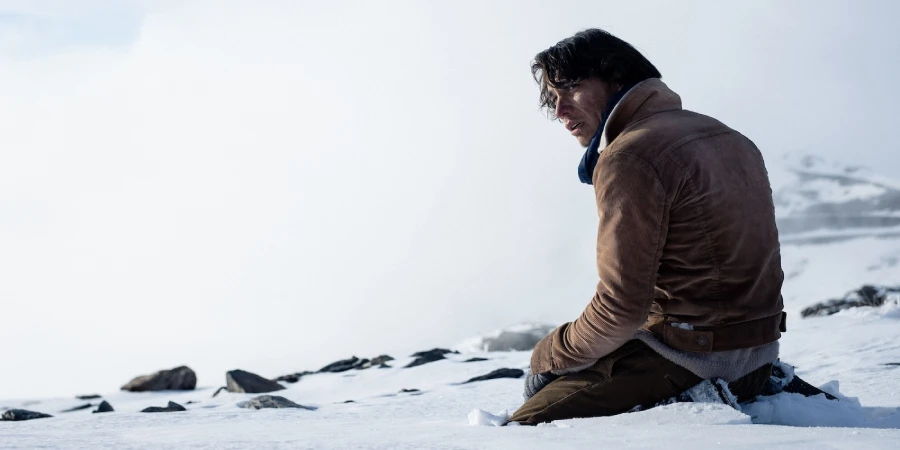
Numa Turcatti does not make it out. He dies near the end of the seventy-two days, weakened by a wound in his leg that becomes infected. This is the gut-punch the film has been building toward quietly, because Numa is the narrator. His death reframes everything we have heard in voiceover as a kind of posthumous testimony.
Bayona gives Numa a final moment of stillness: lying in the snow, past pain, looking at the sky. The other survivors are present, helpless. It is quiet and slow, and the film refuses to cut away quickly, making the audience sit with the loss.
After rescue, Parrado and Canessa return to the mountain by helicopter to help locate and retrieve the bodies. Real survivors appear in the final sequence alongside the actors. Bayona fades between the men who lived and the actors who played them, a choice that is equal parts documentary gesture and emotional gut-check.
A title card names every person who died. Numa’s name appears among them. The film ends not on relief but on a kind of solemn gratitude, the survivors alive because of those who died, including those whose bodies fed them. That is the moral weight the film carries all the way to its final frame.
Are There Post-Credits Scenes?
Society of the Snow has no post-credits scene. Stay if you want to absorb the final moments, but the film says everything it needs to say before the credits begin.
Type of Movie
This is a survival drama rooted in biographical and historical fact. Its tone is austere, patient, and deeply somber. Do not expect action-movie energy or dramatic score swells cuing you when to feel things.
Bayona works closer to the register of slow-burn European art cinema here than to his earlier genre work. The pacing is deliberate. Some viewers will find it punishing; others will find that patience exactly right.
Cast
- Enzo Vogrincic – Numa Turcatti (narrator and emotional anchor)
- Agustín Pardella – Nando Parrado
- Matías Recalt – Roberto Canessa
- Pablo Vega Fillippi – Antonio Vizintin
- Esteban Bigliardi – Gustavo Zerbino
- Diego Vegezzi – Bobby François
- Rafael Federman – Roy Harley
- Tomas Wolf – Carlitos Páez
Film Music and Composer
Michael Giacchino composed the score. He brings a restrained, orchestral palette to the film, favoring strings and silence over bombast. For a survival film, the score is unusually quiet, which is the right call.
Giacchino is best known for his work on Pixar films, J.J. Abrams projects, and Matt Reeves’s The Batman. His score here is among his least showy and arguably his most emotionally honest precisely because of that restraint.

Filming Locations
Production filmed extensively in the Sierra Nevada mountains in Spain, chosen for their high-altitude snow conditions and dramatic topography. The production design team reconstructed the fuselage on location in the snow, not on a soundstage.
Some scenes were also filmed in Uruguay to capture the pre-crash warmth and normalcy of the characters’ lives. That contrast, from sunny Montevideo to white Andean desolation, lands deliberately.
Shooting at real altitude with practical snow environments gave the cast and crew genuine exposure to cold and physical hardship. Several actors reported that the conditions directly informed their performances in ways rehearsal could not.
Awards and Nominations
Society of the Snow received a nomination for Best International Feature Film at the Academy Awards for Spain. It also received significant attention at the Goya Awards, Spain’s national film prizes, where it earned multiple nominations.
Netflix’s global platform amplified its audience far beyond what a typical Spanish-language release would reach, which generated awards conversation across several international circuits.
Behind the Scenes Insights
- J.A. Bayona spent years developing the project and had deep contact with the real survivors, who served as consultants throughout production.
- Several actual survivors appear on screen in the final sequence, standing alongside the actors who portrayed them.
- The cast underwent physical preparation that included weight loss and cold-weather conditioning to authentically reflect the deterioration of the survivors’ bodies.
- Bayona deliberately cast relatively unknown Spanish and Uruguayan actors rather than stars, so audiences would not bring prior associations to the faces on screen.
- The fuselage set was built and placed in real snow at altitude, not constructed on a controlled indoor stage.
- Enzo Vogrincic, who plays Numa, was cast partly because of the quality of stillness he brings; Numa’s arc required someone who could convey interiority without dialogue.
- Bayona worked closely with Pablo Vierci, author of the source book, throughout script development.
Inspirations and References
The film adapts La sociedad de la nieve, the 2008 book by Pablo Vierci. Vierci was a childhood friend of several survivors and spent years gathering their testimonies. His book prioritizes the group’s collective experience over any single heroic individual, and Bayona’s film follows that structure faithfully.
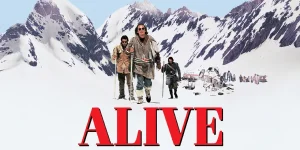
The same events inspired the 1993 Hollywood film Alive, directed by Frank Marshall and starring Ethan Hawke. Bayona’s version deliberately takes a different approach: Spanish-language, ensemble-focused, and far less interested in individual heroism.
The real-life event, the 1972 Andes flight disaster, remains one of the most documented survival stories in history. Nando Parrado and Roberto Canessa have both spoken publicly about their experiences for decades.
Alternate Endings and Deleted Scenes
No officially confirmed deleted scenes or alternate endings have been made public by Netflix or the production team. Given Bayona’s close collaboration with survivors, it seems unlikely any radically different version of the ending was seriously considered.
Book Adaptations and Differences
Vierci’s book gives more page time to individual characters’ backstories and inner lives than the film can accommodate in its runtime. Some survivors who appear briefly in the film receive substantially more attention in the source material.
The choice to make Numa Turcatti the narrator is a significant structural decision. In the book, multiple voices share the telling. Centering Numa in the film, a man who died before rescue, gives the adaptation a melancholy frame the book does not quite have.
Bayona and screenwriter Bernat Vilaplana compressed certain timelines and folded some characters together, standard practice for adaptation. No major factual distortions have been publicly identified by the survivors who consulted on the film.
Memorable Scenes and Quotes
Key Scenes
- The plane crash sequence: chaotic, fragmented, loud, and over fast, placing the audience inside disorientation rather than above it.
- The first act of cannibalism: shot without drama, almost matter-of-fact, a small group cutting flesh in near-silence while others sleep. That quietness is more disturbing than any operatic staging would have been.
- The avalanche burying the fuselage: sudden, crushing, shot from inside the plane so we feel trapped alongside the survivors.
- Susy Parrado’s death: slow and intimate, Nando holding her while the other survivors give them space. One of the film’s most carefully observed moments of grief.
- Parrado and Canessa cresting the summit and seeing more mountains: the discovery that they are nowhere near where they thought. Their faces do not collapse; they just keep going, which says more than any line of dialogue.
- The stone-wrapped note thrown across the river to Catalán: wordless, desperate, and somehow hopeful all at once.
- Numa’s death: slow, still, the camera close, the other survivors gathered. The film refuses to rush it.
- Real survivors appearing alongside the actors in the final sequence: the moment where documentary and fiction fold into each other.
Iconic Quotes
- “We are not the ones who died. We are the ones who survived.” (Numa, in voiceover, paraphrased from the film’s closing passages.)
- “If I die, use my body. Do not waste me.” (Parrado, addressing the group about the cannibalism decision.)
Easter Eggs and Hidden Details
- Bayona includes several shots where the scale of the mountain range is revealed slowly, the camera pulling back to show the survivors as tiny specks, emphasizing how invisible they were to searchers.
- The color palette shifts deliberately across the film: warm amber and green in Uruguay, cold blue-white in the Andes, returning briefly to warmth only when rescue arrives.
- The real Nando Parrado and Roberto Canessa appear in documentary footage or photographs referenced in the film’s closing moments.
- Numa’s narration uses phrases that subtly echo Catholic ideas of sacrifice and communion, a deliberate parallel to the eucharistic dimension several survivors described when they spoke publicly about eating the dead.
- The sleeping bag constructed by the survivors in the film is a close replica of the actual improvised bag the real expeditioners used, details drawn from survivor testimony and photographs.
Trivia
- The film is in Spanish and Rioplatense Spanish dialect, reflecting the Uruguayan origins of the characters, not the Castilian Spanish of the production’s Spanish base.
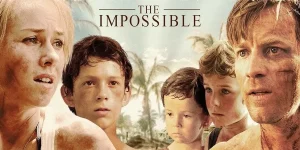
- Bayona is the director of A Monster Calls and The Impossible, both of which deal with grief and survival, making this project a natural fit for his interests.
- Netflix acquired international distribution rights, giving the film a global release far larger than a typical Spanish-language production would receive.
- Nando Parrado has publicly praised the film and participated in its promotion, a significant endorsement given how protective survivors have historically been about their story.
- Parrado later wrote his own memoir, Miracle in the Andes, which covers his experience in detail and informed research behind both the book adaptation and various productions.
- The film’s Spanish title matches the source book exactly: La sociedad de la nieve.
- Bayona reportedly screened a cut of the film for the surviving members before its release.
Why Watch?
Bayona’s decision to center a dead man as narrator is the kind of structural gamble that either collapses or defines a film. Here it defines it. Numa’s death turns every preceding scene into something unbearably sad in retrospect, and Enzo Vogrincic’s quiet, physically expressive performance makes that weight land with precision that a more famous actor would likely have oversold.
Director’s Other Movies
- El orfanato (2007)
- The Impossible (2012)
- A Monster Calls (2016)
- Jurassic World: Fallen Kingdom (2018)
Recommended Films for Fans
- Alive (1993)
- The Revenant (2015)
- Touching the Void (2003)
- 127 Hours (2010)
- The Impossible (2012)
- Into the Wild (2007)
- Adrift (2018)