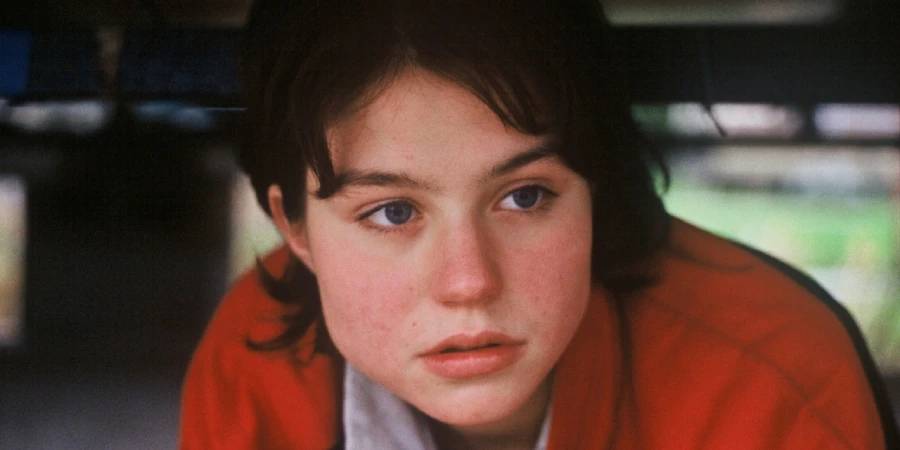

Rosetta never asks for your sympathy. She demands your attention through sheer, exhausting will, and the Dardenne brothers give her exactly enough screen space to make that demand feel earned. Shot with a handheld camera that never leaves her body, this Belgian film drops you into poverty so specific and so tactile that watching it feels less like cinema and more like surveillance.
Émilie Dequenne, a non-professional actor at the time, carries the entire weight of the film on her shoulders, and she does not drop it once.
Detailed Summary
The Opening Fight
Rosetta begins mid-action. She is being dragged out of a factory job she refuses to surrender, screaming, clawing, insisting that her dismissal is unjust. The camera follows her at shoulder height, stumbling to keep up, and the effect is immediate disorientation.
We know nothing about her yet. We do not need to. Her refusal to go quietly tells us everything that matters about who she is.
Life at the Campsite
Rosetta lives in a trailer at a campsite outside Liège with her alcoholic mother. Her mother trades sexual favors with the campsite manager in exchange for accommodation, and Rosetta despises her for it. She hides their cash in a hole near a stream, a small, private ritual she performs with fierce concentration.
Her daily survival is physical labor. She catches fish to eat. She patches her boots. She warms a hot water bottle against her stomach to dull the pain of what seems to be a persistent stomach cramp.
Meeting Riquet
Rosetta meets Riquet, a young man who works at a waffle stand, when she nearly drowns after falling into the pond near the campsite. He pulls her out and takes her home to warm up. A cautious friendship forms between them.
Riquet offers warmth, literally and socially, but Rosetta keeps him at arm’s length. She is suspicious of kindness. She has learned that kindness usually costs something.
Chasing Employment
Rosetta applies for jobs with a relentlessness that is almost painful to watch. She shows up in person, she calls, she argues her case to indifferent managers. Every rejection lands like a small erasure of her personhood.
She gets a brief stint at a bakery and throws herself into the work with complete focus. When that job ends, the despair is wordless. She simply keeps moving.
Rosetta’s Choice
This is where the film twists into something genuinely uncomfortable. Rosetta discovers that Riquet has been skimming money from the waffle stand, giving his employer short measures. She reports him, gets him fired, and takes his job.
It is one of the most morally stark moments in 1990s European cinema. Rosetta does not celebrate. She simply goes to work.
The Job and the Guilt
She has what she wanted. A job. A wage. A foothold in normal life. Yet the camera does not let her enjoy it, and neither does her conscience.
Riquet shows up, quietly furious. He confronts her about the betrayal without melodrama, which makes the scene land harder than any shouting match could. Rosetta cannot look at him.

Movie Ending
Rosetta loses the waffle stand job anyway. Her employer simply replaces her with a family member, and just like that, the betrayal of Riquet meant nothing in practical terms. She sacrificed the one person who was kind to her for a job that evaporated almost immediately.
Back at the trailer, Rosetta decides to kill herself. She fills the trailer with gas, lies down, and waits. The propane tank runs out before it can do its work, and she has to drag a new, heavy tank across the campsite to finish what she started. The physical effort of carrying that tank, exhausted and grief-stricken, is one of the most punishing sequences in the film.
Riquet finds her. He pulls up on his moped, sees what is happening, and follows her. She collapses to the ground, sobbing, unable to carry the tank any further. Riquet stands over her, and the film ends there, on her on the ground, with him watching.
What makes the ending so quietly devastating is what Rosetta does in her final moments on screen. She looks up at Riquet. It is the first time in the film that she really looks at another person without armor. The Dardennes cut before any resolution, before any words, before anything is fixed. Nothing is fixed. She is still poor, still without work, still living with her mother in a trailer. What has changed is only this: she is not alone in the frame anymore, and she chose not to disappear from it.
Are There Post-Credits Scenes?
No. Rosetta has no post-credits scene. The film ends as austerely as it lives, with no appendix, no softening gesture after the final cut.
Type of Movie
Rosetta is social realist drama, sitting firmly in the tradition of Belgian and French naturalist filmmaking. Its tone is relentless, unsentimental, and deliberately unglamorous.
It shares DNA with Ken Loach’s working-class British films, but the Dardennes strip away even more comfort. There is no musical score, no tidy moral arc, and no catharsis in the conventional sense.
Cast
- Émilie Dequenne – Rosetta
- Fabrizio Rongione – Riquet
- Anne Yernaux – Rosetta’s Mother
- Olivier Gourmet – The Boss
Film Music and Composer
Rosetta has no score. This is not an oversight; it is one of the film’s defining formal choices. Jean-Pierre and Luc Dardenne made a deliberate decision to strip music from the film entirely.
What you hear instead is the physical world: Rosetta’s boots on gravel, her breath, the hiss of propane, ambient noise from the campsite. Sound design does the emotional work that a composer might otherwise do, and it does it with far more honesty.

Filming Locations
Principal photography took place around Liège, in the industrial Wallonia region of Belgium. The Dardennes are from this region, and their familiarity with its texture shows in every frame.
The campsite, the narrow roads, the grey-green scrubland around the pond: these are not generic poverty signifiers. They feel specific, inhabited, known. Shooting on location rather than sets gives the film a credibility that no production design budget could have purchased.
The Liège setting also carries political weight. Wallonia was a region hit hard by deindustrialization in the 1980s and 1990s, and the film’s story of a young woman unable to find stable work is inseparable from that economic reality.
Awards and Nominations
Rosetta won the Palme d’Or at the 1999 Cannes Film Festival, which was a genuinely controversial decision at the time given the competition that year. Émilie Dequenne also won the Best Actress prize at Cannes, a remarkable achievement for a first-time, non-professional performer.
The film’s Palme d’Or win is reported to have directly influenced Belgian lawmakers to introduce youth employment protections, a piece of legislation that became known informally as the “Rosetta Plan.”
Behind the Scenes Insights
- Émilie Dequenne had no prior acting experience before Rosetta. The Dardennes cast her after an extensive search for a non-professional performer.
- Jean-Pierre and Luc Dardenne used their signature close-following handheld camera style, keeping the lens at Dequenne’s back or shoulder for much of the film to force audience identification.
- Dequenne was reportedly physically and emotionally exhausted by the shoot, given the physical demands of the role, including the scenes in cold water and the heavy propane tank sequence.
- The Dardennes conducted significant research into the daily lives of young unemployed people in Belgium before writing the script.
- Fabrizio Rongione, who plays Riquet, would go on to appear in several subsequent Dardenne films, becoming a recurring presence in their work.
Inspirations and References
The Dardennes have cited their documentary filmmaking background as a core influence on how they approach feature narrative. Before Rosetta, they made numerous documentaries about working-class life in Wallonia, and that observational habit is visible in every scene.
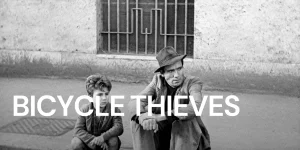
The film draws on the broader tradition of Italian neorealism, particularly the post-war films of directors like Vittorio De Sica, where non-professional actors inhabit social conditions rather than perform against them. Rosetta’s constant movement also echoes the picaresque structure of survival narratives, though the Dardennes collapse any sense of adventure into pure endurance.
Alternate Endings and Deleted Scenes
No officially documented alternate endings or deleted scenes from Rosetta have been released or described in detail by the Dardennes. The brothers tend to be private about their editing process.
Given their working method, which involves extensive rehearsal and close attention to rhythm, significant alternate versions are unlikely to exist in a form that differs dramatically from the release cut.
Book Adaptations and Differences
Rosetta is not based on a book. Jean-Pierre and Luc Dardenne wrote the original screenplay themselves, drawing from their research and documentary work rather than any pre-existing literary source.
Memorable Scenes and Quotes
Key Scenes
- The opening factory sequence: Rosetta is physically removed from her workplace while fighting every inch of the way. The camera scrambles to follow her, already breathless before the film has found its footing.
- The drowning rescue: Rosetta falls into the pond and Riquet pulls her out. It is the film’s only genuinely warm human moment, and the Dardennes frame it with almost no sentimentality, which makes it hit harder.
- Rosetta betraying Riquet: She picks up the phone and reports him to his employer. No music, no close-up of anguish. Just a phone call, and the quiet sound of a friendship ending.
- Dragging the propane tank: Rosetta hauls the heavy canister across the campsite, barely able to continue. The physical labor of her own suicide attempt is one of the most quietly devastating images in the film.
- The final look: Rosetta looks up at Riquet from the ground. No dialogue. The film cuts.
Iconic Quotes
- “My name is Rosetta. My name is Rosetta. I found a job. I’ve found a friend. I won’t fall into the rut. Good night.” This internal montra, which Rosetta repeats to herself before sleeping, is the closest the film gets to interior life, and it is heartbreaking in its smallness.
Easter Eggs and Hidden Details
- Rosetta’s stomach cramps, referenced through her use of the hot water bottle, are never explained by dialogue. Some critics read them as a physical manifestation of stress and hunger; others interpret them as a possible menstrual detail that grounds her bodily experience without comment.
- The hole where Rosetta hides her money near the stream functions as a recurring visual motif. Every time she returns to it, the camera lingers just long enough to signal its importance to her sense of security and selfhood.
- Riquet’s waffle stand is coded throughout the film as a symbol of modest, ordinary economic participation, the kind of small stable employment Rosetta cannot access. Its visual simplicity is the point.
- The campsite manager’s tolerance of Rosetta’s mother, in exchange for her compliance, exists in the background of almost every domestic scene. The Dardennes never editorialize about it; they simply leave it there for the audience to absorb.
Trivia
- The Belgian youth employment legislation nicknamed the “Rosetta Plan” was introduced following the film’s release and its impact on public discourse about youth unemployment.
- Émilie Dequenne’s Cannes Best Actress win came as a genuine surprise to much of the industry, given that she had never acted professionally before the film.
- The Dardenne brothers shot the film with a handheld camera specifically to keep the audience physically close to Rosetta’s perspective at all times, preventing any comfortable observational distance.
- Rosetta was the second Palme d’Or for the Dardennes, following La Promesse‘s critical success, though the Palme went to Rosetta rather than to that earlier film.
- Correction on the above: Rosetta was actually the Dardennes’ first Palme d’Or. La Promesse did not win the Palme. They later won a second Palme d’Or for L’Enfant in 2005.
- The film runs without a conventional three-act structure. Critics who expected dramatic pivots were initially divided; the Cannes jury’s decision to award it the top prize generated significant debate.
Why Watch?
Watch Rosetta because Émilie Dequenne’s performance makes employment rejection feel like a life-or-death confrontation, and because the Dardennes are disciplined enough never to rescue her from that feeling. Rosetta’s bedtime mantra, spoken into the darkness of her trailer, does more emotional work than most films manage across two hours of dialogue. This is poverty rendered with enough precision to make comfortable audiences genuinely uncomfortable, which is exactly what it should do.
Director’s Other Movies
- La Promesse (1996)
- L’Enfant (2005)
- Le Silence de Lorna (2008)
- The Kid with a Bike (2011)
- Two Days, One Night (2014)
- The Unknown Girl (2016)
- Young Ahmed (2019)
- Tori and Lokita (2022)
Recommended Films for Fans
- La Promesse (1996)
- L’Enfant (2005)
- Bicycle Thieves (1948)
- Ladybird Ladybird (1994)
- I, Daniel Blake (2016)
- Beasts of the Southern Wild (2012)
- Fish Tank (2009)
- 4 Months, 3 Weeks and 2 Days (2007)