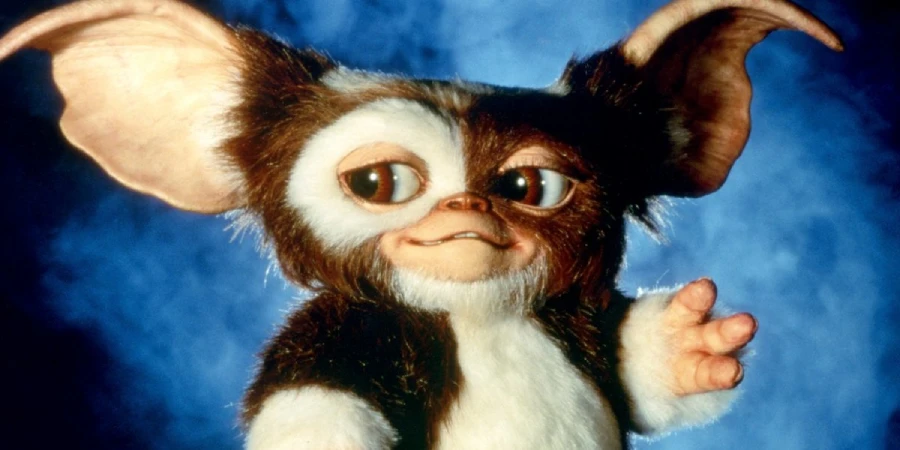

Few holiday movies dare to blend suburban warmth with genuine creature carnage, but Gremlins pulls it off with gleeful confidence. Director Joe Dante weaponizes Christmas cheer, turning tinsel and carols into the backdrop for a full-scale monster uprising in small-town America. A father buys his son a mysterious exotic pet, ignores three critical rules, and accidentally unleashes chaos on an entire community. What follows is one of the most entertainingly deranged films of the 1980s.
Detailed Summary
Rand Peltzer and the Mogwai in Chinatown
Rand Peltzer, a well-meaning but perpetually unsuccessful inventor, wanders into a Chinatown shop searching for a Christmas gift for his teenage son Billy. He spots a small, impossibly adorable creature called a Mogwai and desperately wants to buy it. However, the elderly shop owner refuses to sell, citing the creature’s demanding nature and the weight of responsibility it carries.
Rand leaves empty-handed, but the owner’s grandson secretly sells him the Mogwai anyway, delivering three strict rules alongside it. No bright light, especially sunlight. No water. Never feed it after midnight. These rules sound simple enough, which makes everything that follows feel almost cosmically deserved.
Billy Meets Gizmo
Billy receives the Mogwai on Christmas morning and immediately names him Gizmo. Gizmo is soft-spoken, musical, and completely lovable. Billy takes him to his science teacher, Mr. Hanson, for study, which turns out to be a decision with catastrophic consequences.
A small accident involving water drops on Gizmo’s fur triggers a disturbing reaction: Gizmo screams in pain and sprouts five new Mogwai from his back. These offspring are visually similar but behaviorally very different. In contrast to Gizmo’s gentle nature, the new creatures are mischievous, aggressive, and immediately troublesome.
The Rules Begin to Break
The most cunning of the new Mogwai, later named Stripe, leads the group in manipulating Billy’s young neighbor into feeding them after midnight. A gnawed power cord conveniently cuts off the clock at exactly the right moment. As a result, the Mogwai gorge themselves well past the forbidden hour.
By morning, each creature has cocooned itself in a slimy, pulsating pod. Mr. Hanson’s laboratory specimen also transforms. Something deeply wrong is happening inside those pods, and the film lets the dread build slowly before the creatures inside finally emerge.
The Gremlins Hatch
What crawls out of those pods bears little resemblance to the gentle Mogwai form. Gremlins are scaled, reptilian, sharp-toothed, and sadistic. They stand upright, move fast, and seem to experience genuine delight in causing harm. Mr. Hanson becomes their first victim when one of them injects him with a hypodermic needle.
Stripe, the most dangerous of the group, escapes into the town of Kingston Falls. Meanwhile, the rest of the gremlins spread through Billy’s neighborhood, killing his dog, attacking his mother, and generally treating the holiday season as an opportunity for mayhem. Billy’s mother, Lynn, fights back with surprising ferocity, using kitchen appliances as weapons in a genuinely tense sequence.
Kingston Falls Under Siege
By nightfall, the gremlins have overrun the town. They pack into the local movie theater, invade the bar run by the unpleasant Mrs. Deagle (who earlier dies via a malfunctioning stair lift launching her out a window), and generally terrorize every resident they can find. Billy and his love interest, Kate, navigate the chaos and try to warn the remaining townspeople.
Kate delivers the film’s most unexpected tonal shift, a monologue explaining why she hates Christmas. Her father died on Christmas Eve after getting stuck in their chimney dressed as Santa Claus. It is played with complete sincerity, and it remains one of the strangest, funniest, and most oddly affecting moments in any 1980s blockbuster.

Movie Ending
Billy and Kate locate the bulk of the gremlins at the movie theater, where the creatures are howling along to Snow White and the Seven Dwarfs. Billy turns on the gas and blows up the building, killing most of them in a single explosive stroke. Stripe, however, survives.
Stripe flees to a department store and dives into a fountain, spawning an army of new gremlins in seconds. Billy arrives and chases Stripe through the darkened building while a frantic battle plays out. Gizmo, driving a small toy car, manages to open the store’s skylight blinds, flooding the room with lethal sunlight. Stripe dissolves agonizingly in the light, melting into a puddle while Billy watches.
With the threat eliminated, the mood shifts from relief to consequence. Mr. Wing, the original Chinatown shop owner, arrives in Kingston Falls to reclaim Gizmo. He tells Billy that the Western world is not yet ready for the responsibility of caring for a Mogwai. It is a quietly sobering conclusion to what has been a mostly anarchic film. Gizmo waves goodbye, and the world Billy nearly destroyed returns to uneasy normalcy.
Notably, the ending does not attempt to clean up every thread with a tidy bow. Rand Peltzer’s disastrous invention obsession remains unresolved. The town carries real damage and real deaths. Consequently, the film earns a melancholy undercurrent that distinguishes it from a purely comedic creature feature. Mr. Wing’s final words function as both a moral verdict and a setup for the sequel.
Are There Post-Credits Scenes?
Gremlins contains no post-credits scene. Once Mr. Wing departs with Gizmo and the credits roll, that is the end. Furthermore, there is no hidden footage, no stinger, and no teaser for a sequel buried after the credits.
Type of Movie
Gremlins operates primarily as a horror-comedy, but it genuinely earns both labels rather than coasting on just one. Joe Dante balances slapstick creature comedy with moments of real threat and violence. Several characters die on screen, and the film never fully sanitizes the danger.
In addition, the film functions as a Christmas movie and a suburban satire. It uses the warmth of holiday imagery as deliberate contrast against the carnage. For many viewers, the tonal blend is precisely what makes it so memorable and so difficult to categorize neatly.
Cast
- Zach Galligan – Billy Peltzer
- Phoebe Cates – Kate Beringer
- Hoyt Axton – Rand Peltzer
- Frances Lee McCain – Lynn Peltzer
- Polly Holliday – Ruby Deagle
- Keye Luke – Grandfather (Mr. Wing)
- Judge Reinhold – Gerald Hopkins
- Dick Miller – Murray Futterman
- Corey Feldman – Pete Fountaine
- Glynn Turman – Mr. Hanson
- Scott Brady – Sheriff Frank
- Howie Mandel – Voice of Gizmo
- Frank Welker – Voice of Stripe and other gremlins
Film Music and Composer
Jerry Goldsmith composed the score for Gremlins, delivering one of his most playful and versatile works. Goldsmith was already an established Hollywood legend by this point, with credits spanning decades of genre film. His ability to shift between whimsical and menacing made him an ideal fit for Dante’s tonal balancing act.
The main theme is immediately recognizable, built around a child-like melody that gradually darkens as the film progresses. Goldsmith layers in percussive, chaotic cues during the gremlin attack sequences. Moreover, the score never lets you forget that you are simultaneously watching a fairy tale and a monster movie.
Filming Locations
Production took place primarily on the Universal Studios backlot in California. The backlot’s standing small-town set provided the idealized American suburb that the story required. Kingston Falls needed to feel like a Christmas card come to life, and the controlled studio environment allowed Dante and his crew to dress and light it precisely.
Exterior street scenes and certain establishing shots used the familiar backlot structures that appear in many other Universal productions of the era. Shooting on a controlled lot also allowed the complex puppet and animatronic work to be managed effectively. The artificial quality of the setting, however, works in the film’s favor, reinforcing the satirical unreality of the world the gremlins invade.
Awards and Nominations
Gremlins received a Saturn Award nomination for Best Horror Film from the Academy of Science Fiction, Fantasy and Horror Films. It did not win major awards but performed enormously at the box office and earned widespread critical respect. Its cultural impact has proven far more lasting than any trophy could measure.
Behind the Scenes Insights
- Gremlins was produced by Steven Spielberg, who brought the project to Warner Bros. after reading Chris Columbus’s original script and recognizing its potential immediately.
- The film famously contributed to the creation of the PG-13 rating in the United States. Parents complained that the violence was too intense for a PG film, and the MPAA subsequently introduced the new rating category.
- The Gizmo puppet required an enormous team of puppeteers and technicians to operate for close-up performance shots. At times, more than a dozen crew members worked simultaneously on a single Gizmo scene.
- Joe Dante originally intended Gizmo to transform into Stripe, but Spielberg intervened and insisted Gizmo remain lovable throughout the film. This change led to the multiple Mogwai spawning from Gizmo instead.
- Chris Columbus wrote the original script as a writing exercise with no expectation of it being produced. Spielberg’s team discovered it during a script search.
- Howie Mandel performed Gizmo’s voice on set without seeing the final puppet designs during initial recording sessions.
- Director Joe Dante included numerous references to classic Hollywood films within the background and dialogue, consistent with his career-long habit of embedding cinephile Easter eggs.
Inspirations and References
The concept of gremlins as mischievous mechanical saboteurs predates the film by decades. World War II-era pilots and ground crews blamed mysterious mechanical failures on invisible creatures they called gremlins. Roald Dahl popularized this folklore in his 1943 illustrated book, simply titled The Gremlins.
Chris Columbus drew on this folklore tradition while also channeling classic creature-feature cinema of the 1950s. Films like Invasion of the Body Snatchers and the broader tradition of small-town horror clearly informed the script’s structure. In addition, Columbus has cited a personal experience of hearing mice in his apartment walls at night as a direct inspiration for the screenplay’s atmosphere of hidden, creeping threat.
Joe Dante brought his own layer of influence, specifically his love of Warner Bros. Looney Tunes cartoons. The gremlins’ anarchic, self-destructive energy owes a clear debt to characters like Bugs Bunny and the Tasmanian Devil. Dante saw the gremlins as cartoon characters given monstrous physical form.
Alternate Endings and Deleted Scenes
An early version of the script contained considerably darker material, including a scene where the gremlins kill and cook Billy’s dog. This scene was filmed but ultimately removed before release. Spielberg reportedly felt it crossed a line that would alienate the audience entirely.
Additionally, early drafts featured a more ambiguous ending in which it remained unclear whether all the gremlins had truly been destroyed. Joe Dante has discussed in interviews how the studio preferred a cleaner resolution. Several transitional scenes were also trimmed to tighten the pacing during post-production.
Book Adaptations and Differences
Gremlins is not based on a book. Chris Columbus wrote an original screenplay, though it drew on folklore and the general cultural concept of gremlins as described earlier. A novelization of the film, written by George Gipe, was published alongside the film’s release in 1984.
Gipe’s novelization follows the film closely but expands on certain character backstories and internal monologues that the film handles visually. On the whole, it functions as a companion piece rather than a meaningfully different version of the story.
Memorable Scenes and Quotes
Key Scenes
- Water drops on Gizmo: A single accidental splash of water triggers the spawning sequence, transforming a warm domestic moment into something alarming and deeply strange.
- Lynn’s kitchen battle: Billy’s mother dispatches gremlins using a blender, a microwave, and a kitchen knife, delivering one of the most ferociously entertaining action sequences in the film.
- The movie theater sequence: Dozens of gremlins fill a cinema and laugh hysterically at Snow White, a set piece that captures the film’s anarchic cartoon energy at its absolute peak.
- Kate’s Christmas monologue: Phoebe Cates delivers a completely straight-faced account of her father’s chimney death in a scene that is simultaneously absurd and oddly moving.
- Stripe’s final sunlit death: Gizmo opens the blinds, daylight pours in, and Stripe dissolves in a grotesquely detailed practical effects sequence that remains unsettling decades later.
- Mr. Wing reclaims Gizmo: The final goodbye carries genuine emotional weight, and Gizmo’s small wave punctuates the film’s bittersweet conclusion perfectly.
Iconic Quotes
- “With mogwai comes much responsibility.” – Mr. Wing
- “First of all, keep him out of the light, he hates bright light, especially sunlight, it’ll kill him. Second, don’t give him any water, not even to drink. But the most important rule, the rule you can never forget, no matter how much he cries, no matter how much he begs, never feed him after midnight.” – Grandfather (Mr. Wing’s grandson)
- “Now I have another reason to hate Christmas.” – Kate Beringer
- “They’re watching Snow White. They love it.” – Billy Peltzer
Easter Eggs and Hidden Details
- A poster for E.T. the Extra-Terrestrial appears briefly in Billy’s room, a nod to the Spielberg connection and the broader universe of 1980s Amblin productions.
- Joe Dante cast Dick Miller, a frequent collaborator and Roger Corman regular, as Murray Futterman, continuing a tradition of loyalty to veteran character actors.
- A Jaws poster appears in the background during certain scenes, referencing another Spielberg production and fitting the film’s broader pattern of Hollywood homage.
- Several gremlins are seen wearing costumes and accessories in the bar and theater scenes, a detail Dante included as a direct callback to classic Warner Bros. cartoon logic.
- The town of Kingston Falls is the same set used for Hill Valley in Back to the Future.
- Steven Spielberg himself makes a brief, blink-and-miss-it cameo early in the film on an electric cart on the studio lot.
Trivia
- Gremlins was one of the highest-grossing films of 1984, earning well over 150 million dollars worldwide against a modest production budget.
- The film’s success directly spawned a sequel, Gremlins 2: The New Batch, released in 1990 and directed again by Joe Dante.
- Jerry Goldsmith composed the score in a very short timeframe, a common practice for him throughout his prolific career.
- Alongside Indiana Jones and the Temple of Doom, released the same summer, Gremlins was central to the public and political conversation that led to the PG-13 rating’s creation.
- Phoebe Cates was already famous from Fast Times at Ridgemont High when she took the role of Kate, and her casting brought immediate name recognition to the project.
- The practical puppet and animatronic work on the gremlins required one of the largest crews dedicated to creature effects assembled for a film up to that point.
- Zach Galligan and Phoebe Cates both returned for Gremlins 2: The New Batch, providing continuity between the two films.
- Joe Dante has said in interviews that he viewed the gremlins as a metaphor for the id, the uncontrolled, pleasure-seeking part of human psychology given physical form.
Why Watch?
Gremlins earns its place as a genuine classic because it commits fully to its own strange logic without apology. Joe Dante and Jerry Goldsmith craft a film that is funny, frightening, and surprisingly moving, sometimes within the same scene. Furthermore, it remains a masterclass in practical creature effects that modern CGI-heavy productions rarely match. Simply put, no other Christmas horror-comedy hits quite like this one.
Director’s Other Movies
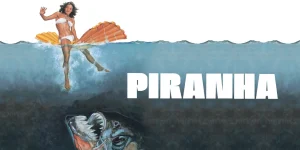
- Piranha (1978)
- The Howling (1981)
- Twilight Zone: The Movie (1983)
- Explorers (1985)
- Innerspace (1987)
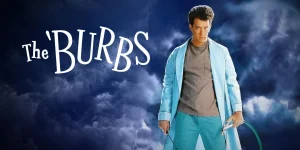
- The ‘Burbs (1989)
- Gremlins 2: The New Batch (1990)
- Matinee (1993)
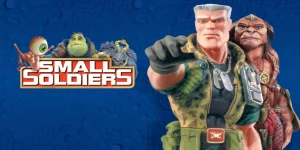
- Small Soldiers (1998)
- Looney Tunes: Back in Action (2003)
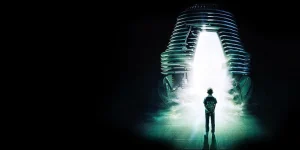
- The Hole (2009)
Recommended Films for Fans
- Critters (1986)
- Little Monsters (1989)
- Beetlejuice (1988)
- The ‘Burbs (1989)
- Tremors (1990)
- Arachnophobia (1990)
- Ghoulies (1984)
- Eight Legged Freaks (2002)
- Krampus (2015)
- Violent Night (2022)