
A young Amish boy watches a cop get murdered in a Philadelphia train station bathroom, and that single moment of violence reshapes every life it touches. Peter Weir’s 1985 thriller works because it refuses to let either world off the hook: the modern one is corrupt, and the peaceful one is fragile.
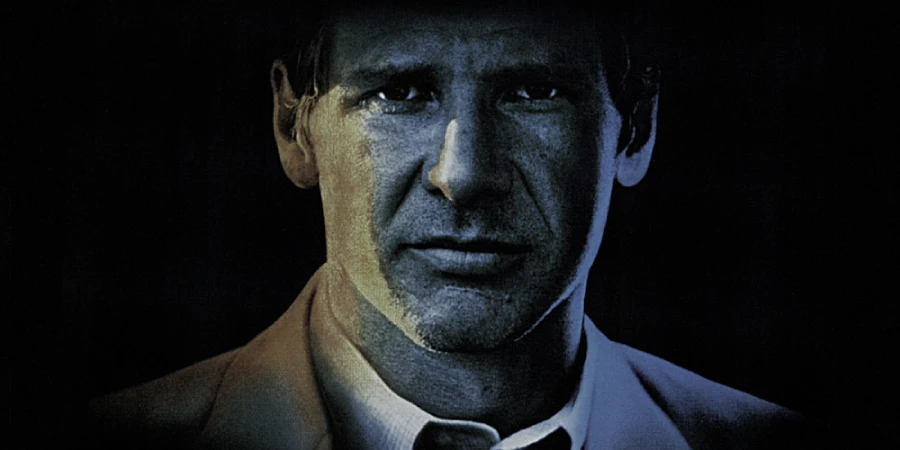
Harrison Ford plays John Book, a detective who has to hide inside a community he cannot fully understand, and his discomfort reads as genuine throughout. What makes this film stick is not the thriller plot but the collision of two incompatible ways of living.
Detailed Summary
Rachel and Samuel Leave Home
Rachel Lapp, a young Amish widow played by Kelly McGillis, boards a train to Baltimore with her eight-year-old son Samuel. Her husband has recently died, and she is traveling to visit a relative. Samuel, wide-eyed and already absorbing every detail of the English world around him, establishes himself immediately as the film’s moral compass.
The Murder in the Train Station
Samuel slips away at Philadelphia’s 30th Street Station and witnesses two men kill a third in a bathroom stall. He hides inside a toilet cabinet, peering through a gap, and watches the entire thing. Detective John Book catches the case and brings Samuel in to look at suspects.
Samuel cannot identify anyone from the lineup. Then he spots a newspaper photo of Deputy Commissioner Schaeffer, a decorated cop, and points to it. Book quietly investigates and discovers that the murdered man was an undercover officer who had found evidence of a heroin operation run by corrupt Philadelphia police, specifically by Lieutenant McFee and Schaeffer himself.
Book Becomes a Target
Book reports his findings to Schaeffer before realizing his mistake. McFee shoots Book in a parking garage, wounding him seriously. Book manages to drive Rachel and Samuel back to Lancaster County before collapsing. He leaves his captain a cryptic message to protect the only other person who knows what Samuel saw.
Recovery in Amish Country
Rachel’s father-in-law Eli, played by Jan Rubes, takes Book in reluctantly. Book heals slowly, dressed in plain clothes, eating at long communal tables, and slowly learning the rhythms of Amish life. Ford plays this fish-out-of-water situation with genuine physical awkwardness, and the performance is at its most interesting in these quiet scenes rather than the action beats.
Book and Rachel develop a tender, slowly building attraction. Weir holds back from rushing it. A scene where Book catches Rachel washing herself at a basin, and she does not immediately cover herself or retreat, says more in ten silent seconds than most love scenes do with dialogue.
The Barn Raising
One of the film’s most celebrated sequences shows the entire Amish community assembling a barn in a single day. Dozens of men work in disciplined, coordinated silence punctuated only by hammers and quiet instruction. Book works alongside them, and for a moment he almost fits. Almost.
Tensions Rise
Eli warns Book that his presence endangers the community. Book knows this himself. A confrontation with some local thugs who harass an Amish family pushes Book to respond with his fists, which draws attention and ultimately tips off Schaeffer about his location.
The Threat Arrives
Schaeffer and McFee drive out to Lancaster County with a third corrupt officer named Fergie. They intend to kill Book and eliminate all witnesses, including Samuel. Book is outgunned. He hides in the cornfields and uses the landscape and his knowledge of the farm to pick off McFee and Fergie one by one.
Movie Ending
Book corners Schaeffer in the barn. He cannot shoot him without a gun, and Schaeffer has the weapon. Book stalls. Rachel climbs to the top of the barn and rings the bell, calling every neighbor and community member to witness what is happening. Schaeffer looks out and sees dozens of Amish men and women standing silently, watching him. He lowers his weapon. You cannot kill that many witnesses.
Schaeffer surrenders. Book’s partner arrives from Philadelphia to take Schaeffer into custody, which means the evidence and Samuel’s testimony can now do their work through the legal system. Book is safe. The corruption at the top of the Philadelphia police department is exposed.
What the film does brilliantly here is use the Amish commitment to nonviolence as the actual weapon. Book could not shoot his way out of this. Rachel’s decision to ring that bell, calling a community of pacifists to simply stand there and watch, defeats a corrupt armed cop more decisively than any gunfight could. It is a climax built entirely on moral logic rather than physical force.
Book and Rachel share a goodbye that makes clear they both know he cannot stay. He drives away. She watches. Eli stands beside her. Daniel Hochleitner, the Amish man who loves Rachel and who has waited patiently throughout, walks toward her. The film ends without resolving whether Rachel chooses Daniel or waits for someone who will never come back for her. That ambiguity is honest, and it respects the audience enough not to wrap everything in a clean bow.
Are There Post-Credits Scenes?
Witness has no post-credits scenes. The film ends on that quiet, open farewell, and the credits roll over silence. No stingers, no callbacks, nothing. That restraint suits the film perfectly.
Type of Movie
Witness is a crime thriller with strong romantic and drama elements layered underneath. Its tone shifts deliberately throughout: tense and procedural in Philadelphia, gentle and observational in Lancaster County, then sharply violent in the third act. Weir manages those tonal shifts without the film ever feeling schizophrenic.
It also functions as a culture-clash drama. The thriller mechanics are the delivery system for something more quietly ambitious: a meditation on violence, community, and the price of belonging to either world.
Cast
- Harrison Ford – John Book
- Kelly McGillis – Rachel Lapp
- Lukas Haas – Samuel Lapp
- Jan Rubes – Eli Lapp
- Alexander Godunov – Daniel Hochleitner
- Josef Sommer – Deputy Commissioner Schaeffer
- Danny Glover – Detective McFee
- Brent Jennings – Carter
- Patti LuPone – Elaine
Film Music and Composer
Maurice Jarre composed the score. His work here leans heavily on synthesizers, which was a deliberate choice that gave the film an unusual, slightly otherworldly texture rather than a conventional orchestral thriller sound.
The main theme is gentle and melancholic, built around sustained synth tones that feel at odds with the Amish setting in a way that quietly underlines Book’s alienation. Jarre had worked with Weir before on The Year of Living Dangerously, and that collaborative trust shows in how well the score supports rather than overwhelms the quieter scenes.

Filming Locations
Production filmed on location in Lancaster County, Pennsylvania, which is actual Amish country. Weir insisted on authenticity, and the landscape earns its place in the story. Those wide, flat fields and white farmhouses are not just backdrop; they carry the sense of a world operating on entirely different values.
Philadelphia’s 30th Street Station served as the murder location. Its grand, cavernous interior makes Samuel look impossibly small, which is exactly the point. Urban Philadelphia and rural Lancaster County are only about an hour apart by road, and that geographic proximity makes the cultural distance between them feel even more striking.
Awards and Nominations
Witness received eight Academy Award nominations, including Best Picture, Best Director for Peter Weir, and Best Actor for Harrison Ford. It won two Oscars: Best Original Screenplay for Earl W. Wallace and William Kelley, and Best Film Editing for Thom Noble.
Ford’s Best Actor nomination remains one of his most deserved. The fact that he did not win is a mild injustice that film fans have quietly argued about for decades.
Behind the Scenes Insights
- Peter Weir requested that the real Amish community not be used as extras or background actors, out of respect for their beliefs about photography. Many of the Amish characters in the film are actors from Mennonite communities, who have fewer restrictions around being filmed.
- Harrison Ford did much of his own physical work on the farm sets, including actual carpentry during the barn raising sequence, which helped him build a physical comfort with the environment that comes across on screen.
- Kelly McGillis had very limited film experience before this role. Weir reportedly cast her partly because her stillness and composure read as genuinely Amish rather than performed.
- Danny Glover, cast against type as the villain McFee, said in interviews that he appreciated the role precisely because audiences would not expect him to be the threat. Weir used that expectation deliberately.
- Weir spent considerable time researching Amish culture before production, including visiting communities in Lancaster County to observe daily routines and social structure.
Inspirations and References
The screenplay drew on real Amish communities in Pennsylvania as its cultural foundation. Earl W. Wallace and William Kelley researched Lancaster County extensively before writing, and their attention to Amish social customs shapes almost every scene set in the community.
Thematically, the film owes a debt to classic Western genre conventions: a lone lawman who must lay down his weapons and live among a peaceful community, only to pick them up again when violence arrives at the door. Shane (1953) operates on a similar moral architecture. Weir never hides that influence.
Alternate Endings and Deleted Scenes
No widely documented alternate ending exists for Witness. Weir has spoken about the challenge of the final scene between Book and Rachel, specifically about resisting the urge to give them a more conventionally romantic resolution.
Some scenes establishing Book’s Philadelphia life were reportedly trimmed during editing to sharpen the pace of the first act. Thom Noble’s editing work, which won the Oscar, involved cutting the film down significantly from earlier assembly cuts, though specific deleted scenes have not been publicly released in detail.
Book Adaptations and Differences
Witness is an original screenplay, not an adaptation of any novel or prior work. The story was written directly for the screen by Earl W. Wallace and William Kelley. No source novel exists to compare it against.

Memorable Scenes and Quotes
Key Scenes
- The bathroom murder: Samuel watches through the cabinet gap as McFee stabs and drowns the undercover cop. Weir frames it entirely from the child’s point of view, the camera low and tight, so the violence feels massive and incomprehensible.
- Rachel’s basin scene: Book walks in on Rachel washing herself. She turns to face him, bare-shouldered, and holds his gaze without flinching. Book is the one who looks away first. The whole scene lasts under a minute and communicates more about their dynamic than pages of dialogue would.
- The barn raising: A wordless sequence of community labor, scored with quiet grace. Weir shoots it with wide angles that make the growing structure look like it rises organically from the earth.
- The kitchen dance: Book finds a radio, puts on a Sam Cooke song, and dances with Rachel in the kitchen. Eli watches from the doorway with quiet disapproval. The joy in the scene is undercut the moment you notice Eli standing there.
- The final confrontation: Schaeffer, armed, faces unarmed Book in the barn. Rachel rings the bell. Silent Amish neighbors materialize from every direction, simply standing and watching. Schaeffer’s gun becomes useless.
Iconic Quotes
- “What you take into your hands, you take into your heart.” Eli says this to Samuel when the boy picks up Book’s gun. It is the film’s thematic thesis delivered with quiet certainty.
- “Book. You be careful out among them English.” Eli’s farewell to Book as he drives away. The line works because Eli means it sincerely, without irony.
- “Don’t you lose him, Rachel.” A sharp, protective moment from Eli about Samuel, but the line resonates beyond its immediate context.
Easter Eggs and Hidden Details
- The corn fields in the climax were partially designed to allow Book to disappear and reappear in ways that mirror Western films where the frontier landscape itself becomes a tactical element.
- Samuel’s wide, observational eyes throughout the opening Philadelphia scenes mirror Weir’s own camera: both the boy and the director are studying a world from the outside with intense curiosity.
- Daniel Hochleitner’s patient presence throughout the film is easy to miss as a subplot, but Weir frames him in several scenes standing at a careful distance from Rachel, which quietly foreshadows the ending’s resolution.
- The carved bird that Samuel examines early in the film connects visually to themes of confinement and observation that run through the whole story.
- Book’s borrowed plain clothes never quite fit him properly. The slightly-too-large shirt and suspenders read as costume rather than belonging, a visual reminder that he is always a visitor.
Trivia
- Harrison Ford was not the first choice for the role of John Book. Several other actors were considered before Ford committed.
- Peter Weir is Australian, and his outsider perspective on American culture, specifically on the gap between rural and urban American life, arguably sharpened rather than limited his direction.
- Lukas Haas was eight years old during filming and had virtually no prior acting experience. His naturalistic performance as Samuel remains one of the strongest child acting turns of the decade.
- Alexander Godunov, who played Daniel Hochleitner, was a former principal dancer with the Bolshoi Ballet who defected to the United States in 1979. His physical grace gives Daniel a quiet dignity that works beautifully against Ford’s blunt physicality.
- The film was shot in sequence where possible, which helped Ford and McGillis build the relationship gradually on camera rather than having to fake a progression they had not yet lived through the shoot.
- Maurice Jarre’s synthesizer-based score was controversial among some critics at the time, who felt it clashed with the pastoral setting. Weir defended the choice, arguing that the score should reflect Book’s sensibility, not the Amish community’s.
Why Watch?
Watch this film specifically for the barn raising sequence and the basin scene, two moments where Weir shows absolute confidence in silence as a storytelling tool. Ford gives his most interior performance here, all suppressed longing and physical restraint, and McGillis matches him beat for beat. This is the rare thriller where the quietest scenes do the heaviest lifting.
Director’s Other Movies
- Picnic at Hanging Rock (1975)
- The Last Wave (1977)
- Gallipoli (1981)
- The Year of Living Dangerously (1982)
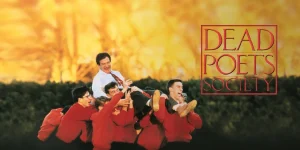
- Dead Poets Society (1989)
- Green Card (1990)
- Fearless (1993)
- The Truman Show (1998)
- Master and Commander: The Far Side of the World (2003)
Recommended Films for Fans
- Shane (1953)
- Picnic at Hanging Rock (1975)
- Tender Mercies (1983)
- Places in the Heart (1984)
- Witness for the Prosecution (1957)
- No Country for Old Men (2007)
- Dead Poets Society (1989)