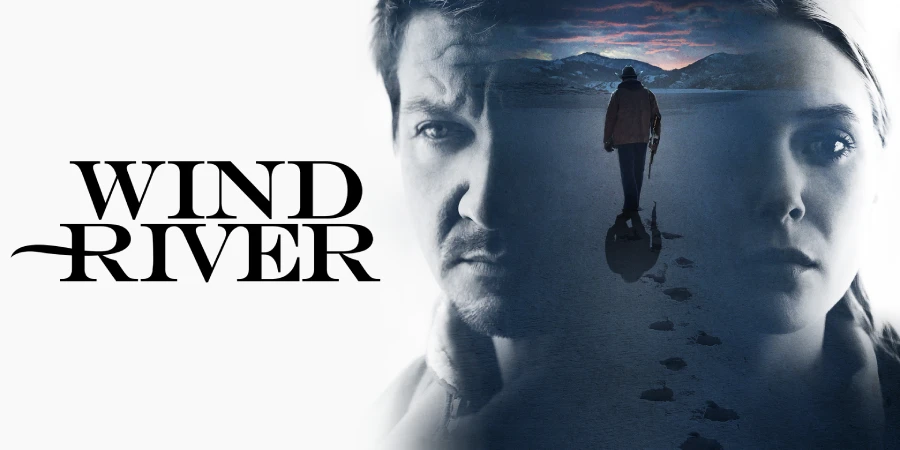

A frozen teenage girl, barefoot in the Wyoming snow, her lungs burst from the inside out: that is how Wind River opens its case. Writer-director Taylor Sheridan gives us a murder mystery that refuses to behave like one, swapping genre comfort for something grimmer and more honest about life on a Native American reservation. Jeremy Renner and Elizabeth Olsen do some of the best work of their careers here, and the film earns every brutal moment it puts on screen.
Detailed Summary
A Body in the Snow
Wildlife tracker Cory Lambert (Jeremy Renner) patrols the Wind River Indian Reservation in Wyoming, hunting predators that threaten livestock. One night he discovers the frozen body of Natalie Hanson (Kelsey Chow), a young Arapaho woman, lying miles from the nearest road with no shoes on her feet.
Natalie’s lungs have hemorrhaged. She ran through subzero temperatures until her body gave out. Cory knows immediately that something violent happened before that run started.
Jane Banner Arrives
FBI agent Jane Banner (Elizabeth Olsen) flies in from Las Vegas, completely unprepared for the Wyoming winter. She shows up in a light jacket, and the film makes no effort to hide how out of her depth she initially appears.
Jane needs Cory’s tracking skills and local knowledge. She recruits him as an unofficial guide, and the two begin picking through the landscape for clues. Tribal police chief Ben (Graham Greene) cooperates but makes clear that jurisdiction on the reservation is a complicated, underfunded mess.
Cory’s Personal History
Cory is not a neutral observer. His own daughter, Emily, died on this same reservation years earlier under circumstances the film deliberately echoes. Emily was also a young woman found dead in the snow, and her death was never fully resolved.
Natalie was Emily’s close friend. Cory carries that grief with visible physical weight, and Renner plays it without a single moment of melodrama: tight jaw, eyes that go flat when he looks at the crime scene.
The Hanson Family
Natalie’s father, Martin Hanson (Gil Birmingham), sits in his house in a stupor of loss. His scene with Cory on the porch is the film’s emotional center point: two fathers who have both buried daughters on this land, passing a silence back and forth that says more than dialogue could carry.
Gil Birmingham’s performance here is criminally underrated. He does almost nothing, and it wrecks you completely.
Tracking the Evidence
Cory follows tracks in the snow and pieces together a path. Natalie ran from the direction of a remote oil drilling camp. She was not alone when she left; a man’s tracks run alongside hers for a stretch, then stop.
Jane and Cory learn that Natalie had been secretly dating Matt Rayburn, a young security guard at the drilling camp. Matt has gone missing since the night she died.
The Drilling Camp Confrontation
Jane and a small group of tribal officers drive out to the oil camp to question the workers. What starts as an interview explodes into a firefight when the camp’s security crew, led by a man named Pete, pulls weapons rather than submit to questioning.
Almost every officer with Jane dies. She takes a bullet. Cory, positioned outside the camp, becomes the lone effective combatant, picking off the armed men with the same cold precision he uses when hunting wolves. It is a brutal, fast sequence, and Sheridan shoots it without glamour: blood in white snow, bodies dropping mid-sentence.
The Truth About Natalie’s Death
Cory finds Matt Rayburn frozen to death nearby. A flashback reveals what actually happened that night. Several of the security guards, drunk and aggressive, gang-raped Natalie inside the camp. Matt tried to stop them and was beaten badly.
Natalie ran. She ran miles through the snow in bare feet, and her lungs gave out long before she could reach help. Matt crawled outside after the attack and froze to death himself.
Sheridan presents this flashback without exploitation. He keeps the camera on faces and hands, and the horror sits in what characters do rather than what the film lingers over.


Movie Ending
Cory tracks down Pete, the ringleader of the assault, who survived the camp firefight and fled into the wilderness. Pete has no shelter, no real gear, and no chance against someone who knows this land the way Cory does.
Cory catches him and offers Pete exactly the same choice Natalie had: run, barefoot, in the snow, and see how far he gets. Pete runs. He does not get far. Cory watches him collapse and die of exposure, which is exactly what happened to Natalie. It is not presented as triumphant. It is cold and deliberate and sad.
Jane survives her gunshot wound. She and Cory have a brief, quiet exchange before she leaves the reservation. There is no romance, no tidy resolution; she goes back to wherever the FBI sends her next.
Martin scatters Natalie’s ashes. Cory visits his ex-wife and their son. Life on Wind River continues with the same grinding indifference the land has always shown.
Before the credits roll, a title card informs viewers that missing Native American women are not tracked by any federal database, and that the number of missing women on reservations is genuinely unknown. That card reframes everything you just watched. It pulls the film out of genre territory and drops it into an ongoing, unresolved crisis. Sheridan earns that card because the film has spent two hours being honest about the systemic neglect that makes such cases disappear.
Are There Post-Credits Scenes?
Wind River has no post-credits scene. Once the title card about missing Native women appears and the credits begin, the film is done. Stay for the score if you like, but nothing is waiting for you at the end.
Type of Movie
Wind River is a crime thriller with strong elements of neo-Western drama. Its pacing is slow and deliberate in the best sense: Sheridan builds tension through landscape and silence rather than action set pieces.
The tone is bleak, restrained, and deeply mournful. It shares more DNA with Sicario than with a conventional whodunit. Audiences expecting a twist-driven mystery will find something harder and more affecting instead.
Cast
- Jeremy Renner – Cory Lambert
- Elizabeth Olsen – Jane Banner
- Graham Greene – Ben, Tribal Police Chief
- Gil Birmingham – Martin Hanson
- Kelsey Chow – Natalie Hanson
- Jon Bernthal – Matt Rayburn
- Julia Jones – Wilma Lambert
- Martin Sensmeier – Chip Hanson
- Ian Bohen – Pete Mickens
Film Music and Composer
Nick Cave and Warren Ellis composed the score. Their collaboration here carries the same cold, sparse texture they brought to projects like The Assassination of Jesse James by the Coward Robert Ford. Droning strings, sparse piano, silence used as an instrument.
The score never tries to tell you how to feel. It sits under scenes like ice under snow: present, cold, load-bearing. That restraint is one of the film’s most effective technical choices.

Filming Locations
Principal photography took place in Utah, primarily around the Heber Valley and Park City areas, rather than on the actual Wind River Reservation in Wyoming. The mountains and open snowfields give the film its suffocating sense of isolation.
That physical environment does real narrative work. When Jane Banner steps off a plane and can barely breathe in the cold, the audience feels why Cory’s expertise matters and why Natalie’s death was possible in the first place.
Shooting in winter conditions added genuine difficulty to production. Actors worked in actual subzero temperatures, and the resulting discomfort reads on screen without any need for visual effects enhancement.
Awards and Nominations
Taylor Sheridan received the Best Director award in the Un Certain Regard section at the Cannes Film Festival in 2017, which was a significant recognition for a directorial debut in that category. The film also earned various critics circle nominations for Renner’s performance and Sheridan’s screenplay.
It did not break through at the major American awards ceremonies in a significant way, which remains a genuine oversight given the quality of Birmingham’s supporting work alone.
Behind the Scenes Insights
- Taylor Sheridan wrote the screenplay after researching the epidemic of missing and murdered Indigenous women on American reservations, wanting to give the subject a mainstream dramatic platform.
- Jeremy Renner trained extensively with actual wildlife trackers to make Cory’s skills feel grounded and specific rather than generic action-hero competence.
- Shooting in genuine winter conditions meant production faced real logistical challenges around equipment, safety, and actor welfare in extreme cold.
- Gil Birmingham, who is of Comanche descent, has spoken about how personally significant this material was to him and how he approached Martin’s grief from a place of cultural understanding.
- Sheridan directed the film himself after his previous screenplays (Sicario, Hell or High Water) were directed by others, wanting full creative control over this particular story.
- Elizabeth Olsen has noted that her character’s initial inadequacy in the environment was something she and Sheridan discussed at length, making sure Jane’s arc felt earned rather than convenient.
Inspirations and References
Sheridan drew directly from documented cases of missing and murdered Native American women, a crisis that advocacy groups and tribal communities had been raising for years before the film brought it to wider public attention.
His earlier screenplays, Sicario and Hell or High Water, form an informal thematic trilogy with Wind River: all three examine systemic failure, marginalized communities, and men trying to enforce a personal moral code in a landscape where official institutions have collapsed or been corrupted.
The neo-Western tradition, stretching through Cormac McCarthy’s fiction and films like No Country for Old Men, clearly informed the tone and visual approach Sheridan brought to the project.
Alternate Endings and Deleted Scenes
No officially released alternate endings or significant deleted scenes have been made publicly available for Wind River. Sheridan has not publicly discussed major structural changes between script and final cut.
Given the film’s tight, purposeful construction, it is hard to imagine a substantially different version existing. Every scene earns its place.
Book Adaptations and Differences
Wind River is an original screenplay, not an adaptation of any novel or pre-existing literary work. Taylor Sheridan wrote it directly for the screen.
A graphic novel adaptation was released after the film, but the film itself came first and has no source text to compare against.

Memorable Scenes and Quotes
Key Scenes
- The porch scene between Cory and Martin: Two grieving fathers sit in silence. Birmingham stares at nothing. Renner looks at the ground. Neither man has words adequate to the situation, and Sheridan keeps the camera still and lets it breathe.
- The oil camp firefight: Fast, chaotic, and stripped of any action-movie aesthetics. Officers die mid-movement. Cory works from outside the chaos with trained calm. Snow turns red.
- Natalie’s flashback: Sheridan presents the assault and its aftermath without turning it into spectacle. The horror lives in Kelsey Chow’s face and in the subsequent image of bare feet hitting frozen ground.
- Pete’s death in the snow: Cory watches from a distance as Pete collapses. No music swells. No speech is given. The landscape simply claims another body.
- The closing title card: White text on black screen, stating the reality of untracked missing Native women. A gut punch delivered after you think the film has already finished.
Iconic Quotes
- “Luck don’t live out here.” – Cory Lambert, to Jane Banner, when she tells Natalie was unlucky.
- “I don’t know how you do it… I don’t know how you live with this.” – Jane to Cory, about the weight of loss he carries on that land.
- “You’re on the Wind River Reservation. Help is not on the way.” – Cory, describing the fundamental reality of the place.
Easter Eggs and Hidden Details
- Cory’s daughter Emily is never shown in the present-day narrative, only referenced in conversation, which mirrors the way missing Native women exist primarily as absences rather than visible presences in the official record.
- The wolves Cory hunts in the opening sequence function as a quiet visual rhyme with the men who later prey on Natalie: predators operating in isolated territory with no natural deterrent.
- Jane’s completely inadequate clothing when she arrives is a deliberate costuming choice, not an oversight: it signals visually that the federal government sends people to this place without equipping them to actually be there.
- Martin’s face paint in the film’s final scenes is drawn from Arapaho mourning traditions, a detail that grounds the film’s cultural specificity rather than treating grief as generically human.
- Cory’s truck and gear are worn and functional, not cinematic: the production design actively avoids the romanticized rugged-cowboy look that lesser Westerns would have leaned into.
Trivia
- Wind River was Taylor Sheridan’s feature directorial debut, following his acclaimed run as a screenwriter on Sicario and Hell or High Water.
- The film was acquired by The Weinstein Company for distribution, which later created significant complications given Harvey Weinstein’s subsequent criminal exposure. Distribution rights eventually passed to other parties.
- Jeremy Renner and Elizabeth Olsen had previously worked together in the Marvel Cinematic Universe, making their pairing here a deliberate casting choice that played against audience familiarity with them in franchise roles.
- Graham Greene, who plays tribal police chief Ben, is one of the most prominent Indigenous actors in North American cinema, with a career stretching back to Dances with Wolves.
- The film’s title refers to the actual Wind River Indian Reservation in Wyoming, home to the Eastern Shoshone and Northern Arapaho tribes.
- Sheridan completed what many critics call his Frontier Trilogy with this film: Sicario, Hell or High Water, and Wind River all examine the failures of American systems at geographic and social borders.
Why Watch?
Jeremy Renner gives a quietly shattering performance, and the porch scene with Gil Birmingham alone is worth your two hours. Sheridan never lets the mystery plot distract from the human devastation underneath it, and that closing title card will rearrange something in how you think about which stories get told and which disappear into the snow.
Director’s Other Movies
- Those Who Wish Me Dead (2021)