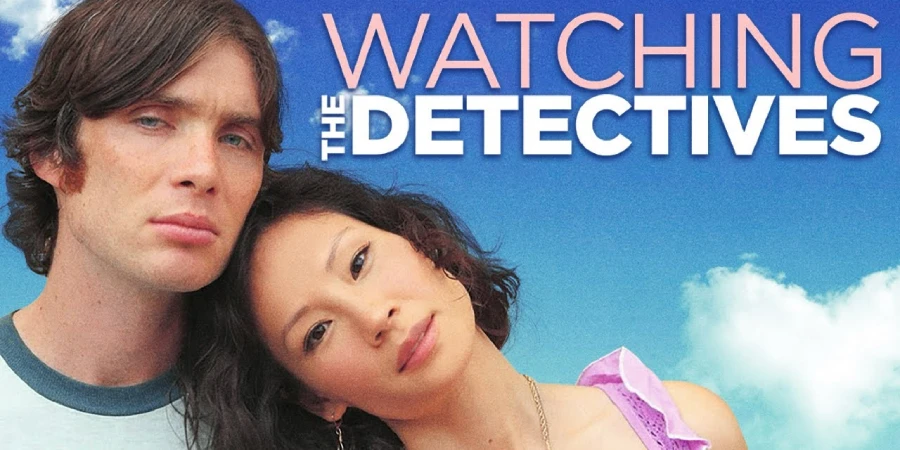

Neil Burger’s Watching the Detectives (2007) runs on a very specific kind of chemistry: the collision between a man who loves movies more than real life and a woman who is real life, loud and chaotic and impossible to pin down.
Cillian Murphy plays it straight while Lucy Liu spins circles around him, and the film is sharp enough to know that the joke is always on him. It is a romantic comedy that understands obsession, not just as a quirk, but as a genuine obstacle to intimacy.
Detailed Summary
Neil and His Video Store Kingdom
Neil Carlyle (Cillian Murphy) runs a small video rental store that specializes in classic and cult films. He has curated his entire life around cinema, and his shop feels less like a business and more like a shrine. His regulars are loyal, his tastes are impeccable, and his emotional life is essentially nonexistent.
Neil’s two best friends, Lucille (Minnie Driver) and Scottie (Michael Panes), hang around the store and serve as his social ecosystem. Lucille is sharp-tongued and affectionate; Scottie is the kind of guy who agrees with whatever the room needs. Together they form a comfortable bubble around Neil, one that has kept him safely insulated from anything resembling romantic risk.
Violet Arrives and Immediately Breaks Everything
Violet (Lucy Liu) walks into Neil’s store like a gust of wind through a carefully stacked card catalog. She is unpredictable, confident, and openly amused by Neil’s seriousness. He is smitten almost instantly, which of course makes him stiff and guarded, because that is what Neil does.
Violet does not play by the expected romantic comedy rules. She starts engineering bizarre, high-stakes situations for Neil, pulling him out of his controlled environment and into scenarios that feel lifted from the very noir and thriller films he stocks on his shelves. This is where the film finds its best comedic gear.
The Games Begin
Violet’s schemes escalate in creativity and absurdity. She stages elaborate scenarios: fake kidnappings, supposed criminal encounters, and manufactured danger designed to jolt Neil out of his passive, movie-mediated relationship with reality. Each scenario mimics a genre film, which is both the joke and the point.
Neil, a man who knows every thriller trope in existence, keeps getting blindsided by them in real life. He can identify a MacGuffin in a Hitchcock film but cannot spot one when Violet dangles it in front of him. That gap between film literacy and life literacy is the film’s sharpest comedic observation.
Neil Starts to Crack
As the schemes pile up, Neil begins to genuinely unravel. He wants Violet, but her chaos terrifies him. His friends find the whole situation alternately hilarious and concerning. Lucille, who functions as the film’s clearest-eyed character, keeps nudging Neil toward self-awareness, mostly unsuccessfully.
Neil starts trying to meet Violet on her own terms. He attempts spontaneity. It does not go well. Murphy plays these scenes with a particular physical awkwardness, his body language tightening every time he tries to let go, which makes the comedy land without tipping into cruelty toward the character.
The Relationship Deepens, Then Fractures
Neil and Violet do connect meaningfully beneath the games. There are quieter scenes where the performance underneath the banter surfaces, and Liu lets Violet drop her showmanship long enough for the audience to understand why she plays these games in the first place. She is testing him, yes, but she is also genuinely trying to reach him.
Neil’s resistance eventually pushes Violet away. She wants someone who will live, not just watch. He has built such a thick wall of film references and careful habits that genuine vulnerability feels impossible. They separate, and the film briefly lets that hurt sit without rushing to fix it.

Movie Ending
Neil finally recognizes what he has been doing. He has been consuming life through a screen, treating his own romantic story like a film he is curating rather than experiencing. Violet’s games were never really about danger; they were an extended, elaborate invitation to participate in his own life.
He goes after her. The reunion leans into the genre conventions the film has been playing with all along, and Neil, for once, leans in too rather than standing at the critical distance he usually maintains. The ending is warm without being saccharine, and it earns the sentiment because the film did the work of making his emotional paralysis feel real before resolving it.
What makes the final beats work is that Violet does not soften. She does not become less chaotic or more domesticated to accommodate his comfort. Neil meets her where she is. That asymmetry, him doing the changing, is more honest than most romantic comedies allow themselves to be.
Are There Post-Credits Scenes?
Watching the Detectives has no post-credits scene. You can leave when the credits roll.
Type of Movie
This is a romantic comedy with genre-savvy meta-textual humor. Its tone sits somewhere between screwball and deadpan, closer to indie quirk than studio gloss. It never goes full parody, which is a wise restraint.
Cast
- Cillian Murphy – Neil Carlyle
- Lucy Liu – Violet
- Minnie Driver – Lucille
- Michael Panes – Scottie
Film Music and Composer
The film’s score fits its indie romantic comedy register without making a big fuss about itself. It supports the film’s tonal shifts between warmth and comic absurdity without overwhelming either. The music choices lean toward the eclectic, reflecting Neil’s own taste for unconventional picks.
No single musical moment dominates, which is fitting for a film that is fundamentally about dialogue and performance rather than spectacle. The score stays in its lane and does its job without asking for applause, which is an underrated quality in films of this budget level.



Filming Locations
Watching the Detectives shot primarily in Louisville, Kentucky. That location choice matters more than it might seem. Louisville gives the film a distinctly un-glamorous American city texture, the kind of place where a cult video store might actually survive and where a man like Neil could plausibly have built his quiet little empire.
It also keeps the film grounded. A story about movie obsession set in Hollywood or New York would carry different baggage. Louisville strips that away and lets the characters exist without the industry breathing down their necks, which makes Neil’s cinephilia feel genuinely personal rather than professional.
Awards and Nominations
Watching the Detectives did not receive significant awards attention or major nominations. It played the festival circuit and found its audience quietly on home video.
Behind the Scenes Insights
- Director Paul Soter wrote and directed the film, keeping production at an indie scale that suited the material.
- Cillian Murphy took the role as a deliberate detour into lighter territory, away from the heavier dramatic work he had been doing in films like Batman Begins and Red Eye.
- Lucy Liu’s performance reportedly involved significant improvisation during the scheming sequences, which helps explain why those scenes feel looser and more energetic than the quieter moments.
- Minnie Driver’s Lucille was designed as the film’s moral compass, a role Driver plays with enough wit that the character never becomes a simple advice-dispenser.
- Shooting in Louisville allowed the production to access practical locations, including a real independent video store, giving Neil’s shop its lived-in, authentic feel.
Inspirations and References
The film feeds directly on classic Hollywood genre cinema, particularly film noir, Hitchcock thrillers, and screwball comedy. Neil’s store functions as a reference library for the film’s own genre games, which is a tidy structural trick.
The broader premise, a man so mediated by pop culture that he cannot engage with real experience, connects to a long tradition of stories about cinephilia as a kind of emotional avoidance. Woody Allen’s work lives somewhere in the film’s DNA, though Watching the Detectives is less neurotic and more physical in its comedy.
Alternate Endings and Deleted Scenes
No officially documented alternate endings or deleted scenes have surfaced in public discussions of this film. Given its indie production scale and limited home video extras, a director’s cut or extended version does not appear to exist in any documented form.
Book Adaptations and Differences
Watching the Detectives is an original screenplay, not adapted from a book or pre-existing source material. There is no literary counterpart to compare it against.


Memorable Scenes and Quotes
Key Scenes
- Violet’s first visit to the video store, where she immediately starts disrupting Neil’s carefully organized sections and he watches her with visible horror and fascination simultaneously.
- The fake kidnapping sequence, which works because Murphy plays Neil’s confused terror with total sincerity; he knows enough about movies to recognize the scenario but cannot override his own panic response.
- The quiet scene where Violet briefly drops the performance and speaks honestly to Neil, and Liu plays it with her eyes rather than her dialogue, which is the best acting in the film.
- Neil’s fumbling attempt at spontaneity, where he tries to engineer a grand gesture that falls apart in a series of compounding small disasters, each one more specific and painful than the last.
- Lucille’s speech to Neil where she cuts through his rationalizations with a directness that the scene earns because Driver never oversells it.
Iconic Quotes
- “You know every movie ever made but you don’t know anything about real life.” (Violet to Neil, the film’s thesis delivered mid-argument)
- Neil’s extended defense of a specific film choice, delivered with the passion he cannot apply to his own relationships, which is both funny and quietly devastating.
Easter Eggs and Hidden Details
- Neil’s video store shelving and organizational system reflects his personality: ordered by director rather than genre, which tells you everything about how he processes the world.
- Violet’s schemes deliberately mirror specific noir and thriller scenarios; sharp viewers will catch the genre being homaged in each sequence before Neil does, which creates a layered comic irony.
- Background titles visible on the store shelves are not random; they were reportedly chosen to comment on the scene playing out in front of them.
- Scottie’s reactions during Violet’s schemes function as a Greek chorus; he registers what is happening before Neil does, every single time.
Trivia
- Cillian Murphy performing in a romantic comedy was a genuine surprise for audiences in 2007, given his run of intense dramatic and genre roles in the mid-2000s.
- Lucy Liu had recently come off the Charlie’s Angels franchise; casting her as Violet gave the film a pop-culture shorthand it used deliberately.
- Paul Soter is also known as a member of the comedy group Broken Lizard, which explains some of the film’s looser, more improvisational comic sensibility.
- The film found its largest audience on cable and home video rather than in theatrical release, which is a common fate for small romantic comedies with indie budgets.
- Murphy prepared for the role by leaning into the character’s stillness, deliberately restraining his physicality to contrast with Liu’s kinetic energy on screen.
Why Watch?
Murphy playing a man paralyzed by his own film knowledge is a casting choice that pays off in every scene where he tries to act natural and cannot quite manage it. Liu matches him beat for beat without once becoming the manic pixie dream girl the premise risks producing. It is a genuinely funny film about a specific and recognizable kind of person.
Director’s Other Movies
- Puddle Cruiser (1996)
- Club Dread (2004)
- Beerfest (2006)
Recommended Films for Fans
- High Fidelity (2000)
- Adaptation (2002)
- You’ve Got Mail (1998)
- Annie Hall (1977)
- Flirting with Disaster (1996)