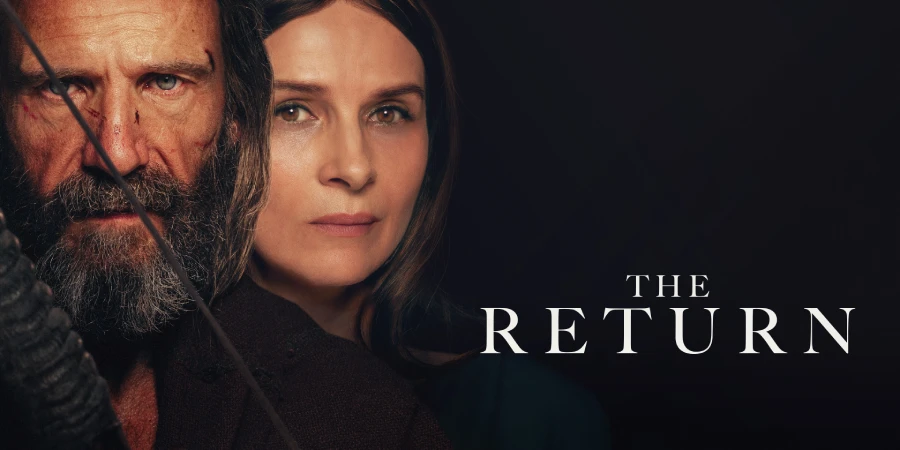

Forget the Cyclops, the sirens, and the meddling gods. The Return strips Homer’s Odyssey down to scar tissue, casting Ralph Fiennes as a hollowed-out Odysseus who washes ashore with nothing left but guilt. Director Uberto Pasolini turns ancient myth into a raw study of war trauma and a marriage on the brink. Every spoiler ahead is fair game, so consider yourself warned.
Detailed Summary
A Broken King Washes Ashore
Twenty years after sailing for Troy, Odysseus washes up naked and half-dead on an Ithacan beach. No crew survived, no ship remains, and no glory followed him home.
A loyal swineherd named Eumaeus shelters the ragged stranger without recognizing his own king. Odysseus, hollowed out by trauma, hides his identity and quietly learns how far his kingdom has fallen.
Penelope’s Loom and the Waiting Suitors
Meanwhile, up at the palace, Penelope lives under siege. Arrogant suitors occupy her halls, drain her wealth, and demand she choose a new husband; Antinous leads the pack.
She stalls with a famous trick. By day she weaves a burial shroud for her dying father-in-law, Laertes, promising to marry once it is finished; by night she unpicks the threads. However, no delay lasts forever.
Telemachus Caught in the Middle
Telemachus, the son Odysseus never watched grow up, simmers with resentment toward both parents. Antinous pressures the prince to push his mother into marriage, and the boy’s refusal marks him as an obstacle.
Laertes soon dies, destroying Penelope’s excuse. Cornered, she vows to finish the shroud as her wedding gown and to choose a suitor at last.
A Beggar at the Palace Gates
Eumaeus escorts the disguised king to the palace to beg for scraps. In one devastating beat, the ancient dog Argos recognizes his master, stirs one last time, and dies. Nobody else gives the filthy stranger a second glance.
For sport, the suitors force the beggar into a brutal brawl with a hulking drifter. Odysseus kills the man with chilling efficiency, and unease ripples through the hall.
Penelope Questions the Stranger
Sensing something familiar, Penelope summons the beggar. She asks whether he fought at Troy and why so many men never found their way back. Odysseus deflects every question, so she sends him away, unsettled and angry.
Later, the old nursemaid Eurycleia bathes him and spots a telltale scar on his leg. Recognition hits her instantly, and Odysseus swears her to silence.
The Hunt for Telemachus
Antinous and his allies decide to murder Telemachus before any wedding. Odysseus intervenes and saves his son, and the fugitives wade through water to throw the hunting dogs off their scent.
Once the danger passes, the king reveals himself. Telemachus erupts with fury, accusing his father of abandoning Ithaca and of leading a generation of young men to their deaths at Troy.
The Shroud Unravels
Antinous catches Penelope undoing her weaving in the dead of night. Her final delay collapses on the spot. Word spreads that the queen will choose her husband the next day.
The Contest of the Bow
Penelope sets the terms herself before the assembled suitors. Whoever strings Odysseus’s great bow and shoots an arrow through a row of axe heads wins her hand. One by one the suitors strain and fail; none can even bend the weapon.
A ragged beggar steps forward and asks for his turn. Everything changes in the next breath.
Movie Ending
Odysseus strings the bow without effort and sends an arrow clean through the axes. Silence falls as the hall grasps what that means. On his signal, servants bar the doors and trap the suitors inside their own feast.
He empties his quiver into the crowd, and when the arrows run out he keeps killing with blades and bare hands. Telemachus nearly flees, yet he chooses to stand and fight beside his father. Blood soaks the very halls Penelope spent twenty years protecting.
Antinous drops his weapon and begs for mercy. Penelope, sickened by the slaughter, orders her son to spare him; she wants the killing to stop somewhere. Telemachus executes him anyway, and her horrified reaction shows exactly what violence has cost this family.
Victory brings no celebration. Telemachus announces he will sail away to discover who he is beyond his father’s shadow. Odysseus lets him go, finally understanding that the war stole his son’s childhood along with his own peace.
One question lingers: can Penelope accept the man who came back? Odysseus notices she now sleeps in an unfamiliar bed, and he climbs to a hidden upper room. There he finds their marriage bed, sealed away on the day he left for Troy.
That discovery works as proof and as metaphor. Only the real Odysseus would know where the bed stood, and only a wife still in love would preserve it. Husband and wife agree to share everything the lost years held, choosing slow honesty over a fairy-tale embrace.
Did Penelope recognize him earlier? Pasolini keeps it deliberately ambiguous and never spells it out; her pointed questions to the beggar hint that she suspects long before the reveal. Ultimately, the film trusts her eyes to tell that story.
Are There Post-Credits Scenes?
No, and you can leave as soon as the credits start. Nothing plays after the story ends; the credits simply roll over Rachel Portman‘s mournful score. Pasolini closes the tale completely, with no teases for a sequel.
Type of Movie
The Return works as a historical psychological drama with sudden bursts of brutal action. Expect a slow-burn character study, not sword-and-sandal spectacle; the film spends far more minutes on guilt and grief than on combat.
Its tone stays somber, intimate, and unflinching. Graphic violence and full-frontal nudity push it firmly into adult territory, and an anti-war current runs beneath every frame. Even so, patient viewers get a finale that is both savage and cathartic.
Cast
- Ralph Fiennes – Odysseus
- Juliette Binoche – Penelope
- Charlie Plummer – Telemachus
- Marwan Kenzari – Antinous
- Claudio Santamaria – Eumaeus
- Ángela Molina – Eurycleia
- Tom Rhys Harries – Pisander
- Amir Wilson – Philoetius
- Jamie Andrew Cutler – Eurymachus
Film Music and Composer
Rachel Portman composed the music, with the Roma Film Orchestra performing under conductor Emanuele Bossi. Her score stays restrained and mournful, favoring aching strings over epic bombast. It whispers where a blockbuster would shout, mirroring the film’s stripped-back style.
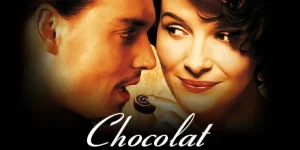
Notably, Portman made history as the first female composer to win the Academy Award for Best Original Score, earning the prize for Emma in 1996. Her Oscar-nominated work includes The Cider House Rules and Chocolat.

Filming Locations
Principal photography began in Greece in spring 2023, centered on Corfu and the Peloponnese. Production then moved to Italy for scenes shot in the countryside north of Rome.
Geography matters here. Ithaca sits in the same Ionian Sea as Corfu, so the sun-bleached coastline, olive groves, and rocky coves feel authentically Homeric. Real locations reinforce Pasolini’s grounded approach; this world looks worn and dusty because it truly is.
Awards and Nominations
The Return earned prestige festival berths, premiering in the Gala section at the 2024 Toronto International Film Festival, but it collected no major awards or Oscar nominations. Critics reserved their warmest praise for the two lead performances, not trophy campaigns.
Behind the Scenes Insights
- Pasolini nursed his dream of adapting the Odyssey for roughly thirty years before cameras finally rolled.
- He asked Fiennes to star and direct back in 2011; Fiennes declined to do both, and in 2022 the actor pushed Pasolini to take the director’s chair himself.
- When Pasolini wondered who should play Penelope, Fiennes immediately named Juliette Binoche.
- Fiennes trained for about five months, adding extra running and weight work, to build a wiry frame he compared to a length of old rope, not a gym body.
- Pasolini removed every god and monster so that guilt for the dead companions would land squarely on Odysseus himself.
- Cinematographer Marius Panduru shot the film in an austere, understated style that critics repeatedly singled out for praise.
- Playwright Edward Bond, a co-writer of the screenplay, died in March 2024, months before the premiere; the film stands among his final credits.
Inspirations and References
Homer’s Odyssey supplies the source material, specifically the poem’s second half set on Ithaca. Everything before the beach, from the Cyclops to Circe, stays offscreen by design.
Modern war stories shape the adaptation just as much. Pasolini frames Odysseus as a veteran wrestling with survivor’s guilt, and several critics compared the film’s bruised mood to post-Vietnam war cinema. In addition, the casting invites memories of The English Patient, another story of lives wrecked by war.
Alternate Endings and Deleted Scenes
No alternate endings or deleted scenes have surfaced publicly for The Return. If Pasolini shot a different finale, he has kept it quiet.
The biggest cuts happened on the page instead. Years of development pared away the gods, the monsters, and the entire sea voyage, which means the boldest deleted scenes are the myths themselves.
Book Adaptations and Differences
Yes, this film adapts a book, and one of the oldest in Western literature. Homer’s Odyssey dates back roughly 2,700 years, though The Return covers only its final stretch.
Differences pile up fast. Homer’s gods vanish entirely; Athena never disguises Odysseus, so rags, dirt, and two decades of damage do the job. Troy survives only in haunted conversation, never in staged battle scenes.
The ending diverges sharply as well. In the poem, Odysseus shoots Antinous first and spares nobody; here Antinous surrenders, Penelope pleads for mercy, and Telemachus lands the fatal blow. Homer also executes the enslaved women of the household, a grim episode the film drops entirely.
Laertes changes too. Homer keeps Odysseus’s father alive for a tearful reunion after the massacre, while the film buries him before Odysseus ever reaches the palace. Consequently, Penelope’s shroud becomes a real funeral garment, not merely an endless delaying tactic.
Memorable Scenes and Quotes
Key Scenes
- Odysseus washing ashore naked, filmed for raw vulnerability, never heroic grandeur.
- Argos recognizing his master after twenty years, stirring once, and dying at his feet.
- A forced pit fight in which the “beggar” reveals lethal skill and silences the jeering hall.
- Odysseus coldly correcting a young islander’s romantic tale of Troy with the butchered truth.
- Eurycleia discovering the scar during the bath, a recognition lifted straight from Homer.
- Every suitor failing the bow, followed by that first arrow threading the axe heads.
- A massacre behind barred doors, staged as horror, not triumph.
- Penelope and Odysseus beside the hidden marriage bed, trading grief and slow forgiveness.
Iconic Quotes
- “Why do men go to war?” (Penelope)
- “For some, war becomes home.” (Odysseus)
- “How can men find their way to war but not find their way home?” (Penelope)
- “So many years. Why?” (Penelope)
- “Would you still love the man I had become?” (Odysseus)
Easter Eggs and Hidden Details
- Odysseus’s leg scar nods to the boar-hunt wound from the poem, the exact detail Eurycleia uses for recognition in Homer.
- Argos’s death recreates one of literature’s most beloved dog moments almost beat for beat.
- Penelope’s weaving trick preserves her legendary cunning and quietly frames her as Odysseus’s intellectual equal.
- Her sealed bedroom reworks Homer’s famous bed test, where knowledge of the marriage bed proves the hero’s identity.
- Pairing Fiennes with Binoche carries echoes of The English Patient, another tale of bodies and minds ruined by war.
- A crumbling palace and untended island visualize nostos, the Greek ideal of homecoming that drives the entire epic.
Trivia
- Production cost about $20 million; Christopher Nolan’s rival adaptation The Odyssey reportedly cost around $250 million.
- This marks the third screen pairing of Fiennes and Binoche, after Wuthering Heights (1992) and The English Patient (1996), and their first in 28 years.
- Director Uberto Pasolini is a nephew of legendary Italian filmmaker Luchino Visconti.
- Before directing, Pasolini produced the hit comedy The Full Monty (1997).
- Filming wrapped on Corfu in June 2023.
- It premiered at Toronto on September 7, 2024, and reached US theaters on December 6, 2024, through Bleecker Street.
- Runtime clocks in at 116 minutes, with a worldwide gross of roughly $3.2 million.
- Reviews skewed positive, with a 78 percent critics’ score on Rotten Tomatoes.
Why Watch?
Watch it for two masters in peak form. Fiennes delivers ferocious, wounded physical acting, and Binoche answers with quiet fire; together they turn ancient myth into raw marriage drama. If you crave intimacy over spectacle, this is your Homer.
Uberto Pasolini’s Other Movies
- Machan (2008)
- Still Life (2013)
- Nowhere Special (2020)
Recommended Films for Fans
- The Odyssey (2026)
- Ulysses (1954)
- O Brother, Where Art Thou? (2000)
- Troy (2004)
- The English Patient (1996)
- The Northman (2022)
- The Green Knight (2021)
- The Best Years of Our Lives (1946)