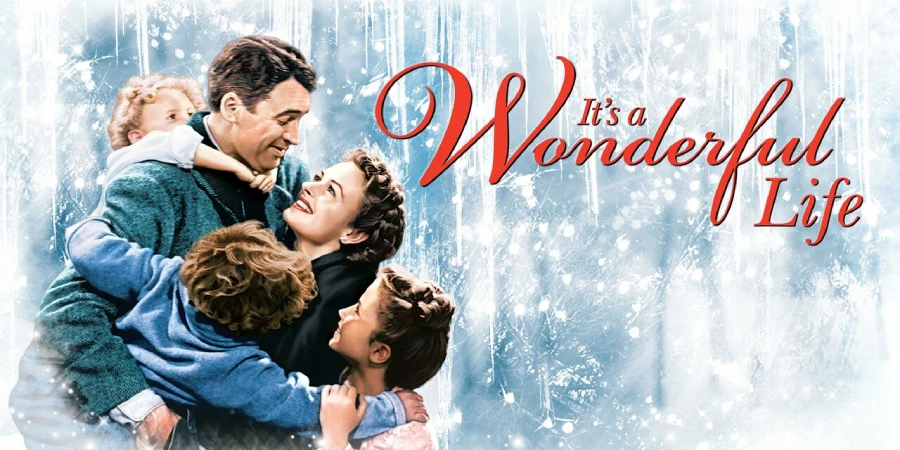

George Bailey stands on a freezing bridge contemplating his own death while heaven debates his worth. This bittersweet masterpiece transforms a simple suicide attempt into the ultimate celebration of human connection. Frank Capra crafts a story that feels both agonizingly grounded and shimmering with celestial magic.
Detailed Summary
George’s Early Life and Sacrifice
Young George Bailey saves his brother Harry from drowning in a frozen pond. This heroic act leaves him deaf in one ear for the rest of his life. Shortly after, he prevents Mr. Gower from accidentally poisoning a child with the wrong medicine.
George constantly dreams of traveling the world and building great bridges. However, his father’s sudden death forces him to stay in Bedford Falls to manage the family business. Consequently, he gives his college tuition to Harry so his brother can pursue an education instead.
The Struggles of the Building and Loan
Harry returns from college with a new wife and a job offer elsewhere. George chooses to stay home once more while his brother moves away to a successful career. Eventually, he marries Mary Hatch and prepares for a long-delayed honeymoon tour of Europe.
A massive run on the bank threatens to destroy the Building and Loan on their wedding day. The couple decides to use their own travel savings to keep the business afloat. Through this sacrifice, they preserve the financial independence of the local working-class citizens.
Financial Ruin and Despair
Uncle Billy accidentally misplaces eight thousand dollars while making a deposit. The villainous Mr. Potter finds the money and hides it to destroy his competition. Facing prison and disgrace, George loses his temper with his family before fleeing into the night.
He visits a bar and asks God for help before crashing his car into a tree. Desperation leads him to the bridge where he considers jumping into the icy river below. Suddenly, a guardian angel named Clarence Odbody leaps into the water first to save George from himself.
Movie Ending
Clarence shows George a terrifying reality where the protagonist was never born. This dark version of the town, renamed Pottersville, overflows with gambling dens and mean spirits. For instance, Mr. Gower spent years in prison as a murderer because George was not there to stop the poisoning.
Mary lives a lonely life as a timid librarian because she never met the man of her dreams. George realizes his existence touched countless lives in ways he never imagined possible. He begs for his life back and returns to his own reality with newfound gratitude.
The community rallies together to replace the missing money through a massive wave of donations. Harry arrives and toasts George as the richest man in town for his wealth of friends. Specifically, the final scene shows a bell ringing on the Christmas tree to signal that Clarence finally earned his wings.
Are There Post-Credits Scenes?
The film does not contain any post-credits scenes. Modern cinematic universes popularized that trend long after this movie left theaters. Following the final chorus of songs, the screen simply fades to black.
Type of Movie
Critics categorize this classic primarily as a supernatural drama and a fantasy film. Its tone shifts drastically from heavy, brooding psychological distress to heartwarming suburban joy. Ultimately, the story functions as a morality tale about the intrinsic value of every human soul.
Cast
- James Stewart – George Bailey
- Donna Reed – Mary Hatch
- Lionel Barrymore – Mr. Potter
- Thomas Mitchell – Uncle Billy
- Henry Travers – Clarence
- Beulah Bondi – Ma Bailey
- Frank Faylen – Ernie Bishop
- Ward Bond – Bert
- Gloria Grahame – Violet Bick
Film Music and Composer
Dimitri Tiomkin composed the orchestral score for this emotional journey. He used traditional folk songs and popular carols to ground the story in American culture. Furthermore, the music mirrors the shifts between the hopeful Bedford Falls and the chaotic jazz of Pottersville.
The score faced significant edits during the final production process. Frank Capra removed some of Tiomkin’s original cues to emphasize the natural sound of the actors. Nevertheless, the soaring strings during the finale remain some of the most recognizable notes in cinema history.

Filming Locations
Production took place almost entirely at the RKO Encino Ranch in California. The crew built one of the largest sets ever seen, covering four acres of land. This massive backlot featured dozens of buildings and a long main street lined with real trees.
Los Angeles heat presented a major challenge for a story set in a snowy New York winter. Consequently, the special effects team invented a new type of chemical snow to create a realistic look. This innovation allowed the actors to perform without the crunching sounds of old-fashioned crushed cornflakes.
Awards and Nominations
The film earned five Academy Award nominations including Best Picture and Best Actor. Despite these nods, it did not win any major competitive Oscars during its initial release year. The technical team did receive a Scientific and Technical Award for their groundbreaking snow effects.
Behind the Scenes Insights
- James Stewart felt nervous about acting again after serving in World War II.
- The gym floor that opens into a swimming pool actually existed at Beverly Hills High School.
- Lionel Barrymore suggested the role of George Bailey to Stewart before the script was even finished.
- Frank Capra considered several actors for the lead role before settling on his first choice.
- The director screened the film every year for his own family during the holidays.
Inspirations and References
The story originates from a short story titled The Greatest Gift by Philip Van Doren Stern. He originally wrote the piece as a Christmas card for his friends. Later, the narrative drew inspiration from the works of Charles Dickens, particularly the themes found in A Christmas Carol.
Alternate Endings and Deleted Scenes
Early script drafts included a scene where Mr. Potter suffers a fatal heart attack after being confronted. Capra chose to omit this to keep the focus on George’s internal redemption rather than revenge. Another cut sequence featured George visiting the cemetery of his brother Harry in the dark reality.
Book Adaptations and Differences
The original short story is much shorter and lacks many of the secondary characters like Mr. Potter. In the book, the stranger who helps the protagonist is never explicitly identified as an angel. Writers expanded the narrative significantly to create the rich history of Bedford Falls seen on screen.

Memorable Scenes and Quotes
Key Scenes
- George and Mary sing together while walking home from the high school dance.
- The frantic run on the bank where the couple gives away their honeymoon money.
- The harrowing sequence in the graveyard where George realizes his brother is dead.
- The final gathering in the Bailey house where the town contributes their savings.
Iconic Quotes
- “What is it you want, Mary? You want the moon? Just say the word and I’ll throw a lasso around it and pull it down.”
- “Strange, isn’t it? Each man’s life touches so many other lives.”
- “Teacher says, every time a bell rings, an angel gets his wings.”
- “To my big brother George, the richest man in town!”
Easter Eggs and Hidden Details
- The bridge used for the jump scene was a real structure in California that people often visited later.
- The names Bert and Ernie belong to the cop and the cab driver, predating the famous puppets.
- Jimmy Stewart really wept during his prayer scene in the bar because he felt the character’s pain.
- The portrait of George’s father in the office changes expressions slightly throughout the movie.
Trivia
- The film initially failed at the box office and only became a hit due to television reruns.
- Because of a clerical error, the copyright lapsed in the 1970s, making it free for stations to air.
- The production used 3000 tons of shaved ice and 6000 gallons of chemical snow.
- The FBI once investigated the film for supposed communist propaganda regarding its portrayal of bankers.
Why Watch?
This movie offers a profound look at the ripples one person creates in a community. It balances deep cynicism with an unbreakable spirit of hope. You will find yourself crying and cheering as a desperate man discovers his own immense value.
Director’s Other Movies
- Mr. Smith Goes to Washington (1939)
- It Happened One Night (1934)
- You Can’t Take It with You (1938)
- Meet John Doe (1941)
- Arsenic and Old Lace (1944)
Recommended Films for Fans
- The Shop Around the Corner (1940)
- Miracle on 34th Street (1947)
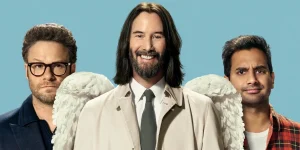
- Good Fortune (2025)
- The Best Years of Our Lives (1946)
- A Christmas Carol (1951)
- The Bishop’s Wife (1947)