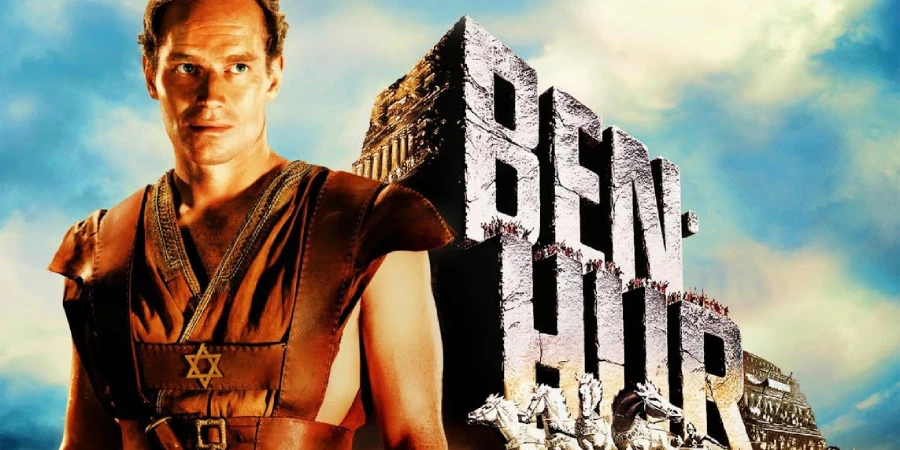

William Wyler unleashed a cinematic titan that redefined the historical epic forever. This massive production features thousands of extras and a staggering musical score. Ben-Hur remains a masterclass in spectacle, yet its heart beats with a deeply personal story of revenge and redemption.
Detailed Summary
The Reunion of Friends
Judah Ben-Hur greets his childhood friend Messala in Jerusalem after years of separation. Messala now commands the local Roman garrison and demands Judah’s loyalty to the Empire. Consequently, their political differences shatter their bond quickly. Judah refuses to betray his fellow Jews, which turns his former friend into a bitter enemy.
A loose roof tile falls during a parade and nearly kills the new Roman governor. Messala knows Judah is innocent of any assassination plot. Nevertheless, he arrests the entire Ben-Hur family to strike fear into the populace. He sends Judah to the galleys and imprisons his mother and sister in secret.
Survival at Sea
Judah survives three grueling years as a galley slave fueled by pure hatred. Fate intervenes during a massive naval battle against Macedonian pirates. He saves the life of Quintus Arrius, a high-ranking Roman consul. Therefore, the grateful commander adopts Judah as his legal son and heir in Rome.
Judah flourishes in the capital city as a champion charioteer. Despite his new wealth and status, his soul remains anchored to his lost family. Eventually, he returns to Judea to find his mother and sister. He learns they have contracted leprosy and believe they are dead to the world.
The Chariot Race
Sheik Ilderim convinces Judah to drive his white stallions against Messala in the circus. This competition provides the perfect stage for ultimate vengeance. The race is a brutal display of speed and violence. Messala uses a spiked wheel to destroy his opponents, but Judah remains undeterred.
Judah eventually forces his rival into a crash that leaves the Roman mangled. As Messala dies, he reveals the location of Judah’s family in the Valley of the Lepers. This final act of spite ensures Judah’s victory feels hollow. The protagonist realizes that his thirst for blood has not brought peace.


Movie Ending
Judah carries his dying sister and mother toward the city during the crucifixion of Jesus. He recognizes the man who once gave him water during his march to the galleys. A sudden storm breaks out as the sky turns dark over Golgotha. The blood of the Christ flows down the hill and enters the water supply where the women drink.
Miraculously, the leprosy vanishes as the rain washes over the land. This divine intervention restores the family and heals Judah’s shattered spirit. He finally lets go of his anger and chooses a path of peace. The film concludes with a symbolic shot of an empty cross and a shepherd tending his flock.
Are There Post-Credits Scenes?
This 1959 production does not contain any post-credits scenes. Modern audiences might expect a teaser, but mid-century films typically ended with a simple title card. The story reaches its full emotional and spiritual resolution before the curtains close.
Type of Movie
Ben-Hur is a quintessential Biblical epic and historical drama. It balances massive action sequences with an intimate character study. The tone shifts from grand adventure to somber religious reflection throughout its lengthy runtime.
Cast
- Charlton Heston – Judah Ben-Hur
- Stephen Boyd – Messala
- Haya Harareet – Esther
- Jack Hawkins – Quintus Arrius
- Hugh Griffith – Sheik Ilderim
- Martha Scott – Miriam
- Cathy O’Donnell – Tirzah
Film Music and Composer
Miklós Rózsa composed one of the most celebrated scores in cinema history. He spent years researching ancient music to create an authentic atmosphere. The soundtrack features leitmotifs for specific characters and spiritual themes. Notably, the Christ theme remains one of the most recognizable pieces of religious orchestration ever written.

Filming Locations
Production took place primarily at Cinecittà Studios in Rome. Designers built the massive arena for the chariot race on a backlot there. This set was the largest ever constructed for a motion picture at that time. Authentic Italian landscapes provided the rugged backdrop for the Judean countryside.
Awards and Nominations
The film achieved a historic sweep at the Academy Awards by winning eleven Oscars. This record stood unmatched for decades until modern blockbusters tied the count. It earned prizes for Best Picture, Best Director, and Best Actor among many others.
Behind the Scenes Insights
- Technicians used massive 70mm cameras that were incredibly difficult to maneuver.
- Charlton Heston actually learned to drive a chariot for his performance.
- Stuntman Joe Canutt accidentally flipped his chariot over a wall during the race.
- The crew dyed the Mediterranean sea blue for one scene because the natural color looked dull.
- Thousands of local Italians worked as extras to fill the massive arena stands.
Inspirations and References
The story originates from the 1880 novel written by Lew Wallace. This book was a literary phenomenon that bridged the gap between secular and religious readers. Wyler drew inspiration from the 1925 silent version of the tale. Additionally, the film incorporates historical accounts of Roman occupation and early Christian tradition.
Alternate Endings and Deleted Scenes
Editors trimmed several hours of footage to keep the runtime under four hours. Some versions of the script suggested a much darker fate for Judah’s family. However, the production team decided to maintain the miraculous healing seen in the novel. No significant alternate endings exist because the central narrative arc was so strictly defined.
Book Adaptations and Differences
The 1959 film remains the most famous adaptation of the source material. Interestingly, the novel places much more emphasis on the religious teachings of the desert. The movie elevates the rivalry between Judah and Messala to create more cinematic tension. While the book is quite dense, the film streamlines the plot into an accessible visual odyssey.
Memorable Scenes and Quotes
Key Scenes
- The naval battle sequence remains a terrifying example of practical effects and model work.
- A silent encounter at the well shows a stranger giving water to a parched Judah.
- The नौ-minute chariot race stands as the most famous action sequence in Hollywood history.
- Miriam and Tirzah hiding in the shadows of their home creates a moment of pure tragedy.
Iconic Quotes
- “You may conquer the land, but you cannot conquer the soul of a people.”
- “The world you live in is quite small, but your hatred is quite large.”
- “It was a miracle, Judah. A miracle.”
- “Greatness is not a crown, but a cross.”
Easter Eggs and Hidden Details
- A red cape symbolizing Roman power frequently appears in scenes involving Messala.
- The face of the actor playing Jesus is never clearly shown to maintain a sense of divinity.
- Different colored horses in the race represent the various nations competing under Rome.
- Stephen Boyd wore brown contact lenses to contrast with Heston’s blue eyes.
Trivia
- The chariot race took five weeks of filming to complete from start to finish.
- More than 200 statues were created to decorate the massive Roman sets.
- Leslie Nielsen actually auditioned for the role of Messala before Boyd was cast.
- This film saved MGM from near bankruptcy due to its massive box office success.
Why Watch?
Experience the definitive historical epic of the golden age. Its practical effects still outshine modern computer imagery. The story balances thunderous action with a touching message of forgiveness. Ultimately, this masterpiece proves that a blockbuster can still have a profound soul.
Director’s Other Movies
- The Best Years of Our Lives (1946)
- Roman Holiday (1953)
- The Big Country (1958)
- Funny Girl (1968)
Recommended Films for Fans
- Spartacus (1960)
- The Odyssey (2026)
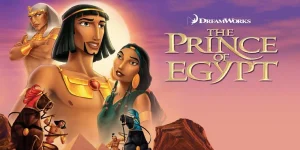
- The Ten Commandments (1956)
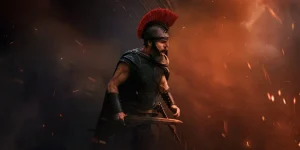
- Gladiator (2000)
- Gladiator II (2024)
- The Sign of the Cross (1932)
- Lawrence of Arabia (1962)