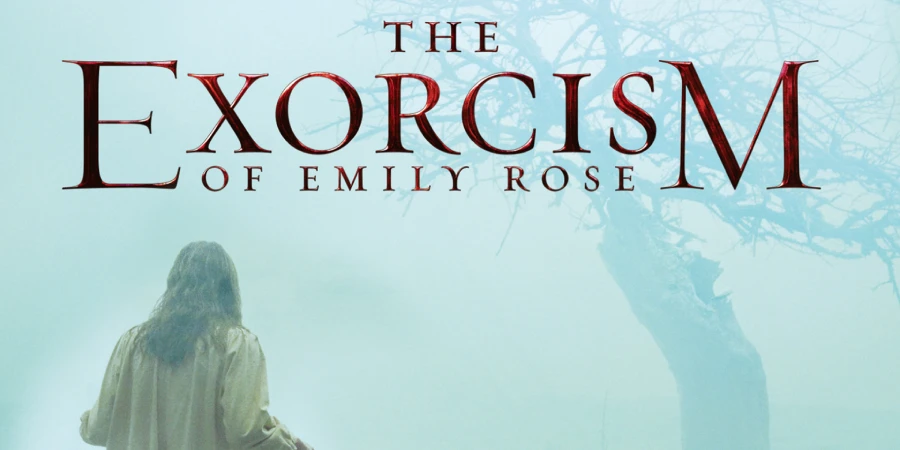

The Exorcism of Emily Rose (2005) is a chilling blend of horror, courtroom drama, and psychological mystery directed by Scott Derrickson. Loosely based on true events, the film explores faith, science, and the human mind through a haunting story of demonic possession and legal responsibility.
Detailed Summary
Introduction: A Death and a Trial
The film begins not with a typical horror setup but with the death of Emily Rose (Jennifer Carpenter), a deeply religious college student who dies after undergoing an exorcism. Her death sparks a criminal case against Father Richard Moore (Tom Wilkinson), the priest who performed the ritual, accused of negligent homicide.
The case becomes a national sensation, and the story unfolds as both a courtroom drama and a supernatural horror tale. Erin Bruner (Laura Linney), a skeptical defense attorney, takes Father Moore’s case, initially seeing it as an opportunity for career advancement—until the haunting evidence starts affecting her own beliefs.
The Flashbacks: Emily’s Descent
Through testimony and flashbacks, we see Emily’s terrifying ordeal. She was a bright, devout college student who began experiencing strange phenomena—uncontrollable body contortions, hallucinations, and voices whispering in multiple languages.
Doctors initially diagnose her with epilepsy and psychosis, prescribing medication. But Emily insists that something darker is happening. Her condition worsens despite medical treatment, leading her family to seek help from the church.
The Exorcism Ritual
Father Moore performs the exorcism in a remote farmhouse, with Emily’s family present. The sequence is one of the film’s most intense and unforgettable moments—Jennifer Carpenter’s performance is raw and unsettling. Emily screams in multiple voices, mimics animals, and contorts her body in impossible ways.
During the ritual, she identifies six demons inside her, including Lucifer himself. However, the exorcism fails to free her completely. Emily later refuses to continue the treatments or the rituals, choosing instead to accept her fate.
The Trial: Faith vs. Science
In court, the prosecution argues that Father Moore’s actions—encouraging Emily to abandon medical treatment—led directly to her death. The defense claims that the priest genuinely believed Emily was possessed, and that science cannot explain everything that happened.
Expert witnesses debate between neurological disorders and supernatural influence, blurring the line between faith and reason. Erin Bruner finds herself caught in a personal crisis—she begins experiencing strange occurrences, hearing noises, and feeling watched, as though Emily’s presence lingers over the proceedings.
Emily’s Final Message
Father Moore insists on testifying, wanting to tell Emily’s story. He reads a letter Emily wrote before her death, stating that the Virgin Mary appeared to her and gave her a choice: to be freed from the demons or to continue suffering as a witness to others’ faith. Emily chose to suffer, believing her pain would show people that evil is real.


Movie Ending
The film’s ending is hauntingly ambiguous and deeply emotional. The jury finds Father Moore guilty of negligent homicide, but they also recommend a suspended sentence, meaning he serves no prison time. The judge agrees, citing the extraordinary nature of the case.
Father Moore accepts the verdict peacefully, stating that Emily’s story needed to be told. Erin, now shaken and changed, visits Emily’s grave. The tombstone reads:
“Work out your own salvation with fear and trembling.”
The movie closes with Father Moore expressing his intention to share Emily’s story with the world, believing it can inspire faith and understanding of spiritual realities.
Are There Post-Credits Scenes?
There is no post-credits scene in The Exorcism of Emily Rose. The film ends on a somber note, leaving viewers to ponder whether Emily was truly possessed—or a victim of her own mind and misguided faith.
Type of Movie
This film is a supernatural horror-drama and courtroom thriller, combining two genres rarely blended so effectively. It’s more psychological and philosophical than a typical horror movie, focusing on belief systems and the confrontation between faith and science.
Cast
- Jennifer Carpenter as Emily Rose
- Tom Wilkinson as Father Richard Moore
- Laura Linney as Erin Bruner
- Campbell Scott as Ethan Thomas (prosecutor)
- Colm Feore as Karl Gunderson
- Mary Beth Hurt as Judge Brewster
Film Music and Composer
The atmospheric score was composed by Christopher Young, known for his work on other horror classics like Hellraiser and Sinister. His music here emphasizes tension and spiritual dread through haunting strings and minimalist tones that echo Emily’s torment.



Filming Locations
The film was shot mainly in Vancouver, British Columbia, and various rural areas in Canada. These locations provided the perfect gloomy, overcast settings to reflect the somber tone of both the horror sequences and the courtroom drama.
Awards and Nominations
- Saturn Award Nomination – Best Horror Film
- MTV Movie Award Nomination – Jennifer Carpenter for Best Frightened Performance
- The film also received critical praise for its screenplay and Carpenter’s haunting performance, though reactions from critics were mixed overall.
Behind the Scenes Insights
- Jennifer Carpenter’s performance was so intense that no CGI was used for her contortions—she could naturally twist her body in disturbing ways.
- Director Scott Derrickson insisted on keeping the tone grounded, drawing inspiration from real exorcism case files.
- The real case that inspired the film was that of Anneliese Michel, a German woman who died in 1976 after a series of exorcisms.
- Laura Linney was drawn to the project because it treated religious belief with seriousness, not mockery.
Inspirations and References
The movie was inspired by the true story of Anneliese Michel, whose exorcism and death became one of the most controversial court cases in modern religious history. It also draws thematic influence from The Exorcist (1973), though it focuses less on spectacle and more on moral and theological questions.
Alternate Endings and Deleted Scenes
A few deleted scenes expand on Erin’s haunting experiences, showing her nightmares and sleep paralysis episodes in more detail. These scenes were cut to maintain the courtroom focus. There are no known alternate endings, though early drafts of the script had a more overtly supernatural conclusion.
Book Adaptations and Differences
The film was not based on a single novel but rather inspired by Felicitas D. Goodman’s book “The Exorcism of Anneliese Michel” and related case records. The movie fictionalizes many details—moving the setting to America, renaming characters, and focusing heavily on the legal aftermath rather than the religious ritual itself.


Memorable Scenes and Quotes
Key Scenes
- Emily screaming in Latin and Aramaic during the exorcism.
- The barn scene where Emily’s body contorts as she battles the demons.
- Father Moore’s testimony reading Emily’s letter.
- Erin’s nighttime haunting, suggesting the spiritual forces may not be confined to Emily.
Iconic Quotes
- Father Moore: “The real trial here is whether we still believe in the existence of the devil.”
- Emily Rose: “I am Lucifer, the devil in the flesh.”
- Erin Bruner: “Maybe some things are meant to stay unexplained.”
Easter Eggs and Hidden Details
- The clock in Erin’s apartment stops at 3:00 AM, the so-called “Devil’s Hour.”
- The barn where the exorcism occurs mirrors imagery from classic Christian paintings of martyrdom.
- The film’s title card fades into an image resembling a cross—symbolizing faith amid tragedy.
Trivia
- Jennifer Carpenter reportedly scared the crew so much during the exorcism scenes that some refused to watch playback footage.
- The screams and vocal distortions in the film were largely her own, with minimal digital enhancement.
- Director Scott Derrickson later directed Sinister and Doctor Strange, both of which explore the boundary between science and the supernatural.
Why Watch?
Watch The Exorcism of Emily Rose if you enjoy horror with intellectual and emotional depth. It’s not just about jump scares—it’s a meditation on faith, morality, and the limits of human understanding. It leaves you questioning what you believe in long after the credits roll.
Director’s Other Movies
- Sinister (2012)
- Deliver Us from Evil (2014)
- Doctor Strange (2016)
- The Black Phone (2021)
Recommended Films for Fans
- The Exorcist (1973)
- The Rite (2011)
- The Possession (2012)
- Deliver Us from Evil (2014)
- The Conjuring (2013)
- Saint Maud (2019)