Neo lies in a coma, Trinity waits at his side, and the Sentinels are hours from Zion. The Matrix Revolutions picks up exactly where the cliffhanger left off and refuses to slow down for anyone who skipped Reloaded. It swaps philosophy for war, kills its heroes, and ends with a sunrise that fans still argue about. Below, we walk through every battle, every sacrifice, and the deal that finally stops the machines.
Detailed Summary
Trapped in Mobil Avenue
Neo wakes in a spotless subway station with no exit. A program named Rama-Kandra waits there with his wife and their young daughter, Sati, who was created out of love rather than purpose. They are being smuggled into the Matrix so Sati can live with the Oracle.
The station belongs to the Trainman, a scruffy smuggler who answers to the Merovingian. Neo tries to board the train and gets flattened for his trouble. Consequently, Neo is stuck in a limbo between the Matrix and the machine world while his body lies unconscious on the Hammer.
Bane Wakes Up
Aboard the Hammer, the crew interrogates the lone survivor of the fleet disaster. Bane claims he remembers nothing about the EMP that doomed Zion’s counterattack. Nobody suspects that Smith now wears his face.
Trinity and Morpheus jack in to find the Oracle, and Seraph meets them at the door. The Oracle looks different now, a change she explains as the price of a choice she made. She tells them Neo is trapped and that only the Merovingian can free him.
Club Hel
Seraph, Trinity, and Morpheus walk into the Merovingian’s underground nightclub, Club Hel, past a wall of bodyguards. A gunfight erupts in the coat check, with the trio fighting on the ceiling while guards shoot upward. They reach the Merovingian’s booth with pistols raised.
The Frenchman names his price: the eyes of the Oracle. Trinity responds by putting a gun to his head and offering a trade of her own. Either Neo goes free, or everyone in the room dies together; the Merovingian releases Neo.
The Oracle’s Final Lesson
Neo visits the Oracle one last time and asks why she never told him about the cycle. She admits that he was not ready for the truth. Smith, she warns, is Neo’s opposite, the result of the system trying to balance the equation when Neo destroyed him.
Smith will consume both the Matrix and the machine world unless someone stops him. She also reveals that Neo’s power over the Sentinels comes from the Source itself. Neo leaves convinced he must travel to the machine city, 01, and strike a deal.
Smith Takes the Oracle
After Neo departs, Smith arrives at the apartment. He absorbs Seraph and Sati in the hallway. Inside the kitchen, the Oracle finishes her cookies and tells him he already knows what she has seen.
Smith overwrites her and gains her gift of foresight. The newly upgraded Smith laughs with her voice. By this point, nearly every soul in the Matrix wears his face.
Two Ships, Two Missions
Niobe offers Neo the Logos, the fastest ship in the fleet, for the trip to the machine city. Trinity insists on going with him. Morpheus boards the Hammer with Niobe and Roland to warn Zion and help defend it.
Bane slips aboard the Logos before launch. He ambushes Trinity, and Neo arrives to fight him in the engine room. Smith, speaking through Bane, taunts Neo as a cable sparks in his hand.
Blinded
Bane presses the live cable into Neo’s eyes and burns them out. Neo stumbles in darkness until a strange thing happens: he sees Smith as a figure of roaring orange flame. He strikes with a steel pipe and kills Bane for good.
Neo can now perceive the machine world as golden light without his eyes. Trinity bandages his face and takes the controls. Meanwhile, the Sentinels begin drilling through Zion’s dock ceiling.
The Battle of Zion
Sentinels pour through the ceiling by the thousand. Captain Mifune leads the Armored Personnel Units, towering mechs with twin cannons that fire until their ammunition runs dry. The Kid, too young to enlist, sprints across the battlefield to reload Mifune’s guns.
Mifune falls, but with his dying breath he orders the Kid to open the gate. The Kid climbs into the damaged APU and forces the doors open as the Hammer comes screaming in. Zee, Link’s wife, joins the fight with a rocket launcher.
The Hammer’s Gamble
Niobe flies the Hammer through a mechanical tunnel at reckless speed with Morpheus beside her. Sentinels swarm the ship as it bursts into the dock. Roland triggers the EMP, which fries every machine in the chamber and every APU and defense system along with them.
Zion’s defenders retreat to the temple. Lock reports another wave already digging toward the city. In short, the EMP bought time, not victory.
Flight to the Machine City
Trinity pilots the Logos toward 01 while Neo guides her through storms of flying machines. Bombs rain down, so Trinity climbs straight up above the clouds. For the first time in her life, she sees the sun.
The ship stalls and plunges back down. It crashes into a tower in the machine city, and metal spears pierce Trinity’s body. She asks Neo for one more kiss and dies in his arms.
Movie Ending
Neo walks alone through the machine city as Sentinels swirl around him. A colossal face assembles itself from thousands of flying drones: Deus Ex Machina, the voice of the machines. Neo offers a bargain. Smith has spread beyond the machines’ control, and only Neo can stop him; in exchange, he wants peace for Zion.
The machine agrees. Back in Zion, the second wave of Sentinels stops inches from the temple, and the defenders stare in confusion. Mechanical tendrils lift Neo and plug him into the Matrix one last time.
Rain pours over a city filled with Smiths. One steps forward, the copy that absorbed the Oracle, and the rest stand still to watch. Neo and Smith trade punches that crack buildings and launch each other through the sky.
The fight ends in a crater with Smith beating Neo into the mud. Smith asks why Neo keeps getting up when everything he loves is gone. Neo answers that he chooses to.
Then Smith hesitates. He recites a line the Oracle planted, about everything with a beginning having an end, and realizes he has seen this moment before. Neo stands and lets Smith overwrite him.
On the machine side, a surge of energy floods through Neo’s body into the Smith inside him. Light bursts out of the copy, then spreads across the city as every Smith shatters into fragments. The Oracle, Seraph, and Sati reappear on the ground where they fell.
Deus Ex Machina declares it done. The Sentinels withdraw from Zion, and Morpheus and Niobe embrace as the crowd realizes the war is over. Machines carry Neo’s lifeless body away on a slab of light.
The epilogue takes place in the Matrix at dawn. The Oracle and Sati sit on a bench, and Sati reveals she made the sunrise for Neo. The Architect approaches and promises that the peace will hold as long as it can, and that anyone who wants out will be freed.
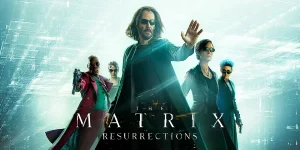
So why does it matter? Neo wins by refusing to fight on the machines’ terms and on Smith’s; he turns himself into the vessel that lets the system delete its own virus. Admittedly, the ending leaves questions, chiefly whether Neo survived, and the Oracle’s answer is simply that she believes he will return. The Matrix Resurrections (2021) eventually revealed that the machines rebuilt both Neo and Trinity.
Are There Post-Credits Scenes?
No. The Matrix Revolutions has no mid-credits or post-credits scenes. The credits roll over “Navras” by Juno Reactor and Don Davis, and the film ends when the music stops. This was the first entry without a teaser, since the trilogy was complete.
Type of Movie
The Matrix Revolutions is a science fiction war film wrapped in the franchise’s cyberpunk and martial arts trappings. It spends far more time in the real world than its predecessors, and the Zion battle plays like a mech anime brought to life. Tonally, it is the bleakest entry, driven by grief and sacrifice rather than discovery.
The dialogue still carries the trilogy’s mythic weight, but the exposition runs lighter than in Reloaded. It carries an R rating for violence and brief sexual content.
Cast
- Keanu Reeves – Neo
- Laurence Fishburne – Morpheus
- Carrie-Anne Moss – Trinity
- Hugo Weaving – Agent Smith
- Jada Pinkett Smith – Niobe
- Mary Alice – The Oracle
- Harold Perrineau – Link
- Lambert Wilson – The Merovingian
- Monica Bellucci – Persephone
- Collin Chou – Seraph
- Harry Lennix – Commander Lock
- Nona Gaye – Zee
- Ian Bliss – Bane
- Bruce Spence – The Trainman
- Nathaniel Lees – Captain Mifune
- Clayton Watson – The Kid
- Tanveer K. Atwal – Sati
- Bernard White – Rama-Kandra
- Helmut Bakaitis – The Architect
- David Roberts – Roland
- Anthony Zerbe – Councillor Hamann
- Kevin Michael Richardson – Deus Ex Machina (voice)
Film Music and Composer
Don Davis closed out the trilogy with his biggest score, adding a large choir to his signature brass. The final fight cue, “Neodämmerung,” features the choir chanting verses from the Upanishads in Sanskrit, tying the music to the film’s Hindu imagery. Davis described the choir as a way to raise the fight to a mythic register.
His collaboration with Juno Reactor produced “Navras,” the end credits track that reworks the same Sanskrit chant over electronic percussion. Davis had scored every Wachowski film since Bound, and Revolutions marked the end of that run.

Filming Locations
The Wachowskis shot Revolutions in Sydney, Australia, at Fox Studios, back to back with Reloaded. Sets included the Zion dock, the Mobil Avenue station, the Oracle’s apartment, and the rain-drenched crater for the final fight. The machine city existed almost entirely as computer graphics.
Sydney mattered here because almost nothing takes place on real city streets. Soundstages gave the crew control over rain rigs, wire work, and the enormous dock set where the APU battle unfolds. The result is a sequel that feels built rather than found.
Awards and Nominations
The Matrix Revolutions received no Academy Award nominations. It picked up Saturn Award nominations and other genre recognition, mainly for its visual effects and sound work.
Behind the Scenes Insights
- Warner Bros. released the film at the same moment worldwide on November 5, 2003, timed to 9 a.m. in Los Angeles, a first for a major studio release.
- It was also the first live-action feature released simultaneously in standard theaters and IMAX.
- Mary Alice replaced Gloria Foster as the Oracle after Foster’s death in 2001, and the script explains the change as the cost of the Oracle’s choice to help Neo.
- Keanu Reeves and Hugo Weaving spent weeks shooting the Super Burly Brawl under constant artificial rain on a soundstage.
- The APU mechs in the dock battle were full-scale practical props on set, with digital doubles handling the heavier action.
- Bruce Spence, who plays the Trainman, was already a cult favorite from the Mad Max films.
- The Wachowskis refused to do press for the film, continuing their policy from the earlier entries.
- Reeves performed the blinded engine room fight largely without the use of his eyes, relying on rehearsed choreography.
- The Deus Ex Machina face was built from thousands of individually animated flying machines.
Inspirations and References
Hindu philosophy saturates the film. Sati, Rama-Kandra, and Kamala carry Indian names, the choir chants from the Upanishades, and the Oracle’s talk of karma and love for programs echoes Hindu and Buddhist thought. “Navras” itself refers to the nine emotions of classical Indian aesthetics.
Christian imagery returns at the climax. Neo dies in a cruciform pose, and Deus Ex Machina’s declaration that it is done mirrors Christ’s final words. The title Deus Ex Machina literally means “god from the machine,” a theatrical device for divine intervention.
Mythology shapes the first act as well. Morpheus descending into Club Hel to retrieve Neo recalls Orpheus entering the underworld, and the Trainman functions like Charon ferrying souls. Captain Mifune takes his name from Toshiro Mifune, and the dock battle draws heavily on mecha anime and the power loader from Aliens.
Alternate Endings and Deleted Scenes
No alternate ending has been released. The Wachowskis always intended Neo’s sacrifice and the sunrise truce as the conclusion. Home video releases did not include a reel of deleted scenes.
The story did continue elsewhere, however. The online game The Matrix Online carried the official continuation after the truce, and the Wachowskis later revisited the characters in The Matrix Resurrections.
Book Adaptations and Differences
The Matrix Revolutions is not based on a book. The Wachowskis wrote it as the final chapter of their original screenplay, conceived alongside Reloaded as a single story. Philosophical and religious texts informed the themes, but no novel or comic served as source material.
Tie-in media came afterward rather than before. The Matrix Comics and The Matrix Online expanded on the ending, and the Kid’s arc continues from the Animatrix short “Kid’s Story.”
Memorable Scenes and Quotes
Key Scenes
- Neo meeting Sati’s family in the Mobil Avenue station.
- The Club Hel shootout, with Trinity, Morpheus, and Seraph fighting on the ceiling.
- Trinity holding a gun to the Merovingian’s head to win Neo’s freedom.
- Smith absorbing the Oracle in her kitchen and laughing with her voice.
- Bane blinding Neo in the engine room.
- Captain Mifune’s last stand in the APU.
- The Kid opening the gate for the Hammer under fire.
- Trinity breaking through the clouds to see the sun.
- The Super Burly Brawl in the rain, from the sky to the crater.
- Sati’s sunrise and the Oracle’s final line.
Iconic Quotes
- “Everything that has a beginning has an end.”
- “Because I choose to.”
- “Why, Mr. Anderson? Why do you persist?”
- “It is done.”
- “Kiss me, once more.”
- “You have to make it to the end.”
- “What do you think I am? Human?”
- “I believe.”
Easter Eggs and Hidden Details
- Mobil Avenue is an anagram of “limbo,” which describes exactly what the station is.
- After his blinding, Neo sees the machine world in gold, the same color used for Seraph’s code in the earlier films.
- Smith repeats the Oracle’s line about beginnings and endings word for word, proving he inherited her sight along with her body.
- Neo’s death pose forms a cross as the machines carry him away.
- The Merovingian’s club is named after Hel, the Norse underworld, fitting for a place where the heroes retrieve a trapped soul.
- Sati has no purpose in the system, which is why the Trainman must smuggle her in; her gift to Neo is a sunrise no program ordered.
- The Kid’s devotion to Neo pays off a thread begun in The Animatrix, where Neo helped him escape the Matrix without a red pill.
- The Architect’s bench scene with the Oracle mirrors their roles as father and mother of the Matrix, the two forces that balance it.
Trivia
- The film grossed roughly $427 million worldwide, well below Reloaded despite opening only six months later.
- Reeves, Fishburne, Moss, and Weaving all completed the trilogy in a single extended production that spanned more than a year of shooting.
- Both Neo and Trinity die on screen, yet both returned in The Matrix Resurrections in 2021.
- Morpheus’s death occurred not on film but in The Matrix Online, which Lana Wachowski later referenced in Resurrections.
- Kevin Michael Richardson, a prolific voice actor, provided the booming voice of Deus Ex Machina.
- The Sanskrit chant in the finale translates roughly as a prayer to lead the listener from darkness to light.
- Niobe pilots the Hammer through a tunnel that no other captain considered survivable, a payoff for her reputation as the best pilot in the fleet.
- The APU battle used sound design built from real industrial machinery to give the mechs weight.
Why Watch?
The Matrix Revolutions delivers the trilogy’s most emotional payoff and its biggest battle. Trinity’s final flight, Mifune’s stand, and the rain-soaked showdown still land with real force. Even with its flaws, it closes the story with conviction and a sunrise worth the journey.
Director’s Other Movies
- Bound (1996)
- The Matrix (1999)
- The Matrix Reloaded (2003)
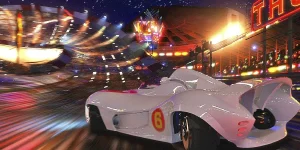
- Speed Racer (2008)
- Cloud Atlas (2012)
- Jupiter Ascending (2015)
- The Matrix Resurrections (2021)