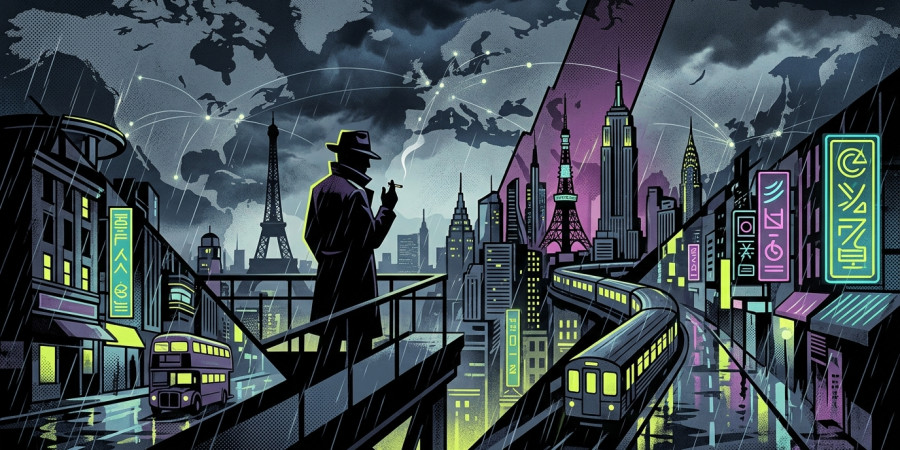

Shadows stretch across wet pavement. A cigarette glows in the darkness. Somewhere, a femme fatale waits.
These images have defined cinema for decades, but their evolution tells a story far bigger than Hollywood. The neo-noir film genre emerged in the 1960s and 70s, breathing new life into classic noir aesthetics while reflecting contemporary anxieties. What started as an American phenomenon has become a global cinematic language, influencing filmmakers from Seoul to São Paulo.
Understanding this genre’s worldwide impact reveals how cinema transcends borders and adapts to local cultures. Moreover, it shows how visual storytelling evolves while maintaining core themes of moral ambiguity, urban decay, and existential dread.
Understanding the Neo-Noir Film Genre Foundation
Classic film noir dominated American screens from the 1940s through the 1950s. Dark lighting, cynical protagonists, and doomed romance defined these crime dramas. However, the genre seemed to fade as Hollywood entered its colorful, widescreen era.
Then something unexpected happened. Directors began revisiting noir conventions with a modern twist. Chinatown and The Long Goodbye kicked off this revival, proving that noir storytelling could address contemporary issues while honoring the past.
The neo-noir aesthetic maintains several key characteristics:
- Morally compromised protagonists navigating corrupt systems
- Urban settings portrayed as alienating and dangerous
- Visual style emphasizing contrast, shadow, and atmospheric lighting
- Nonlinear narratives that mirror psychological confusion
- Themes of paranoia, betrayal, and institutional failure
Key Elements That Define Modern Noir Cinema
Unlike its predecessor, modern noir cinema embraces color cinematography while maintaining the genre’s signature mood. Directors use neon lights, rain-slicked streets, and stark contrasts to create visual unease. Color becomes another tool for emotional manipulation rather than an obstacle to noir aesthetics.
Technology also plays a crucial role. Surveillance, digital traces, and information overload replace the paper trails and phone taps of classic noir. Consequently, contemporary noir films explore how technology isolates us while supposedly connecting everyone.



How Asian Cinema Transformed Neo-Noir Storytelling
Asian filmmakers took the neo-noir genre and made it their own. South Korean cinema particularly excels at blending noir conventions with local storytelling traditions. Films like Memories of Murder and The Chaser demonstrate how procedural investigations can expose societal rot.
Japanese directors approach neo-noir through their unique cultural lens. Their films often emphasize honor, shame, and the weight of the past. Yakuza films incorporate noir elements while exploring codes of conduct and belonging in modern Japan.
Hong Kong action cinema deserves special mention. Directors there fused noir fatalism with spectacular action choreography, creating a hybrid style that influenced Western filmmakers. John Woo’s work particularly demonstrates this synthesis, where bullet ballet meets moral complexity.
Regional Variations in Asian Neo-Noir
Different Asian regions bring distinct flavors to neo-noir storytelling:
- Korean films emphasize class conflict and systemic corruption
- Japanese cinema focuses on alienation in hyper-modern societies
- Hong Kong productions blend action spectacle with existential themes
- Thai neo-noir explores urban poverty and spiritual emptiness
European Directors Redefining Neo-Noir Conventions
European cinema approached the neo-noir aesthetic with philosophical depth and visual experimentation. French directors, naturally drawn to existential themes, created films that questioned reality itself. Their work often blurs genre boundaries, mixing noir with art cinema traditions.
British neo-noir tends toward social realism, grounding crime stories in working-class struggles. These films expose how economic systems trap individuals in cycles of violence. Kitchen-sink realism meets shadowy corridors, creating uniquely gritty narratives.
Scandinavian countries developed Nordic noir, emphasizing bleak landscapes and psychological introspection. Snow-covered vistas replace rain-soaked streets, but the moral murkiness remains. This regional variation proved so popular it launched countless novels, films, and television series.
Notable European Contributions to the Genre
European filmmakers introduced several innovations to neo-noir cinema:
- Extended contemplative sequences that build dread through stillness
- Ambiguous endings that refuse easy moral resolution
- Political critique woven into crime narratives
- Exploration of memory, trauma, and unreliable perception
Latin American Neo-Noir and Social Commentary
Latin American directors use neo-noir stylistics to confront harsh social realities. Their films explore poverty, corruption, and violence as systemic issues rather than individual failures. Mexican cinema particularly excels at this, creating noir narratives set against drug war violence.
Brazilian filmmakers craft neo-noir stories set in favelas, where geography itself reflects social stratification. These films show how urban spaces trap residents in predetermined roles. Consequently, the city becomes both setting and antagonist.
Argentine cinema brings psychological complexity to neo-noir frameworks. Directors there explore how political trauma echoes through generations. Personal crimes become metaphors for national wounds that refuse to heal.
Contemporary Hollywood’s Global Neo-Noir Influence
Modern Hollywood absorbed influences from global neo-noir movements. Directors now incorporate international techniques into American productions. This cross-pollination enriches the genre while demonstrating cinema’s universal language.
Streaming platforms accelerate this exchange. Audiences worldwide access films from different countries, creating shared visual vocabularies. A viewer in Mumbai might watch Korean neo-noir, which influences Indian filmmakers, who then create work seen in Buenos Aires.
The result is a truly global neo-noir cinema movement where national boundaries matter less than shared themes. Urban alienation, institutional corruption, and moral ambiguity resonate regardless of where a film originates.
Cross-Cultural Elements in Modern Productions
International collaborations have become increasingly common. Co-productions blend different national approaches, creating hybrid styles that appeal to global audiences. Furthermore, filmmakers freely reference works from other countries, building on established visual traditions.
Where Neo-Noir Goes from Here
The neo-noir film genre continues evolving as new technologies and social concerns emerge. Climate anxiety, digital surveillance, and artificial intelligence provide fresh contexts for timeless noir themes. These modern fears fit naturally into a genre built on paranoia and powerlessness.
Diversity in filmmaking voices ensures neo-noir will keep transforming. Women directors, in particular, bring new perspectives to a genre traditionally dominated by male viewpoints. Their work questions whose stories get told and how power operates within noir narratives.
As cinema becomes increasingly global, neo-noir serves as common ground. Its visual language transcends dialogue and cultural specifics, communicating through shadow, composition, and atmosphere. This universality guarantees the genre’s continued relevance across borders.
Start exploring neo-noir from different countries. Notice how filmmakers adapt genre conventions to reflect local concerns while maintaining core themes. Each regional variation offers insights into both cinema and the societies that produce these dark, compelling stories. Your next favorite film might come from somewhere unexpected.