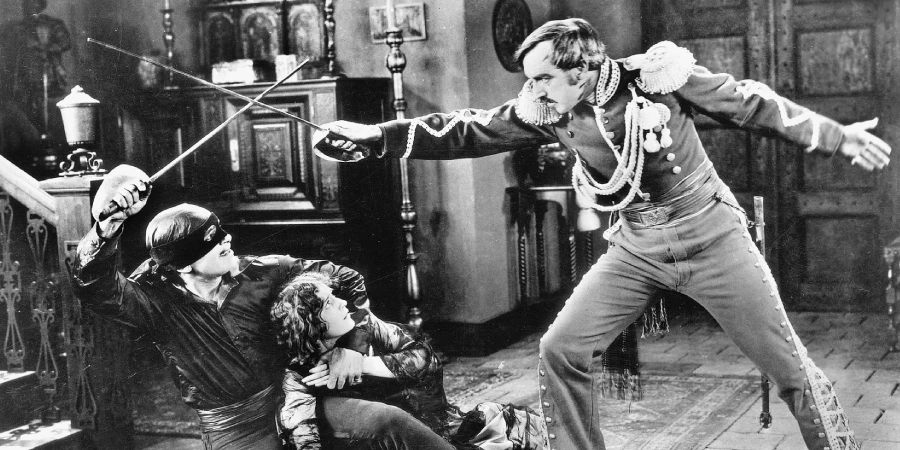
Douglas Fairbanks transformed the adventure genre forever with his athletic portrayal of a masked vigilante in old California. This silent masterpiece defined the swashbuckler archetype by blending acrobatic stunts with a clever dual identity. Audiences witnessed the birth of a cinematic legend who fought against corrupt colonial officials with a sword and a smile.
Detailed Summary
The Return of Diego Vega
Don Diego Vega returns to his family home in Los Angeles after finishing his education in Spain. He finds the territory suffering under the iron fist of Governor Alvarado and the cruel Captain Juan Ramon. Diego adopts the persona of a weary, bored aristocrat to hide his true intentions from his oppressive enemies.
The Shadowy Vigilante Appears
Local villagers whisper about a mysterious figure named Zorro who defends the poor and punishes greedy tax collectors. Captain Ramon grows frustrated as this masked rider consistently escapes capture while leaving a signature mark on his victims. Meanwhile, Diego’s father pressures the young man to marry the beautiful Lolita Pulido to strengthen family ties.
Romance and Rebellion
Lolita finds the foppish Don Diego incredibly dull but feels a sudden, passionate attraction to the daring Zorro. Captain Ramon also pursues Lolita, which leads to a tense confrontation where Zorro humbles the villainous officer. Consequently, the rebellion gains momentum as Zorro inspires the local caballeros to join his crusade for justice.
Movie Ending
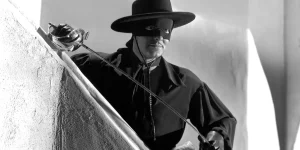
Stakes rise significantly when Captain Ramon insults Lolita and arrests her parents on false charges. Diego realizes his masquerade must end to save those he loves from the governor’s wrath. He leads a daring raid on the governor’s palace, showcasing breathtaking stunts and masterful swordplay.
Zorro corners his enemies and forces the corrupt officials to resign their positions under threat of death. He reveals his true identity to his father and Lolita, who both react with shock and pride. Ultimately, the hero wins Lolita’s hand in marriage and restores peace to the region.
Are There Post-Credits Scenes?
No post-credits scenes exist for this film. The concept of additional footage after the credits did not exist during the silent film era. The Mark of Zorro concludes strictly with the final narrative resolution and a traditional title card.
Type of Movie
This film serves as the definitive swashbuckler adventure and a foundational action movie. It maintains a lighthearted, energetic tone despite the underlying themes of political corruption and social injustice.
Cast
- Douglas Fairbanks – Don Diego Vega / Zorro
- Marguerite De La Motte – Lolita Pulido
- Robert McKim – Captain Juan Ramon
- Noah Beery – Sergeant Pedro Gonzales
- Charles Hill Mailes – Don Carlos Pulido
- Claire McDowell – Doña Catalina Pulido
Film Music and Composer
Silent films originally relied on live theater organists or local orchestras to provide musical accompaniment. Because no synchronized soundtrack existed in 1920, the score varied significantly depending on the venue. Modern restorations often feature new scores by composers like Jon Mirsalis or Gaylord Carter. These contemporary versions emphasize the rhythmic pacing of the sword fights and Fairbanks’ legendary athleticism.
Filming Locations
The production utilized various outdoor spots in California to replicate the rugged landscape of the 1820s. Specifically, the crew filmed several key sequences in the San Fernando Valley and near the Mojave Desert. These locations provided the dusty, sun-drenched atmosphere necessary for an authentic Western frontier setting. Furthermore, the sprawling sets at the Pickford-Fairbanks Studio in Hollywood allowed for complex indoor choreography and rooftop chases.
Awards and Nominations
This film predates the Academy Awards and most major modern honors. However, the Library of Congress selected it for preservation in the National Film Registry due to its cultural significance.
Behind the Scenes Insights
- Douglas Fairbanks performed nearly all his own stunts, including the famous leap over a high wall.
- The actor spent months training with a fencing master to ensure his swordplay looked authentic and fast.
- Fairbanks initially worried that the audience would not accept the dual-identity gimmick because he was mainly known for comedies.
- Production staff built an entire Mexican village on the studio lot to maintain total control over lighting and weather conditions.
Inspirations and References
The screenplay takes direct inspiration from the serialized story The Curse of Capistrano. Author Johnston McCulley wrote the tale only a year before the film entered production. Many historians believe the character of Zorro reflects the real-life exploits of Joaquin Murrieta, a legendary Mexican outlaw. Additionally, the concept of a wealthy man hiding behind a mask influenced later heroic figures in literature and film.
Alternate Endings and Deleted Scenes
Standard studio practices in the 1920s did not include preserving deleted scenes for future releases. Most historians believe the theatrical cut matches the director’s original vision perfectly. No evidence exists suggesting that the producers ever filmed or considered an alternate ending for this story.
Book Adaptations and Differences
The movie follows the plot of The Curse of Capistrano quite closely. Interestingly, the original book intended for Zorro to reveal his identity and retire permanently at the end. The film’s massive success forced McCulley to write more stories where the hero continues his adventures. Notably, Fairbanks added more humor and physical comedy to Diego’s persona than the book initially described.

Memorable Scenes and Quotes
Key Scenes
- Zorro carves his trademark “Z” into the skin or clothing of his enemies for the first time.
- Diego hilariously pretends to be fascinated by a new handkerchief while his enemies search for the outlaw.
- The final chase sequence across the rooftops showcases Fairbanks’ incredible parkour-style movements.
- Zorro and Sergeant Gonzales engage in a playful, yet dangerous, duel inside a crowded tavern.
Iconic Quotes
- “I have a mission to perform… it is to punish those who wrong the poor.”
- “The spirit of Diego is as thin as the edge of his sword.”
- “Wait! Before you go, I must leave my mark!”
Easter Eggs and Hidden Details
- The “Z” mark became so popular that it appeared in several subsequent Fairbanks productions as an inside joke.
- Look closely at the background soldiers; many were actual stuntmen who worked on multiple Fairbanks films.
- The film features a specific style of riding that influenced the “Western” genre for decades to come.
Trivia
- This movie directly inspired Bob Kane when he co-created the character of Batman in 1939.
- It was the very first film released by United Artists, a studio founded by Fairbanks and his partners.
- The original title of the source material was replaced by the movie’s title for all future book printings.
- Fairbanks’ mustache in this film became his signature look for the rest of his professional life.
Why Watch?
Witness the definitive origin of the modern action hero through this silent classic. The physical performances remain impressive a century later, proving that real stunts beat digital effects. Character dynamics provide a blueprint for every masked vigilante story that followed.
Director’s Other Movies
- The Three Musketeers (1921)
- The Iron Mask (1929)
- Robin Hood (1922)
Recommended Films for Fans
- The Thief of Bagdad (1924)
- The Mask of Zorro (1998)
- The Adventures of Robin Hood (1938)