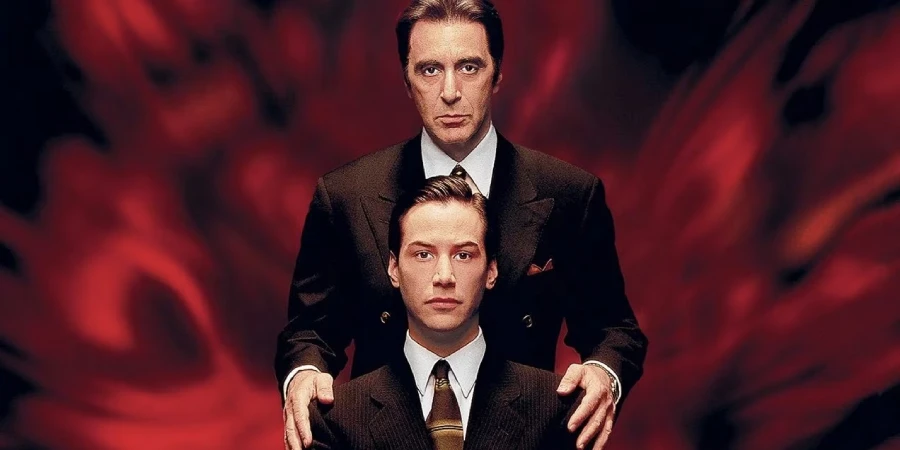

Al Pacino plays Satan as a chatty New York lawyer, and he has never looked happier. The Devil’s Advocate (1997) takes a courtroom thriller and quietly pours brimstone into it until the walls catch fire. Keanu Reeves supplies the ambition, Charlize Theron supplies the heartbreak, and Taylor Hackford keeps the trap closing. Every spoiler follows below, so finish the film first if you still have a soul to protect.
Detailed Summary
A Florida Lawyer Who Never Loses
Kevin Lomax (Keanu Reeves) is an undefeated defense attorney in Gainesville, Florida. His current client, schoolteacher Lloyd Gettys, stands accused of molesting a student. During the girl’s testimony, Kevin realizes Gettys is guilty.
He retreats to the courthouse bathroom, where a reporter named Larry mocks his losing streak before it even begins. Kevin returns to the courtroom and destroys the teenage witness on cross-examination. He wins, and that choice sets the whole story in motion.
An Offer from New York
A recruiter named Leamon Heath arrives with a proposal from the Manhattan firm Milton, Chadwick & Waters. Kevin helps them pick a jury, scores another victory, and receives a lavish job offer. His wife Mary Ann (Charlize Theron) is thrilled; his devout mother Alice (Judith Ivey) quotes scripture and begs him to stay.
John Milton (Al Pacino), the firm’s magnetic founder, seals the deal on a rooftop over the city. Kevin and Mary Ann move into a luxurious apartment inside the firm’s own building. Interestingly, the walls of that apartment will matter later.
Santeria, Billionaires, and a Managing Partner on Borrowed Time
Kevin’s first case involves Phillipe Moyez, a Santeria priest charged over animal sacrifice. He wins again. Milton then hands him the firm’s biggest client: real estate tycoon Alexander Cullen (Craig T. Nelson), charged with murdering his wife, her stepson, and a maid.
Meanwhile, managing partner Eddie Barzoon (Jeffrey Jones) resents being passed over. Federal investigator Mitch Weaver is circling the firm, and Barzoon is tempted to cooperate. During a run in Central Park, Barzoon is beaten to death by vagrants whose faces briefly turn demonic.
Mary Ann Unravels
While Kevin disappears into work, Mary Ann drifts through a life of shopping and lonely afternoons. Jackie Heath and the other firm wives welcome her, but something feels wrong. In a salon, she watches Jackie’s face twist into a monstrous mask.
She sees visions of a child, learns she cannot have children, and grows convinced the building itself is hostile. Kevin, however, dismisses her fears as stress. Consequently, she sinks deeper into isolation.
Christabella and the Cullen Trial
Associate Christabella Andreoli (Connie Nielsen) keeps crossing Kevin’s path with obvious intent. Milton encourages the flirtation while preaching about the beauty of appetite. Kevin resists, barely.
In the Cullen case, Kevin realizes that alibi witness Melissa Black is lying and that his client is almost certainly guilty. He puts her on the stand anyway. Cullen walks free, and Kevin’s winning streak stays intact.
The Breaking Point
Mary Ann claims Milton assaulted her in the apartment, and her body shows claw-like wounds. Kevin cannot believe her, because he spent that exact time with Milton in court. As a result, she is committed to a psychiatric hospital.
During a visit, Mary Ann shatters a window and slashes her throat with the glass. She dies in Kevin’s arms. Alice then reveals the secret she has carried for decades: John Milton is Kevin’s father.



Movie Ending
Kevin loads a gun, walks through strangely empty streets, and climbs to Milton’s penthouse. Milton drops the mask completely. He is Satan, and he has been grooming Kevin since Gainesville.
Milton explains the whole design. Every case Kevin won was a test, and every victory was a small surrender. Christabella is Kevin’s half-sister, and Milton wants the two of them to conceive a child who will become the Antichrist.
Pacino delivers a furious monologue about God as an “absentee landlord” who sets up rules just to watch people fail. He insists he has always been a fan of humanity. Vanity, he admits, is his favorite sin.
Kevin seems to agree, then turns the pistol on himself. He invokes free will and pulls the trigger. Milton screams, Christabella burns away, and the penthouse erupts into flame as the Devil’s rage tears the room apart.
Kevin then wakes up in the Gainesville courthouse bathroom. He is back at the Gettys trial, before any of it happened. Whether the New York chapter was a vision, a temptation, or a loop that will repeat is left for the viewer to decide.
This time, he tells the judge he will not continue representing Gettys. The judge warns him he will be disbarred. Kevin accepts that and walks out with Mary Ann, who is alive and well.
Larry the reporter catches them in the hallway and asks for an exclusive interview. Mary Ann nudges Kevin, who agrees. After the couple leaves, Larry’s face melts into Milton’s grin. He repeats his line about vanity, and the Devil wins round two before the credits roll.
Are There Post-Credits Scenes?
No. The film ends with Milton’s smirk and cuts to the credits, with The Rolling Stones playing over them. Nothing extra waits at the end.
Type of Movie
The Devil’s Advocate is a supernatural thriller wrapped inside a legal drama. The first hour feels like a slick John Grisham adaptation. The second hour slides into full-blown horror, complete with demonic faces and a flaming penthouse.
Tonally, it swings between slow-burn dread and operatic excess. Pacino’s performance pushes the climax into dark comedy. The film earned an R rating and runs roughly 144 minutes.
Cast
- Keanu Reeves – Kevin Lomax
- Al Pacino – John Milton
- Charlize Theron – Mary Ann Lomax
- Jeffrey Jones – Eddie Barzoon
- Judith Ivey – Alice Lomax
- Connie Nielsen – Christabella Andreoli
- Craig T. Nelson – Alexander Cullen
- Tamara Tunie – Jackie Heath
- Ruben Santiago-Hudson – Leamon Heath
- Debra Monk – Pam Garrety
- Vyto Ruginis – Mitch Weaver
- Laura Harrington – Melissa Black
- Heather Matarazzo – Barbara
- Chris Bauer – Lloyd Gettys
- Delroy Lindo – Phillipe Moyez
- Don King – Himself
Film Music and Composer
James Newton Howard composed the score. By 1997 he was already one of Hollywood’s most versatile composers, with credits on The Fugitive and Dave. His later work includes The Sixth Sense, Signs, and The Dark Knight with Hans Zimmer.
For this film, Howard builds slow, brooding textures that avoid cheap scares. Low strings and choral touches creep under the courtroom scenes. Notably, the music rarely tells you Milton is evil; it lets the audience figure that out.
The end credits switch gears entirely. “Paint It Black” by The Rolling Stones plays as a final wink.
Filming Locations
Most of the production shot in New York City, and the city is practically a character. Manhattan’s canyons of glass and marble sell the idea that money is the real religion here. Milton’s rooftop speeches would mean nothing in a smaller skyline.
The Cullen apartment scenes used Donald Trump’s personal residence at Trump Tower on Fifth Avenue. That gilded setting gives Cullen’s character instant credibility as a ruthless developer. In contrast, the early Florida scenes feel sun-bleached and modest, which makes Kevin’s rise look even more seductive.
Awards and Nominations
The film won the Saturn Award for Best Horror Film in 1998 and picked up Saturn nominations for Best Actor (Al Pacino) and Best Writing. A Saturn nomination for Best Make-Up went to Luigi Rocchetti and Neal Martz. Pacino also received an MTV Movie Award nomination for Best Villain.
Behind the Scenes Insights
- Keanu Reeves accepted a lower salary so the producers could meet Al Pacino’s asking price, and Pacino reportedly donated the same amount to charity once he found out.
- Pacino turned the role down several times when the script leaned heavily on visual effects; the later, character-driven drafts finally won him over.
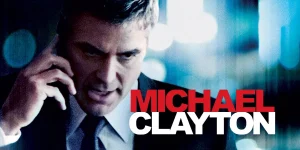
- Jonathan Lemkin and Tony Gilroy wrote the screenplay. Gilroy later wrote the Bourne films and directed Michael Clayton, another story about a lawyer losing his moral footing.
- Cinematographer Andrzej Bartkowiak shot the film, bringing the same cold polish he gave to Speed and Falling Down.
- Producers Arnon Milchan, Arnold Kopelson, and Anne Kopelson backed the project for Warner Bros.
- The living bas-relief in Milton’s office was one of the film’s most elaborate effects. Ironically, that same sculpture caused the production’s biggest headache after release.
Inspirations and References
Andrew Neiderman’s 1990 novel provided the plot foundation. Beyond the book, the film borrows freely from the Faust legend, in which a man trades his soul for worldly success.
Milton’s name is a direct nod to the author of Paradise Lost. He even quotes its most famous line about reigning in Hell rather than serving in Heaven. Furthermore, the story’s pregnancy plot clearly echoes Rosemary’s Baby.
The legal thriller framework owes a debt to the 1990s Grisham boom, especially The Firm. Both films feature a young hotshot lured into a glamorous firm with a rotten core.
Alternate Endings and Deleted Scenes
No alternate ending was released. The theatrical cut’s dream-reset finale remains the only version.
The biggest post-release change involves the sculpture behind Milton’s desk. Sculptor Frederick Hart sued over its resemblance to his work “Ex Nihilo” at Washington National Cathedral, and later home video releases altered the scenes where it appears. A 2026 4K release from Scream Factory includes deleted scenes and commentary from Taylor Hackford.
Book Adaptations and Differences
Yes, the film adapts Neiderman’s novel of the same name. The book’s protagonist is named Kevin Taylor, and his wife is Miriam; the film renames them Kevin Lomax and Mary Ann.
Neiderman’s story is a leaner supernatural thriller. Lemkin and Gilroy expanded the courtroom material, deepened Mary Ann’s breakdown, and built the explosive penthouse confrontation and reset ending for the screen. Admittedly, the film’s version of Milton is far more theatrical than anything on the page.


Memorable Scenes and Quotes
Key Scenes
- Kevin’s bathroom moment in Gainesville, where a single choice defines his character.
- Milton’s rooftop pitch above the city, framed like a temptation on a mountaintop.
- Mary Ann watching Jackie’s face warp in the salon mirror.
- Milton dipping his finger into holy water and watching it boil.
- Barzoon’s death in Central Park, with the vagrants revealed as demons.
- Mary Ann’s suicide in the hospital, the film’s emotional low point.
- The penthouse confrontation, with the sculpture coming alive on the wall.
- Larry’s face morphing into Milton’s for the final sting.
Iconic Quotes
- “Vanity, definitely my favorite sin.”
- “Free will. It’s like butterfly wings: once touched, they never get off the ground.”
- “Lose? I don’t lose! I win!”
- “Better to reign in Hell than serve in Heaven.”
- “Look but don’t touch. Touch but don’t taste.”
Easter Eggs and Hidden Details
- Milton speaks several languages during the film, including Spanish on the subway and Mandarin with a client. Satan, naturally, is fluent everywhere.
- Holy water boils when Milton touches it in the church. He sits there calmly, as if testing the plumbing.
- Milton never actually enters a courtroom. He watches, nudges, and waits for Kevin to do the dirty work.
- Mary Ann’s haircut and wardrobe shift as she assimilates into the firm’s world, mirroring her loss of identity.
- The sculpture in Milton’s office contains figures that move during the finale, revealing the souls trapped inside.
- Milton calls the law the ultimate backstage pass. Specifically, he notes that more lawyers are practicing now than at any point in history.
Trivia
- The film had a budget of about $57 million and grossed roughly $153 million worldwide.
- Warner Bros. released the film on October 17, 1997.
- Charlize Theron was still a relative newcomer; this role helped launch her toward Monster and an Oscar.
- Connie Nielsen made her major Hollywood breakthrough here before starring in Gladiator.
- Boxing promoter Don King plays himself during a fight-night sequence with Milton.
- Reeves and Pacino shared the screen again only in spirit; the pairing remains a one-off.
Why Watch?
Watch it for Al Pacino cutting loose as a Devil who loves his job. Watch it for a legal thriller that keeps morphing into something stranger and scarier. Above all, watch it for an ending that doubles back and bites you twice.
Director’s Other Movies
- The Idolmaker (1980)
- An Officer and a Gentleman (1982)
- Against All Odds (1984)
- White Nights (1985)
- Everybody’s All-American (1988)
- Blood In Blood Out (1993)
- Dolores Claiborne (1995)
- Proof of Life (2000)
- Ray (2004)
- Love Ranch (2010)
- Parker (2013)
- The Comedian (2016)