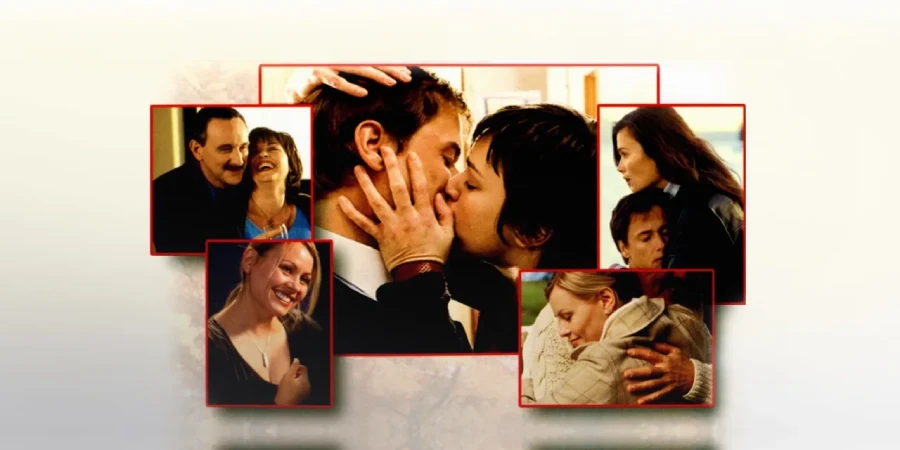

Dying badly is something most films prefer to skip over, but The Barbarian Invasions puts a man’s messy, undignified death at the center of everything and dares you to find it funny, sad, and beautiful all at once. Rémy Girard plays Rémy, a Montreal history professor whose body is failing him, and the film spends every minute cataloguing what a spectacularly flawed human being he has been. Director Denys Arcand wrote a sequel to his own 1986 film The Decline of the American Empire, and the result is one of the most honest films about mortality that Quebec cinema has ever produced.
Detailed Summary
Rémy’s Deteriorating Health and the Hospital from Hell
Rémy lies in a Montreal public hospital, surrounded by the particular chaos of an underfunded system. His ward is overcrowded, his bed squeezed into a hallway, and the socialist healthcare model he spent his academic career defending is visibly collapsing around him. Arcand’s camera lingers on the peeling walls and the shuffling, overwhelmed staff with something close to dark comedy.
Rémy’s ex-wife, Louise, calls their estranged son Sébastien, a wealthy London-based financier, to come home. Sébastien barely hides his contempt for his father’s lifestyle, his politics, and his endless infidelities. Father and son have not spoken in years, and the reunion is ice-cold from the first handshake.
Sébastien Buys His Father a Better Death
Sébastien is not sentimental, but he is efficient. He bribes a union official to clear out an entire floor of the hospital so Rémy can have a private room with actual dignity. Watching money solve a problem that Rémy’s beloved collectivism could not solve is one of Arcand’s sharpest, most pointed jokes, and he does not soften it for anyone.
Sébastien also tracks down Nathalie, the heroin-addicted daughter of Rémy’s old friend Diane. He arranges for her to supply pharmaceutical-grade heroin to manage Rémy’s pain, sidestepping the bureaucratic maze of palliative care. This subplot is handled with surprising tenderness; Nathalie slowly becomes one of the film’s most compelling figures.
Reassembling the Old Guard
Sébastien begins calling in the friends from Rémy’s intellectual circle, most of whom appeared in The Decline of the American Empire. Claude, Diane, Pierre, and the others arrive and gather around Rémy’s bed like a parliament of aging bohemians. Their conversations crackle with the same wit and political argument as their younger selves, but there is now a weight behind every word.
These reunion scenes are genuinely funny and genuinely sad in alternating beats. Rémy performs for his friends even while dying, holding court on history, politics, and his own catastrophic love life. Girard’s physical performance here is extraordinary; he communicates exhaustion and vitality at the same time, often within a single sentence.
Nathalie’s Parallel Story
Nathalie, played by Marie-Josée Croze, is not simply a plot device to deliver drugs. Arcand gives her a full arc. She is smart, broken, and funny, and her growing bond with the dying Rémy becomes the film’s emotional spine.
Sébastien initially sees Nathalie as a transaction. Her heroin connects her to Rémy, and something shifts in how she carries herself when she is around him. She starts showing up not because she is paid to, but because she wants to be there.
Rémy’s Confessions and Catalogue of Sins
One of the film’s best sequences involves Rémy listing, with theatrical pride, every woman he has slept with outside his marriage. Louise sits nearby, cycling between fury and exhausted affection. Arcand frames it as both comedy and quiet devastation; Louise has carried this for decades, and her face does the work that no dialogue could.
Rémy never fully apologizes. He is self-aware enough to understand his failures but too much of a sensualist to truly regret them. This refusal to grant him a deathbed redemption arc is one of Arcand’s bravest screenplay choices.
Sébastien and His Girlfriend Gaëlle
Sébastien’s girlfriend Gaëlle arrives from London and brings a practical competence that cuts through the emotional fog. She helps Sébastien manage the logistics of his father’s care with a warm efficiency that gradually softens Sébastien himself.
Their relationship quietly illustrates a generational shift. Sébastien operates in a globalized, post-ideological world where money is the actual currency of power, not ideas. His father spent his life arguing about theory; Sébastien simply writes a check and changes reality.
The Auction of Art and Ideas
In one of the film’s most quietly damning scenes, a former student arrives to buy some of Rémy’s old books and academic belongings. The haggling over intellectual artifacts that once seemed to matter is played with dark humor. Decades of thought, compressed into items that fetch a few hundred dollars at best.


Movie Ending
Rémy’s condition deteriorates past any point where the hospital can manage, and Sébastien arranges to move him to a lakeside chalet outside the city. This is the film’s final act, and Arcand stages it with a quiet, almost ceremonial calm that earns every minute of the buildup.
The old friends gather at the chalet. They eat, drink wine, and talk as they always have. Rémy is weak but present, propped up among the people he has loved and wronged in roughly equal measure. There is no speech, no grand reconciliation, just the low hum of old friendship.
Nathalie prepares the fatal dose of heroin. She does it with practiced care, and Rémy takes it willingly. His friends sit around him as he slips away, peacefully, outdoors, beside a lake on a clear day. It is a death arranged entirely outside legal and institutional frameworks, and the film frames this not as transgression but as grace.
Sébastien and Rémy have a private moment before the end. Their reconciliation is understated and entirely real for that reason. No tearful speeches. Sébastien simply stays close, and Rémy looks at his son with something that reads as gratitude mixed with regret.
After Rémy dies, his friends scatter across the dock and the surrounding grass. Nobody collapses. Life continues in its ordinary rhythms, which is precisely the point. Arcand refuses to make death cinematic in the Hollywood sense; instead, he makes it look uncomfortably like what it actually is: an absence that the living have to walk back from.
Nathalie’s fate adds a final complication. Sébastien pays for her to enter a rehabilitation program abroad, funding a new life for the woman who eased his father’s exit. It is a gesture of generosity that also carries the film’s running argument: individual acts of money and will can accomplish what collective systems cannot, or at least cannot in the broken version of those systems we see throughout the film.
Are There Post-Credits Scenes?
No. The Barbarian Invasions contains no post-credits scenes. Arcand’s closing images carry finality; adding anything after them would undercut the whole point.
Type of Movie
This is a dramatic comedy, or perhaps a comedic drama, depending on which scene you last watched. Arcand’s tone shifts between sharp political satire, warm ensemble comedy, and genuinely affecting grief with unusual control.
It belongs to a loose category of “death with friends” films, but it carries a specifically Quebec flavor: secular, literate, politically engaged, and deeply skeptical of institutions. The pacing is unhurried, the register is intimate, and the humor is dry enough to burn.
Cast
- Rémy Girard – Rémy Beaulieu
- Stéphane Rousseau – Sébastien Beaulieu
- Marie-Josée Croze – Nathalie
- Dorothée Berryman – Louise
- Louise Portal – Diane
- Dominique Michel – Dominique
- Pierre Curzi – Pierre
- Yves Jacques – Claude
- Marina Hands – Gaëlle
Film Music and Composer
The score was composed by Pierre Aviat. His work here is restrained and elegant, favoring strings and spare arrangements that do not compete with Arcand’s dialogue-heavy scenes.
Aviat’s music functions almost like a held breath. It appears at emotional peaks but never telegraphs feeling in a manipulative way. The chalet sequence, in particular, benefits from his light touch; the score recedes and lets silence carry the weight.



Filming Locations
Principal photography took place in Montreal, Quebec. The city is not just a backdrop; it is an argument. Its public institutions, its architectural mix of French tradition and North American modernity, and its political identity all feed directly into Arcand’s themes.
The hospital scenes were shot in real Montreal facilities, which gives them a grittiness that a studio set could not fake. The lakeside chalet in the final act provides a visual and emotional contrast: clean air, open water, and natural light against the film’s earlier institutional grays.
Awards and Nominations
The Barbarian Invasions won the Academy Award for Best Foreign Language Film at the 2004 ceremony. It also won the Best Screenplay award at the Cannes Film Festival in 2003, and Marie-Josée Croze took home Best Actress at Cannes that same year.
The film swept the Genie Awards in Canada, winning across multiple categories. Its reception at both Cannes and the Oscars confirmed what Quebec audiences already knew: Arcand had made something genuinely special with this reunion.
Behind the Scenes Insights
- Denys Arcand reunited most of the original cast from The Decline of the American Empire, which meant actors who had genuinely aged together since 1986 were playing characters who had done the same.
- Arcand wrote the screenplay as a way to process his own feelings about aging, death, and the failures of Quebec’s social institutions.
- Marie-Josée Croze prepared extensively for her role as a heroin addict and has spoken about the physical and psychological demands of the performance.
- The film was shot relatively quickly and on a modest budget, which Arcand has credited with keeping the production intimate and focused.
- Several of the long conversation scenes were rehearsed extensively before filming to allow them to feel naturalistic rather than staged.
Inspirations and References
Arcand drew directly on his 1986 film The Decline of the American Empire, which introduced most of these characters. The Barbarian Invasions works as a standalone film, but its emotional weight multiplies considerably if you know where these people started.
Arcand has cited his own observations of Quebec’s healthcare system and his experiences with friends and family facing serious illness as central inspirations. The film is not based on a specific text but carries a strong autobiographical undercurrent.
Intellectually, the film is in conversation with Alexis de Tocqueville, historical cyclical theories, and the kind of French-Canadian intellectual tradition that flourished in Montreal universities in the 1960s and 1970s. Rémy’s dining table arguments echo that world directly.
Alternate Endings and Deleted Scenes
No officially confirmed alternate endings or deleted scenes from The Barbarian Invasions have been publicly documented. Arcand has not discussed significant cuts to the theatrical version in widely available interviews.
Given the film’s tight, purposeful structure, it is hard to imagine a radically different cut existing. The ending at the lake feels like the only ending Arcand ever intended to write.
Book Adaptations and Differences
The Barbarian Invasions is not based on a book. The screenplay is an original work by Denys Arcand, written as a sequel to his earlier film. No source novel or play exists for comparison.

Memorable Scenes and Quotes
Key Scenes
- The hospital hallway: Rémy lying on a gurney in a crowded corridor, surrounded by groaning patients, establishes the film’s central irony in under two minutes.
- Sébastien bribing the union official: A single envelope of cash clears an entire floor of a public hospital. Arcand plays it completely straight, which makes it funnier and more disturbing than any winking commentary could.
- Rémy’s list of lovers: Girard delivers this monologue with the pride of a man cataloguing his greatest achievements while Dorothée Berryman’s face quietly destroys you from the corner of the frame.
- Nathalie preparing the fatal dose: Croze’s hands are steady and methodical. There is no melodrama, just concentration, and that restraint makes the scene devastating.
- The death at the lake: Rémy fades outdoors, among friends, on a beautiful day. Arcand holds the shot longer than expected, and the ordinariness of it is the whole point.
Iconic Quotes
- “Je ne suis pas croyant. Je ne suis pas pratiquant. Mais j’ai été élevé catholique.” (Rémy, on his complicated relationship with faith)
- Rémy addressing his friends gathered around him: “You’re all here because you feel guilty. Good. You should.”
- Sébastien to Gaëlle, explaining his father: “He had every idea and every woman except the right ones.”
Easter Eggs and Hidden Details
- Several of the books visible in Rémy’s hospital room are titles that would have been assigned reading in Quebec universities during the intellectual heyday of his generation, a quiet nod to his formation as a thinker.
- The architectural details of the hospital deliberately echo real Montreal public institutions, grounding the film’s political critique in a recognizable geography for local audiences.
- Nathalie’s drug paraphernalia is handled with unusual specificity and accuracy, which reflects Croze’s research into the subject.
- The chalet’s lakeside setting mirrors the natural retreats that Quebec intellectuals historically used as escape from urban academic life, giving the final act a culturally specific resonance.
- Background conversations among the minor hospital staff occasionally include references to budgetary cuts and staffing shortages, deepening the institutional critique without drawing attention to it.
Trivia
- The Barbarian Invasions is one of the very few sequels to win the Academy Award for Best Foreign Language Film, while the original film had also been nominated for the same award nearly two decades earlier.
- Marie-Josée Croze’s Best Actress win at Cannes was widely praised as a breakthrough moment for a performer who had been underutilized in French-Canadian cinema up to that point.
- Arcand wrote the title as a reference to historical periods when established civilizations were overrun by outside forces, applying that metaphor to the incursion of market logic into the film’s socialist intellectual world.
- The film was produced partly with support from Canadian public film funding bodies, which adds a layer of irony given its critique of public institutions.
- Rémy Girard and Stéphane Rousseau had appeared together in Quebec productions before, which gave their father-son dynamic an additional layer of familiarity that benefits their scenes together.
Why Watch?
Rémy Girard’s performance alone justifies the time: he makes a serial adulterer, an ideological hypocrite, and a deeply loving man feel like the same person in every scene, which is a harder trick than it sounds. Marie-Josée Croze won at Cannes for good reason; her Nathalie is the emotional anchor that keeps the film from becoming an old men’s club. Arcand argues something genuinely uncomfortable here, that money and individual will can do more for a dying man than the systems we build to protect each other, and he never lets you fully settle on whether that makes him right.
Director’s Other Movies
- The Decline of the American Empire (1986)
- Jesus of Montreal (1989)
- Love and Human Remains (1993)
- Stardom (2000)
- The Age of Ignorance (2007)
Recommended Films for Fans
- The Decline of the American Empire (1986)
- The Sweet Hereafter (1997)
- Amour (2012)
- The Diving Bell and the Butterfly (2007)
- Mon Oncle Antoine (1971)
- Nebraska (2013)
- Ikiru (1952)