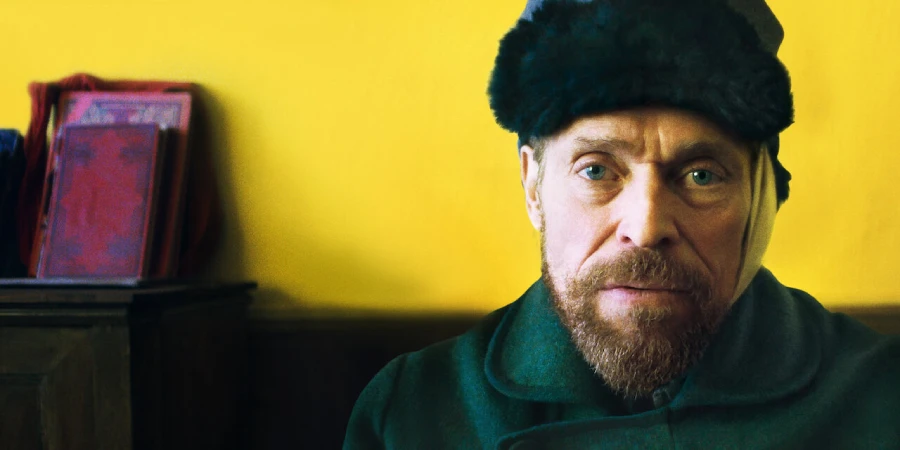
Vincent van Gogh paints colors that nobody else can see while his mind slowly unravels in the French countryside. This visceral biopic rejects standard historical tropes to place viewers directly inside the artist’s fractured perspective. Willem Dafoe delivers a haunting performance that captures both the ecstasy of creation and the agony of isolation.
Detailed Summary
Heading South to Arles
Vincent moves to the south of France after growing weary of the gray Parisian art scene. Paul Gauguin encourages this change because he believes a new light exists in the countryside. Consequently, Vincent finds himself surrounded by golden fields and vast landscapes that fuel his frantic creative pace.
Isolation begins to take a heavy toll on his mental health despite his high productivity. He scares the local children and wanders through nature with mud on his face. Meanwhile, his brother Theo provides constant financial support but cannot cure Vincent’s growing loneliness.
The Yellow House and Gauguin
Dreams of an artist collective lead Vincent to rent a yellow house where he hopes friends will join him. Paul Gauguin eventually arrives, though their relationship quickly turns volatile and competitive. Furthermore, their conflicting philosophies on painting from nature versus memory cause frequent, heated arguments between the two men.
Gauguin decides to leave Arles after realizing Vincent’s instability is becoming dangerous. This abandonment triggers a famous psychological break during which Vincent severs his own ear. Subsequently, the townspeople petition to have him removed from their community due to his erratic behavior.
Sanatorium and Final Days
Vincent voluntarily enters an asylum at Saint-Remy to seek some form of peace. He continues to paint feverishly, believing his work offers a glimpse into eternity for future generations. Nevertheless, his seizures and bouts of melancholy persist even under medical supervision.
He eventually moves to Auvers-sur-Oise to stay closer to Dr. Gachet and his brother. Death approaches not as a tragedy, but as a release from a world that refuses to understand his vision. Specifically, the film depicts his end as a mysterious confrontation in a field rather than a clear suicide.
Movie Ending
Vincent stands in a sun-drenched field when two young boys approach him with a firearm. A struggle ensues and a shot rings out, striking the artist in the stomach. Interestingly, the film follows the controversial theory that local youths accidentally shot him rather than the traditional suicide narrative.
He stumbles back to his room and refuses to implicate the boys despite his agonizing pain. Theo arrives to comfort his brother during his final, quiet moments of life. Because Vincent views death as a transition to a different star, he meets his end with a strange sense of serenity.
The funeral brings together a small group of people who finally see the vast collection of unsold canvases. Each painting vibrates with the life and energy that Vincent could never communicate through words. Ultimately, his physical journey ends in a simple wooden coffin, but his transcendental vision remains immortalized in his art.
Are There Post-Credits Scenes?
There are no scenes after the credits in At Eternity’s Gate. The screen fades to black, allowing the emotional weight of the finale to linger. Viewers should use this time to reflect on the stunning visual journey and the somber music.
Type of Movie
This film is a biographical drama with a heavy emphasis on experimental cinematography. It utilizes a poetic and immersive tone to mimic a subjective psychological experience. Instead of a fast-paced plot, it focuses on mood, light, and the internal landscape of a genius.
Cast
- Willem Dafoe – Vincent van Gogh
- Rupert Friend – Theo van Gogh
- Oscar Isaac – Paul Gauguin
- Mads Mikkelsen – The Priest
- Mathieu Amalric – Dr. Paul Gachet
- Emmanuelle Seigner – Madame Ginoux
Film Music and Composer
Tatiana Lisovskaya composed the haunting and minimalist score for this production. The music features sharp, dissonant piano notes that reflect Vincent’s jagged mental state. Additionally, the soundtrack often gives way to the natural sounds of wind and rustling grass to ground the viewer in the setting.
Filming Locations
Production took place in Arles, Bouches-du-Rhone, and Auvers-sur-Oise to capture the authentic light of France. These locations allowed the director to film in the exact spots where Van Gogh once stood with his easel. Notably, the authenticity of the landscape helps the audience understand why the artist became obsessed with these specific vistas.
Awards and Nominations
Willem Dafoe received an Academy Award nomination for Best Actor for his transformative performance. He also won the Volpi Cup for Best Actor at the Venice International Film Festival.
Behind the Scenes Insights
- Director Julian Schnabel taught Willem Dafoe how to paint with authentic brushstrokes for the filming process.
- The crew used a split-diopter lens to create a blurred effect on the bottom half of many frames.
- Most of the dialogue during the asylum scenes came directly from historical letters written by the artist.
- Actors often performed long takes in natural light to capture a sense of raw realism.
Inspirations and References
The film primary draws inspiration from the numerous letters Vincent sent to his brother Theo. These documents provide a window into his spiritual beliefs and his theories regarding color usage. Moreover, the biography Van Gogh: The Life by Steven Naifeh and Gregory White Smith influenced the depiction of his death.
Alternate Endings and Deleted Scenes
Julian Schnabel edited the film to maintain a specific rhythmic flow and discarded several linear narrative scenes. While no official alternate endings exist, several montages of Vincent painting in the sun were shortened. These cuts ensured the focus remained on the artist’s emotional state rather than a chronological checklist of events.
Book Adaptations and Differences
This movie is not a direct adaptation of a single book but serves as an original interpretation of historical facts. It differs from traditional biographies by supporting the theory that Vincent was accidentally murdered. Conversely, many history books still categorize his death as a definitive suicide in the wheat fields.
Memorable Scenes and Quotes
Key Scenes
- Vincent creates a pair of boots on canvas, finding beauty in a mundane, worn-out object.
- The intense interrogation by Mads Mikkelsen’s priest explores the thin line between madness and religious divinity.
- Gauguin explains his preference for painting from the mind while Vincent insists on the truth of nature.
Iconic Quotes
- “I am my paintings.”
- “Maybe God gave me a gift for people who aren’t here yet.”
- “There is something inside me. I don’t know what it is.”
Easter Eggs and Hidden Details
- The sketchbook shown in the film is a recreation of a “lost” ledger that scholars still debate today.
- Many background extras wear clothing meticulously modeled after figures in Van Gogh’s actual portrait series.
- Colors in the film gradually shift from muted tones to vibrant yellows as Vincent heads south.
Trivia
- Willem Dafoe was 62 years old during filming, whereas the real Van Gogh died at 37.
- Julian Schnabel actually painted some of the artworks seen on screen during the production.
- The title comes from an oil painting Vincent completed late in his life.
Why Watch?
Willem Dafoe delivers a career-best performance in this visually spectacular masterpiece. It avoids boring biographical cliches by making the act of painting feel like a high-stakes thriller. Everyone who appreciates art or human psychology must witness this breathtaking cinematic achievement.
Director’s Other Movies
- Basquiat (1996)
- Before Night Falls (2000)
- The Diving Bell and the Butterfly (2007)
- Miral (2010)
Recommended Films for Fans
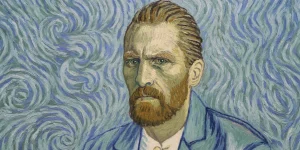
- Loving Vincent (2017)
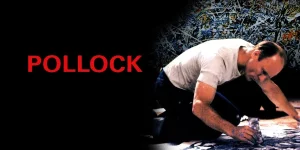
- Pollock (2000)
- Lust for Life (1956)
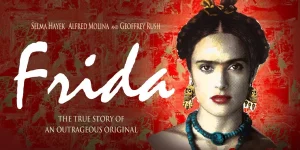
- Frida (2002)
- Mr. Turner (2014)