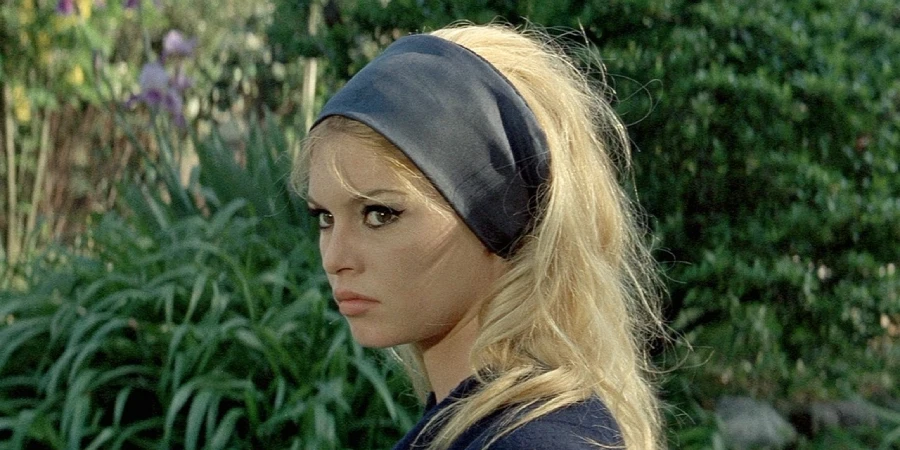
Jean-Luc Godard turned a straightforward literary adaptation into one of cinema’s most devastating portraits of a marriage falling apart in real time. Contempt (1963) does not hide its cruelty behind metaphor; it puts the slow death of love on screen with almost unbearable directness. Brigitte Bardot stares at Michel Piccoli, and the camera stares back at both of them, refusing to look away. Few films have made romantic collapse feel this beautiful and this brutal simultaneously.
Detailed Summary
Opening: A Marriage Introduced in Intimacy
Godard opens the film with Paul Javal (Michel Piccoli) and his wife Camille (Brigitte Bardot) lying in bed together, listing the parts of her body he loves. It feels tender, almost playful. However, there is an unease beneath the surface that the film will spend its entire runtime excavating.
Paul Takes the Job
Paul is a screenwriter approached by the brash American producer Jeremy Prokosch (Jack Palance) to work on a film adaptation of Homer’s Odyssey, directed by the legendary Fritz Lang (playing himself). Paul needs the money, and he accepts without hesitation. That decision becomes the first crack in the foundation of his marriage.
The Car Scene and the First Fracture
Prokosch offers Camille a ride in his sports car, and Paul, inexplicably, encourages her to go ahead while he follows in a taxi. This moment is small but catastrophic. Camille reads Paul’s willingness to hand her off to another man as a sign that he is using her, perhaps even pimping her out to secure the job, and she never fully forgives him for it.
Godard frames this scene with minimal drama. Yet its consequences ripple through every scene that follows, making it one of the film’s most quietly devastating choices.
The Apartment Argument
A long, agonizing sequence in Paul and Camille’s partially furnished apartment follows. Paul attempts to understand why Camille has grown cold toward him. Camille refuses to articulate her contempt directly, cycling through moods, deflections, and half-truths. The sequence lasts roughly half an hour of screen time, and Godard shoots it in long, slow pans around the apartment, trapping the audience inside the argument alongside the couple.
Meanwhile, the colors shift subtly from warm to cold as the scene progresses. Godard uses red, white, and blue lighting in ways that feel painterly rather than naturalistic. In addition, the sequence functions almost as a one-act play, stripped of the external plot entirely.
Capri and the Arrival at the Villa
Production moves to Capri, where Fritz Lang shoots scenes at the stunning Villa Malaparte. Prokosch grows increasingly frustrated with Lang’s artistic vision and wants something more commercial and sensationalistic. Lang, calm and authoritative, resists every demand with quiet dignity.
Camille, consequently, gravitates toward Prokosch’s attention. Paul watches his wife slip away while simultaneously failing to stand up for his own artistic integrity alongside Lang. Both losses mirror each other pointedly.
Camille’s Decision
Camille makes clear to Paul that their relationship is finished. She has decided, not in a dramatic outburst but in a quiet, matter-of-fact declaration, that she no longer loves him. Paul scrambles to hold on, alternating between anger, self-pity, and desperate tenderness. None of it works.
The Odyssey as Mirror
Lang continues filming his version of Homer’s Odyssey throughout the Capri sequences. Godard draws explicit parallels between Odysseus, Penelope, and the suitors on one hand, and Paul, Camille, and Prokosch on the other. However, the parallel is inverted: Paul is no heroic Odysseus pining to return home. He is the man who abandons his wife emotionally and expects her to simply wait.
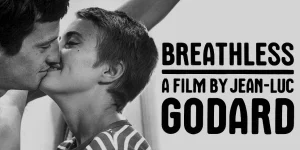
Movie Ending
Camille writes Paul a letter confirming the end of their marriage and leaves Capri with Prokosch. Paul receives the letter and, for a moment, seems to accept the loss. He stands at the Villa Malaparte looking out at the sea, and Godard gives him no grand emotional release, no cathartic breakdown. The film refuses to sentimentalize Paul’s grief.
Then comes the film’s brutal final blow. Prokosch’s car crashes on the road, killing both Prokosch and Camille. Paul learns of their deaths almost as an afterthought, conveyed with startling economy. Godard does not linger on the accident itself; he simply reports it, the way real tragedy often arrives, without theatrical preparation.
In the final shots, Lang continues filming his Odyssey on the rocky coastline of Capri. He calls out “Silence,” and the camera pans slowly upward toward the sky and the open sea. It is a deliberately ambiguous ending. On one level, art continues regardless of human suffering. On another, the silence Lang commands reads as an epitaph for Camille, for the marriage, and for any illusion Paul held about himself as a man of principle.
Paul’s fate after this moment remains unaddressed. Godard is not interested in his recovery. The film ends with Lang, not Paul, at its center, suggesting that artistic integrity outlasts personal moral failure. Furthermore, the sea itself, which the Odyssey scenes have filled with mythic weight throughout the film, becomes the final image, vast, indifferent, and gorgeous.
Are There Post-Credits Scenes?
No. Contempt contains no post-credits scene of any kind. Once Lang calls for silence and the camera lifts toward the sky, the film is over. Nothing follows.
Type of Movie
Contempt belongs to the drama genre, with strong elements of art-house cinema and what some critics classify as a film-within-a-film structure. Its tone is melancholic, cerebral, and at times achingly beautiful. Godard blends psychological realism with a kind of operatic visual grandeur that resists easy categorization.
In contrast to Godard’s earlier, more kinetic New Wave work, this film moves slowly and deliberately. It is a film about watching and being watched, about the male gaze turned inward against itself.
Cast
- Brigitte Bardot – Camille Javal
- Michel Piccoli – Paul Javal
- Jack Palance – Jeremy Prokosch
- Fritz Lang – Himself
- Giorgia Moll – Francesca Vanini (interpreter)
Film Music and Composer
Georges Delerue composed the score for Contempt, and it ranks among the most celebrated film scores in French cinema. His main theme is a sweeping, mournful melody for strings that returns repeatedly throughout the film, functioning almost as a Greek chorus commenting on the action. Delerue was one of the most prolific and respected composers of the French New Wave era.
The score does not simply underscore emotion; it amplifies it to an almost unbearable degree. Notably, Godard uses the theme in ways that feel ironic at times, placing beauty over scenes of coldness and fracture. The contrast between the music’s lushness and the film’s emotional austerity is itself a form of commentary.
Filming Locations
Contempt was shot primarily in two locations: Rome and Capri, Italy. The Rome sequences were filmed at the famous Cinecittà Studios, grounding the film in the heart of the European film industry that Prokosch represents. Capri provided the exterior sequences, particularly at the iconic Villa Malaparte, perched on a cliff above the Tyrrhenian Sea.
Villa Malaparte is not merely a backdrop. Its stark, modernist architecture, angular and isolated against the sea and sky, mirrors the emotional landscape of the film perfectly. Godard reportedly fought to use this location specifically because of how it looked on screen.
The choice of Italy was also commercially motivated; co-production with Italian companies required Italian settings. However, Godard transforms this commercial constraint into something artistically essential.
Awards and Nominations
Contempt did not receive major awards recognition upon its initial release, which was not unusual for Godard’s work in mainstream awards circles. Over the decades, however, it has accumulated significant critical recognition and appears on numerous authoritative lists of the greatest films ever made.
Behind the Scenes Insights
- Producers Carlo Ponti and Joseph E. Levine forced Godard to shoot additional scenes featuring Bardot in a more overtly sexual context to satisfy commercial demands. Godard was deeply unhappy with this requirement and made no secret of his contempt for the producers’ interference.
- Godard reportedly included the famous opening bedroom scene partly to satisfy producer demands for Bardot’s presence in a sensual context, while simultaneously subverting expectations by making it a scene about love rather than spectacle.
- Fritz Lang, then in his seventies, brought tremendous authority and gravitas to his role. His participation lent the film a sense of living film history, since Lang had been making movies since the silent era.
- Jack Palance did not speak French, and Michel Piccoli and Brigitte Bardot did not speak English fluently. Much of the dialogue between characters required real-time interpretation, which Godard incorporated into the film’s structure through the character of Francesca.
- Godard and Bardot had a famously tense working relationship on set. She later described the experience as uncomfortable, though she acknowledged the film’s quality.
- The film was shot in widescreen CinemaScope, a format Godard used self-consciously. He had Lang deliver a line in the film commenting on widescreen being suited for showing snakes and funerals, a sly critique of the format itself.
Inspirations and References
The film adapts Alberto Moravia’s 1954 novel Il disprezzo (published in English as A Ghost at Noon). Moravia’s novel examines the same central premise: a screenwriter watches his marriage dissolve during a film production in Italy. Godard follows the novel’s structure fairly closely while infusing it with his own intellectual and cinematic preoccupations.
Homer’s Odyssey functions as a second layer of inspiration, both as the film-within-the-film that Lang is directing and as a mythic framework for the marriage dynamic. Godard was also clearly in dialogue with the tradition of Italian neorealism and classical Hollywood cinema, specifically the kind of big-budget American productions that Prokosch embodies.
Alternate Endings and Deleted Scenes
No confirmed alternate ending for Contempt is part of the public record. The additional scenes that Godard shot under producer pressure, specifically the more explicit sequences of Bardot at the film’s opening, represent the most documented case of interference with his original cut. Godard shot these scenes but reportedly did everything in his power to make them feel integrated rather than exploitative.
No significant body of deleted scenes has entered public circulation or been discussed authoritatively in relation to this film.
Book Adaptations and Differences
Contempt is based on Alberto Moravia’s novel Il disprezzo (1954). The novel is narrated in the first person by Riccardo Molteni, who corresponds to Paul Javal in the film. Moravia’s narrator is more self-aware and introspective in a literary sense, spending considerable time analyzing his own failings explicitly.
Godard externalizes this interiority through cinema rather than narration. In the film, moreover, the Fritz Lang character plays a much more prominent symbolic role than his equivalent in the novel. Godard also layers in his own commentary about the film industry, commercial cinema, and artistic compromise in ways that go beyond Moravia’s original scope.
One key structural difference is that the novel provides a clearer timeline and more conventional narrative scaffolding. Godard, in contrast, stretches certain scenes (particularly the apartment argument) to durations that feel deliberately uncomfortable and anti-novelistic.
Memorable Scenes and Quotes
Key Scenes
- The opening bedroom scene, where Paul catalogs Camille’s body part by part while she lies still, lit in shifting colors of red, white, and blue.
- Prokosch driving Camille away in his sports car while Paul watches and does nothing to stop it, a small gesture that destroys a marriage.
- The extended apartment argument, roughly thirty minutes of circling, deflecting dialogue that dissects the mechanics of a relationship’s collapse.
- Fritz Lang quoting from a poem by Holderlin on the terrace of Villa Malaparte, providing a moment of unexpected lyricism amid the tension.
- The final pan upward from Lang’s film set toward the open sky and sea, closing the film on a note of vast, ambiguous silence.
Iconic Quotes
- “In the beginning was not the word, but the gesture.” – spoken during the film’s reflections on Homer and cinema.
- Fritz Lang, responding to Prokosch’s crude taste: “I make films for eyes, not for ears.”
- Lang, quoting Holderlin: “To live is to defend a form.”
- Paul to Camille during the apartment scene: “I love you totally, tenderly, tragically.” (Godard’s own addition, not from Moravia’s novel.)
Easter Eggs and Hidden Details
- The red, white, and blue lighting in the opening bedroom scene mirrors the colors of both the French and American flags, quietly signaling the Franco-American co-production tension that runs through the entire film.
- Fritz Lang playing himself collapses the boundary between the film’s fictional world and cinema history, a typical Godardian meta-gesture. Lang’s presence implies that real artistic integrity exists within the film as a character, not just as a concept.
- Prokosch repeatedly tosses film canisters across the room in anger, a visual metaphor for his contempt for the art form he funds. It is a small but pointed detail.
- The Villa Malaparte was designed by architect Adalberto Libera and built for writer Curzio Malaparte, a figure associated with fascism and artistic transgression. Godard’s choice of this location carries cultural connotations beyond mere aesthetics.
- Lang’s line about CinemaScope being good for snakes and funerals is a direct quotation attributed to the director Fritz Lang himself outside the fiction, blending the real person’s opinions into the character’s dialogue.
Trivia
- Brigitte Bardot agreed to appear in the film largely because she wanted to work with a serious art-house director and expand her image beyond the sex-symbol roles she had become associated with.
- Georges Delerue’s main theme from Contempt was later used by Quentin Tarantino in Inglourious Basterds (2009), introducing the melody to a new generation of audiences.
- The film was a French-Italian co-production, which is why Capri and Rome were required as shooting locations, as noted by Godard himself in various interviews.
- Michel Piccoli wears a fedora hat throughout much of the film because the producers insisted Paul resemble a more conventionally masculine, glamorous figure. Piccoli later said he found it ridiculous but played along.
- Godard has cited Contempt as one of the few films he made where external commercial pressure visibly shaped the final product, and he remained ambivalent about it for years afterward.
- The film’s budget was substantially larger than anything Godard had worked with previously, largely because of Bardot’s participation and the American co-production money from Joseph E. Levine.
Why Watch?
Contempt is essential viewing for anyone serious about cinema, not because it is comfortable, but because it refuses every comfortable option available to it. Godard, Delerue, and a cast at the peak of their powers combine to produce something genuinely rare: a film that makes you feel the texture of emotional loss. Furthermore, its meditation on art, commerce, and integrity has only grown more relevant with time.
Director’s Other Movies
- Breathless (1960)
- Vivre sa vie (1962)
- Band of Outsiders (1964)
- Alphaville (1965)
- Pierrot le Fou (1965)
- Weekend (1967)
- Every Man for Himself (1980)
- Goodbye to Language (2014)
- The Image Book (2018)
Recommended Films for Fans
- L’Avventura (1960)
- La Notte (1961)
- 8 1/2 (1963)
- Breathless (1960)
- Persona (1966)
- Vivre sa vie (1962)
- Marriage Italian Style (1964)
- Scenes from a Marriage (1974)