
Few films dare to make anxiety this beautiful. Cleo from 5 to 7, directed by Agnès Varda, follows a young Parisian singer across roughly two hours of real time as she waits for the results of a cancer biopsy. Varda turns dread into a meditation on mortality, femininity, and what it means to truly see and be seen. It is a film that quietly dismantles you.
Detailed Summary
The Tarot Reading That Sets Everything in Motion
Cleo visits a fortune teller at the very start of the film. Shot in striking color before the rest of the film shifts to black and white, the tarot reading introduces the central tension immediately: the cards suggest death, illness, and darkness ahead.
Cleo interprets the reading as confirmation of her worst fears. Her superstitious nature surfaces fully here, and Varda uses this opening to establish Cleo as a woman who has largely been defined by how others see her, including fortune tellers who project fate onto her.
Cleo in Her Apartment: Performance and Pretense
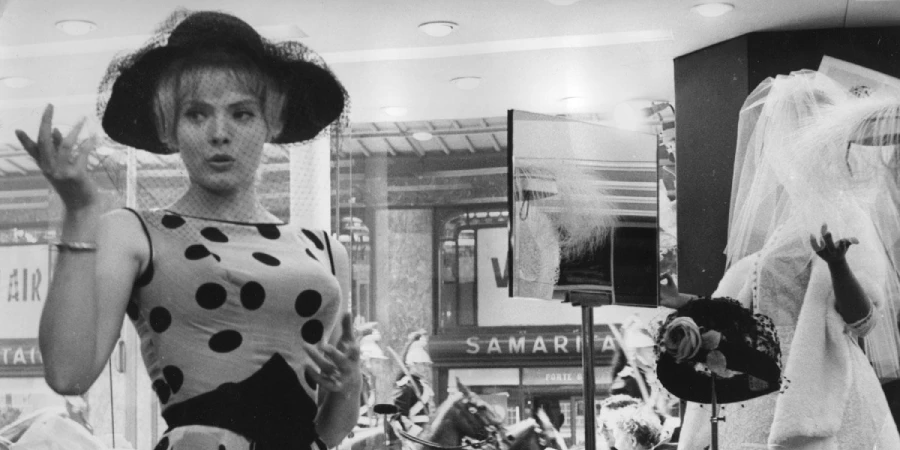
Cleo, played by Corinne Marchand, returns to her lavish Paris apartment. She is a pop singer, beautiful and pampered, surrounded by her housekeeper Angèle and her lover José.
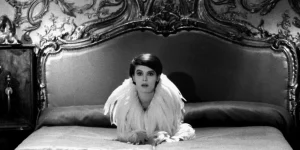
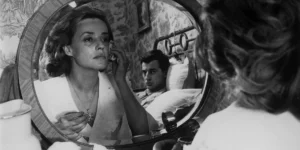
However, beneath the surface glamour, Cleo is terrified. She tries on hats, sings with her songwriters, and performs a kind of cheerfulness that fools almost everyone around her. Varda frames her here as a decorative object, present in mirrors and reflections, observed rather than observing.
The Song “Sans Toi” and a Moment of Rupture
Cleo’s songwriters Bob and Plaisir visit to rehearse new material. Then something shifts: Cleo sings a mournful ballad called “Sans Toi” (Without You), and the performance cracks open her emotional armor completely.
Varda films this moment with rare intensity. Cleo stops performing for others and starts feeling for herself, and the song becomes one of the most quietly devastating sequences in French cinema.
Cleo Leaves the Apartment and Enters the City
Cleo steps outside into Paris, and the film transforms alongside her. She moves through cafes, shops, and streets, and Varda’s camera follows her with observant attention, capturing both Cleo’s gaze and the gazes directed back at her.
Men stare at her constantly. In contrast, Cleo begins to notice the city itself, its people, its textures, its indifference. This section marks her gradual shift from passive object to active subject.
A Comic Interlude With a Friend
Cleo visits her friend Dorothée, a life model who poses nude for art students. Dorothée is earthy, unselfconscious, and entirely comfortable in her body, which makes her a fascinating foil to the anxiety-ridden Cleo.
They attend a short silent comedy film together, a playful digression Varda inserts to lighten the tone temporarily. Notably, this cameo sequence features Jean-Luc Godard and Anna Karina, among other New Wave figures, in a cheeky in-joke for cinephiles.
Cleo Meets Antoine in the Park
Cleo wanders into the Parc Montsouris and meets a young soldier named Antoine, played by Antoine Bourseiller. Antoine is about to return to Algeria to serve, carrying his own proximity to death very casually.
Their conversation becomes the emotional heart of the film. Antoine speaks to Cleo not as a beautiful object but as a person, and she responds by opening up in ways she could not with José or Angèle. Moreover, their dialogue touches on mortality, loneliness, and the strange comfort of shared vulnerability.
Walking Through Paris Together
Antoine accompanies Cleo on her walk to the hospital, and their time together feels both fleeting and profound. Varda shoots them moving through working-class neighborhoods far removed from Cleo’s gilded apartment world.
Cleo sheds her glamorous hat at one point, a small but significant gesture. She is no longer performing. Consequently, she starts to inhabit her own life rather than the role others have cast her in.
Movie Ending
Cleo and Antoine arrive at the hospital where she will receive the results of her biopsy. The wait is brief. A doctor confirms that she does have cancer and will require several months of treatment, but he delivers this news with a calm directness that strips away the catastrophic finality Cleo had feared.
Cleo’s reaction is not the collapse you might expect. She absorbs the news with a kind of quiet steadiness. Varda frames this moment carefully: the diagnosis is real, the illness is real, but Cleo is still standing, still present, still herself.
Antoine remains beside her outside the hospital. They look at each other with a gentleness that feels earned rather than romantic in any conventional sense. Furthermore, the film ends there, on that shared look, as if to say that being truly seen by another person is its own form of survival.
What makes this ending remarkable is what Varda refuses to do. She refuses melodrama. She refuses a tidy resolution. Instead, she offers something more honest: a woman who has moved, over the course of roughly ninety minutes, from self-obsession rooted in fear to a genuine awareness of the world around her. The cancer does not disappear, but Cleo does not disappear either.
Are There Post-Credits Scenes?
Cleo from 5 to 7 contains no post-credits scenes. Varda ends the film cleanly, with no additional footage following the closing moments. This was 1962, and the film respects its own ending without any addendum.
Type of Movie
This film belongs firmly to the French New Wave movement, blending elements of drama, character study, and urban realism. Its tone is contemplative and melancholic, occasionally punctuated by moments of dry humor.
In addition, it functions as an early and powerful example of feminist cinema, interrogating the male gaze long before that term entered mainstream critical vocabulary. Calling it a “slow burn” undersells it; the tension is always present, humming quietly beneath every scene.
Cast
- Corinne Marchand – Cleo
- Antoine Bourseiller – Antoine
- Dorothée Blank – Dorothée
- Michel Legrand – Bob, the pianist
- Dominique Davray – Angèle, the housekeeper
- José Luis de Villalonga – José, Cleo’s lover
- Jean-Luc Godard – cameo in the silent film sequence
- Anna Karina – cameo in the silent film sequence
Film Music and Composer
Michel Legrand composed the score, which is remarkable in part because he also appears onscreen as Bob, Cleo’s pianist. Legrand was already an established figure in French music, and his work here ranges from playful to quietly heartbreaking.
The standout piece is “Sans Toi,” the song Cleo performs mid-film that fractures her composed exterior. Legrand’s score complements Varda’s visual rhythms rather than overwhelming them, functioning almost like a second narrator throughout the picture.
Filming Locations
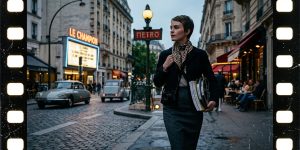
Varda shot the film almost entirely on location in Paris, using real streets, cafes, and parks rather than studio sets. This was a defining New Wave approach, and it gives the film an immediacy and documentary texture that studio filmmaking could not replicate.
Specific locations include the streets of Montparnasse and the Parc Montsouris, where Cleo meets Antoine. These locations are not incidental; they chart a geographical journey from Cleo’s wealthy, insulated world toward something more open and democratic.
Varda also incorporated real Parisian passersby, adding another layer of authenticity. The city functions as a living character, indifferent to Cleo’s crisis yet somehow part of her awakening.
Awards and Nominations
Cleo from 5 to 7 received a nomination for the Palme d’Or at the 1962 Cannes Film Festival, which was a significant recognition for Varda as a female director working in a heavily male-dominated industry. The film did not win the top prize, but its inclusion cemented its status as a major work of the French New Wave.
Behind the Scenes Insights
- Varda structured the film around real time as closely as possible, with the runtime roughly corresponding to the two hours Cleo spends waiting for her results.
- Corinne Marchand had to walk real Paris streets, meaning genuine passersby reactions were captured on camera without staging.
- Varda later described the film as deeply personal, connected to her own fears about illness and mortality.
- Michel Legrand’s dual role as composer and onscreen actor was Varda’s playful idea, blurring the line between the film’s world and its creation.
- The opening tarot sequence shot in color was a deliberate contrast to heighten the sense that superstition and magic exist outside ordinary reality.
- Varda was largely self-taught as a filmmaker, having studied art history rather than cinema, and her visual compositions throughout the film reflect that background strongly.
Inspirations and References
Varda drew on her own existential anxieties and on the broader postwar French preoccupation with mortality and meaning. The influence of existentialist philosophy, particularly the ideas circulating in Paris in the late 1950s and early 1960s, permeates the film’s central questions about consciousness and death.
The real-time structure echoes theatrical traditions and may owe something to Greek tragedy, with its unity of time compressing action into a single, pressure-filled window. Furthermore, Varda’s feminist gaze anticipates later theoretical writing on the male gaze, notably the work of Laura Mulvey, even though the film predates Mulvey’s essay by over a decade.
Alternate Endings and Deleted Scenes
No widely documented alternate endings or significant deleted scenes exist for Cleo from 5 to 7. Varda worked with a lean, purposeful approach to production, and the film that exists appears to reflect her intentions closely.
No major director’s cut or alternate version has surfaced in the decades since release. What audiences see today is effectively the film Varda intended to make.
Book Adaptations and Differences
Cleo from 5 to 7 is not based on a book, short story, or any previously published source material. Varda wrote the original screenplay herself, making the film entirely her own invention from the ground up.

Memorable Scenes and Quotes
Key Scenes
- The opening tarot reading in color, immediately establishing dread and superstition as Cleo’s framework for understanding her life.
- Cleo performing “Sans Toi” and visibly breaking down, finally feeling her own fear rather than performing cheerfulness for an audience.
- Cleo removing her glamorous hat while walking with Antoine, a small act that signals her shedding of her public persona.
- The silent comedy cameo sequence featuring Godard and Karina, offering a moment of playful self-referentiality within an otherwise serious film.
- The final scene outside the hospital, where Cleo and Antoine exchange a quiet, knowing look after receiving the diagnosis.
Iconic Quotes
- “As long as I’m pretty, I’m alive.” (Cleo, reflecting on her dependence on external validation for her sense of existence.)
- “Everyone spoils me, which means everyone feels sorry for me.” (Cleo, articulating the loneliness beneath her pampered life.)
Easter Eggs and Hidden Details
- The tarot card that most disturbs Cleo is the Wheel of Fortune, a classical symbol of fate’s indifference to human wishes, which rhymes with the film’s broader existentialist themes.
- Varda places Cleo in front of mirrors and reflective surfaces repeatedly in the apartment scenes, visually reinforcing that she has spent her life seeing herself through others’ eyes.
- The transition from color to black and white after the tarot reading signals Cleo’s entry into ordinary, mortal reality, stripped of the magical thinking the color palette represented.
- Antoine’s casual attitude toward his own impending return to the Algerian War quietly places Cleo’s personal crisis within a broader political and historical context without ever stating it overtly.
- Michel Legrand appears as Bob the pianist, meaning the person physically creating Cleo’s professional identity onscreen is also, in reality, creating the film’s musical identity.
Trivia
- Varda was one of the very few female directors associated with the French New Wave, and Cleo from 5 to 7 is widely considered her breakthrough feature.
- The film’s title refers to the two-hour window between 5 p.m. and 7 p.m., during which Cleo waits for her biopsy results.
- Varda insisted on shooting in chronological order to preserve the real-time tension for both cast and crew.
- The New Wave cameo sequence, featuring Godard and Karina in a silent comedy, required special permissions and coordination given how prominent those figures already were in French cinema at the time.
- Corinne Marchand was primarily known as a singer before this film, which made her casting as a pop singer feel unusually organic.
- Despite its relatively modest budget, the film attracted significant critical attention immediately upon release and has only grown in reputation over the decades.
Why Watch?
Cleo from 5 to 7 offers something genuinely rare: a film that holds anxiety and beauty in perfect, uncomfortable balance. Varda achieves in ninety minutes what most directors cannot manage across entire careers. It rewards patience, punishes distraction, and leaves you thinking about time, mortality, and selfhood long after the final frame.
Director’s Other Movies
- La Pointe Courte (1955)
- Le Bonheur (1965)
- Vagabond (1985)
- Kung-Fu Master! (1988)
- Jacquot de Nantes (1991)
- The Gleaners and I (2000)
- The Beaches of Agnès (2008)
- Faces Places (2017)
- Varda by Agnès (2019)
Recommended Films for Fans
- Breathless (1960)
- Hiroshima Mon Amour (1959)
- My Life to Live (1962)
- The 400 Blows (1959)
- Umberto D. (1952)
- Summer Hours (2008)
- Jeanne Dielman, 23 quai du Commerce, 1080 Bruxelles (1975)