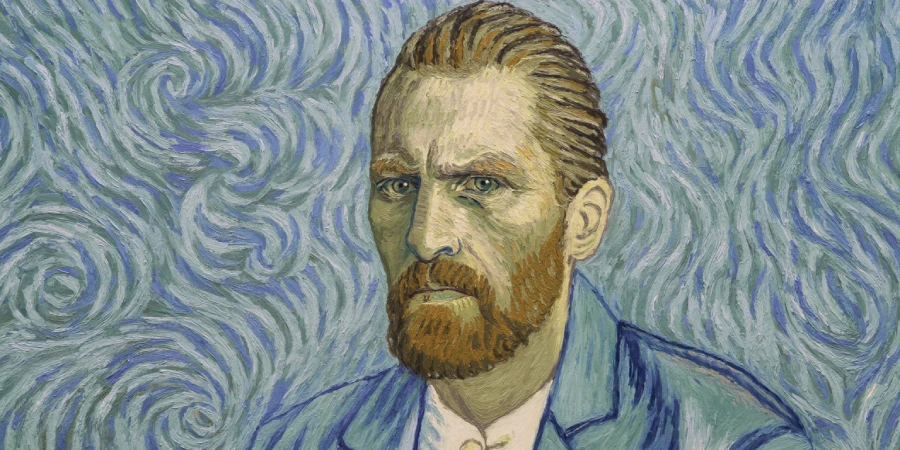

Art transforms into a breathing pulse within this hand-painted masterpiece. Actors disappear beneath sixty-five thousand individual oil frames, creating a cinematic experience unlike any other. Every brushstroke tells a haunting story about a man who vanished into his own legendary colors.
Detailed Summary
The Final Letter
Postman Roulin discovers a forgotten letter from Vincent van Gogh. He asks his son, Armand, to deliver the note to Vincent’s brother, Theo. Armand lacks enthusiasm for the task because he views the painter as a madman.
The Path to Theo
Armand travels to Paris only to find that Theo is already dead. A merchant named Père Tanguy explains that Theo passed away shortly after Vincent. Consequently, Armand continues his journey to Auvers-sur-Oise to find a suitable recipient.
Seeking Dr. Gachet
Tanguy suggests that Dr. Gachet, a close friend of Vincent, might take the letter. Armand arrives in the small village and begins interviewing the locals. He soon realizes that everyone has a different version of the artist’s final days.
Conflict in the Village
Adeline Ravoux, the innkeeper’s daughter, remembers Vincent as a quiet and dedicated guest. Conversely, the local boatman describes him as a lonely soul haunted by local bullies. These conflicting accounts transform Armand’s simple delivery mission into a murder investigation.
The Mystery Deepens
Armand begins to doubt the official suicide narrative. He learns that Vincent appeared happy and productive just before his death. Notably, the angle of the gunshot wound seems physically impossible for a self-inflicted injury.
Movie Ending
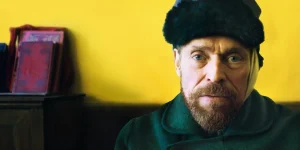
Dr. Gachet finally meets with Armand to clarify the tragic situation. He reveals his own deep jealousy of Vincent’s raw talent and artistic vision. Furthermore, the doctor admits that he failed to treat the artist properly during his darkest hour.
Vincent likely took the fall for a local teenager named René Secrétan. This boy frequently tormented the artist and played with a malfunctioning pistol. Therefore, Vincent claimed he shot himself to protect the youth from a murder charge.
Armand leaves the village with a profound respect for the tormented painter. He understands that Vincent’s death was an act of sacrifice rather than simple despair. This realization brings peace to Armand as he returns the letter to the artist’s sister.
Are There Post-Credits Scenes?
No post-credits scenes appear after the final painted frames. However, the credits themselves are worth watching. They display side-by-side comparisons of the original Van Gogh paintings and the film’s recreations.
Type of Movie
Loving Vincent is a biographical drama and a mystery film. Its tone feels melancholic and investigative, resembling a classic noir story. The experimental animation style provides a surreal, dreamlike atmosphere throughout the entire runtime.
Cast
- Douglas Booth – Armand Roulin
- Robert Gulaczyk – Vincent van Gogh
- Saoirse Ronan – Marguerite Gachet
- Jerome Flynn – Dr. Gachet
- Chris O’Dowd – Postman Roulin
- Helen McCrory – Louise Chevalier
- Eleanor Tomlinson – Adeline Ravoux
- John Sessions – Père Tanguy
Film Music and Composer
Clint Mansell composed the haunting and evocative score for this project. He utilized delicate strings and piano melodies to match the fluid movement of the oil paint. Specifically, the music captures the lingering sadness found in the artist’s personal letters.
Singer Lianne La Havas provides a beautiful cover of the song Starry Starry Night during the credits. This track serves as a poignant tribute to the painter’s legacy. Mansell successfully balances historical elegance with modern emotional intensity.
Filming Locations
The production took place primarily in Poland and Greece. Live-action actors performed on green screens or specially designed sets. These recordings served as a reference for the painters who worked in specialized Design Animation Workstations.
Choosing these locations allowed the directors to recruit hundreds of professional oil painters from across Europe. The physical studio space needed to accommodate massive canvases and high-resolution cameras. This setup ensured that every frame remained consistent with the artist’s signature style.
Awards and Nominations
The film received a nomination for Best Animated Feature at the 90th Academy Awards. Additionally, it earned a Golden Globe nomination and won the Audience Award at the Annecy International Animated Film Festival.
Behind the Scenes Insights
- Over 100 artists contributed to the project by hand-painting every single frame.
- The team spent years developing the technique to blend live-action footage with oil painting.
- Artists used the same brands of paint that Vincent used during the nineteenth century.
- Each second of the film required twelve hand-painted frames on canvas.
- The project began as a short film before the directors expanded the scope.
Inspirations and References
The screenplay relies heavily on the 800 letters written by Vincent van Gogh himself. These documents provide the emotional core of the dialogue and plot. Furthermore, the visual style references over 120 of his most famous paintings.
Alternate Endings and Deleted Scenes
The filmmakers did not release significant alternate endings for this story. The narrative focuses strictly on the historical ambiguity surrounding the artist’s death. Some early drafts featured more focus on the artist’s time in the asylum, but the finished film remains centered on the final mystery.
Book Adaptations and Differences
This film is not a direct adaptation of a specific book. Instead, it serves as a biographical interpretation of historical events. While it draws from the 1934 novel Lust for Life for some thematic elements, the screenplay remains an original creative work.
Memorable Scenes and Quotes
Key Scenes
- The transition from a black-and-white flashback to a vibrant, swirling landscape.
- Armand’s first encounter with Marguerite Gachet in the lush garden.
- The closing montage featuring portraits of the actual people who inspired the characters.
Iconic Quotes
- “I want to touch people with my art.”
- “We cannot speak other than by our paintings.”
- “You want to know so much about his death, but what do you know of his life?”
Easter Eggs and Hidden Details
- The movie includes subtle cameos from characters seen in the Starry Night background.
- Many background actors mirror poses from the artist’s lesser-known sketches.
- The color palette shifts subtly to reflect the artist’s changing mental state in flashbacks.
- Specific brushstrokes in the sky scenes fluctuate according to the intensity of the character’s emotions.
Trivia
- This was the world’s first fully painted feature film.
- The production took approximately six years to complete from start to finish.
- Painting the frames required more than 3,000 liters of oil paint.
- The directors originally planned to use only one painter before realizing the scale.
Why Watch?
This visual marvel offers a sensory experience unlike anything else in cinema. You will gain a deep appreciation for the world’s most famous painter through a gripping mystery. Ultimately, the stunning craftsmanship makes every single frame worthy of a museum.
Director’s Other Movies
- The Flying Machine (2011)
- The Peasants (2023)
Recommended Films for Fans
- At Eternity’s Gate (2018)
- Lust for Life (1956)
- Van Gogh (1991)
- Pollock (2000)