
A dead dictator will not stay buried. Every night after the funeral, someone digs up Varlam Aravidze and props his corpse in his son’s garden, grinning in the moonlight. Repentance (1984) turns that image into the great parable of Stalinism, and the Soviet Union locked the film away for three years. When Tengiz Abuladze‘s masterpiece finally reached screens under glasnost, it broke the silence of an entire country.
Detailed Summary
A Woman and Her Cakes
Ketevan Barateli decorates cakes shaped like churches in her kitchen. A neighbor reads aloud an obituary for Varlam Aravidze, the longtime mayor of the town. Her expression hardens, and the story that follows unfolds as her reverie.
The Funeral and the Corpse
Varlam’s son Abel, his wife Guliko, and their teenage son Tornike bury the patriarch with full honors. The next morning the body sits in their garden. They rebury him, and he returns again. Police finally catch the culprit: Ketevan, armed with a shovel.
A Confession in Court
At trial, Ketevan admits everything. She declares she will dig him up as long as she lives, because Varlam does not deserve to rest in the earth. Pressed to explain, she tells the court about her childhood.
Varlam Comes to Power
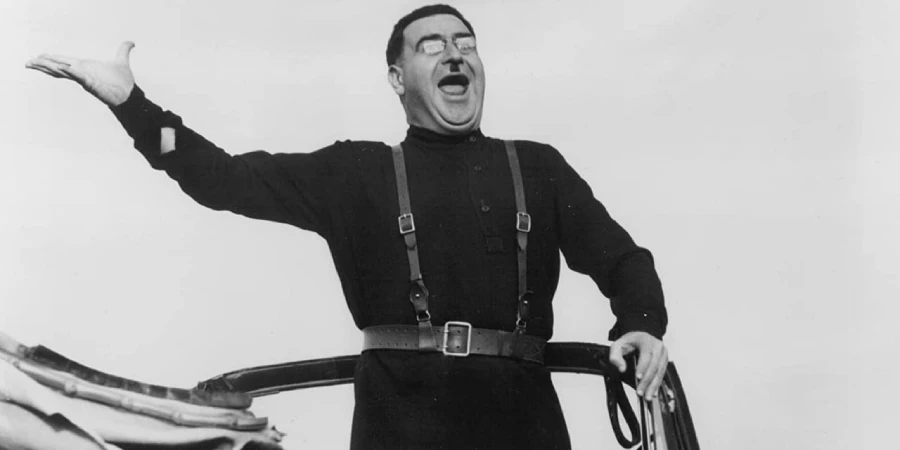
Years earlier, Varlam took charge of the town with speeches about order and a black shirt that evokes several dictators at once. Ketevan’s father Sandro, a painter, resisted when Varlam’s men turned the old church into a laboratory. Varlam visited the family, sang opera at their table, and smiled too much.
The Night Arrests Begin
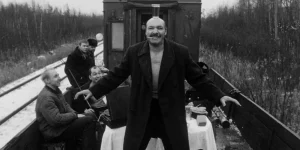
Sandro vanishes into custody. Their friend Mikhail Korisheli, a loyal party man, is arrested as well and confesses to absurd crimes, including digging a tunnel from Bombay to London. Ketevan’s mother Nino is taken soon after.
Logs at the Lumber Yard
In the film’s most haunting sequence, Ketevan and her mother search freshly delivered timber for names carved by prisoners in the camps. Other wives and children do the same. For a moment they find Sandro’s mark, then lose it.
Abel’s Defense
Back in the present, Abel’s lawyers argue that Ketevan is insane. If she is mad, the past can stay buried. Abel himself is a comfortable official who inherited everything from his father, including the habit of looking away.
Movie Ending
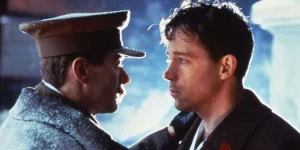
Tornike cannot look away. He visits Ketevan and learns the full truth about his grandfather. At home he confronts his father, who shrugs that the times were complicated and that Varlam did what the era required. Tornike finds that answer unbearable.
Then the boy takes the hunting rifle Varlam once gave him and shoots himself. His death strips Abel of every excuse. In grief and rage, Abel digs up his father’s corpse with his own hands.
He carries the body to a cliff and hurls it down to the crows. The son completes what Ketevan started: the tyrant is cast out of the earth rather than honored within it. Repentance arrives only through catastrophe.
Then the film returns to Ketevan’s kitchen. An old woman knocks and asks whether this road leads to the church. Ketevan answers that it is Varlam Street and leads nowhere near a church. The woman wonders aloud what use a road is if it does not lead to a church, and walks on.
Why end there? The question doubles as a verdict on a society that paved over faith, memory, and conscience in the name of progress. Abuladze leaves the audience on Varlam Street, where most of his viewers in 1987 still lived.
Are There Post-Credits Scenes?
No. The old woman’s question is the final word, and the credits follow with no additional material.
Type of Movie
Repentance is a political allegory wrapped in surrealist drama and dark satire. Its tone slides between farce, nightmare, and lament. Expect knights in armor guarding a modern office, operatic singing at a terror arrest, and a courtroom that may exist only in one woman’s mind.
Cast
- Avtandil Makharadze – Varlam Aravidze / Abel Aravidze
- Zeinab Botsvadze – Ketevan Barateli
- Ketevan Abuladze – Nino Barateli
- Edisher Giorgobiani – Sandro Barateli
- Merab Ninidze – Tornike Aravidze
- Ia Ninidze – Guliko Aravidze
- Kakhi Kavsadze – Mikhail Korisheli
- Veriko Andjaparidze – Old woman
Film Music and Composer
Nana Janelidze, who also co-wrote the screenplay, shaped the film’s music. Rather than an original symphonic score, Repentance assembles classical pieces that comment ironically on the action.
For instance, Varlam performs opera to charm the family he will destroy, and grand European music accompanies acts of petty cruelty. The contrast between culture and barbarism becomes a theme in its own right.

Filming Locations
Abuladze shot the film in Soviet Georgia through the Georgian studio system. Tbilisi and its surroundings provided the town, the courtyards, and the cliffs of the finale.
The church that Varlam seizes is central to the story’s symbolism. Georgia’s ancient Christian architecture, visible throughout, stands for everything the dictator’s road refuses to reach.
Awards and Nominations
Repentance won the Grand Prix at the 1987 Cannes Film Festival, along with the FIPRESCI prize. In the Soviet Union it was honored at the first Nika Awards and received the USSR State Prize.
Behind the Scenes Insights
- The film was completed in 1984 but shelved by Soviet authorities until 1986 and 1987, when Gorbachev’s glasnost allowed its release.
- Eduard Shevardnadze, then Georgia’s party chief, protected the production, which Georgian television nominally commissioned.
- Makharadze plays both the tyrant and the son, underlining that Abel is his father’s continuation.
- Varlam’s look blends the pince-nez of Beria, the mustache of Hitler, and the black shirt of Mussolini.
- Repentance completes a trilogy with Abuladze’s earlier The Plea and The Wishing Tree.
- Soviet audiences packed theaters in 1987, and the film became a defining event of perestroika culture.
Inspirations and References
Abuladze drew on the Great Terror of the 1930s and its aftermath in Georgia, Stalin’s homeland. The lumber-yard scene reflects real accounts of families searching timber for prisoners’ marks.
Moreover, the film echoes the biblical names of Abel and the story of sins passed from father to son. Its surreal register nods to Fellini and Buñuel, while its moral argument belongs to the Russian and Georgian literary tradition of conscience.
Alternate Endings and Deleted Scenes
No alternate ending is known. The version released in 1987 matches the one Abuladze finished in 1984. Any changes demanded during the shelving period were not made public, and the film circulates in a single cut.
Book Adaptations and Differences
Repentance is not based on a book. Abuladze wrote it with Nana Janelidze and Rezo Kveselava as an original screenplay.


Memorable Scenes and Quotes
Key Scenes
- Varlam’s corpse leaning against the garden tree at dawn.
- Ketevan’s vow in court to keep digging.
- Varlam singing opera at the Barateli dinner table.
- Women and children searching logs for carved names.
- Korisheli’s absurd confession about the tunnel.
- Tornike’s confrontation with his father.
- The body thrown from the cliff.
- The old woman’s question about the road.
Iconic Quotes
- Ketevan’s promise to unearth Varlam for as long as she lives (paraphrased).
- Abel’s excuse that the era was complicated (paraphrased).
- The closing question of what good a road is if it leads to no church (paraphrased).
Easter Eggs and Hidden Details
- Varlam’s enforcers wear medieval armor, suggesting a timeless machinery of repression.
- The surname Aravidze derives from the Georgian for “nobody”, hinting at the hollowness of power.
- Ketevan’s church-shaped cakes mirror the church Varlam desecrates.
- A grand piano is dragged into the laboratory church, culture mocking faith.
- The courtroom’s shifting logic hints early that the trial is imagined.
Trivia
- Abuladze later said the film expressed what many Georgians had whispered for decades.
- The Cannes screening took place three years after completion.
- Veriko Andjaparidze, who delivers the final line, was one of Georgia’s most beloved stage actresses and died shortly after the film’s release.
- Merab Ninidze went on to an international career, including English-language films.
- The film’s Georgian title is Monanieba.
- It helped open the floodgates for other shelved Soviet films in the late 1980s.
Why Watch?
Repentance is the film that helped a superpower confront its own crimes. Its images, from the propped corpse to the carved logs, are impossible to shake. Nonetheless, it is also wildly inventive and even funny. Watch it to understand how art can say what politics forbids.
Director’s Other Movies
- Magdana’s Donkey (1955)
- Someone Else’s Children (1958)
- Me, Grandma, Iliko and Illarion (1962)
- The Plea (1967)
- A Necklace for My Beloved (1971)
- The Wishing Tree (1976)
Recommended Films for Fans
- The Plea (1967)
- The Wishing Tree (1976)
- Come and See (1985)
- Burnt by the Sun (1994)
- Khrustalyov, My Car! (1998)
- The Death of Stalin (2017)
- Dear Comrades! (2020)