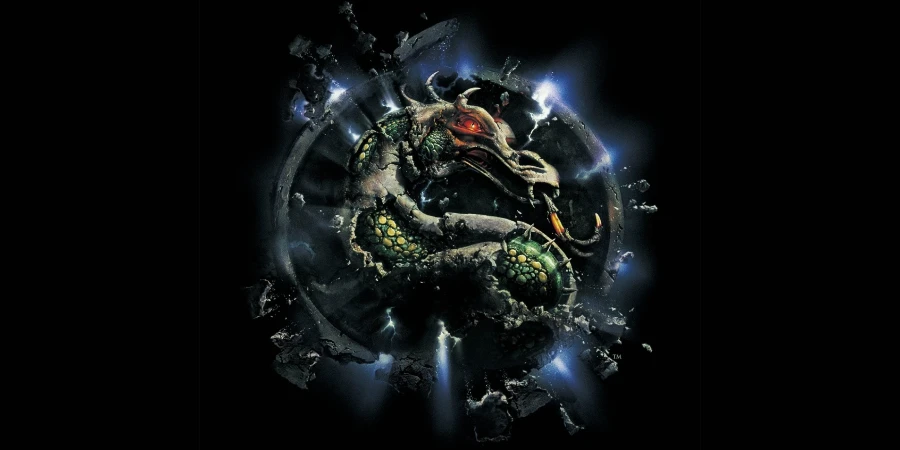
Mortal Kombat: Annihilation is a spectacular disaster in the most watchable sense. While the 1995 original had momentum, this sequel throws it all away for rubber suits, terrible wirework, and a villain whose plan is just waiting around. With characters either dying instantly or stuck in dead-end subplots, the fact that people still watch this is honestly worth examining.
Detailed Summary
Opening Chaos: Johnny Cage Dies Immediately
Shao Kahn and his army breach the barrier between Outworld and Earthrealm within the first few minutes, violating the rules of Mortal Kombat. Shao Kahn announces that Earthrealm now belongs to him and that he has precisely six days to complete the merger before the Elder Gods can intervene. Rayden pleads with the Elder Gods for help, and they refuse to lift a finger.
Johnny Cage, played this time by a completely different actor with no acknowledgment of the switch, tries to fight Shao Kahn directly. Shao Kahn snaps his neck. Just like that, the franchise’s most charismatic character from the first film is dead inside three minutes. This is possibly the boldest creative decision in the movie, though bold does not mean good.
The Warriors Scatter and Regroup
Liu Kang, Sonya Blade, Kitana, and Rayden survive the initial assault and go on the run. Rayden sacrifices his immortality to walk among mortals and better guide his champions, which sounds meaningful but mostly just means he wears a different coat. Kitana gets captured by Shao Kahn’s forces almost immediately after this.
Sonya reunites with her old partner Jax, who now sports bionic arms with no backstory whatsoever. He just has them. The film expects you to move on, and honestly you do, because the next fight scene is already starting.
Sindel’s Resurrection and the Kahn Family Reveal
Shao Kahn resurrects Sindel, Kitana’s mother, as a brainwashed weapon loyal to him. This puts Kitana in the emotionally complicated position of fighting her own mother. Sindel is genuinely menacing in brief flashes, but the film does not linger long enough on the mother-daughter conflict to let it breathe.
Here is where the screenplay drops its biggest, strangest twist: Shao Kahn reveals to Liu Kang that he is actually Rayden’s brother. This revelation lands with the intended weight of a dramatic bombshell and the actual weight of a wet napkin, because the film built zero foundation for it. It feels borrowed from a soap opera rather than developed from the mythology.
Jade, Nightwolf, and the Vision Quest
Liu Kang meets Jade, an ally who helps him find Nightwolf. Nightwolf sends Liu Kang on a vision quest to unlock his full fighting potential. This sequence is where the film loses the plot most completely, staging a sort of spiritual training montage that feels detached from every other story thread happening simultaneously.
Nightwolf himself is a decent screen presence and gets one of the more visually interesting fights, but his role evaporates quickly. He exists to hand Liu Kang a power upgrade and then step aside, which is a waste of the character.
Cyrax, Ermac, Sheeva, and Everyone Else
Sonya and Jax run into Cyrax, a robot assassin sent to kill them. The fight takes place in what appears to be a swamp, and Cyrax gets destroyed when Sonya tricks him into a quicksand pit. It is a fun, scrappy little sequence that feels more like the original film’s spirit than anything else in this movie.
Sheeva, a four-armed Shokan warrior serving Shao Kahn, gets very little screen time before Jax defeats her. Ermac and Rain appear and disappear so fast that if you blink you will miss their contribution entirely. Motaro, a centaur-like creature, serves as a mid-tier boss obstacle for Jax.
Mileena, the Fake Kitana
Mileena impersonates Kitana to sow confusion among the Earth warriors. Sonya fights and kills Mileena after seeing through the disguise. It is a short, chaotic battle that works better as a spectacle than as a narrative beat.
Kitana Breaks Free
Kitana manages to get through to Sindel during their confrontation, breaking the brainwashing long enough for Sindel to regain her own will. Sindel’s redemption is rushed but emotionally functional in a broad strokes way. She helps the warriors by turning against Shao Kahn at a critical moment, which sets up the final confrontation.

Movie Ending
Liu Kang faces Shao Kahn in a final battle that the film has been building toward across its entire runtime. Shao Kahn, in a move the movie has telegraphed since its opening scene, transforms into a giant monster creature for the climax. Liu Kang counters by transforming into a green-energy dragon of his own, and the two titans brawl in what amounts to two CGI creatures biting each other while the actors do nothing.
Liu Kang defeats Shao Kahn, and the Elder Gods finally get involved, dragging Shao Kahn apart in beams of light as punishment for breaking their sacred rules. It is a climax that sidelines its human protagonist at the exact moment he should be most active. Liu Kang technically wins, but the Elder Gods do the actual finishing move, which feels like a design failure in a franchise built around personal combat.
Rayden regains his immortality and his white suit after Shao Kahn’s defeat, confirming Earthrealm is safe. Kitana and Liu Kang kiss. Everyone smiles. The group stands on a cliff as fireworks or magical energy lights the sky, and the film ends on a note of triumphant celebration that the story has not quite earned.
What the ending really signals is a sequel setup that never came. Kitana’s mother is free, Earthrealm is restored, and the team is intact. A third film was planned but never produced, leaving the franchise dormant until the 2021 reboot took over.
Are There Post-Credits Scenes?
No. Mortal Kombat: Annihilation has no post-credits scene of any kind. Once the credits roll, that is it. Given the state of the film, this is probably merciful.
Type of Movie
This is a action-fantasy film with martial arts at its center, based on the video game franchise of the same name. Tonally, it skews toward campy blockbuster spectacle rather than genuine threat or drama. Think Saturday morning cartoon logic applied to a feature film budget.
It never commits to being a self-aware parody, which is both its flaw and its charm. The film plays everything straight, which makes the absurdity hit harder and funnier in ways the filmmakers almost certainly did not intend.
Cast
- Robin Shou – Liu Kang
- Talisa Soto – Kitana
- James Remar – Rayden
- Sandra Hess – Sonya Blade
- Lynn Red Williams – Jax
- Brian Thompson – Shao Kahn
- Musetta Vander – Sindel
- Irina Pantaeva – Jade
- Litefoot – Nightwolf
- Marjean Holden – Sheeva
- Deron McBee – Motaro (voice and motion)
- Reiner Schöne – Ermac
- Alexis Arquette – Rain
- Chris Conrad – Johnny Cage
Film Music and Composer
George S. Clinton composed the score. Clinton was a reliable Hollywood hand for action and genre pictures throughout the 1990s, and his orchestral work here is serviceable without being memorable on its own terms.
The soundtrack album, separate from the score, leaned heavily into the industrial and electronic metal sounds that the first film’s soundtrack popularized. Artists contributed aggressive, pulse-driven tracks that function as the film’s real musical identity, overshadowing Clinton’s underscore completely.
The opening theme, a pumping electronic rendition of the classic Mortal Kombat theme, remains the most recognizable piece of audio the film has to offer. It is one of those pieces of music that has outlasted the film by decades in popular memory.
Filming Locations
Principal photography took place primarily in Los Angeles, California, making extensive use of studio soundstages for the interior sequences and otherworldly environments. Much of Outworld was constructed as sets rather than filmed on location, which contributes to the controlled, slightly airless visual atmosphere of those sequences.
Some exterior sequences used locations around the greater Los Angeles area dressed to suggest alien or otherworldly terrain. The reliance on stages rather than genuine exotic locations is one reason the film feels smaller and more contained than its ambition suggests. The first film shot in Thailand, giving it genuine texture; this sequel lost that advantage.
Awards and Nominations
Mortal Kombat: Annihilation did not receive nominations from major award bodies. It was recognized at the Razzie Awards, which is not a distinction the production was likely celebrating.
Behind the Scenes Insights
- Robin Shou and Talisa Soto were the only principal cast members to return from the 1995 original in their same roles, with several key actors replaced entirely.
- Director John R. Leonetti had primarily worked as a cinematographer before this project, and his visual instincts show in some of the better-composed fight sequences, even when the choreography itself falters.
- The production faced significant pressure to deliver more spectacle and more characters than the original, resulting in a noticeably overcrowded story that the runtime could not support.
- Brian Thompson, playing Shao Kahn, brought genuine physical intimidation to the role, but much of his actual face was obscured by the helmet throughout filming, limiting his expressive range.
- Alexis Arquette’s casting as Rain was considered unusual at the time, and the role amounted to little more than a cameo despite Rain being a significant character in the games.
- The dragon transformation sequence at the film’s climax relied on early digital effects technology that dated quickly, and it already looked rough by the late 1990s.
- Christopher Lambert, who played Rayden in the original, declined to return. James Remar replaced him with a noticeably different, more grounded interpretation of the character.
Inspirations and References
The film draws directly from the Mortal Kombat video game series created by Ed Boon and John Tobias, specifically pulling characters and plot threads from Mortal Kombat 3 and Ultimate Mortal Kombat 3. Shao Kahn’s invasion of Earthrealm, Sindel’s resurrection, and the six-day countdown are all lifted from those games’ storylines.
Nightwolf’s vision quest subplot touches lightly on Native American spiritual traditions, though in a broad and simplified cinematic shorthand that prioritizes the plot function over any genuine cultural specificity. The film’s mythology borrows loosely from ideas of dimensional planes and cosmic law that appear across multiple genre traditions, including martial arts cinema and pulp fantasy.
Alternate Endings and Deleted Scenes
No officially documented alternate endings have been released or confirmed for this film. A number of scenes were reportedly trimmed during post-production to manage the runtime and the crowded character roster, but no formal deleted scenes collection has been made publicly available in any major home video release.
Given how many characters vanish from the film with minimal resolution, it is reasonable to assume that footage existed for some of them that never made the final cut. Sheeva’s storyline in particular feels like something got left on the floor of the editing room.
Book Adaptations and Differences
Mortal Kombat: Annihilation is not based on a book. It is a sequel to a film adaptation of a video game franchise. No novelization of this specific film has been a significant part of the conversation around it.

Memorable Scenes and Quotes
Key Scenes
- Johnny Cage’s death in the opening minutes, where Shao Kahn simply grabs him and snaps his neck, ending the fan-favorite character before the story has even started.
- Sonya and Jax fighting Cyrax in the swamp, a quick and energetic sequence that has more personality than most of the film surrounding it.
- Sindel’s mid-air fight with Sonya and other warriors, where Musetta Vander screams and levitates while delivering a genuinely unhinged performance that commits fully to the chaos.
- Liu Kang’s dragon transformation at the climax, which is objectively terrible CGI and somehow completely watchable for exactly that reason.
- Nightwolf sending Liu Kang into the spirit realm, a sequence that goes full psychedelic with its imagery and functions as the film’s strangest tonal detour.
Iconic Quotes
- “Earthrealm is mine.” (Shao Kahn, essentially his entire character in four words)
- “You will never win.” (Liu Kang, with the confidence of a man who has read the script)
- “Rayden… brother.” (Shao Kahn delivering the twist that absolutely nobody saw coming for reasons that become clear once you hear it out loud)
Easter Eggs and Hidden Details
- Several character designs, particularly Motaro and Sheeva, were pulled directly from Mortal Kombat 3 with minimal alteration, functioning as frame-accurate visual references for game fans.
- Rain’s purple color scheme in his costume matches his game design closely, one of the few genuine satisfactions his brief screen time offers.
- Nightwolf’s animality power, the ability to channel animal spirits, is a direct reference to the Animality finishing move mechanic introduced in Mortal Kombat 3.
- Shao Kahn’s shoulder armor and helmet are largely consistent with his game appearance, making him one of the more faithful live-action translations of a video game villain from that era.
- Ermac’s red costume is accurate to his game appearances, even though his role in the film is too small to do anything meaningful with the character.
Trivia
- The film was released in 1997, just two years after the original, which contributed to the rushed quality of the screenplay and production design.
- Paul W.S. Anderson directed the first film but did not return for this sequel. John R. Leonetti took over as director.
- Despite its critical drubbing, the film turned a profit at the box office, proving once again that audiences and critics do not always agree.
- Deron McBee, who provided the physical performance for Motaro, later became a minister and has spoken publicly about leaving Hollywood behind entirely after this film.
- Alexis Arquette’s portrayal of Rain marked one of the earliest mainstream depictions of the character in live action, even if the role amounted to almost nothing on screen.
- The Mortal Kombat franchise would not see another major live-action film until the 2021 reboot, a gap of over two decades.
- James Remar took on the Rayden role after Christopher Lambert’s departure and played the character with considerably less theatrical eccentricity than his predecessor.
Why Watch?
Watch this film specifically for Musetta Vander’s Sindel, a performance so committed to screaming, levitating, and generally being a one-woman natural disaster that it deserves its own appreciation thread. Vander plays the role as if she is in a much more deranged movie than everyone else, and she is right. Nothing in Annihilation quite matches the sheer unhinged energy she brings to a character the screenplay barely supports.
Director’s Other Movies
- The Butterfly Effect 2 (2006)
- Annabelle (2014)
Recommended Films for Fans
- Mortal Kombat (1995)
- Mortal Kombat (2021)
- Street Fighter (1994)
- Double Dragon (1994)
- Super Mario Bros. (1993)
- The Fifth Element (1997)
- Big Trouble in Little China (1986)