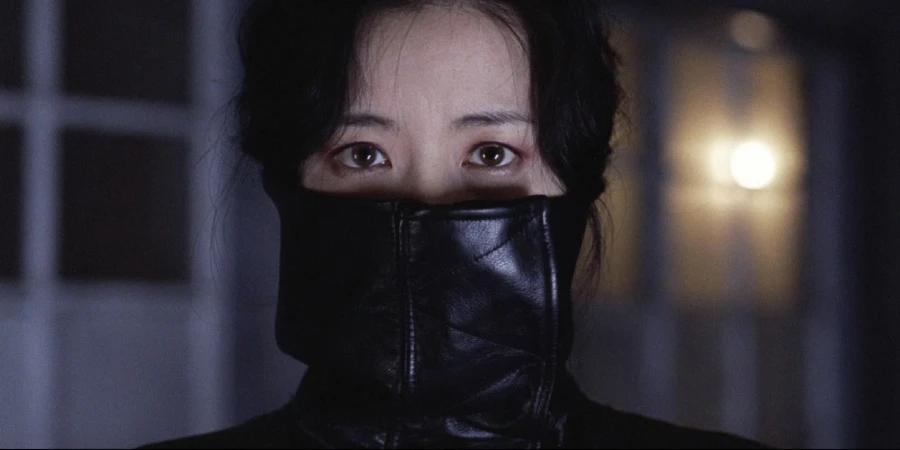

Lee Geum-ja spent thirteen years in prison for a crime she did not commit, and she spent every single one of those years planning. Park Chan-wook’s Lady Vengeance opens with a woman walking out of prison holding a block of tofu, a Korean tradition symbolizing a clean start. She throws it on the ground. That one small gesture tells you everything about where this film is going, and it does so with more economy than most directors manage in an entire first act.
Detailed Summary
The Crime and the False Confession
Thirteen years before the film begins, a young woman named Lee Geum-ja confessed to kidnapping and murdering a boy named Won-mo. She was nineteen years old. Her tearful public confession made her infamous across South Korea, a beautiful face attached to an unthinkable act.
What the public did not know was that a schoolteacher named Mr. Baek had taken Geum-ja’s infant daughter and threatened to kill the child unless Geum-ja took the blame. She confessed to save her daughter. She was sentenced to thirteen years, and Mr. Baek walked free.
Prison Years and the Making of a Plan
Inside prison, Geum-ja reinvents herself with surgical precision. She performs acts of extraordinary kindness for fellow inmates, building a network of loyal women who will owe her favors upon release. She also cultivates a reputation for religious devotion, which lets everyone, guards included, underestimate what she is actually doing.
One fellow inmate she helps is a woman she later has killed, because that woman had been abusing children inside the facility. Geum-ja’s moral code is rigid but not conventional. She punishes cruelty wherever she finds it, even when it costs her something.
Release and Reconstruction
When Geum-ja walks out of prison, she immediately begins calling in her debts. Her former cellmates, now living ordinary lives across South Korea, each contribute a piece of her revenge plan. One provides shelter. Another delivers a weapon, a custom revolver with a long, elegant barrel that Geum-ja clearly helped design during her prison years.
She also travels to Australia to find her daughter, Jenny, who was adopted by a couple in Melbourne. Their reunion is awkward and charged, a teenage girl meeting a mother who is essentially a stranger. Geum-ja brings Jenny back to Korea, folding her into the plan whether Jenny fully understands it or not.
Tracking Mr. Baek
Geum-ja begins surveilling Mr. Baek, played with cold reptilian ease by Choi Min-sik. She gets close to him. She learns he has continued killing children over the years, at least four more victims since Geum-ja went to prison. He is not a man who stopped. He is a man who got away with it repeatedly.
This discovery changes the shape of the revenge. It is no longer only Geum-ja’s wound to address. Other families have lost children to this man. She tracks down the parents of each victim.
The Warehouse
Geum-ja arranges for Mr. Baek’s capture and brings the grieving families together in a warehouse. She presents them with evidence of what he did, including video recordings he made of the murders. Watching those recordings, the parents fall apart completely. Some vomit. Some hold each other. Some go silent in a way that is worse than screaming.
Geum-ja then offers the families a choice: she can handle Mr. Baek herself, or they can all participate. Every single family chooses to participate. What follows is a collective act of execution, ugly and prolonged, carried out with whatever tools are at hand. Park Chan-wook films it with restraint, cutting away and returning, never letting it become pornographic but never softening it either.
Mr. Baek dies in that warehouse, and the families are left covered in blood, standing in silence, staring at what they have just done and who they have just become.

Movie Ending
After the warehouse, the families scatter back into their ordinary lives, carrying what they did with them. There is no catharsis in the clean Hollywood sense. Park Chan-wook denies that release deliberately.
Geum-ja and Jenny end up together outside in the snow. Jenny has witnessed enough of what her mother is to understand the weight of the night. Geum-ja presses her face into a block of white tofu, the same symbol of purity from the film’s opening, now used as an act of self-condemnation rather than rejection. She pushes her face in and weeps, her tears mixing with the white surface.
Jenny embraces her. The film ends on that image, mother and daughter in the snow, reunited through something that should never have brought them together.
What Park Chan-wook asks, and what the ending refuses to answer neatly, is whether revenge actually restored anything. Geum-ja has her daughter. Mr. Baek is dead. The other families got to act. And yet every face in that final sequence reads as grief rather than relief. The tofu scene is the film’s thesis made physical: Geum-ja knows she is not clean. She never will be again. The question the film leaves open is whether that price was worth paying, and Park Chan-wook trusts the audience to sit with the discomfort of not having an answer handed to them.
Are There Post-Credits Scenes?
Lady Vengeance has no post-credits scene. Once the snow sequence ends, the film is done. You can stay in your seat if you like, but nothing extra is waiting for you.
Type of Movie
Lady Vengeance is a revenge thriller with strong elements of psychological drama and dark comedy. Park Chan-wook layers absurdist humor into genuinely disturbing material, which is one of his signatures and one of the things that makes this film genuinely difficult to categorize cleanly.
The tone shifts deliberately throughout. Early sections feel almost whimsical. By the warehouse sequence, the film has walked into something closer to tragedy. That tonal range is a feature, not a flaw, and it demands a viewer willing to follow without demanding consistency.
Cast
- Lee Young-ae – Lee Geum-ja
- Choi Min-sik – Mr. Baek
- Kwon Yea-young – Jenny
- Kim Si-hoo – Detective Choi
- Oh Dal-su – Mr. Chang
- Kim Byeong-ok – Preacher
Film Music and Composer
Young-wuk Cho composed the score for Lady Vengeance. His work here is one of the most underrated elements of the entire Vengeance Trilogy. Where many revenge films lean on propulsive, aggressive music, Cho’s score is often delicate, almost mournful, which creates a productive tension with what is happening on screen.
Choir arrangements appear at key moments, giving certain scenes an almost liturgical quality. When Geum-ja carries out acts of violence or planning, the music treats her with a kind of sorrowful reverence rather than excitement. That choice shapes how we feel about her enormously.



Filming Locations
Principal photography took place in South Korea, primarily in Seoul and surrounding areas. The prison sequences establish a controlled, institutional world that makes Geum-ja’s eventual freedom feel genuinely expansive by contrast.
A significant portion of the film was also shot in Melbourne, Australia, for the sequences involving Jenny and her adoptive family. That geographic separation between mother and daughter is made physical by the filming locations. Australia reads as a clean, bright world entirely disconnected from everything Geum-ja has lived through, which underscores how strange their reunion is.
The warehouse, where the film’s climax takes place, is deliberately industrial and ugly. Park Chan-wook chose a location stripped of any visual comfort, a concrete space with harsh lighting that gives the execution sequence a documentary bleakness.
Awards and Nominations
Lady Vengeance competed in the main competition at the Cannes Film Festival in 2005. Lee Young-ae received significant critical recognition for her performance, and the film earned nominations at various international festivals, cementing Park Chan-wook’s reputation as one of the most distinctive directors working in world cinema at the time.
Behind the Scenes Insights
- Lee Young-ae reportedly prepared extensively for the role, working to portray Geum-ja’s controlled affect without making her seem robotic. The performance required projecting enormous inner life through very small physical gestures.
- Park Chan-wook released an alternative version of the film called Lady Vengeance: Fade to Black, in which the color gradually drains from the image as the film progresses, eventually becoming black and white. This version was released later and is considered a distinct artistic statement about moral desaturation.
- Choi Min-sik, who played the lead in Oldboy, the second film in the Vengeance Trilogy, returned here as the villain, which creates an interesting dynamic for viewers watching the trilogy in order.
- Park Chan-wook has described Lady Vengeance as the most personal film in the trilogy for him, in part because it grapples most directly with the question of whether revenge can coexist with humanity.
- The custom revolver Geum-ja commissions in prison was a prop designed specifically for the film and became one of its most visually recognizable objects.
Inspirations and References
Park Chan-wook has cited his broader interest in moral philosophy and the ethics of punishment as driving forces behind the entire Vengeance Trilogy. Lady Vengeance in particular engages with questions about collective guilt and collective action that have roots in Greek tragedy.
The warehouse sequence, where multiple families share in the act of killing, deliberately echoes the concept of communal punishment found in ancient drama. Park Chan-wook has also spoken about his interest in how Korean society processes grief and trauma publicly, which feeds into the film’s examination of performance versus genuine feeling.
Religious imagery throughout the film, particularly the Christianity Geum-ja performs in prison, draws on Korean evangelical culture and its complicated relationship with forgiveness and retribution.
Alternate Endings and Deleted Scenes
The Fade to Black version of the film, released as an alternate cut, does not change the ending itself but dramatically changes how it feels. By the time the final snow sequence arrives in that version, the image has fully converted to black and white, stripping away the last traces of warmth. It is an extraordinarily effective choice, and arguably the more powerful of the two versions.
No widely documented deleted scenes have been made publicly available. Park Chan-wook tends to work with tight editorial control, so major excised sequences are not a documented feature of this production.
Book Adaptations and Differences
Lady Vengeance is not based on a book. Park Chan-wook wrote the original screenplay with Jeong Seo-gyeong, his frequent collaborator. There is no source novel to compare it against.

Memorable Scenes and Quotes
Key Scenes
- The tofu rejection: Geum-ja walks out of prison, accepts the traditional block of tofu from a religious well-wisher, and drops it on the pavement. Cold, quiet, and instantly clarifying about who she has become.
- The red eyeshadow application: Geum-ja paints her signature red eyeshadow in a mirror, a ritual that signals her transition from the meek prison convert to the woman she was always becoming. Lee Young-ae does it without vanity or pleasure, just focused determination.
- Showing the parents the recordings: Mr. Baek filmed his murders. Watching the families watch that footage is one of the most genuinely difficult sequences in the trilogy. Park Chan-wook keeps the camera on the families’ faces rather than the screen, which is the right call and the brave call.
- The collective execution in the warehouse: Messy, prolonged, and shot without heroic framing. Nobody looks empowered. Everyone looks like they are doing something they cannot take back.
- The final snow scene: Geum-ja pressing her face into the tofu while Jenny holds her. Two minutes of silence that contain the entire emotional weight of the film.
Iconic Quotes
- “Be white. Live white.” The phrase the preacher offers Geum-ja upon her release, tied to the tofu symbolism. She discards both immediately.
- “You were too cruel.” Geum-ja’s words, addressed to herself as much as to Mr. Baek, cutting to the heart of the film’s refusal to let its protagonist off the moral hook.
Easter Eggs and Hidden Details
- The color red appears throughout the film in connection with Geum-ja, particularly her eyeshadow, while other characters are associated with cooler, more neutral tones. This visual coding is consistent across every scene she dominates.
- The tofu appears twice, once rejected and once embraced with self-punishment, forming a deliberate visual rhyme that bookends Geum-ja’s arc.
- In the Fade to Black version, color begins draining from the very first frame, though it is subtle enough that most viewers do not notice until well into the film. Rewatching reveals how early the desaturation begins.
- Mr. Baek’s classroom, glimpsed in flashbacks, is decorated in a way that presents him as a warm, trusted authority figure, a visual irony Park Chan-wook leans into deliberately.
- Choi Min-sik’s casting as the villain, given his iconic role as the protagonist of Oldboy, creates a quiet intertextual commentary on how the same face can carry entirely different moral weight depending on context.
Trivia
- Lady Vengeance is the third and final film in Park Chan-wook’s Vengeance Trilogy, following Sympathy for Mr. Vengeance (2002) and Oldboy (2003).
- Lee Young-ae had taken a break from acting before this film. Her return was a significant cultural event in South Korea.
- The film’s Korean title is Chinjeolhan geumjassi, which translates roughly as Kind-hearted Geum-ja, a deeply ironic title given what she spends the film doing.
- Park Chan-wook shot the film with the intention of making Geum-ja the most morally complex figure in the trilogy, neither victim nor straightforward avenger.
- The warehouse sequence involved a large ensemble of actors playing grieving parents, and Park Chan-wook reportedly spent considerable time with them discussing the emotional reality of the scene before filming began.
- Unlike Oldboy, which attracted immediate international cult attention, Lady Vengeance took longer to receive the critical recognition it deserved outside of festival circles.
Why Watch?
Lee Young-ae’s performance is the reason to sit down with this film. She plays thirteen years of controlled fury through the angle of a jaw, the stillness of a hand, a fraction of a pause before she speaks. No other entry in the Vengeance Trilogy asks this much of a single actor, and she delivers every frame. Park Chan-wook gives her a character worth the investment.
Director’s Other Movies
- Sympathy for Mr. Vengeance (2002)
- Oldboy (2003)
- Thirst (2009)
- Stoker (2013)
- The Handmaiden (2016)
- Decision to Leave (2022)