A volleyball made millions of people cry. That single fact captures the strange power of Cast Away, Robert Zemeckis’s 2000 survival drama about a man, an island, and a very patient sporting good. Tom Hanks spends most of the runtime alone, unshaven, and unscored, yet he turns silence into one of the great performances of his career. Spoilers follow, right down to the angel wings at that dusty Texas crossroads.
Detailed Summary
A Package Leaves a Texas Ranch
The story opens in 1995 at a ranch in Texas. A FedEx truck picks up a package decorated with a pair of painted angel wings, sent by a woman named Bettina Peterson to Russia. Elvis Presley’s Return to Sender plays while the box bounces through sorting hubs and across the world to Moscow.
That small detail sets up the entire film. Packages, time, and delivery become the language of Chuck Noland’s life, and eventually the language of his survival.
Chuck Noland Lives by the Clock
Chuck Noland (Tom Hanks) works as a systems engineer for FedEx. In Moscow, he lectures a new crew about the tyranny of the clock, insisting that they live or die by it. He even times a delivery with a stopwatch to prove his point.
Back home in Memphis, Chuck spends Christmas with his girlfriend Kelly Frears (Helen Hunt) and her family. Dinner gets interrupted by his pager, as always. His friend Stan (Nick Searcy) mentions that his wife Mary is seriously ill, and Chuck promises to find a specialist.
A Watch, a Ring, and a Goodbye
At the airport, Kelly gives Chuck her grandfather’s pocket watch with her photograph tucked inside. He hands her a small wrapped box and tells her to open it on New Year’s Eve. He then says the line that will haunt the rest of the film: “I’ll be right back.”
Nobody says the word “ring” out loud. Still, the shape of the box and the look on Kelly’s face make the intention clear.
The Crash Over the Pacific
Chuck boards a FedEx cargo plane bound across the Pacific. A violent storm forces the crew hundreds of miles off their planned route, and they lose radio contact. Then the cabin decompresses, and the aircraft plunges into the ocean at night.
Chuck survives thanks to an inflatable life raft. He watches the plane sink in flames and spends a long, terrifying night adrift. By morning, the current has pushed him onto a small, uninhabited island.
First Days on the Island
Chuck explores the beach and finds only coconuts, crabs, and rocks. He spells out HELP with logs and scans the horizon, convinced rescue is hours away. FedEx packages from the wreck begin washing ashore, and he dutifully stacks them unopened.
The body of a pilot, Albert Miller, floats in days later. Chuck buries him, keeps the flashlight, and faces a brutal truth: nobody is coming soon. An attempt to paddle out in the raft ends when the surf hurls him into a coral reef and slices open his leg.
Opening the Packages
Hunger and desperation finally win. Chuck opens the packages and finds a pair of ice skates, a stack of VHS tapes, a frilly party dress, and a Wilson volleyball. He also finds legal papers and a birthday card, reminders of lives continuing without him.
One package stays sealed. Painted with angel wings, it becomes his private symbol of hope. He decides it will reach its destination someday, even if nothing else does.
Fire and the Birth of Wilson
Making fire nearly breaks him. After days of failed attempts, Chuck gashes his hand on a stick and hurls the volleyball across the sand in rage. The bloody handprint it leaves gives him an idea, and he sketches a face into the stain.
That night, flames finally catch. Chuck dances around the bonfire and bellows that he has made fire, then starts chatting with the ball he now calls Wilson. What begins as a joke soon becomes his lifeline against madness.
The Tooth and the Breaking Point
An abscessed tooth torments him for weeks. With no dentist within thousands of miles, Chuck presses the blade of an ice skate against the tooth and strikes it with a rock. He knocks himself out cold, and the film cuts to black.
Chuck later admits that he hit a lower point than that. At one stage he climbed to the island’s cliff, tested a rope, and planned to hang himself. The test log snapped the branch, and he realized he could not even control his own death.
Four Years Later
The film jumps forward four years. Chuck is lean, bearded, and spearing fish with practiced skill. Tally marks and a charcoal portrait of Kelly cover the cave walls, and Wilson now sports a shock of grassy hair.
Then the ocean delivers something new: half of a plastic portable toilet. Chuck recognizes it as a sail. For the first time in years, escape seems possible, and he begins building a raft lashed together with rope braided from the VHS tapes.
Escape and the Loss of Wilson
Chuck waits for the right winds, then rows hard at the surf. The makeshift sail finally carries him over the reef that nearly killed him years earlier. He looks back at the island with a mix of relief and grief.
Days at sea follow. A whale surfaces beside the raft, almost curious. A storm then wrecks the sail, and in the chaos Wilson slips loose and drifts away. Chuck dives after his friend but cannot reach both the ball and the raft, and he sobs an apology as Wilson floats out of sight.
Rescue and Return
Exhausted and sunburned, Chuck lies motionless on the raft. A container ship spots him and hauls him aboard. He is going home, though home no longer exists in the way he remembers it.
Back in Memphis, FedEx stages a welcome ceremony with news crews and speeches. Stan quietly tells Chuck two things: Mary died of her illness, and Kelly got married. Chuck had a funeral years ago, and everyone he knew moved on.
A Night in the Rain
Chuck visits Kelly’s house late at night. She now has a husband, Jerry Lovett (Chris Noth), and a young daughter. In the garage, she unrolls the search maps and explains how far off course the plane went, which made rescue nearly impossible.
She kept his old Jeep, and she hands him the keys. In the pouring rain, they kiss, and Kelly says he is the love of her life. Moments later she turns back toward her family, and Chuck lets her go.

Movie Ending
Chuck sits with Stan in a hotel room and finally tells the whole story. He explains the rope, the failed suicide, and the moment he understood that he had power over nothing. Then came the day a sail washed ashore. He learned to keep breathing, because tomorrow the sun will rise, and nobody knows what the tide could bring.
That monologue is the thesis of the entire movie. Chuck never beat the island. Instead, he endured it, and endurance turned out to be enough.
Next, Chuck drives the angel wings package to Texas. The ranch is empty, so he leaves it on the porch with a handwritten note: the package saved his life. He asks for nothing in return.
At a dusty crossroads, he unfolds a map and hesitates. A pickup truck stops, and a friendly woman (Lari White) gives him directions before driving off. As she pulls away, Chuck spots painted angel wings on her tailgate.
Here is the question everyone asks: do they end up together? Zemeckis refuses to answer. Chuck stands at the center of four roads, glances in each direction, and lets his gaze settle on the one she took. He smiles, and the film ends.
Viewers also want to know what was inside that package. The film never tells us, and Zemeckis has treated the mystery as a deliberate choice. FedEx later poked fun at the question in a 2003 Super Bowl commercial, where the box contains a satellite phone and other survival gear.
Why does Kelly stay with Jerry? She built a life and a child on the belief that Chuck died, and the film respects that grief as real. Her choice hurts, yet it keeps the movie honest rather than sentimental.
Are There Post-Credits Scenes?
No. The credits roll over Alan Silvestri’s full orchestral theme, and nothing follows. Once the final crossroads shot fades, you can safely leave the room.
Type of Movie
Cast Away is a survival drama with a strong romantic undercurrent. Most of the runtime plays as a one-man show, with no dialogue partner and, remarkably, no musical score during the island sequences.
The tone shifts gradually. Early scenes crackle with corporate energy, the island stretch feels raw and quiet, and the final act turns into a melancholy love story. It carries a PG-13 rating, mostly for the crash sequence and some bloody moments.
Cast
- Tom Hanks – Chuck Noland
- Helen Hunt – Kelly Frears
- Nick Searcy – Stan
- Chris Noth – Jerry Lovett
- Lari White – Bettina Peterson
- Frederick W. Smith – Himself (FedEx founder)
- Wilson – Wilson, a volleyball of few words
Film Music and Composer
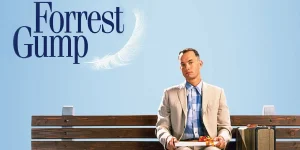
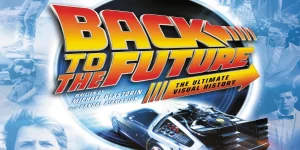
Alan Silvestri wrote the score, continuing a long partnership with Zemeckis that includes Back to the Future and Forrest Gump. His approach here is radical: the island contains no music at all. Waves, wind, and Chuck’s breathing fill the silence.
Silvestri’s main theme enters only when Chuck’s raft clears the reef. That delayed payoff gives the escape an emotional punch no earlier cue could match. His end credits suite later earned a Grammy Award for Best Instrumental Composition.
Elvis Presley’s Return to Sender appears in the opening montage. Beyond that, the soundtrack stays sparse by design.
Filming Locations
The island scenes were shot on Monuriki, an uninhabited island in Fiji’s Mamanuca group. Its real isolation gave Hanks nothing to lean on except the environment, and the jagged reef you see on screen is the actual coastline.
Moscow’s Red Square hosts the early FedEx training scene, grounding Chuck’s globe-trotting job in a real place. Memphis, home of the FedEx hub, serves as his base.
For the ending, production moved to the Texas Panhandle, near the town of Canadian. Those flat, empty roads create the crossroads image that closes the film, a landscape as open as Chuck’s future.
Awards and Nominations
Tom Hanks received an Academy Award nomination for Best Actor, and the film earned a second nomination for Best Sound. Hanks also won the Golden Globe for Best Actor in a Drama.
Silvestri’s Grammy for the end credits theme rounds out the major honors. Admittedly, the film missed a Best Picture nomination, which still irritates many fans.
Behind the Scenes Insights
- Production shut down for roughly a year so Hanks could lose about 50 pounds and grow a convincing beard. Zemeckis used the break to direct What Lies Beneath with much of the same crew.
- Hanks suffered a real cut on his leg during filming. It became infected, and the resulting staph infection delayed production for weeks.
- Screenwriter William Broyles Jr. spent time alone on a beach to research survival. A volleyball washed ashore during his stay, which inspired Wilson.
- Hanks originated the idea after reading about FedEx planes crossing the Pacific. He nursed the concept for years before it became a script.
- FedEx did not pay for its prominent role. Company founder Fred Smith appears as himself during the welcome-home ceremony.
- Monuriki had no roads, power, or facilities. Cast and crew traveled by boat each day and worked around the tides.
- The sound team shaped the island’s atmosphere with meticulous attention. Their work earned the film its Best Sound nomination.
Inspirations and References
Daniel Defoe’s Robinson Crusoe casts the longest shadow. Chuck’s progression from helpless castaway to resourceful survivor follows that classic template, though the film strips away Crusoe’s companions and colonial comforts.
Broyles’s own beach experiment shaped the practical details, from coconut cracking to fire making. Hanks’s fascination with FedEx logistics provided the corporate framing.
Interestingly, the title is spelled as two words. “Cast Away” functions as a verb here, describing what happens to Chuck rather than what he becomes.
Alternate Endings and Deleted Scenes
No official alternate ending has surfaced on home video. The crossroads conclusion, with its unanswered questions, appears to have been the plan from the start, and Zemeckis has defended its openness in interviews.
Some connective material from the island years was trimmed to maintain pace. However, the finished cut already runs 143 minutes, and the theatrical version remains the only one in circulation.
Book Adaptations and Differences
Cast Away is not based on a book. Broyles wrote an original screenplay, drawing on his own research and Hanks’s concept.
The film does invite comparison with Robinson Crusoe. In contrast to Defoe’s hero, Chuck never finds a Friday, never builds a fortress, and never conquers his surroundings. His story centers on loss rather than mastery.
Memorable Scenes and Quotes
Key Scenes
- The plane crash, filmed from inside the cabin with brutal immediacy.
- Chuck finally making fire and roaring at the sky in triumph.
- The tooth extraction with an ice skate, which still makes audiences wince.
- Wilson drifting away while Chuck screams and sobs in the open ocean.
- The welcome party, where Chuck stares at a cigarette lighter in silent disbelief.
- Kelly and Chuck kissing in the rain before she returns to her family.
- Chuck at the crossroads, glancing down the road the woman with the angel wings took.
Iconic Quotes
- “I’ll be right back.”
- “Look what I have created! I have made fire!”
- “I’m sorry, Wilson!”
- “I couldn’t even kill myself the way I wanted to. I had power over nothing.”
- “I gotta keep breathing. Because tomorrow the sun will rise. Who knows what the tide could bring?”
- “You’re the love of my life.”
Easter Eggs and Hidden Details
- The surname Noland reads as “no land,” a sly nod to his predicament.
- Wilson Sporting Goods makes the volleyball, hence the name. Chuck simply read the logo.
- Angel wings bookend the film, appearing on the first package and on the final pickup truck.
- Kelly’s pocket watch stops working after the crash. Chuck keeps it for her photograph, not for the time.
- At the welcome party, the table overflows with crab legs and sushi, foods Chuck spent four years catching by hand.
- Chuck asks for ice in his glass during the hotel scene. On the island, ice was unimaginable.
- Silvestri’s first musical cue arrives exactly as the raft crosses the reef, marking the moment Chuck regains control.
- Kelly’s search maps show the plane’s deviation, quietly explaining why nobody found him.
Trivia
- Hanks lost around 50 pounds for the island scenes, and the production waited a year for him to do it.
- Cast Away earned more than $400 million worldwide, making it one of the biggest hits of 2000.
- Multiple Wilson balls were used during filming. One later sold at auction for a five-figure sum.
- Monuriki has become a tourist attraction, with boat tours advertising it as the “Cast Away island.”
- Hanks and Zemeckis had previously teamed up on Forrest Gump, which won them both Oscars.
- Lari White, who plays Bettina, was better known as a country music singer.
- The film premiered in December 2000 and runs 143 minutes.
Why Watch?
Few films trust an actor this completely, and Hanks repays that trust in every frame. Cast Away turns a volleyball into a tragic figure and a crossroads into a promise. Watch it for the craft, then stay for the quiet devastation of that garage scene.
Director’s Other Movies
- Romancing the Stone (1984)
- Back to the Future (1985)
- Who Framed Roger Rabbit (1988)
- Back to the Future Part II (1989)
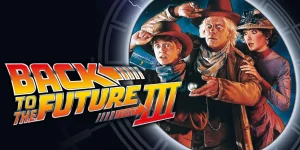
- Back to the Future Part III (1990)
- Death Becomes Her (1992)
- Forrest Gump (1994)
- Contact (1997)
- What Lies Beneath (2000)
- The Polar Express (2004)
- Beowulf (2007)
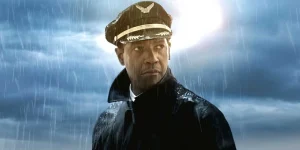
- Flight (2012)
- The Walk (2015)
- Allied (2016)
- Here (2024)