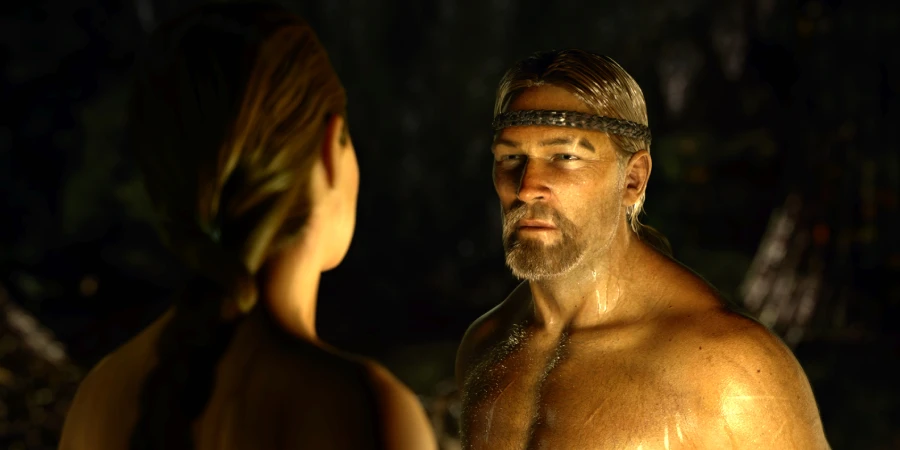

Robert Zemeckis transforms an ancient epic into a digital fever dream. This motion-capture spectacle strips away the dry academic layer of the original poem to reveal a story of lust and hubris. Consequently, the legendary hero becomes a deeply flawed man haunted by his own lies.
Detailed Summary
The Arrival of Beowulf
King Hrothgar hosts a raucous celebration in the great hall of Heorot. However, the noise agonizes Grendel, a nearby monstrous creature with sensitive hearing. Grendel attacks the hall and slaughters several soldiers before fleeing back to his cave.
Beowulf arrives from Geatland with his brave band of warriors. He pledges to kill the beast with his bare hands to prove his unmatched strength. While others doubt him, the hero prepares for a bloody confrontation without armor or weapons.
The Battle with Grendel
The monster returns to Heorot for another night of carnage. Beowulf engages the creature in a brutal wrestling match that destroys much of the hall. He eventually traps Grendel’s arm in the heavy door mechanism and rips the limb clean off.
The wounded beast crawls home to die in the arms of his mother. Peace seemingly returns to the kingdom, but a new threat emerges from the shadows. Grendel’s Mother descends upon the hall to seek vengeance for her fallen son.
A Fatal Bargain
Beowulf tracks the female demon to a cave filled with gold and ancient treasure. She appears as a beautiful woman rather than a hideous hag to tempt the warrior. She offers him fame and kingship in exchange for a new son to replace Grendel.
The hero yields to her seduction and breaks his moral code. He returns to Hrothgar with Grendel’s head, claiming he killed the mother as well. In contrast, Hrothgar recognizes the lie because he once made the same deal himself.

Movie Ending
Years of prosperity pass as Beowulf reigns as a successful but hollow king. The dragon, born from his secret encounter with the demon, awakens to terrorize his people. This golden beast destroys villages and eventually heads straight for the royal palace.
The aging king realizes he must finally face the consequences of his youthful sins. He engages the dragon in a mid-air duel while hanging from the creature’s neck. Ultimately, he reaches into the dragon’s chest to crush its heart but fall to his death in the process.
The golden queen watches from the waves as the dragon turns back into a human corpse. Wiglaf becomes the next king and inherits the heavy burden of leadership. However, the temptress rises from the water to look upon the new monarch, suggesting the cycle of corruption will likely repeat.
Are There Post-Credits Scenes?
This film does not contain any scenes after the credits. The story concludes firmly with the burial of the king and the final shot of the sea. Audiences can safely leave the theater or turn off the screen once the names begin to roll.
Type of Movie
This production is a dark fantasy epic utilizing performance capture technology. It maintains a gritty and adult tone that departs from traditional animated family films. Furthermore, the narrative leans heavily into themes of masculine ego and the corrosive nature of secrets.
Cast
- Ray Winstone – Beowulf
- Angelina Jolie – Grendel’s Mother
- Anthony Hopkins – King Hrothgar
- John Malkovich – Unferth
- Robin Wright – Queen Wealtheow
- Brendan Gleeson – Wiglaf
- Crispin Glover – Grendel
Film Music and Composer
Alan Silvestri composed the sweeping and bombastic score for the film. He utilized deep choral elements to mimic the feel of an ancient Norse campfire tale. Particularly, the main theme utilizes heavy percussion to emphasize the warrior’s physical power.
The soundtrack also features “A Hero Comes Home,” performed by Idina Menzel for the credits. This song appears as a haunting diegetic melody within the movie itself. Therefore, the music serves as both a grand orchestral backdrop and a narrative tool for the characters.
Filming Locations
Virtually the entire film was shot on a motion capture stage in Culver City, California. Since the environments were digitally rendered, the physical location mattered less than the space for infrared cameras. This allowed the actors to perform in a void while the computers built the 6th-century Danish landscape around them.
Awards and Nominations
The film received several nominations for its technical achievements and visual effects. Specifically, it garnered nods from the Visual Effects Society and the Saturn Awards for its innovative use of animation technology.
Behind the Scenes Insights
- The production used over 200 cameras to capture the facial expressions of the actors.
- Ray Winstone performed the role in a jumpsuit covered in sensors despite his character’s muscular physique.
- Angelina Jolie’s golden appearance was achieved through a mix of her performance and digital painting.
- Robert Zemeckis pushed for a 3D release back when the technology was still regaining its footing in cinemas.
Inspirations and References
The primary source is the Old English epic poem of the same name. Neil Gaiman and Roger Avary wrote the screenplay to fill in perceived gaps in the original text. They specifically drew inspiration from the idea that Grendel might be Hrothgar’s illegitimate son.
Alternate Endings and Deleted Scenes
Rumors persisted of a more graphic “Director’s Cut” that included extra violence during the Grendel fight. A few deleted sequences showed more of Beowulf’s men interacting before the first attack. Nevertheless, the theatrical version remains the most complete vision of the story available to the public.
Book Adaptations and Differences
The movie fundamentally changes the nature of the heroes and the monsters. In the poem, Beowulf truly kills Grendel’s Mother after a fierce underwater battle. In contrast, the film version depicts her as a manipulative siren who survives by seducing kings.
The original text portrays the hero as a paragon of virtue until his death. The film depicts him as a braggart who builds his reputation on a fraudulent victory. Consequently, the dragon attack serves as a personal reckoning rather than a random act of fate.
Memorable Scenes and Quotes
Key Scenes
- The terrifying sequence where Grendel first invades the mead hall.
- Beowulf’s naked brawl with the monster while the soldiers sing.
- The Dragon’s golden transformation as it emerges from the lair.
- The final heart-to-heart confrontation between Wiglaf and his dying friend.
Iconic Quotes
- “I am Beowulf!”
- “The sins of the fathers!”
- “I am the ripper, the tearer, the slasher, the gouger. I am the teeth in the darkness!”
- “A hero doesn’t have to be right. He only has to be brave.”
Easter Eggs and Hidden Details
- The dragon’s design incorporates facial features reminiscent of the protagonist to hint at their biological connection.
- Crispin Glover spoke his lines in Old English during the motion capture sessions for Grendel.
- Symbols of the Christian cross begin to replace pagan icons as the timeline of the film progresses.
- The golden horn features intricate carvings that tell the history of Hrothgar’s curse.
Trivia
- The filmmakers digitally altered Ray Winstone’s height so he would loom over the other characters.
- Robert Zemeckis spent months refining the digital eyes to avoid the uncanny valley effect.
- This was the first capture-based film to receive a PG-13 rating for its intense imagery.
- The script sat in development for nearly a decade before technology caught up with the writers’ vision.
Why Watch?
This film offers a visual journey into a world of myth and visceral action. It deconstructs the concept of a legendary hero with a bold and mature script. Furthermore, the stellar voice cast brings genuine emotional weight to the digital avatars.
Director’s Other Movies
- Back to the Future (1985)
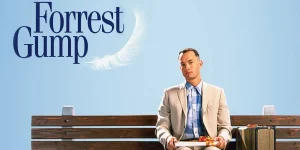
- Forrest Gump (1994)
- Cast Away (2000)
- The Polar Express (2004)
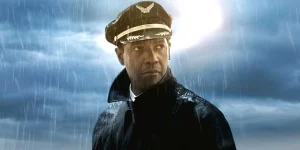
- Flight (2012)
Recommended Films for Fans
- 300 (2006)
- The 13th Warrior (1999)
- Excalibur (1981)
- Clash of the Titans (1981)
- Valhalla Rising (2009)