
Some comedies are simply funny. What About Bob?, on the other hand, is a hilarious descent into psychological warfare disguised as a feel-good family film. Its central conflict pushes the boundaries of sanity. The result is a brilliantly dark comedy that asks if a cure can be far worse than the disease.
Detailed Summary
Bob Meets Dr. Marvin
We first meet Bob Wiley, a man crippled by a staggering array of phobias and anxieties. Bob is so dysfunctional he can barely leave his apartment. In desperation, his current therapist pawns him off on a colleague, the successful and egotistical psychiatrist Dr. Leo Marvin.
Dr. Marvin is on the cusp of a career breakthrough. His new book, Baby Steps, is about to be featured in a major television interview. Consequently, he only agrees to a single session with Bob before heading off for his month-long family vacation.
The “Baby Steps” Method
During their brief session, Dr. Marvin gives Bob a copy of Baby Steps. The book’s core philosophy is to conquer overwhelming fears by breaking them down into small, manageable tasks. For a man who fears everything, this advice is a revelation.
Bob, however, takes the advice to an extreme. He latches onto Dr. Marvin as his only hope. When a minor panic attack strikes after the session, Bob calls his new doctor, only to find out he has left on vacation for a month, leaving Bob feeling abandoned.
Vacation Interrupted
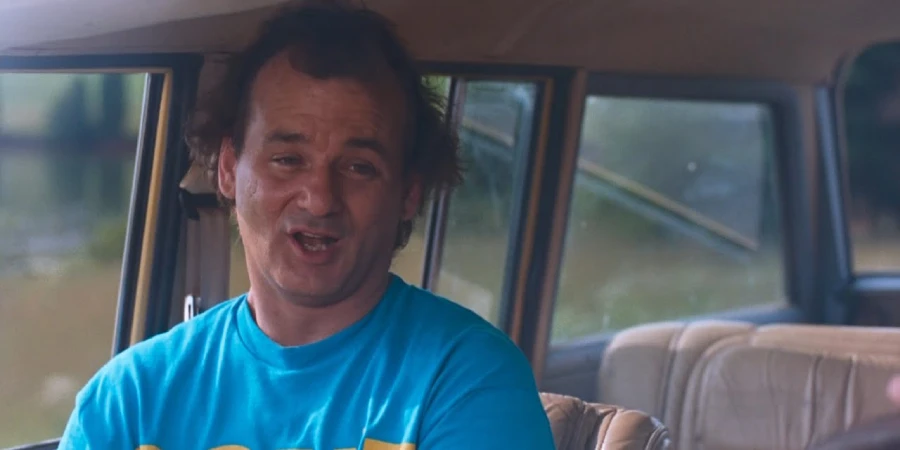
Feeling desperate, Bob concocts a plan. He calls Dr. Marvin’s office, pretends to be a detective, and tricks the answering service into revealing the doctor’s vacation spot: Lake Winnipesaukee, New Hampshire. Using the “baby steps” method, Bob overcomes his travel phobias to T-shirt his way onto a bus.
He arrives in the small town, a disheveled but cheerful mess. Dr. Marvin is, to put it mildly, horrified to see his neediest patient on his doorstep. He tries to send Bob away, but Bob has nowhere to go and the next bus is not for several days.
Bob Charms the Family
While Leo’s sanity begins to fray, Bob inadvertently charms the rest of the Marvin family. He helps Leo’s son, Siggy, overcome his fear of diving. He connects with the introverted daughter, Anna, over her anxieties. Moreover, he showers Leo’s wife, Lily, with the praise and attention her self-absorbed husband rarely provides.
The family embraces Bob’s fun-loving and appreciative nature. His presence throws Leo’s own failings as a husband and father into sharp relief. Bob even becomes a local celebrity after a viral moment where he goes sailing while tied to the mast of the boat.
Dr. Marvin Snaps
Dr. Marvin’s frustration escalates into pure rage. His attempts to get rid of Bob backfire spectacularly. For instance, he tries stranding Bob in the woods, only for Bob to be happily rescued. His big interview on Good Morning America is upstaged when the show features Bob’s “sailing” story instead.
Driven to the edge, Leo’s professionalism crumbles. He tries to have Bob committed to a mental institution. The plan fails when Bob, using his newfound confidence, charms the hospital staff and is released almost immediately.
“Death Therapy”
In a final, desperate act, Leo decides Bob needs “death therapy.” He breaks into a local shop, steals a shotgun and 20 pounds of black powder, and rigs their vacation home to explode. His plan is to lure Bob into the house and blow him up, permanently solving his “Bob problem.”
Leo ties Bob to a chair in the living room, surrounded by explosives. He calmly explains his twisted therapeutic reasoning, having clearly suffered a complete psychotic break. Bob, naturally, is terrified.

Movie Ending
Just as Dr. Leo Marvin is about to detonate the explosives, Bob’s intense phobia of being tied up re-emerges. He frantically repeats his mantra, “I feel good, I feel great, I feel wonderful,” but the fear is overwhelming. He breaks free from his bindings, and the “death therapy” is ironically a success, curing him of his last major hang-up.
However, the house, now empty of Bob, explodes in a massive fireball just as the rest of the Marvin family arrives with the police. Leo survives the blast but is rendered completely catatonic by the experience. Bob, now cured and mentally sound, watches with concern.
An epilogue flashes forward. Bob has written a bestselling book about his experience called Death Therapy and is a celebrated author himself. Leo, still catatonic, attends the wedding of Bob to Leo’s sister. When the officiant asks if anyone objects, Leo miraculously snaps out of his state, screaming “No!”, but it is too late.
Are There Post-Credits Scenes?
There are no post-credits scenes in What About Bob?. Once the credits begin to roll, the movie is over.
Type of Movie
What About Bob? is a classic black comedy. It brilliantly mines humor from a dark premise: the complete psychological destruction of a man at the hands of his patient. The tone remains light and breezy, even as Dr. Marvin’s actions become increasingly unhinged and violent.
This contrast between the sunny, vacation setting and Leo’s dark inner turmoil is central to the film’s success. It plays like a light family comedy, but its subtext is about obsession, ego, and madness.
Cast
- Bill Murray – Bob Wiley
- Richard Dreyfuss – Dr. Leo Marvin
- Julie Hagerty – Lily Marvin
- Charlie Korsmo – Sigmund “Siggy” Marvin
- Kathryn Erbe – Anna Marvin
- Tom Aldredge – Mr. Guttman
- Roger Bowen – Phil
Film Music and Composer
The score for What About Bob? was composed by Miles Goodman. His music is largely light, playful, and optimistic. It perfectly captures Bob’s childlike worldview and the idyllic setting of Lake Winnipesaukee.
This cheerful score creates a powerful ironic counterpoint to Dr. Marvin’s escalating mental collapse. One of the most memorable musical moments involves the use of the song “Sailing” by Christopher Cross, which Bob joyfully sings, much to Leo’s annoyance, during their infamous sailing scene.

Filming Locations
While the film is set on Lake Winnipesaukee, New Hampshire, it was primarily filmed at Smith Mountain Lake, Virginia. The production chose this location for its scenic beauty and its ability to represent the quintessential American summer vacation spot.
The idyllic, peaceful setting is crucial to the film’s comedy. It provides the perfect, tranquil backdrop for Dr. Marvin’s chaotic and violent breakdown, making his unraveling seem all the more absurd and out of place. Early scenes were shot on location in New York City.
Awards and Nominations
What About Bob? was a significant commercial success but did not receive major Academy Award or Golden Globe nominations. Notably, the film’s screenplay by Tom Schulman was nominated for a Writers Guild of America Award.
Behind the Scenes Insights
- Significant real-life friction existed between stars Bill Murray and Richard Dreyfuss. Dreyfuss has repeatedly described Murray as an “Irish drunken bully” and the on-set experience as miserable due to Murray’s antagonistic ad-libbing and behavior.
- In an interview, director Frank Oz called the production “kind of a tense” and difficult shoot, largely due to the tension between his two lead actors.
- Richard Dreyfuss has stated that the scene where Leo throws an entire tackle box at Bob was born from genuine frustration and was not entirely scripted.
- Producer Laura Ziskin claimed the story idea originated from an experience her father, a therapist, had with a patient who followed him on vacation.
Inspirations and References
What About Bob? is based on an original story by Alvin Sargent and Laura Ziskin. It is not a direct adaptation of any single work. However, the premise was reportedly inspired by an anecdote from producer Laura Ziskin, whose psychiatrist father once had a patient follow him on vacation.
The film plays on common tropes within psychotherapy, specifically the concept of transference, where a patient redirects feelings for one person onto their therapist. Bob’s extreme dependence on Dr. Marvin is a comedic exaggeration of this phenomenon.
Alternate Endings and Deleted Scenes
The original script reportedly featured a much darker ending. In one version, the explosive climax was to culminate in the death of Dr. Marvin. Test audiences reacted poorly to this conclusion, feeling it was too grim for the film’s overall tone.
As a result, the filmmakers reshot the ending to have Leo survive in a catatonic state. This change allowed for a final comedic beat at the wedding, preserving the black comedy without descending into tragedy.
Book Adaptations and Differences
What About Bob? is not based on a book. It is an original screenplay. The only book featured in the film is the fictional self-help guide, Baby Steps, written by Dr. Leo Marvin.

Memorable Scenes and Quotes
Key Scenes
- The First Session: Dr. Marvin’s horrified realization of the depth of Bob’s neuroses, setting the stage for their entire conflict.
- “I’m Sailing!”: Bob, tied to the mast of a sailboat, glides across the lake in a moment of pure, unadulterated joy that becomes a local news sensation.
- The Good Morning America Interview: Dr. Marvin’s moment of triumph is stolen when the program pivots to a segment celebrating his “patient” Bob’s sailing adventure.
- Death Therapy: The film’s climax, where a completely unhinged Dr. Marvin rigs his house with explosives in a last-ditch effort to kill Bob.
Iconic Quotes
- “Baby steps.” – Dr. Leo Marvin’s central therapeutic advice that Bob takes to heart.
- “I feel good, I feel great, I feel wonderful.” – Bob’s personal mantra to get through moments of panic.
- “I’m sailing! I’m a sailor! I sail!” – Bob’s ecstatic proclamation while tied to the mast.
- “Gimme, gimme, gimme! I need, I need!” – Dr. Marvin’s bitter mockery of Bob’s dependence, revealing his deep-seated resentment.
Easter Eggs and Hidden Details
- The name of Dr. Marvin’s son is Sigmund, a clear nod to Sigmund Freud, the father of psychoanalysis. It is a joke that Leo would name his son after the most famous figure in his profession.
- During his bus trip, Bob wears a t-shirt that says “Don’t Hassle Me, I’m Local.” This is an inside joke, as it was the catchphrase of a character in the movie The Great Outdoors, which also featured a character invading a family vacation.
Trivia
- Before Richard Dreyfuss was cast, Woody Allen was considered for the role of Dr. Leo Marvin, but director Frank Oz felt he was not physically imposing enough to be believably driven to violence.
- The film was a major box office hit, grossing over $63 million in the United States on a budget of around $35 million.
- Actor Charlie Korsmo, who played Siggy, later quit acting, graduated from MIT, and became a lawyer and law professor.
Why Watch?
This film is a masterclass in comedic tension. Watching a desperate patient slowly and cheerfully drive his egotistical therapist insane is pure gold. Bill Murray and Richard Dreyfuss deliver career-defining comedic performances that remain hilarious decades later.
Director’s Other Movies
- The Dark Crystal (1982)
- Little Shop of Horrors (1986)
- Dirty Rotten Scoundrels (1988)
- In & Out (1997)
- Bowfinger (1999)
- The Score (2001)
Recommended Films for Fans
- Planes, Trains and Automobiles (1987)
- Groundhog Day (1993)
- Office Space (1999)
- The Cable Guy (1996)
- Dinner for Schmucks (2010)