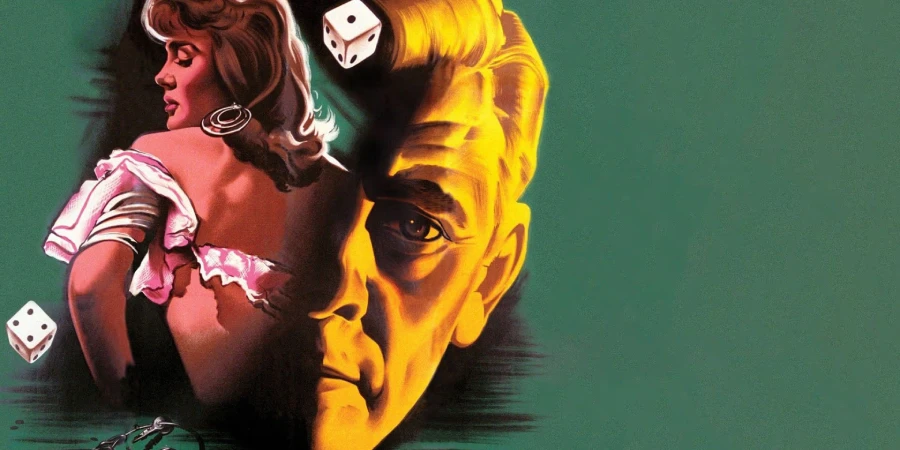

Bob Montagné is a man who should be dead, broke, or in prison, yet he strolls through Montmartre like he owns it. Bob le Flambeur, directed by Jean-Pierre Melville in 1955, follows a charming, aging gambler whose one last heist doubles as a slow-motion act of self-destruction. Melville fuses American noir with Parisian atmosphere to produce something that feels both borrowed and entirely original. This film practically invented the template that dozens of heist movies would spend the next seven decades copying.
Detailed Summary
Introducing Bob and His World
Bob Montagné, played by Roger Duchesne, wanders home through Montmartre at dawn after a long night at the casino. He is a former criminal turned small-time gambler, respected on the streets, broke in the wallet, and utterly charming despite everything.
Melville establishes Bob’s world with great economy. His apartment is modest, his wardrobe is immaculate, and everyone from small-time crooks to local cops seems to genuinely like him. Inspector Ledru, an old acquaintance on the right side of the law, tolerates Bob because their friendship predates any professional conflict.
Anne and Paolo Enter the Picture
Bob encounters Anne, a young woman drifting without purpose in the Montmartre underworld. He takes her under his protection, not romantically, but with a paternal instinct that reveals the decent man buried beneath decades of bad decisions.
Paolo, Bob’s young protégé, promptly falls hard for Anne. Bob warns him off, recognizing the trouble that comes with mixing loyalty, youth, and a pretty face. His warning, however, lands with the usual effectiveness of advice given to a young man in love, which is to say, none at all.
The Deauville Casino Plan Takes Shape
Facing serious financial ruin after another disastrous night at the tables, Bob hatches an audacious plan: rob the casino at Deauville during its peak season. The target holds an enormous amount of cash, and Bob begins assembling a small team of specialists to pull it off.
He recruits safecracker Roger and several other associates, carefully organizing the job with military precision. Melville presents this planning phase with genuine procedural detail, making the audience feel the weight and logic behind every decision. Bob takes the heist seriously; the film takes Bob seriously in return.
Cracks Begin to Appear
Paolo, frustrated and lovestruck, begins talking too freely around Anne. She, in turn, lets enough slip to her current lover, a low-level police informant named Marc. Word of the Deauville job starts traveling through exactly the wrong channels.
Meanwhile, Bob continues rehearsing the plan, scouting the casino, and maintaining his cool exterior. He seems blissfully unaware that the carefully constructed secrecy around the heist is already dissolving. Melville builds this dramatic irony quietly, without melodrama, which makes it sting all the more.
The Night of the Heist
On the night of the robbery, something extraordinary happens to Bob before the heist even begins properly: he sits down at the casino tables and starts winning. Not just winning a little, but winning on a scale that would solve every financial problem he has.
Bob cannot stop himself. His compulsive gambler’s soul takes over completely, and he keeps playing, racking up an almost absurd fortune while his crew waits for the signal to move. The heist, in a real sense, stops being necessary even as it continues to happen.
The Heist Unravels
Police, tipped off by the informant chain that Paolo and Anne inadvertently set in motion, arrive and surround the casino. Bob’s crew attempts to carry out the robbery anyway, and a violent confrontation erupts. Several members of the gang are killed or arrested in the chaos.
Bob himself, still at the tables and still winning, barely seems to register what has happened around him. Ledru arrives and effectively takes Bob into custody, though the arrest carries none of the usual bitterness. Bob has broken no law that night; he simply gambled, and won spectacularly.
Movie Ending
Bob walks away from the Deauville casino under police escort, his pockets full of legitimate winnings and his heist crew in ruins around him. Ledru arrests him, but the charge feels almost ceremonial. Bob committed no crime that evening because his gambling streak consumed the entire window in which the robbery was supposed to occur.
Melville delivers this conclusion as darkly comic poetry. The man who planned everything perfectly got undone, not by a rival, not by a clever detective, but by his own inescapable nature. Bob is a gambler first, a criminal second, and fate simply let his truest self win the argument.
Paolo, whose careless talk triggered the police tip, faces the harder consequences. The young man’s inability to keep quiet cost the crew everything, and his relationship with Bob carries a new and permanent shadow. Anne survives the fallout, but her role in the chain of betrayal, however unintentional, is not forgotten.
What makes the ending so resonant is its refusal to punish Bob in any conventional way. He is both ruined and saved simultaneously. His criminal enterprise collapsed, yet he leaves with more money than the heist would have netted. Melville seems to suggest that fate rewards authenticity, even the authenticity of a compulsive gambler who cannot get out of his own way.
Are There Post-Credits Scenes?
Bob le Flambeur contains no post-credits scene. Films of this era did not employ that convention, and Melville’s restrained style would have been entirely incompatible with it. Once the story ends, it simply ends.
Type of Movie
Bob le Flambeur occupies the territory between film noir and crime drama, with a distinctly French sensibility layered over its American genre inspirations. Its tone is cool, melancholic, and laced with dry wit. This is not an action film; it rewards patience and attention.
Melville later became famous for austere, near-silent crime films, and you can see that instinct developing here. In contrast to Hollywood heist films of the same period, Bob le Flambeur keeps its emotional temperature consistently low. That restraint is precisely what gives it power.
Cast
- Roger Duchesne – Bob Montagné
- Isabel Corey – Anne
- Daniel Cauchy – Paolo
- Guy Decomble – Inspector Ledru
- André Garet – Roger
- Gérard Buhr – Marc
- Claude Cerval – Jean
Film Music and Composer
The score for Bob le Flambeur features jazz-inflected compositions that perfectly mirror its protagonist’s world. Eddie Barclay and Jo Boyer contributed to the musical landscape of the film, giving it a nocturnal, smoky quality that feels inseparable from the Montmartre setting.
Jazz was not merely decorative here. Melville used music as a character in itself, something that breathes and moves alongside Bob through the pre-dawn streets. The result is a soundtrack that feels lived-in rather than composed.

Filming Locations
Melville shot extensively on location in Montmartre, the Paris neighbourhood that functions almost as a co-star in the film. Its winding streets, early-morning emptiness, and distinct social atmosphere gave the film an authenticity that studio sets could never have replicated.
Deauville, the coastal resort town in Normandy, provides the setting for the climactic casino sequence. Its reputation as a playground for wealthy gamblers and the French elite makes it the perfect arena for Bob’s final, self-sabotaging act. Location choice here is not incidental; it carries thematic meaning.
Melville’s decision to shoot on real Parisian streets also aligned with the emerging nouvelle vague aesthetic, even though the film predates that movement’s official arrival. Consequently, Bob le Flambeur reads as a direct ancestor of Godard and Truffaut’s location-heavy work.
Awards and Nominations
Bob le Flambeur did not receive major international awards recognition upon its initial release. However, it earned strong critical respect over the following decades and is now widely regarded as a foundational work in French cinema.
Behind the Scenes Insights
- Melville funded the film largely independently, shooting with a small crew and a tight budget that forced creative solutions throughout production.
- Roger Duchesne had largely stepped away from acting before Melville cast him as Bob; the role became his most celebrated performance.
- Melville was a devoted admirer of American cinema, particularly Hollywood crime films, and deliberately channeled that influence while insisting on a French identity for the story.
- Shooting on Montmartre streets at actual pre-dawn hours gave the film its eerily authentic atmosphere, something Melville considered non-negotiable.
- Isabel Corey was a teenager during filming and had virtually no prior acting experience; Melville reportedly cast her purely on the strength of her screen presence.
Inspirations and References
Melville drew heavily from the tradition of American film noir, citing directors like John Huston and the visual grammar of films such as The Asphalt Jungle (1950) as key touchstones. The heist planning sequences in particular show Huston’s structural influence clearly.
Beyond cinema, Melville was inspired by the real culture of Montmartre, its gamblers, its small-time criminals, and its particular code of street honor. He treated the neighborhood as a living source material rather than a backdrop. In addition, the broader tradition of French crime literature informed the film’s moral ambiguity and its sympathy for its outlaw protagonist.
Alternate Endings and Deleted Scenes
No documented alternate endings or significant deleted scenes from Bob le Flambeur have entered the public record. Given the film’s independent, low-budget production circumstances, extensive alternate footage was unlikely to have been shot in the first place.
Book Adaptations and Differences
Bob le Flambeur is not based on a novel or pre-existing literary source. Melville developed the story as an original screenplay. Therefore, no book-to-screen comparison applies here.


Memorable Scenes and Quotes
Key Scenes
- Bob’s solitary walk through Montmartre at dawn in the film’s opening minutes, establishing character and atmosphere in one elegant sweep.
- Bob meeting Anne for the first time and assuming a protective role, a moment that quietly defines his moral code without any explicit dialogue about it.
- The meticulous planning scenes in which Bob lays out the Deauville casino robbery with the focus and precision of a military operation.
- Bob sitting at the casino tables on the night of the heist and beginning his extraordinary winning streak while his crew circles the building outside.
- Ledru arriving at the casino to find Bob winning legitimately, the final ironic collision of the film’s two worlds.
Iconic Quotes
- “Bob is a gambler. He sleeps by day and lives by night.” (the film’s opening narration, which frames everything that follows)
- Bob to Paolo, on Anne: words of warning delivered with the tired patience of a man who has already seen how this story ends.
Easter Eggs and Hidden Details
- Melville included visual references to American gangster films throughout the production design, most notably in Bob’s clothing and the way characters carry themselves in confrontational situations.
- Bob’s apartment, modest yet elegant, reflects his personality with unusual precision; Melville reportedly paid close attention to every prop placed within it.
- Several extras in the Montmartre street scenes were actual locals rather than hired actors, adding an unrepeatable documentary texture to the background of many shots.
- Melville briefly appears on screen in a small role, a habit he continued throughout his career as a quiet personal signature.
Trivia
- Bob le Flambeur directly inspired Neil Jordan’s The Good Thief (2002), a remake starring Nick Nolte that relocated the story to Nice and Monte Carlo.
- Melville operated his own private film studio in Paris, giving him an unusual degree of creative independence for the era.
- The film’s title translates roughly as Bob the Gambler or Bob the High Roller in English, with flambeur carrying specific connotations of reckless, compulsive betting.
- François Truffaut cited this film as a significant influence on the development of the nouvelle vague movement, even though Melville himself remained somewhat separate from that group.
- Roger Duchesne’s performance as Bob is widely considered one of the great underappreciated lead turns in French cinema history.
Why Watch?
Bob le Flambeur offers one of cinema’s most purely watchable antiheroes and a masterclass in atmosphere built on almost no budget. Melville achieves more with a Paris street at dawn than most directors manage with entire studio backlots. Moreover, its ending remains genuinely surprising even for audiences who think they know heist movies. This is the film that taught cool how to dress.
Director’s Other Movies
- Le Silence de la Mer (1949)
- Les Enfants Terribles (1950)
- Deux Hommes dans Manhattan (1959)
- Le Doulos (1962)
- Le Deuxième Souffle (1966)
- Le Samouraï (1967)
- L’Armée des Ombres (1969)
- Le Cercle Rouge (1970)
- Un Flic (1972)
Recommended Films for Fans
- The Asphalt Jungle (1950)
- Rififi (1955)
- Le Samouraï (1967)
- Le Cercle Rouge (1970)
- Pickpocket (1959)
- The Good Thief (2002)
- Breathless (1960)
- Touchez Pas au Grisbi (1954)