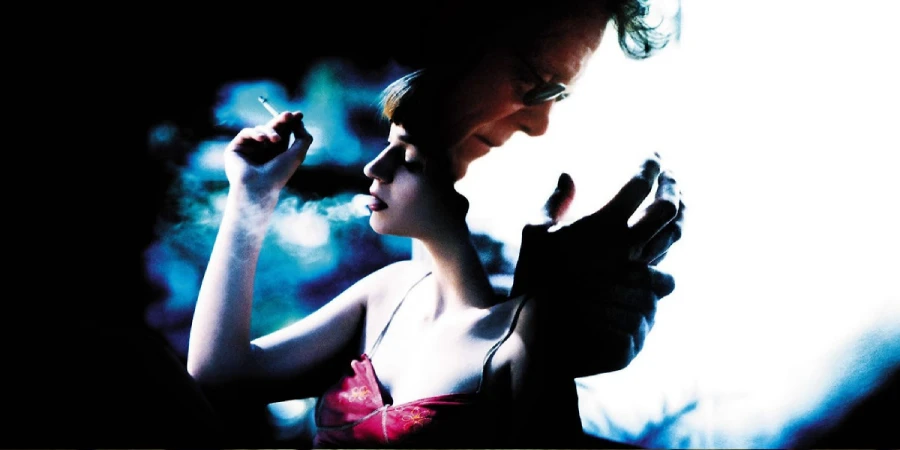

A heroin-addicted gambler planning an audacious art heist while simultaneously running a elaborate decoy operation sounds like a recipe for chaos, and The Good Thief delivers exactly that kind of gloriously messy brilliance. Director Neil Jordan reimagines Jean-Pierre Melville’s 1955 French classic Bob le Flambeur, transplanting the action to the sun-drenched, neon-lit streets of Monaco and Nice. Nick Nolte gives one of his most magnetic performances, playing a man who is simultaneously falling apart and pulling off the con of a lifetime.
Detailed Summary
Introducing Bob Montagnet: A Man in Free Fall
Bob Montagnet, played by Nick Nolte, is a legendary thief and compulsive gambler living on the French Riviera. He has a serious heroin addiction and a reputation built on past glories that seem increasingly distant. Bob is charming, respected by criminals and cops alike, but visibly on the edge of self-destruction.
Detective Roger, played by tchéky Karyo, monitors Bob with a mix of professional obligation and genuine personal affection. Roger openly admits he likes Bob; he just cannot let him operate freely. This unusual dynamic gives the film much of its moral texture from the start.
Anne and the Question of Rescue
Bob encounters Anne, a young Eastern European woman played by Nutsa Kukhianidze, being passed between men near the border. He takes her under his wing without any obvious ulterior motive, which surprises nearly everyone around him. His protectiveness toward Anne is one of the film’s clearest signals that Bob retains a genuine moral core beneath the addiction and the grift.
Anne is street-smart but vulnerable, and her relationship with Bob avoids easy sentimentality. Jordan keeps their dynamic complex; Bob is paternal but not naive, and Anne is grateful but not passive. She becomes part of the world Bob inhabits rather than simply a symbol of his redemption.
The Casino Heist Takes Shape
Bob hatches a plan to rob the Casino de Monte Carlo. Specifically, he targets the vault holding an extraordinary collection of paintings. His crew assembles gradually, including a young safecracker named Paulo and other specialists who trust Bob’s instincts despite his current state of disrepair.
Meanwhile, Bob begins a very deliberate and public gambling streak at the casino. He wins increasingly large sums, attracting enormous attention. This is entirely intentional; he wants casino management and the police focused on his gambling, not on any potential theft.
The Art Forgery Layer
Here the film reveals its most sophisticated layer. Bob is not actually planning to steal the real paintings. He has arranged for expert art forgers to switch the originals with high-quality fakes, meaning the casino will never even realize what was truly taken. In addition, the heist plan involves multiple levels of misdirection, with Bob essentially running a con inside a con.
Two mysterious American art dealers are also circling the casino, adding another layer of complication. Their presence suggests the paintings have value beyond what the casino officially acknowledges. Bob quietly exploits this ambiguity throughout the second act.
Roger Closes In
Roger grows increasingly suspicious of Bob’s conspicuous winning streak. He understands that Bob is too smart to simply be on a lucky run; something larger is in motion. However, every time Roger gets close to uncovering the real plan, the layers of misdirection send him chasing shadows.
Roger and Bob share several conversations that feel almost like chess matches conducted over drinks. Both men respect the rules of their respective games. Consequently, their scenes together carry a tension that never quite tips into hostility.
Bob Kicks His Habit, Temporarily
In a pivotal stretch of the film, Bob manages to get himself clean ahead of the heist. He needs a steady hand and a clear head, and he achieves both through sheer will. This sequence is important because it shows Bob at his most capable, stripping away the haze of addiction to reveal the brilliant operator underneath.
His clarity also brings renewed intensity to his gambling performances. He plays brilliantly and publicly, cementing his cover story. The casino management, now deeply invested in understanding how he keeps winning, focuses almost entirely on his presence at the tables.
Heist Night
On the night of the robbery, Bob’s crew executes the plan with precision. Paulo and the team access the vault while Bob commands the casino floor with his gambling spectacle. Security is stretched thin trying to watch Bob’s extraordinary play while simultaneously managing a busy night.
The forgery swap proceeds as planned; the forged paintings replace the originals cleanly. By the time the vault team exits, the genuine artworks are already moving out of reach. Bob, for his part, continues playing as though nothing else in the world exists.
Movie Ending
Bob wins a staggering amount at the tables on the night of the heist, making his gambling the talk of Monaco. Roger arrives, fully aware that something has happened but unable to pinpoint exactly what. He confronts Bob, and Bob greets him with his usual unshakeable calm.
Roger realizes, perhaps fully for the first time, that the gambling was always the cover. By the time he and his team investigate the vault, the real paintings are gone and the fakes sit convincingly in their place. The casino itself may not even know for certain what it has lost, because the forgeries are so accomplished.
Bob walks away clean. He does not get caught, and he does not suffer a dramatic downfall. In contrast to many heist films that punish their protagonists at the finish line, The Good Thief lets Bob win, which feels both earned and quietly subversive.
Anne’s fate is left with a sense of open possibility rather than neat resolution. She has options now, which Bob helped create for her. His final act of genuine generosity toward her confirms that his moral compass, however battered, still points somewhere meaningful.
Roger watches Bob go, and his expression carries something between admiration and resignation. He knows he has been outplayed, and on some level he does not entirely mind. That final emotional beat gives the film its lasting warmth; it is a crime story that ends not with punishment but with a kind of grace.
Are There Post-Credits Scenes?
The Good Thief contains no post-credits scenes. Once the story concludes, the film is simply over. Audiences can leave their seats without waiting.
Type of Movie
The Good Thief is a heist thriller with strong elements of character drama and neo-noir. Its tone balances melancholy with wit, never fully committing to either cynicism or sentimentality. Neil Jordan keeps the atmosphere loose and sun-warmed rather than cold and clinical.
Stylistically, the film owes a clear debt to French New Wave cinema. It prioritizes mood and character over mechanical plot mechanics. For fans of heist films that care more about people than procedures, this sits in a rewarding niche.
Cast
- Nick Nolte – Bob Montagnet
- Tchéky Karyo – Roger
- Nutsa Kukhianidze – Anne
- Said Taghmaoui – Paulo
- Gérard Darmon – Raoul
- Emir Kusturica – Vladimir
- Mark Polish – Lewis
- Michael Polish – Philippo
Film Music and Composer
Elliot Goldenthal composed the score for The Good Thief. Goldenthal brings a sophisticated, jazz-inflected sensibility that matches the film’s Riviera setting perfectly. His music breathes and wanders rather than pushing the audience toward obvious emotional cues.
Goldenthal is best known for scores including Interview with the Vampire and Frida, for which he won an Academy Award. His work on The Good Thief is understated by comparison, but that restraint is precisely right for this material. The score feels like it belongs in the same world as the smoky, amber-lit casinos Bob frequents.
Filming Locations
Principal photography took place in and around Nice and Monaco on the French Riviera. These locations are not merely decorative; they carry the specific social geography of wealth, glamour, and the criminal underworld that exists just below the glittering surface. Jordan uses the contrast between luxury and seediness as a visual argument throughout the film.
Nice in particular gives the film its texture of faded elegance. Narrow streets, old hotels, and late-night bars populate Bob’s world convincingly. The locations feel lived-in rather than staged, which suits the film’s grounded, character-driven approach.
Awards and Nominations
Nick Nolte received a Golden Bear nomination at the Berlin International Film Festival for his performance. The film also generated considerable critical attention upon its festival run, though it did not accumulate a large number of major awards.
Behind the Scenes Insights
- Neil Jordan had long admired Jean-Pierre Melville’s Bob le Flambeur and pursued the remake for years before securing the right circumstances to make it.
- Nick Nolte prepared extensively for the role, working to capture Bob’s physical deterioration while preserving his charismatic authority.
- Director Emir Kusturica, a celebrated filmmaker in his own right, appears in the film as the character Vladimir; his casting adds a layer of cinephile pleasure for knowledgeable audiences.
- Jordan chose to shoot on location rather than reconstruct the Riviera on sets, insisting that the authenticity of the environment was essential to the film’s credibility.
- Nutsa Kukhianidze, a Georgian actress, made her international film debut in this production.
Inspirations and References
The Good Thief is a direct remake of Jean-Pierre Melville’s Bob le Flambeur from 1955. Melville’s original is itself considered a foundational text of French noir cinema. Jordan’s film updates the setting and modernizes certain character dynamics while preserving the spirit of Melville’s original conception.
Melville’s influence on global crime cinema is enormous; directors from Jean-Luc Godard to Michael Mann have cited him as a crucial reference. Jordan participates in that lineage openly rather than disguising his source. The film functions as both a remake and a tribute.
Alternate Endings and Deleted Scenes
No officially documented alternate endings or notable deleted scenes have entered public record for The Good Thief. Jordan has not publicly discussed cutting major sequences from the finished film. Without confirmed information, it would be irresponsible to speculate further.
Book Adaptations and Differences
The Good Thief is not based on a book. It derives from Melville’s 1955 screenplay and film, not from any novel or literary source. Jordan worked from his own script, which adapts the cinematic original rather than any written text.

Memorable Scenes and Quotes
Key Scenes
- Bob first encountering Anne near the border and deciding, almost impulsively, to protect her from further exploitation.
- Bob’s marathon gambling session at the Casino de Monte Carlo, playing with total focus while his crew operates in the vault below.
- Roger confronting Bob in the aftermath of the heist and realizing he has been watching the wrong hand the entire time.
- Bob’s detox sequence, showing the sheer physical cost of getting clean in preparation for the job.
- The quiet final exchange between Bob and Roger, loaded with mutual respect and unspoken acknowledgment.
Iconic Quotes
- “I’m a lucky man. I just don’t feel it right now.” – Bob
- “You’re a good thief, Bob. The worst kind.” – Roger
Easter Eggs and Hidden Details
- Emir Kusturica’s casting as Vladimir is itself a winking reference; having a director of his stature play a supporting criminal role invites audiences familiar with his work to read his presence as a knowing in-joke about the nature of artistic outlaws.
- Several visual compositions in the film deliberately echo the cinematographic style of Melville’s original, functioning as quiet visual homages for attentive viewers.
- The specific paintings targeted in the heist are described in ways that blur the line between real and fictional works, a nod to the forgery theme operating at the heart of the plot.
- Bob’s wardrobe subtly degrades and then improves in parallel with his addiction cycle, providing a visual shorthand for his internal state without dialogue.
Trivia
- Neil Jordan previously worked with Nick Nolte on other projects, and their established rapport contributed significantly to the relaxed, lived-in quality of Nolte’s performance.
- Jean-Pierre Melville’s Bob le Flambeur had already been a major influence on Michael Mann’s Heat; Jordan’s remake therefore sits within a rich chain of creative inheritance.
- Nutsa Kukhianidze’s casting came after an extensive search for an actress who could project both vulnerability and resilience without leaning too heavily on either quality.
- The film’s relatively modest box office performance on release contrasts sharply with the consistent critical affection it has received in the years since.
- Jordan wrote the screenplay himself, adapting Melville’s story without relying on a co-writer, which gives the film an unusual tonal consistency throughout.
Why Watch?
Nick Nolte delivers a career-highlight performance, raw and magnetic in equal measure, and Neil Jordan surrounds him with a film that respects its audience’s intelligence. Moreover, the layered con-within-a-con structure rewards close attention without punishing casual viewers. For fans of character-driven crime cinema, this is essential viewing.
Director’s Other Movies
- Mona Lisa (1986)
- The Crying Game (1992)
- Interview with the Vampire (1994)
- Michael Collins (1996)
- Butcher Boy (1997)
- In Dreams (1999)
- Breakfast on Pluto (2005)
- Ondine (2009)
- Byzantium (2012)
Recommended Films for Fans
- Bob le Flambeur (1955)
- Heat (1995)
- Rififi (1955)
- The Thomas Crown Affair (1999)
- Ocean’s Eleven (2001)
- Confidence (2003)
- After the Sunset (2004)