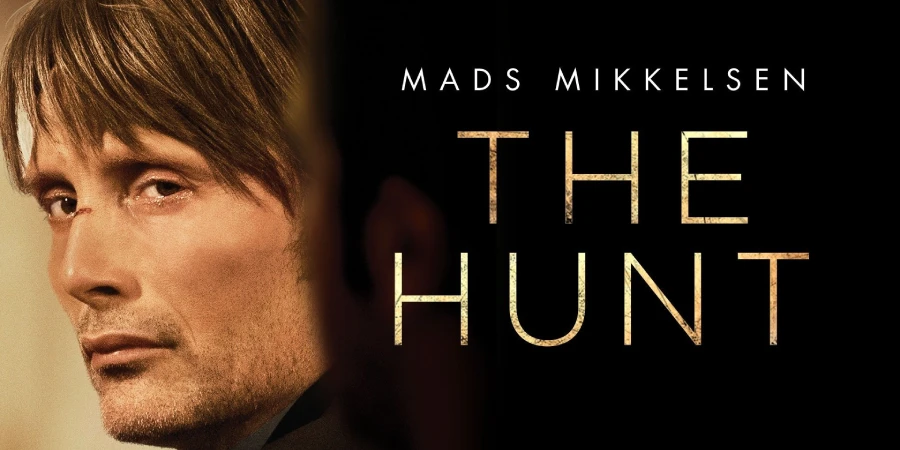

A single lie told by a child can bring a grown man to his knees. Thomas Vinterberg’s The Hunt opens on a community of Danish men playing in icy water, laughing, bonded by ritual closeness. That image of warmth makes what follows feel genuinely savage. Mads Mikkelsen gives one of the finest male performances of the 2010s, and this film earns every uncomfortable minute of it.
Detailed Summary
Lucas and His Life in the Village
Lucas is a kindergarten teacher living in a small Danish town. He is well-liked, recently divorced, and navigating a custody dispute over his teenage son Marcus. His best friend is Theo, whose young daughter Klara adores Lucas deeply, almost too deeply.
Klara develops a childlike crush on Lucas. She tries to kiss him on the mouth one morning, and Lucas gently but firmly redirects her. He explains that is not appropriate behavior. She feels humiliated and hurt.
The Lie and Its Immediate Fallout
Klara tells the kindergarten principal, Grethe, that Lucas showed her something inappropriate. She uses a phrase that suggests she saw his genitals. Grethe, acting on safeguarding protocol, contacts the authorities.
A child psychologist and social workers interview Klara. The process is deeply flawed. Adults subtly reinforce her initial statement, and what begins as a confused, fleeting comment hardens into a formal accusation. Klara herself later tries to recant, telling her mother the story was not true. Her mother dismisses it entirely, deciding children never lie about such things.
Grethe fires Lucas immediately. The news spreads through the town within hours.
The Community Turns
Lucas’s neighbors and friends abandon him almost overnight. Theo stops answering his calls. Shop owners refuse to serve him. Someone kills his dog and leaves the body at his door. His entire social world collapses in real time, and Vinterberg shoots this collapse with clinical precision, cutting between Lucas’s isolated apartment and the tight social gatherings he is no longer invited to.
Other parents start believing their children were also abused, producing new accusations that feel almost certainly coached or imagined. The hysteria compounds itself. More children describe a dark basement in Lucas’s house, except Lucas’s house has no basement at all. That detail is ignored.
Marcus Arrives and Stands by His Father
Marcus comes to live with his father despite pressure from others. He arrives and sees Lucas’s isolation firsthand. A supermarket confrontation between Marcus and a store employee who blocked Lucas from shopping turns physical, and Vinterberg films it with raw, ugly energy.
Marcus’s loyalty matters enormously here. It functions as the film’s small but steady counterweight to the collective madness surrounding Lucas.
Christmas Eve Confrontation
Lucas attends Christmas church service and is physically pushed out by Theo and other men from the community. A priest attempts to intervene. Lucas refuses to leave quietly and forces his way back inside, insisting on his innocence and his right to be there.
He later confronts Theo directly and physically, demanding that his best friend look him in the eye. Theo cannot fully do it. This scene is the film’s emotional breaking point, and Mikkelsen plays it with a trembling, barely contained fury that is genuinely difficult to watch.
Charges Are Dropped
Authorities eventually drop the charges against Lucas due to lack of evidence. Klara has already contradicted herself, and no physical evidence ever existed. Lucas is legally cleared.
But legal clearance and social rehabilitation are two entirely different things. Vinterberg makes sure the audience feels that gap sharply.
Movie Ending
A full year passes. Lucas reintegrates into the community. Theo apologizes. Lucas and Theo’s friendship resumes, awkwardly but genuinely. Marcus receives his hunting rifle in a coming-of-age ceremony, a ritual that binds men in this community together, and Lucas participates alongside his son.
It seems like resolution. Vinterberg is not that generous, though.
Out in the forest during the hunt, a shot rings out and barely misses Lucas. He spins around and sees a figure in the treeline. The figure disappears. Lucas stands there alone, shaking, the sunlight filtering through bare branches around him.
We never learn who fired that shot. It may have been a young man, possibly Klara’s older brother, who attacked Lucas earlier in the film. It may have been a random accident. Vinterberg refuses to clarify, and that refusal is entirely deliberate.
The point is that nothing is truly over. Lucas has been legally exonerated, socially forgiven on the surface, and yet someone in his community may have just tried to kill him. The wound the lie opened never fully closed. That final gunshot is the film saying, clearly and coldly, that a community can forgive but cannot fully unknow what it chose to believe.
Mikkelsen’s face in those final seconds carries everything. His jaw tightens. His eyes scan the treeline. He turns back toward his son and the others, and the film cuts to black. He does not run. He does not call out. He simply absorbs it, the way he has absorbed everything for two hours, and keeps standing.
Are There Post-Credits Scenes?
The Hunt has no post-credits scenes. Once the film cuts to black after that final forest shot, it is over. No additional footage follows.
Type of Movie
The Hunt is a drama with elements of psychological thriller. Its tone is bleak, restrained, and deeply uncomfortable without relying on genre mechanics to manufacture tension. Real-life social dynamics do all the work.
It belongs loosely in the tradition of Scandinavian social realism, prioritizing character over plot. Vinterberg keeps the pacing slow and deliberate, which makes each act of community cruelty land harder.
Cast
- Mads Mikkelsen – Lucas
- Thomas Bo Larsen – Theo
- Annika Wedderkopp – Klara
- Lasse Fogelstrøm – Marcus
- Alexandra Rapaport – Nadja
- Lars Ranthe – Bruun
- Anne Louise Hassing – Agnes
Film Music and Composer
Composer Nikolaj Egelund wrote the score. His approach suits the film’s restraint perfectly. He avoids swelling emotional cues and instead uses sparse, understated instrumentation that often simply lets silence do the work.
Several scenes carry almost no score at all. That absence amplifies the social isolation on screen far more than conventional dramatic music would have.
Filming Locations
The Hunt was filmed primarily in Jutland, Denmark, in and around small rural communities. Vinterberg wanted landscapes that felt genuinely familiar and tight-knit rather than cinematically exotic.
The forested areas matter enormously. Hunting and outdoor ritual form the social glue of the male community in this story. Shooting in actual Danish countryside rather than constructed sets gives those scenes a tactile, documentary-like honesty.
The claustrophobic feel of small-town life is not a production design choice but a geographical reality. Every location reinforces how inescapable Lucas’s situation becomes.
Awards and Nominations
Mads Mikkelsen won the Best Actor award at the Cannes Film Festival in 2012, a genuinely deserved recognition of a performance that could easily have been overlooked by more prestige-hungry festivals. The Hunt also received a nomination for the Academy Award for Best Foreign Language Film at the 2013 ceremony, representing Denmark.
Behind the Scenes Insights
- Vinterberg and Mikkelsen developed their working relationship over years before making this film, and that trust shows in how freely Mikkelsen inhabits Lucas rather than performing him.
- Young actress Annika Wedderkopp had no prior professional acting experience. Vinterberg reportedly worked with her very carefully to ensure she understood she was playing a character, not describing real events.
- Vinterberg has spoken about the challenge of making the audience sympathize with Klara even as her lie destroys a man’s life. He insisted on never making her a villain.
- Mikkelsen prepared for the role by spending time in Danish kindergartens observing how teachers physically and emotionally interact with children to calibrate what appropriate and inappropriate behavior actually looks like in practice.
- Several actors in supporting community roles were non-professionals from the local area where filming took place, which adds to the lived-in texture of the ensemble.
Inspirations and References
Vinterberg drew inspiration from real-world daycare abuse scandals that swept through the United States, Canada, and parts of Europe during the 1980s and 1990s. Many of those cases involved accusations later found to be false or heavily influenced by adult suggestion during child interviews.
Arthur Miller’s The Crucible is the most obvious literary parallel. Both works examine how a community’s need to identify a monster can override its capacity for reason. Vinterberg has acknowledged awareness of that parallel.
Kafka’s The Trial also hovers over the film’s structure. Lucas, like Josef K., faces an accusation he cannot disprove because the system processing it has no real mechanism for innocence.
Alternate Endings and Deleted Scenes
No alternate endings or significant deleted scenes have been officially documented or released by the production. Vinterberg has not publicly discussed major scenes cut from the final version.
Given how tightly constructed the film is, it is difficult to imagine substantial material existing outside what made the cut.
Book Adaptations and Differences
The Hunt is an original screenplay written by Thomas Vinterberg and Tobias Lindholm. It is not based on a book, novel, or any single documented real case. No adaptation comparison applies here.
Memorable Scenes and Quotes
Key Scenes
- The morning kiss: Klara kisses Lucas on the mouth, and he gently removes her hands from his face. His careful, almost pained patience in that moment establishes everything about his character before the film dismantles him.
- The supermarket refusal: A store worker blocks Lucas from buying groceries and physically shoves him. Lucas keeps his composure until he simply cannot, and the controlled implosion that follows shows Mikkelsen at his most precise.
- The church confrontation: Lucas forces his way back into Christmas service after being physically ejected. He stares at Theo and tells him he is nothing, a line delivered quietly enough to feel more devastating than a shout.
- Klara’s recantation: Klara tells her mother the story was not true. Her mother refuses to hear it. This scene, under two minutes long, is the film’s cruelest beat because the one moment of possible rescue gets smothered immediately.
- The final shot in the forest: A bullet strikes a tree inches from Lucas. He scans the treeline, finds no one, and turns back to rejoin the group. The film ends on his face.
Iconic Quotes
- Lucas to Theo at Christmas: “Look at me. Look at me, Theo. Look into my eyes. I am nothing. There is nothing there. You leave me alone now.”
- Grethe to Lucas when she fires him: The delivery is bureaucratic and cold, which makes it worse than if she had screamed at him.
Easter Eggs and Hidden Details
- Klara carries a small heart-shaped toy that she originally gave to Lucas as a gift of affection. After her accusation, a brief shot shows the toy still sitting in Lucas’s apartment, a small visual confirmation that her feelings for him were genuine and confused rather than malicious.
- The film’s opening hunting sequence mirrors the closing one almost shot for shot. Men in forests, rifles raised, bonds of community on display. Placing Lucas inside both sequences suggests he is part of this world whether the world wants him there or not.
- Lucas’s dog is shown as his primary companion during the period of his worst isolation. Its killing is not shown on screen; we see only the aftermath. Vinterberg frames the dead animal to echo how Lucas himself has been disposed of by the community.
- Klara’s description of the nonexistent basement is one of the film’s key pieces of evidence that the accusation is false. Sharp viewers will notice that Grethe and the social workers never visit Lucas’s actual home to verify the claim before acting on it.
Trivia
- Mads Mikkelsen beat out stiff competition at Cannes despite The Hunt not being the festival’s most heavily hyped film that year. His win came as a genuine surprise to many critics present.
- Director Thomas Vinterberg is one of the co-founders of the Dogme 95 movement alongside Lars von Trier, though The Hunt does not follow Dogme rules.
- Tobias Lindholm, co-writer of the screenplay, later became a significant director in his own right, known for films including A Hijacking.
- The film’s Danish title is Jagten, which means “the hunt” in Danish. The title works on multiple levels: the literal deer hunting culture of the community and the town’s collective hunt for a predator that does not exist.
- Vinterberg’s daughter Ida Vinterberg appeared in the film in a small role during production, a deeply personal connection for the director given the film’s subject matter involving children.
Why Watch?
Mads Mikkelsen keeps Lucas almost entirely closed off emotionally for two hours, and that restraint makes the church scene, when something finally cracks, feel like a physical event. This film does something few social dramas manage: it makes you feel the mechanics of collective delusion from the inside rather than observing them from a safe critical distance. Watch it because it will make you think hard about the last time you believed something simply because everyone around you believed it first.
Director’s Other Movies
- The Celebration (1998)
- It’s All About Love (2003)
- Dear Wendy (2005)
- Submarino (2010)
- Far from the Madding Crowd (2015)
- Another Round (2020)